Featured Articles
The Decision That Changed The World – America’s Entry Into World War I
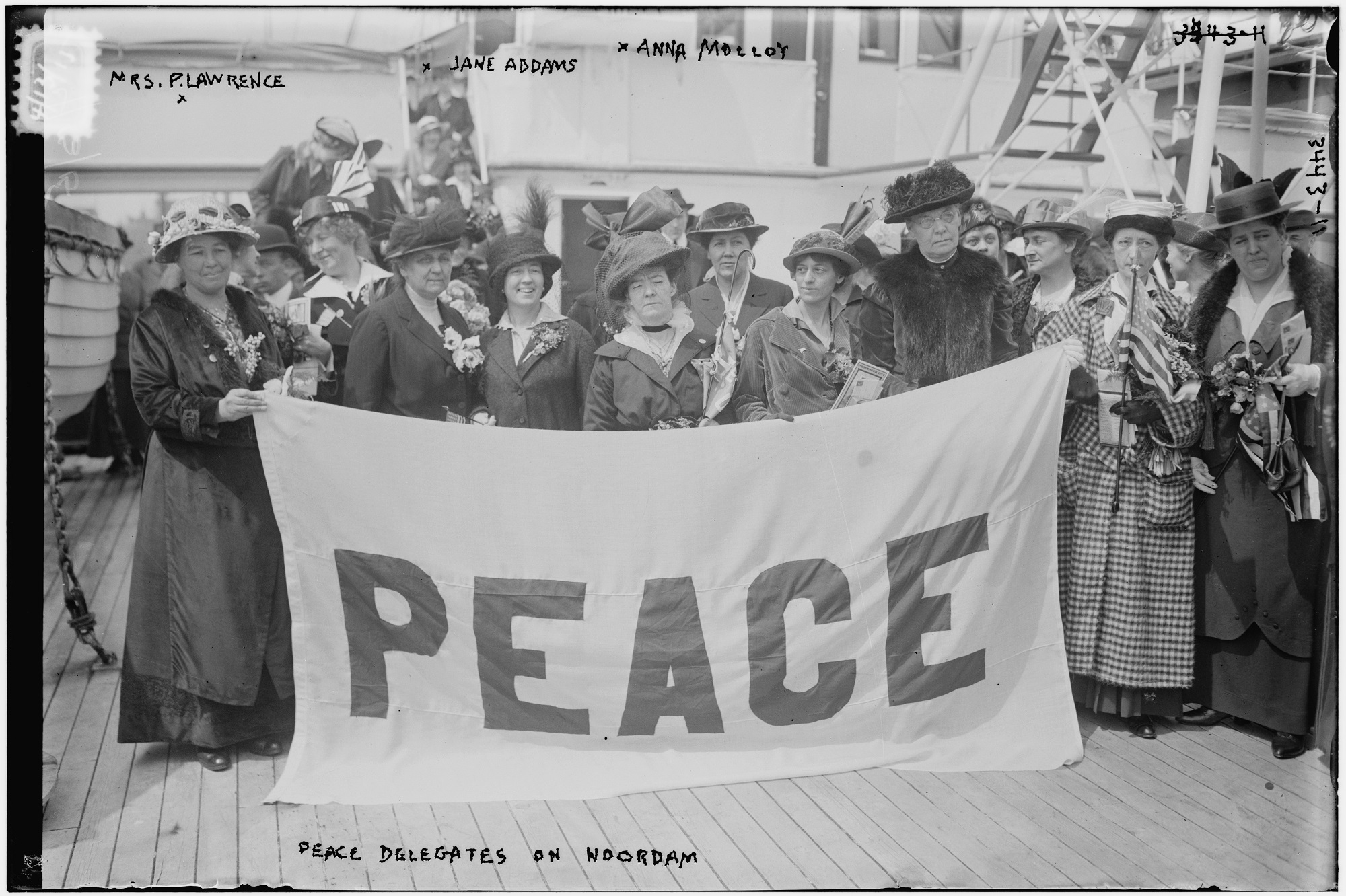 Jane Addams (third from left) and pacifist colleagues on Noordam before departure, April 13, 1915. (Library of Congress, LC-B2- 3443-11).
The Decision That Changed The World – America’s Entry Into World War I
By Neil Lanctot
Special to the Doughboy Foundation web site
“World War I? Why are you writing about that war?”
It was an all-too-common attitude I encountered when I shared with family and friends that my new book would explore America’s path to involvement in the Great War. Indeed, World War I, at least among the general public in the United States, remains a sort of red-headed step-child to more “popular” conflicts such as the Civil War and World War II. After all, America’s participation was fairly brief and our combat losses, compared to the European powers, were relatively light.
 Neil Lanctot But I had long been intrigued by World War I. Our Times, Mark Sullivan’s massive popular history of America in the early 20th century published between 1926 and 1935, had especially kindled my interest. Sullivan, a well-known journalist of the period, wrote from the perspective of a keen observer who had experienced the era firsthand and knew many of the major players. And his volumes on the World War I era were particularly fascinating, especially his coverage of the rapid changes occurring in America, the colorful political personalities, and the United States’ expanding global role.
I knew there was a story to be told, one that had long been overlooked. How did America come to make the fateful decision to join the Allies in 1917, a decision that actually changed the course of the 20th century? Without American involvement, Germany might never have been decisively defeated. In such an alternate scenario, there is no Treaty of Versailles to redraw the map of Europe, no reparations imposed on Germany, and no Hitler to set off a second World War twenty years later.
I felt the best way to tell this story was through a character-driven approach. The choice of the “characters” was not difficult. President Woodrow Wilson, ex-President Theodore Roosevelt, and the social worker and reformer Jane Addams not only knew each other well and were major figures in the Progressive reform movement of the early 1900s, but they were also deeply involved in the crucial episodes on America’s path to involvement.
Ending 2021 on a Positive Note
Ending 2021 on a Positive Note
By Dorian de Wind
via The Moderate Voice web site
December 31, 2021 — It is good to be able to close out this “annus horribilis” on a positive note.
Up to the beginning of this year, while there are several local and state monuments and memorials commemorating the more than four million Americans who served in World War I, there was no true “national” monument.
Finally, in January 2013, Congress established the World War One Centennial Commission “to ensure a suitable observance of the centennial of World War I, to provide for the designation of memorials to the service of members of the United States Armed Forces in World War I…” and in December 2014, Congress designated Pershing Park as the site for the memorial.
On April 16 of this year, more than a century after the “Great War” ended, the long-awaited memorial rightfully joined the three other national memorials honoring those who served and sacrificed in the three other major wars the U.S. fought in the 20th century: World War II, the Korean War and the Vietnam War.
The image below – a screen shot from the WW Centennial organization – shows the memorial.
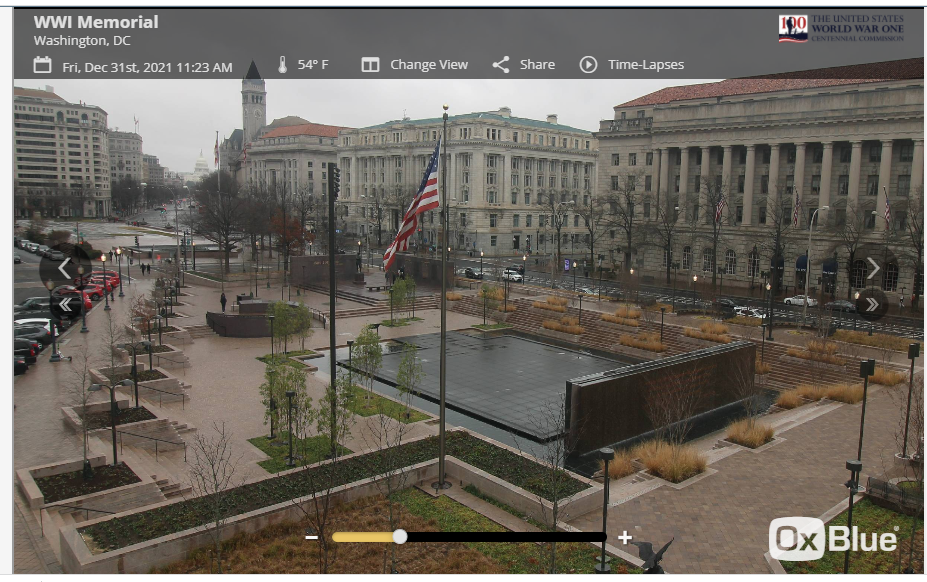
The 60-foot long, 12-foot-tall bas-relief sculpture, “A Soldier’s Journey,” is scheduled to be installed in 2024. For now, a canvas with sketches of the sculpture stands in its place.
Of the more than 3,550 Medal of Honor recipients to date, 126 served in World War I, 92 receiving the award posthumously.
In addition, “Congress awarded six Medals of Honor to unknown, unidentified soldiers of Belgium, France, Great Britain, Italy, Rumania, and the United States to pay tribute to each country’s unknown dead.”
Like the World War I monuments and memorials, there are several state monuments, memorials and museums honoring those who received our nation’s highest military award for valor in combat, but no national monument exists.
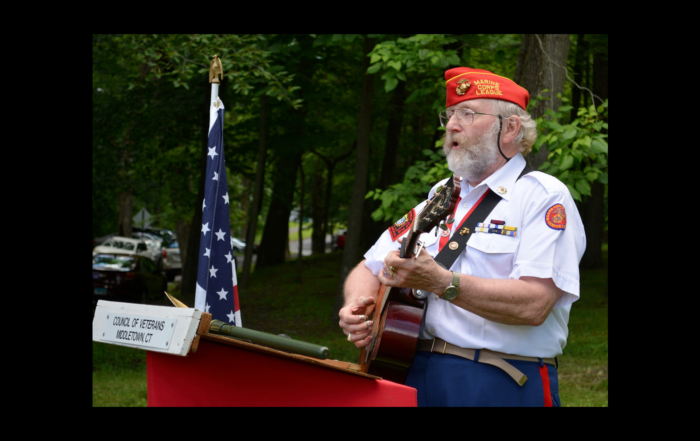
Connecticut’s 1st State Troubadour Connects To WWI
{source}<iframe width="1000" height="563" src="https://www.youtube.com/embed/yamumk-Gqfk" title="YouTube video player" frameborder="0" allow="accelerometer; autoplay; clipboard-write; encrypted-media; gyroscope; picture-in-picture" allowfullscreen></iframe> {/source}
Connecticut's 1st State Troubadour Connects To World War I
By Tom Callinan, Connecticut's 1st Official State Troubadour
Special to the Doughboy Foundation web site
As background to my formative years, my parents met at a barn-dance in Middletown, CT, my mother's hometown, in the early 1940s. My father, Joe, was the sixth of seven children, born in New Haven to Irish immigrant parents, who eked out a living until my grandfather succumbed to the Spanish Flu, when my dad was only five. His widowed mother was left with six at home, and another one who had gone to Ireland to live with his maternal grandparents, and helped tend to their meager farm. With flaming, red hair and a muscular build, Dad was a scrappy kid, as were many of the poor, fatherless, Depression-Era boys. To help his mother, Dad dropped out of high school to join the Civilian Conservation Corps to earn $30 a month, $25 of which was sent home. In addition to being a boxer, Dad was a born entertainer, who had performed in minstrel shows and on street corners during the 1930s as an amateur barbershop-quartet singer.
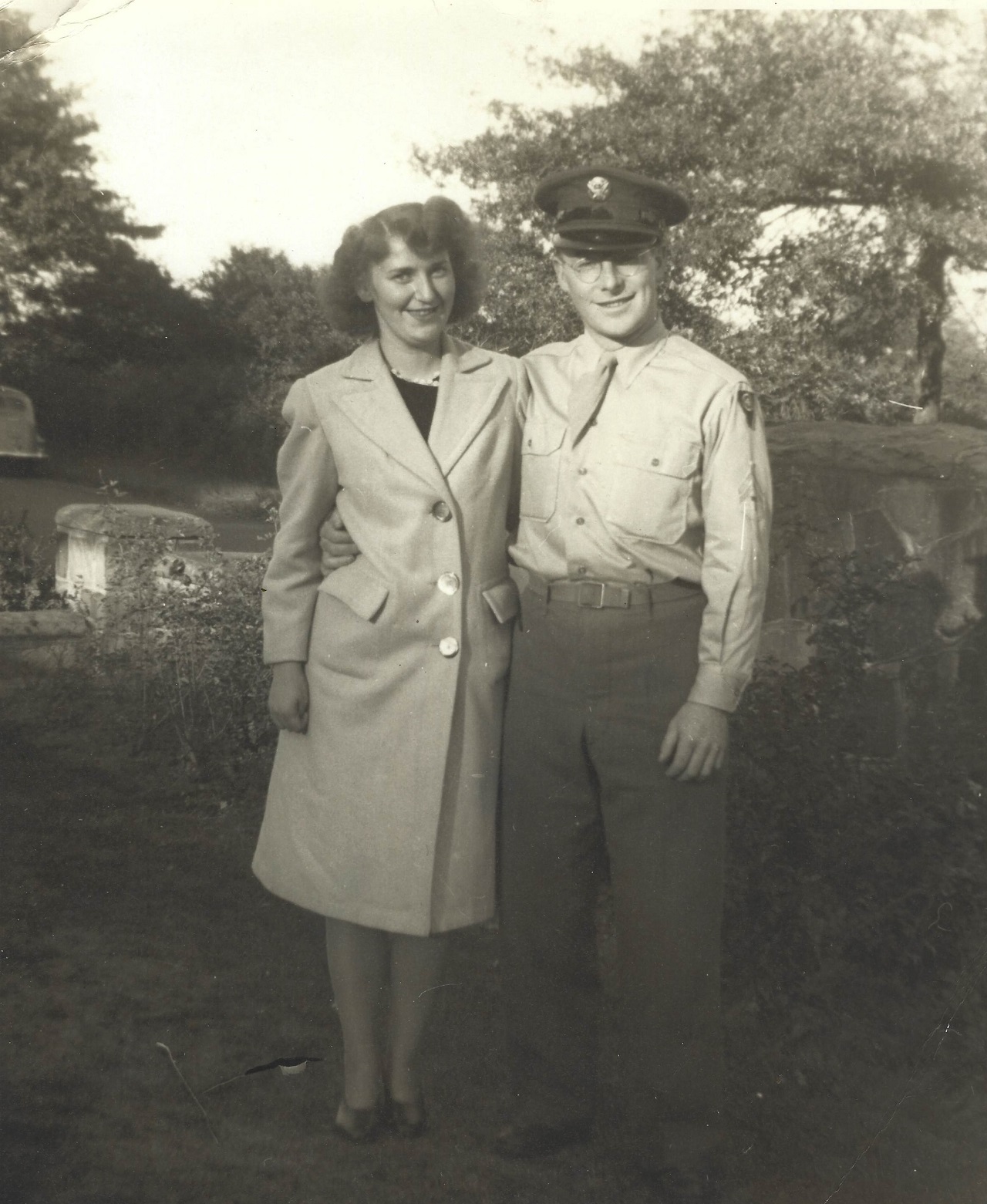 Ann Coleman and Joe Callihan, Tom Callinan's parents, during World War II. Joe served with the Army's 83rd Infantry Division in the European Theater of Operations, while Ann served as the secretary of the local Draft Board.When WWII erupted, Dad served with the Army's 83rd Infantry Division in the European Theater of Operations, while my mother, Ann Coleman, an only child, had grown up in a middle-class family, and graduated high school in 1940 with a commercial diploma. During the war she served as the secretary of the Draft Board in Middletown.
Before Mom was born, her late-uncle, Jeremiah J. Coleman served with the 107th Regiment of the 77th Division (National Army) in The Great War. He was killed in action at Chateau Thierry, France in late-August, 1918, and other than seeing his photo when we paid frequent visits to my Aunt Mary (Uncle Jerry's sister), I knew little about him, except that he is interred in St. John's Cemetery in Middletown; he's listed on the WWI memorial obelisk on the Washington Terrace Green; and one of the trees planted in memory of Middletown's fallen was planted in his honor.
In the late 1960s, I was an English major/Music minor at Central Connecticut State College (now University), with eyes toward becoming a teacher. However, a number of factors caused my life to spiral out of control, and as a result, I dropped out of school. Pretty much rudderless, I bounced-around from job-to-job, trying to deal with my free-fall with too much alcohol, and too little self-control. In the first draft lottery of 1970, I received number 29, so I decided to turn my life around by enlisting in the Marine Corps. As luck would have it, while being processed for deployment to Vietnam, the Marine directly ahead of me in line was the last 0311 (rifleman) in the quota for DaNang, so I was diverted to Camp Pendleton, CA, and never got out of the country.
After my Honorable Discharge, I returned to CCSC to resume my academic studies, and graduated with a B.S. in Secondary Education in 1973. That led to a junior high school teaching job, and a serendipitous meeting with two musicians who had a weekly gig at a pub in Hartford, performing Irish music and sea chanteys. Since my musical proclivities ran parallel to those genres, they asked me to sit-in, and in late-1973 I became the third member of The Morgans, which became known as "Connecticut' Premier Irish and Sea Songs Ensemble."
Veterans Day Celebration with the launch of a new comic book featuring a WWI hero
Veterans Day Celebration with the launch of a new comic book featuring World War I hero Dr. Frank Boston
By George Whitehair and Leigh Ferrier
Special to the Doughboy Foundation web site
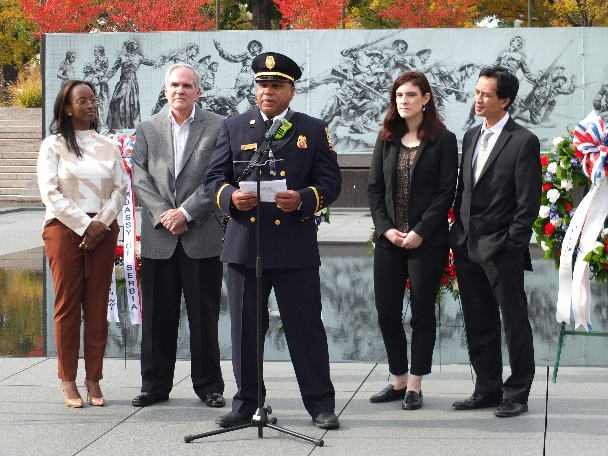 Participants in the event announcing the new comic book about World War I hero Dr. Frank Boston (left to right): Ouli Sow; George Whitehair; Washington D.C. Deputy Fire Chief Michael Knight; Heather Pham; Khoi Pham.Hidden History comes to the comics. The Boston Legacy Foundation returned to the National World War I Memorial in Washington, D.C. on November 11th, Veteran’s Day, to continue to celebrate the legacy of Dr. Frank Boston, a WWI Veteran, alongside all of those who have served their country and to celebrate the release of the Doc Boston Adventures comic book. Joining this effort was Washington D.C. Deputy Fire Chief, Michael Knight, who was one of the keynote speakers.
By way of background, after serving in WWI, Dr. Boston returned to his community and applying his military experiences, he started both a Hospital and a First Aid Emergency Squad, both of which flourish to this day. For his contributions to society, Dr. Boston received two separate U.S. Presidential Citations and was recently honored by the Pennsylvania Senate and Pennsylvania House with unanimous resolutions issued in his honor. A Congressional Resolution was submitted to Congress and a Citation was issued by U.S. Senator Chuck Grassley and one from Congresswoman Madeleine Dean.
Dr. Boston has also been recognized by Pennsylvania Attorney General Josh Shapiro, Pa. VFW, U.S. Senator Bob Casey, U.S. Senator Joni Ernst, Fort Des Moines Museum, Congressman Brian Fitzpatrick, and many others.
To further recognize his contributions to society, a comic book is being published, called the “Doc Boston Adventures”, which is based upon a true story when Doc Boston and his team of first responders saved lives during the 1936 floods.
This story is updated to reflect America today and introduce a unique and diverse group of young first responders, including - Chase and Penelope of European backgrounds; Ouli from Africa; Maya from South America, Sophal representing Asia; Murtuza, of Arabic origin; and of course, Doc Boston’s beloved St. Bernard, “Tiny” and one of his horses, “Danny.”
The Aftermath of Wisconsin’s Experience as the “Traitor State”
The Aftermath of Wisconsin’s Experience as the “Traitor State”
By Leslie Bellais
Special to the Doughboy Foundation web site
As I began a new job as a curator, mainly in charge of clothing and textiles, at the Wisconsin Historical Society in the early 1990s, I had no idea that it would lead me to an abiding interest, almost a passion, regarding the history of Wisconsin’s home front during World War I. The first spark was an exhibit I did on the topic for the 75th anniversary of America’s entrance into the war, but a decade later, when the exhibit staff asked me to do a smaller version for the museum’s permanent exhibit, my interest was rekindled and I decided to return to graduate school at the University of Wisconsin and make it the focus of my Ph.D. dissertation.
 Leslie Bellais and the book in which her essay "Lest We Forget’: Remembering World War I in Wisconsin, 1919-1945” appeared. The drama surrounding Wisconsin during World War I probably drew me to the topic. Wisconsin became known as the “Traitor State” in the summer of 1917, an epithet it acquired in part due to its U.S. Senator Robert La Follette’s vociferous fight against American participation in the European war, its outspoken Socialist Party adherents, and its significant German population (about 30 percent of Wisconsinites at the time were German immigrants or their children).
My interest became focused on those who described themselves at the time as “militant patriots,” specifically their reaction to the perception of Wisconsinites as traitorous and their campaign to expunge that perception, at first with educational campaigns, but as their frustration against the disloyal intensified with violence and vigilantism. My dissertation, “’Traitor State’: A Crisis of Loyalty in World War I Wisconsin,” follows their story from the beginning of the war in August 1914 to the early 1920s, by which time their interest in German-American disloyalty had dissipated and La Follette had been vindicated to the point he could run for president in 1924.
My original intent had been to look beyond the 1920s to see the affect the war’s turmoil had had on the state and its residents. As a graduate student, I had taken a course on historical memory and did much of my research on the post-war years for the required paper. What I learned was that there was only a tenuous connection between the way the war was experienced and the way it was remembered. The state’s militant patriots attempted to control its memory by writing books, building monuments and memorials, and organizing Armistice Day celebrations in an effort to expunge any hint of traitorous behavior from the official record. I argue that in the end it was all for naught. Despite the constant repetition at the time of the phrase “Lest We Forget,” the reality of the false promises made during the war, such as making the world safe for democracy, led most Wisconsinites to put the war behind them, essentially to forget it. Although some of this post-war material made it into the dissertation’s epilogue, the paper did not become a separate chapter and I set aside most of this research.
When the history department at Michigan Technological University decided to hold a conference in 2018 about the war’s effect on the American Midwest as part of a centennial commemoration for World War I, this seemed a perfect place to share my unused research with others interested in the topic. A few months later the conference organizers asked me, along with other presenters, to turn their presentations into chapters for their book Home Front in the American Heartland: Local Experiences and Legacies of WWI. I jumped at the chance to improve the text of my original paper and share it with a larger audience.
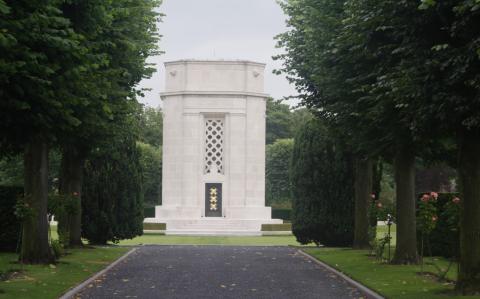
Five things you may not know about Flanders Field American Cemetery in Belgium
The American Battle Monuments Commission’s (ABMC) Flanders American Cemetery is located in Waregem, Belgium. It is the smallest ABMC cemetery in the world and the only World War I cemetery in Belgium. How well do [...]
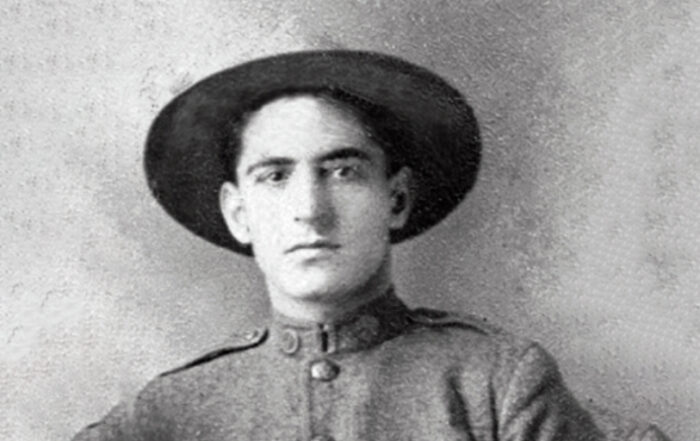
George Dilboy, The First Greek-American to Fall in World War I
It was on July 18, 1918, that George Dilboy was killed on a battlefield near Belleau, France in WWI after fighting so courageously that he was posthumously awarded the Medal of Honor, America’s highest medal [...]