Dispatch August 2026

Published: 27 August 2026

update subscription preferences

View this in your browser

UPDATED header image 05252026

August 2026

2026 Syposium header image large type

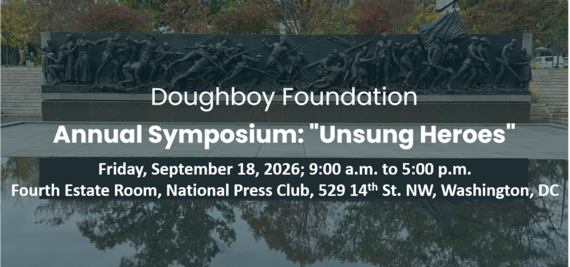
Doughboy Foundation's Annual Symposium: "Unsung Heroes" on September 18, 2026

The Doughboy Foundation's 2026 flagship Symposium on Friday, September 18, 2026 features "Unsung Heroes," the overlooked and exceptionally brave figures of WWI. Join us for an immersive day that brings together historians, military history enthusiasts, World War I descendants, educators and professional musicians.

2026 Symposium Bell-Watson

Pioneering Women & Minorities – learn about minority frontline units and the landmark service of African American women and the critical role of the American Red Cross Motor Corps.

  • Jerri Bell: Navy Veteran and Managing Editor of O-Dark-Thirty, co-author of It's My Country Too and author of the soon to be published book, Golden Fourteen, featuring the first African American women to officially serve during WWI.
  • Susan Watson: National Archivist for the American Red Cross

Native American Code Talkers & Doughboy Legacies – learn how Native American service members used their traditional tribal languages to transmit secret tactical messages.

2026 Symposium Code Talkers

  • Erin Fehr (Yup'ik): Assistant Director & Archivist at the Sequoyah National Research Center (UA Little Rock), researcher and co-creator of the Modern Warriors of World War I database.
  • Timothy Hunts-In Winter: Citizen of the Standing Rock Sioux Tribe, educator, and genealogist. Renowned for his historical research into Dakota and Lakota frontline soldiers and WWI Code Talkers.
  • Sarah Elisabeth Sawyer: Choctaw Nation tribal member, "story archaeologist," and award winning author. Her narrative biography Otis W. Leader: The Ideal American Doughboy won the 2024 Oklahoma Book Award for Nonfiction.

Music & the Wartime Trumpet: Presenting on the history, tradition and heritage of bugling in the military and the Great War. The presentation features genuine World War I bugles, including a rare trench bugle and General Pershing's own bugle.

2026 Symposium Buglers

  • Chris Gekker: Professor of Trumpet at the University of Maryland; renowned international soloist and former faculty member at The Juilliard School.
  • Kevin Paul: Military Band Historian, member of a premier band in Washington, DC and director of operations for the Foundation focusing on Daily Taps program and our AEF Band.

Read more about the 2026 Symposium, and register to attend!


2026 September Concert

Doughboy Foundation Summer Concert Finale September 18: From Ragtime to Swing, America Finds its Rhythm

Join us for the finale of The Summer Concert Series at the National World War I Memorial  on September 18, 2026 at
5 p.m.
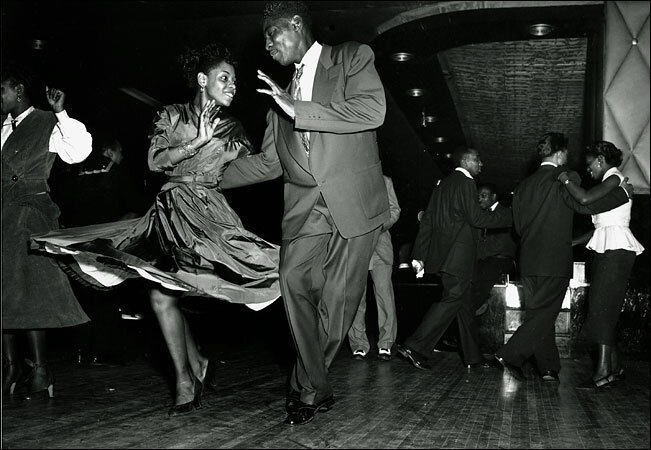
 We are proud to present From Ragtime to Swing, America Finds its Rhythm! Get ready to move!  You'll be dancing in the park to the rhythms of jazz legends and swing classics. Honoring the legacy of James Reese Europe and the Harlem Hellfighters, this concert showcases the evolution of jazz and community dance.

RSVP and join us FREE on September 18, in person or online via YouTube, for the finale of our 2026 Summer Concert Series at the National WWI Memorial. 


Doughboy Foundation bugler featured at new U.S. Army Brigadier General's promotion ceremony August 14

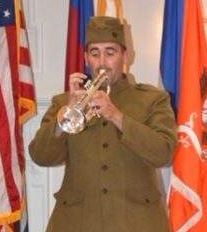
Wilson Childers

Attendees at the promotion ceremony on August 14, 2026 for the U.S. Army's new Brigadier General Ronald Iammartino Jr. enjoyed an unexpected musical bonus as Doughboy Foundation bugler Wilson Childers performed music for the event in his World War I Doughboy uniform. A West Point graduate (Class of 2003) and native of Staten Island, New York, Iammartino was nominated on March 27, 2026, for appointment to the grade of brigadier general in the U.S. Army, and his nomination was confirmed by the U.S. Senate on April 22, 2026. The promotion ceremony took place at at Fort McNair in Washington, DC August 14. Read more about the ceremony, General Iammartino's outstanding career, and how the Doughboy Foundation's bugler set the tone for the VIP event.


Finding the Hello Girls: August 2026 update

The U.S. Army Signal Corps Female Telephone Operators of WWI, known as the Hello Girls, were finally awarded a Congressional Gold Medal in 2024, thanks in large measure to the hard work and diligence of a small group of descendants of Hello Girls and several dedicated researchers. In 2025, the group evolved into the Hello Girls Military Honors and Remembrance Program (M-HARP), a new Special Program of the Doughboy Foundation, with the mission of honoring and preserving the legacy of these 280 women.

The Only Vermont Hello Girl:
Sarah Adeline Fecteau Reiber, 1895-1922

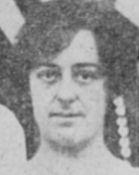
Sarah Fecteau

The only Hello Girl to hail from Vermont, Sarah Adeline Fecteau was born in the Village of White River Junction, Town of Hartford, on 23 August 1895. A long-time telephone operator, she joined the U.S. Army in 1918 and was a member of the First Unit of the Hello Girls to deploy to France. She returned from France with a commendation letter from the Chief Signal Officer of the American Expeditionary Forces, and something else that was very important to her. Learn more about Sarah Fecteau's life, wartime service, her most important souvenier from France,  the tragedy that cut her life short, and how she was one of the few Hello Girls recoginzed for her military service at that time. 


Michael Santoro:

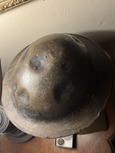
Carey's Force in the Somme: The Shrapnel-Dented Helmet of Fred Bachle, 6th Engineer Regiment, 3rd Division

Fred Bachle helmet

"This is the moderately-dented British Mark I helmet worn by Sergeant (Acting Sergeant 1st Class) Fred Bachle of Company B, 6th Engineer Regiment, 3rd Division, American Expeditionary Forces. Bachle was part of "Carey's Force", a small detachment of the 6th Engineers tasked with building bridges in the Somme area in February 1918. The force was made up of Companies B & D along with the Headquarters Company of the 6th Engineers. Long before they were attached to their division, they were thrown onto the front lines with British rifles on the Somme." Michael Santoro explores more of the hidden history to be found in WWI artifacts. Read about how Sgt. Bachle's helmet got it's first "moderate" dent, and how "each dent carries its own story of life and death that Bachle had to live through" in his service in France during World War I.


Home Again in Uniform: A French Immigrant's Return to Liberate His Homeland

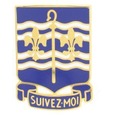
306th Infantry Patch

When Private Marcel Albert Rogissart stepped ashore in France with the American Expeditionary Forces in the spring of 1918, he was returning to a country he knew well. Unlike most of the young Americans around him, France was not a distant ally he had only read about in newspapers—it was home. Born and raised in Charleville, in the Ardennes, Marcel had emigrated to the United States only seven years earlier. Now, wearing the uniform of the United States Army but not yet an American citizen, he had returned to help liberate the homeland he had left as a teenager. Learn more about Rogissart, and why his "story reminds us that the American Expeditionary Forces were strengthened not only by native-born citizens but also by immigrants who answered the nation's call before they could legally call themselves Americans."


Youth in Action: How One High School Student is Keeping WWI History Alive

Juliette McEnroe

Juliette McEnroe recently organized the impressive "Lest We Forget: A Memorial Day Gallery Event" at her High School, and she was inspired to turn a traditional boring holiday assembly into a hands-on museum experience by what she had learned about World War I from her contacts with  the Doughboy Foundation.  Learn more about her realization that her fellow "students wanted to interact with history rather than just hear about it," and how her exhibit connected WWI remembrance to America's 250th anniversary.


UPDATE: How to Follow the Upcoming Cycling Trip Along the Western Front Way

Western Front Way cycling trip map

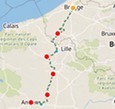
In June, retired U.S. Army Signal Corps Colonel Linda Jantzen wrote about leading a small group on a "deeply personal" bicycle expedition along the Western Front Way in August and September from Amiens, France, to Bruges, Belgium, to remember and honor those who fought and fell. In an update to the story, find out how, starting August 28, you can track the progress of the trip online, and interact with the riders as they make their way along the Western Front.


Discovering the legacy of my great-grandfather's WWI Navy Yard service

John Faulkner

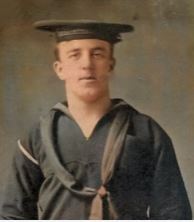
"The recent nationwide celebrations of America's 250th anniversary allowed me the chance to reflect upon the extraordinary legacy of my great-grandfather John Faulkner who worked as a carpenter at the Philadelphia Navy Yard following the Great War," says Joe Felice. "What interests me the most about his Navy Yard service is the large veil of mystery that still surrounds the details of his assigned duties." Read more, and learn how, "Although the past few years have revealed documentation confirming Faulkner's service, a great deal remains unknown about the specifics of his work at the Navy Yard."


JTF-DC JIC: Preserving WWI History

Sgt. Katlynn Pickle

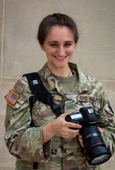
The echoes of 1918 rang out at the National World War I Memorial as the Doughboy Foundation's American Expeditionary Forces Headquarters Band played center stage, July 23, 2026, delivering a living-history performance titled "From the Trenches to Broadway." While the audience watched the concert, part of an ongoing summer series designed to honor the legacy of American soldiers who served on the front lines in Europe over a century ago, a Soldier worked quietly behind the scenes covering the event. Learn how Sgt. Katlynn Pickle, a mass communication specialist from the Georgia Army National Guard, captured video footage of the concert series, and Soldiers patrolling, helping inform the public about the mission and preserve history.


Daily Taps at the National WWI Memorial

Honoring PFC LeRoy Hill, U.S. Army

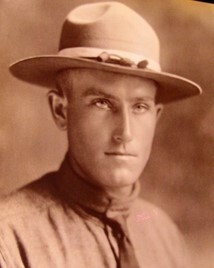
During the week of August 12, 2026, Daily Taps at the National World War I Memorial in Washington, DC was sounded in honor of WWI veteran PFC Leroy Hill.

Leroy Hill was born May 7th, 1894. The day before his twenty-third birthday he traveled to Manhattan, Kansas and volunteered for WWI on May 6th, 1917.

Hill was with the 15th Field Artillery Regiment, nickname the "Indian Heads" when they left the United States on December 11th, 1917, and sailed on board the USS Adriatic for Liverpool, England. The Regiment landed at Le Harve, France in February of 1918. By June 1st, 1918, the regiment occupied positions northwest of Chateau-Thierry fighting the Germans.

Back home in Gardner, Kansas on June 20, 1918, his parents John and Anne Hill
received a telegram from the War Department, stating their son had been killed on the battlefield near Chateau-Thierry on June 7th, 1918. He was twenty-four years and one month old. Hill was Gardner's first casualty of World War I.

PFC Leroy Hill

Three years later, Friday, August 5th, 1921, Hill's body finally returned home and was greeted by many citizens, and the Guard of Honor from the American Legion. As Leroy's flag draped casket was carried off the train onto the depot platform and over to the waiting hearse, his father standing by Mrs. Hill said, "Mother, he's home at last." Hill's sacrifice is forever remembered through American Legion Post No. 19 named in his honor.

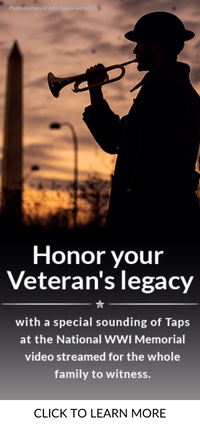
The Daily Taps program of the Doughboy Foundation provides a unique opportunity to dedicate a livestreamed sounding of Taps in honor of a special person of your choice while supporting the important work of the Doughboy Foundation. Choose a day, or even establish this honor in perpetuityClick here for more information on how to honor a loved veteran with the sounding of Taps.


Why World War I History Is Hidden in Plain Sight Across Philadelphia

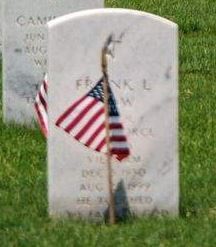
Headstone with flag

Philadelphia felt the war long before American troops left for France. The city's shipyards, textile mills, and armories converted almost overnight into wartime suppliers. They sent boots, blankets, and shells to Allied forces well before the United States formally entered the conflict in 1917. Local firms such as the Baldwin Locomotive Works retooled production lines to build artillery shells. The city's tanneries supplied a large share of the boots issued to American soldiers overseas. World War I history in Philadelphia rarely announces itself with a museum wing or a marked trail. It shows up instead in doorframes, cornerstones, and the odd keepsake a grandparent kept for reasons nobody quite remembers. Read more, and learn how, for anyone settling into the city's older neighborhoods, WWI history sits closer than it looks.


Brighter Days Ahead: The Actions of Harry F. Kelly During the First World War

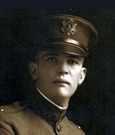
Harry F. Kelly

Author Katherine Haun explores the story of Harry F. Kelly, who became the 39th governor of Michigan during World War II, and an associate justice of the Michigan Supreme Court, but his service during World War I, though heavily reported on during the conflict, has largely been left behind with the passage of time. Learn how, although Kelly is best remembered for his political career, the seeds of that later success were planted during World War I.


For sale at Richmond marina: One of the last surviving WWI boats. Needs work.

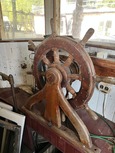
Katie steering wheel

"It's a big project."
That's how Matt Harris describes the USS Katie, a wooden boat docked at the Richmond, VA Yacht Basin about 10 miles south of the city. The Katie doesn't look like much at first sight — relatively small, weatherbeaten, very obviously showing its age, which is roughly about 110 years. Yet the boat's history is arguably among the more unique in the U.S.  Read more, and find out how, except for a few museum ships, the Katie is among the scant few World War I-era U.S. Navy ships that are still afloat today.  And she needs a rescue!


Wildfires expose — and detonate — buried bombs and mines from WWI

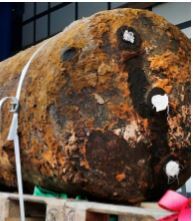
Snip of unexploded bomb

The wildfires burning across Europe this summer have exposed a potentially deadly threat lurking beneath the blackened landscape: rusty bombs and mines from World War I and II that threaten crews responding to the flames. Some of the weapons have exploded in the intense heat. Blasts have been reported in France, Belgium, Germany and the Netherlands. Find out how the wildfires have moved over territory that has long been known to hold unexploded weapons, a lethal legacy that lingered long after the guns fell silent.


East Side Bridgeport – A Cityscape Made by the Great War

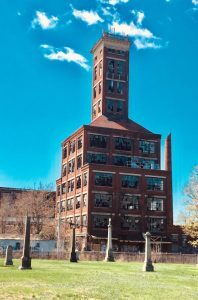
Remington shot tower

Looking back at her childood in Bridgeport, CT, author Carolyn Ivanoff, writing for the Bridgepoint History Center, considers that "I didn't understand then, but I know now, that I was looking out over a Bridgeport landscape created by the Great War." From the Remington shot tower to the immense ammunition plant, one of the largest industrial facilities in the world in its time, World War I changed the landscape of the city in ways that still are evident today. Read more, and learn how "It took longer to de-construct the buildings than it did to build them in that Great War summer of 1915. Bridgeport's Great War landscape is slowly eroding and vanishing like the great industries that created it."


A German Pigeon Began Life as a World War I Messenger, was Captured in France, crossed the Atlantic, and became an American Military Hero

Kaiser the homing pigeon

In a museum collection near Washington, D.C., sits an unusual veteran of the First and Second World Wars. Kaiser was a German homing pigeon, hatched in Koblenz in 1917 and captured by American soldiers before the First World War had ended. Instead of being returned to Germany, he was brought to the United States, where his military career took an unexpected turn. He spent decades in American Army lofts, fathered generations of military pigeons, and eventually became a familiar figure at ceremonies and public events. Read more, and find out how, by the time he died in 1949, Kaiser had lived far longer than most pigeons and had spent much of his life in military custody. 


Allo­ways Creek ship grave­yard holds
hid­den World War I his­tory

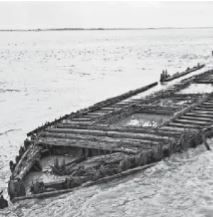
WWI wooden ship snip

Allo­ways Creek ship grave­yard is a line of 18 World War I wooden steam­ships.The now-barely vis­ible ships were built by the Emer­gency Fleet Cor­por­a­tion when Ger­many had sunk many of our coun­try's sup­ply ships. After the war, not of much use,  the ships were sunk in a form­a­tion to act as a break­wa­ter, and few people now know of their exist­ence. Learn more about how, last­ing for over a cen­tury, these unwanted WWI wooden sup­ply ships are still in place and still doing what they had been set to do: warding off erosion at a tricky naut­ical place.


Americans in the Canadian Army?

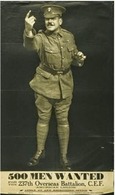
Canadian advertisement fopr American soldiers WWI

"When you write historical fiction, sometimes you paint yourself into a corner, and while resolving a plot issue, you discover a bit of hidden history," says author Barbara Ristine. "In my novel, The Face Painter, one of the characters is a young American who reluctantly agrees to have a mask made in the Tin Noses Shop. This posed a dilemma when I started writing. How would an ordinary Yank end up in a British military hospital before America even entered the First World War?" Find out how resolving that delimma revealed that some 40,000 Americans enlisted in the Canadian Expeditionary Force (C.E.F.)  in the first two years of the war, crossing the border to enlist for a variety of reasons in "The American Legion."


Swedes in the 361st Regiment, 91st Division, during the Meuse-Argonne

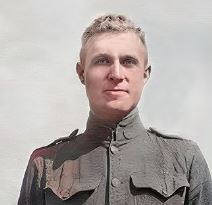
Ernest J A Erickson snip

"Reading the text in the war diary of Ernest Julius Alfred Ersson Erickson brings me to tears. The reason for this is the great connection I have established to one of the relatives to Ernest." So begins the latest story from Jocke Hallberg, proprieter of the Swedes in the Great War website. He recalls that "many years ago, in the beginning of my research, I found beautiful files and photographs of American soldiers who turned out to be Swedish born individuals, who emigrated from Sweden to North America, and particpated in the Great War. It turned out it were three of them, and I immidiately became very attached to them." Read about "one of three brothers who fell in the Meuse Argonne Offensive, that dark day of October 10, 1918. The story of Ernest Julius Alfred Erickson."


Over The Top: WWI brings American troops to the front in its first update!

Over The Top: WWI snip

Flying Squirrel Entertainment is bringing a massive content update for free to Over The Top: WWI. Included in the free update is the option to play the game in a classic first-person perspective, a much-requested feature by fans. The update also introduces a new, fully defined American faction. The faction introduces a wide variety of new weapons, vehicles, and uniforms per class – historically inspired by US Army designs. FInd out more about the update, and how the game is also introducing the paid DLC Over The Top: WWI – Harlem Hellfighters,the American infantry unit that was so successful during World War I that it was awarded the Croix de Guerre by the French Army. 


World War I News Digest for August 2026

Sam Patti and Kathleen Houlihan letter

World War I was The War that Changed the World, and its impact on the United States continues to be felt over a century later, as people across the nation learn more about and remember those who served in the Great War. Here's a collection of interesting news items from the last month related to World War I and America.

WWI Mystery: Sam and Kathleen found each other…somehow…

Preventing Industrialized Atrocity, WWI to the Age of Automation

America's 2026 Summertime World War One Commemorations 

The Boston Navy Yard in WWI: The Ships and the Boats

20 Images and Facts From World War I

In 1920, D.C. planted 507 Norway maples to honor its WWI dead

World War I biplane rebuilt in Long Island, NY

Getting Those World War I Naval Mutinies Straight

Remembering WWI: "I see the scars all over Europe and America"

The Day an American WWI Rookie Shot Down an Ace

Putin Can Learn 3 Big Lessons From World War I

The Americans Who Flew for France in World War I

'Not forgotten': WWI soldier awarded Purple Heart 100 years later

Unusual burial record leads father & son on WWI search

World War I, Ada Kepley and Patriotism

WWI Profiles of Valor: GySgt Charles Hoffman & Cpl Henry Pruitt 

Touched by the Great War: Remembering Sam Neill

4 Brutal WWI Trench Weapons That Look Horrifying Today

World War I and America

See faces of Colorado National Guard who fought in WWI

How did weather play a role during World War I for the Allies?


Doughboy MIA for August 2026

Private Harry Bohannon

A man is only missing if he is forgotten.

Our Doughboy MIA this month is Private Harry M. Bohannon, who enlisted on May 8th, 1917 at his home of Logansport, Indiana. He trained at Fort Thomas, Kentucky and then Camp Greene, North Carolina, where he was assigned to the assembling 3rd Division. Designated a rifleman, he was sent to Company L, 38th Infantry, and embarked with them for overseas duty on March 30th, 1918. That summer, the 3rd Division stopped the German advance on Paris at the Marne River. The engagement spilled back and forth onto both banks of the river and in the heavy fighting Private Bohannon was severely wounded in action on July 1st, 1918 while trying to cross back over the river to the bank held by his regiment. In the process he drowned. It is unclear whether one of the bodies later pulled from the river was his or not. (Doughboy MIA has begun preliminary plans to launch a deeper investigation into this case.) The American Legion Post in Delphi, Indiana is named in his honor.

Would you like to be involved with solving the case of Private Bohannon and all the other Americans still in MIA status from World War I? You can! Click here to make a tax-deductible donation to our non-profit organization today, and help us bring them home! Help us do the best job possible and give today, with our thanks.  Remember: A man is only missing if he is forgotten.


Merchandise from the Official
Doughboy Foundation WWI Store

⇒ ⇒ ⇒ Limited Supply!

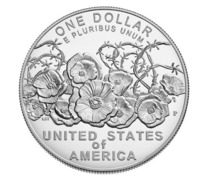
Commemorative Coint

2018 Centennial
World War I
Silver Dollar Commemorative Coin

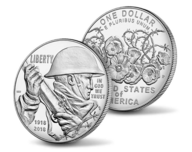
Struck by the United States Mint to commemorate the centennial of America's involvement in World War I and honor the more than 4 million men and women from the United States who served.

WWI Commemorative Dollar Coin Obverse.jpg

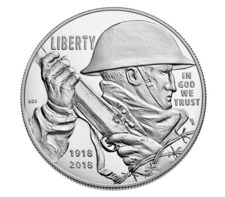
Obverse: The obverse (heads) design, titled "Soldier's Charge," depicts an almost stone-like soldier gripping a rifle. Barbed wire twines in the lower right hand side of the design. Inscriptions include "LIBERTY," "1918," and "IN GOD WE TRUST."

Reverse: The reverse (tails) design, titled "Poppies in the Wire," features abstract poppies mixed in with barbed wire. Inscriptions include "ONE DOLLAR," "E PLURIBUS UNUM," and "UNITED STATES OF AMERICA."

WWI Commemorative Dollar Coin Reverse.jpg

Proceeds from the sale of these coins will help The Doughboy Foundation keep watch over the new National World War I Memorial in Washington, DC.

This and many other items are available as Official Merchandise of the Doughboy Foundation.


George Goody

A Story of Service from the Stories of Service section of doughboy.org

George Goody

Submitted by: Jack Sherman

My grandfather joined the Army at 16 to avoid working in the woods of Maine. His father signed his papers but couldn't read and write English so was rather angry when he figured out what was happening. George left Maine and ended up in troop I, 6th Cavalry on the Texas-Mexico border during the punitive expedition. Since he didn't read or write English he was never promoted in 6 years of service. When we declared war on Germany and the Army needed French speakers, grandpa George became a genius overnight since he could read, write, and speak French just fine. He left the cavalry and became a dispatch rider working behind the lines, since he could communicate with French. Unfortunately, he was wounded and almost lost his right leg, and ended the war in a hospital. When peace broke out he went AWOL from the hospital to Paris for a celebration with some friends. He eventually got caught, returned to the hospital, and chewed out, but apparently, it was worth it. His leg never healed correctly and was a constant source of pain for the rest of his life. He eventually returned to America and was discharged at Fort Dix, NJ in 1920, unfit for further service.

Later in life, he pursued many occupations, such as farmer, carpenter, and owner of a Taxi company. He never lost the love for horses, backed down from a fight (disciplined for fist fighting in a VA hospital in his 60's), or carousing. When my father was courting my mother, George disapproved of my father and threatened to beat him up… until they went riding together. Legend has it since my father could ride quite well, he won grandpa's approval. Of course, the horses they rode that day were in pretty bad shape when they finished with them. The farmer that rented them the horses was pissed but got over it. Neither my father nor grandpa were young men at that point, but both were proud and would rather die than let someone outdo them on horseback. After that, the marriage was sealed. George Goody served with honor in two conflicts and remained a soldier at heart for the rest of his life.

Submit your family's Story of Service here.


Share this article

Related posts