Ceremony of the Wheat starts a new WWI Tradition at Arlington National Cemetery
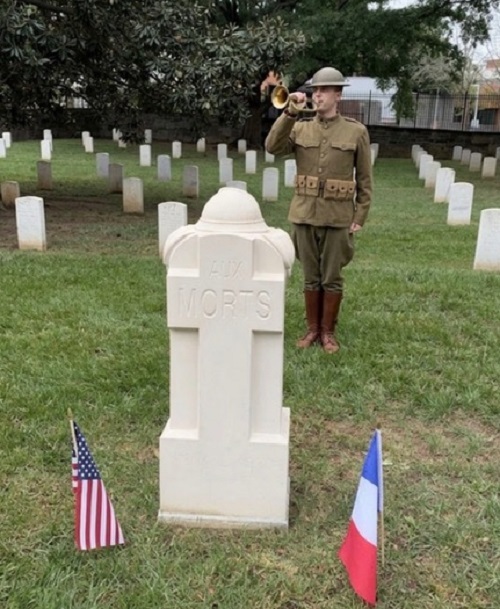
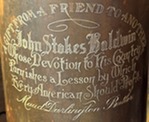
The Ceremony of the Wheat took place at 10:00 a.m. on September 27 at the Sacred Soil Marker inside Arlington National Cemetery, as part of the 2026 National Gold Star Mother's Weekend in Washington, DC. The ceremony follows the July 5 rededication ceremony restoring the historic World War I monument gifted to the United States nearly a century ago, and is planned to be an annual tradition at Arlington, linking the enduring legacy of World War I to modern military families through partnerships between the American Gold Star Mothers, the American Battle Monuments Commission (ABMC), the American Society of Le Souvenir Français, and the Doughboy Foundation. Speakers and participants placed sheaves of wheat at the monument as directed by the MC, honoring fallen heroes whose final resting places remain on foreign soil. Read the whole story, and learn how the original Arlington marker deteriorated and was removed in 1938, and how the restoration project revived it in 2026 to commemorate 250 years of the Franco-American alliance and shared sacrifice.
 |
Symposium Remembers the Stories of America's Unsung Heroes of World War I
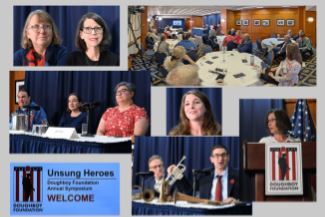
The Doughboy Foundation's second World War I Symposium, hosted at the prestigious National Press Club in Washington, DC on September 18, 2026, offered a full day of immersive historical learning provided by experts on certain less well-known aspects of America's participation in World War I.
Titled "Unsung Heroes," the Symposium spotlighted several groups whose contributions to the war effort of the United States in the Great War have been overlooked, marginalized, or outright forgotten. Read more about the 2026 Sympsoium, and find out what attendees learned about the people and organizations whose World War I work has been neglected for much too long.
Finding the Hello Girls: Sept. 2026 update
The U.S. Army Signal Corps Female Telephone Operators of WWI, known as the Hello Girls, were finally awarded a Congressional Gold Medal in 2024, thanks in large measure to the hard work and diligence of a small group of descendants of Hello Girls and several dedicated researchers. In 2025, the group evolved into the Hello Girls Military Honors and Remembrance Program (M-HARP), a new Special Program of the Doughboy Foundation, with the mission of honoring and preserving the legacy of these 280 women.
Letter to the Editor, Los Angeles Times, Re: L.A. Renaming Pershing Square
Michael Santoro

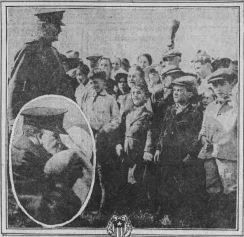
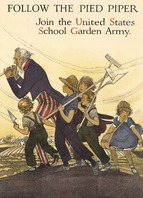
While much has been written about efforts in the United States to mobilize men and women of military age to serve in the armed forces and civilian supporting organizations during World War I, less has been said about the mobilization effort for those too young to serve. Emmanuel Destenay notes that "between August 1914 and April 1917, Americans seized the opportunity presented by World War I to promote their respective agenda. Gilded Age and Progressive Era reformers and educators believed American youth needed to participate in civic activities to better themselves, while advocates of preparedness argued that children needed to defend and protect the nation. A myriad of war-related activities offered children the possibility to develop an altruistic mindset while helping Uncle Sam." Learn more, and find out how, by the time that the U.S. entered World War I on April 6, 1917, "children had, to a certain extent, already been mobilized."
|

Jocke Hallberg, on his fine Swedes in the Great War, 1914-1918 website, recounts "the remarkable story of the Swedish emigrant Frank Gustaf Severin Erickson." Building on the research of Frank's grandson, Mark Julius Erickson, Jocke gives a detailed account of Ericson's immigration to the United States before World War I, his enlistement to serve his new nation, and his service with the 77th Division in the pocket of the Charlevaux Ravine, where the men of the 'Lost Battalion' siege suffered a staggering casualty rate of roughly 72%. Read the entire story, and find out how Erickson, three days after the Armistice, was awarded the Silver Star for gallantry in action during the 'Lost Battalion' Siege.
|
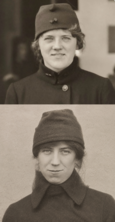
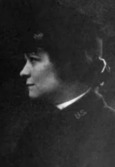
On September 24, 2026, Daily Taps at the National WWI Memorial in Washington, DC, honored Inez Crittenden, chief operator of the U.S. Army Signal Corps' 2nd Telephone Unit, who served in France during World War I.
|
Crittenden was born in September 1887, and raised in a bi-lingual (French and English) household. She never received a formal education, but through natural instincts and a disciplined approach to her job, she gained the trust and confidence of employers. She applied for a position as an Operator to the U.S. Army Signal Corps in Dec. 1917. After passing a French language test, she was selected to join by Signal Corps leadership, becoming Chief Operator, 2nd Telephone Unit. In April 1918, Inez and the 2nd Unit embarked aboard the SS Carmania to cross the Atlantic Ocean. When the 2nd Unit arrived in France they received orders to set up a telephone exchange in Paris in support of American Expeditionary Force (AEF) operations. Sadly, Inez died of complications of influenza on Armistice Day, November 11, 1918. She was 31 years old, and was buried at Suresnes American Cemetery, France.
|
|
 |
The sounding of Daily Taps for Inez Crittenden on September 24, 2026 was unique: due to the visit of a high-ranking international figure to the White House that day, the entire city block that encompasses the National World War I Memorial had been fenced off by the U.S. Secret Service and U.S. Park Service, and our bugler was unable to access the normal location (at the base of the Memorial's flagpole) for the sounding of Taps. Undeterred, the bugler sounded Taps at 5:00 p.m. EDT, precisely as scheduled, as close as possible to the flagpole outside the barrier, fulfilling the Doughboy Foundation's promise to sound Taps every single day at the Memorial, in perpetuity.
The Daily Taps program of the Doughboy Foundation provides a unique opportunity to dedicate a livestreamed sounding of Taps in honor of a loved veteran from any war or conflict, while supporting the important work of the Doughboy Foundation. Choose a day, or even establish this honor in perpetuity. Click here for more information on how to honor a loved veteran with the sounding of Taps.

In June 1917, the fields north of Chillicothe held nothing but farmland and a handful of dirt roads. By December, more than 2,000 buildings stood on that same ground, and over 40,000 soldiers had passed through what became Camp Sherman. How WWI reshaped Ohio's military geography can be measured in exactly that kind of speed. Entire cities of wood and canvas rose in months, on land that had been growing corn only weeks earlier. Industrial plants in Cleveland retooled almost overnight. Small towns swelled to several times their prewar size. Read more, and find out how Ohio didn't just contribute soldiers to World War I. It physically rearranged itself to build them.
|

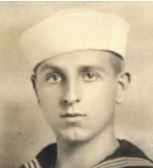
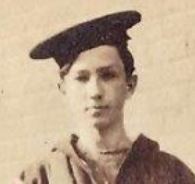
A World War I veteran, who passed away nearly 40 years ago, was formally laid to rest in a Nashville cemeter on Tuesday, September 1, 2026. John Repka served in the U.S. Navy during WWI. Along with his wife Celia, who died nearly 30 years ago, the couple's ashes were interred at Middle Tennessee Veterans Cemetery. Thought by his family to have been buried in Chicago, where he spent most of his life, it was discovered this past July that his ashes, and those of his wife, had actually been left in a storage unit. Read more, and learn how his family planned the funeral service because they "wanted to give him the honor and dignity of not just the military but the religious rights to find a final resting place that they never had."
|

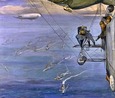
U.S. Navy aviation entered World War I as a tiny force of just 54 obsolete aircraft and 48 pilots, but expanded rapidly into a major anti-submarine patrol network operating 44 stations globally by the 1918 Armistice. Naval aviators flew seaplanes, dirigibles, and kite balloons on more than 22,000 patrols across 3 million nautical miles, targeting German U-boats threatening Allied supply shipping. By the Armistice, the U.S. Navy was operating over 2,100 aircraft, 15 airships, and 215 kite balloons. Learn more about how the Navy's aviation got big quick, and see why, though U.S. naval aircraft did not receive credit for a single sinking in WWI, they created considerable interference with U-boat operations, especially in the last year of the Great War.
|
|
Turns out that eating gluten-free was also popular during World War I. Wartime in the United States meant that certain supplies, including food, were temporarily in short order. Crops were donated to help feed troops and others involved in the conflict abroad. In this conflict, wheat was one of those crops that became scarce stateside. As a response to the shortage, the U.S. government encouraged people to eat lots and lots of potatoes instead — five bushels, in fact, and each bushel is about 60 pounds — in addition to gluten-free flour substitutes, like oats, rice, corn, and buckwheat. Read more, and find out how, while going gluten-free wasn't a health choice per se, it does go to show you that the concept isn't new!
|

As men left their jobs to serve their country in war overseas, women replaced their jobs. Women filled many jobs that were brought into existence by wartime needs. As a result, the number of women employed greatly increased in many industries. In the U.S. there were, before the war, over eight million women in paid occupations. After the war began, not only did their numbers increase in common lines of work, but as one newspaper stated, "There has been a sudden influx of women into such unusual occupations as bank clerks, ticket sellers, elevator operator, chauffeur, street car conductor, railroad trackwalker, section hand, locomotive wiper and oiler, locomotive dispatcher, block operator, draw bridge attendant, and employment in machine shops, steel mills, powder and ammunition factories, airplane works, boot blacking and farming." Read more about women's active involvement in many industries, and the many new roles that American women played during World War I.
|

Few stories of World War I are better known than the story of the Lost Battalion, a unit in the 308th Infantry of the 77th Division commanded by Major Charles W. Whittlesey. Numerous books and at least two movies exist to tell the dramatic story of the Lost Battalion. Few people realize, however, the remarkable story of the Connecticut 17th Regiment during the Battle of Long Island on 27 August 1776. Like Major Whittlesey's World War I unit, the Connecticut 17th, a unit of about 300 men, was cut off from the rest of its army. It was surrounded by thousands of British and Hessian soldiers; nevertheless, the 17th inflicted more casualties on the enemy that day on Battle Hill than any other patriot unit. Most importantly, it guarded the flank of the Maryland 400, enabling that valiant unit's rearguard action to effect the successful retreat of Washington's army from Brooklyn. One member of the Connecticut 17th was Private Duren Whittlesey of Haddam, Connecticut, a third cousin four generations removed from Major Charles W. Whittlesey. Learn more about the amazing historical coincidence that these two distant cousins found themselves in desperate, parallel circumstances in their respective wars a century apart..
|
 |
|
World War I was The War that Changed the World, and its impact on the United States continues to be felt over a century later, as people across the nation learn more about and remember those who served in the Great War. Here's a collection of interesting news items from the last month related to World War I and America.
|
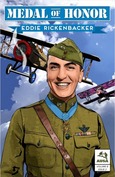
How World War I ace Eddie Rickenbacker survived 24 days at sea
WWI Submarine Wreck Leaking Explosives Into The North Sea
Capt. Rudolph Schroeder sets world record altitude, 18 Sept 1918
Who Was Belle Skinner?
Army's 'Hello Girls' of WWI waited 60 years for veteran status
Navy-Merchant Marine Memorial honors sailors lost at sea in WWI
Financial Facts about the U.S. (and UK) War Bonds in World War I
World War I Books recommended by historians and novelists
District of Columbia WWI Memorial not well known or much visited

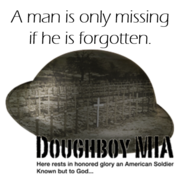
A man is only missing if he is forgotten.
Our Doughboy MIA this month is Private Verne Blythe, born in Marshall, Indiana on May 28th in 1892. Blythe was working as a telegraph operator in Danville, Illinois before the war for what would eventually become AT&T when he enlisted in early June, 1917. He received his training at Jefferson Barracks in Missouri and Fort Leavenworth, Kansas before embarking for overseas duty on February 19th, 1918 as a member of Company C, 5th Field Signal Battalion which was part of the 3rd Division. During the second battle of the Marne – where the 3rd would gain everlasting fame as the 'Rock of the Marne Division' – Private Blythe was severely wounded by artillery fire on July 15th, 1918, and died soon thereafter. Little more of his story known at this time, but it is currently believed that he may have later been buried as an Unknown.
Would you like to be involved with solving the case of PVT Verne Blythe, and all the other Americans still in MIA status from World War I? You can! Click here to make a tax-deductible donation to our non-profit organization today, and help us bring them home! Help us do the best job possible and give today, with our thanks. Remember: A man is only missing if he is forgotten.
|
|