The Americans Who Flew for France
Published: 5 August 2026
By Fortuné Leroy
via the MiGFlug website
Lafayeytte Escadrille header image framed
On a French airfield in 1916, you might have found two lion cubs named Whiskey and Soda padding between the tents, and a group of young Americans who had crossed an ocean to fight a war their own country had not yet joined. This was the Escadrille Lafayette — the most romantic unit of the First World War, and one of the strangest.
They were volunteers, adventurers and idealists: a squadron of American pilots flying French fighters for France, more than a year before the United States declared war. Some of them never came home.
Paying a very old debt
The squadron formed in April 1916 as the Escadrille Americaine, under French command but flown by Americans who had made their way to Europe to join the fight. When Germany objected that a neutral country’s citizens were flying against it, the French tactfully renamed the unit the Escadrille Lafayette — after the Marquis de Lafayette, the French nobleman who had fought for American independence.
The name carried real feeling. For many of these men, flying for France was repaying a debt owed since 1776. None put it more plainly than Kiffin Rockwell of Tennessee.
“I pay my part for Lafayette and Rochambeau.”
Kiffin Rockwell — Lafayette Escadrille pilot, killed in action September 1916
Rockwell meant it literally. On May 18, 1916, he became the first American to shoot down an enemy aircraft in the war. That autumn, on September 23, he was killed in a dogfight — one of the squadron’s first deaths, and far from its last.
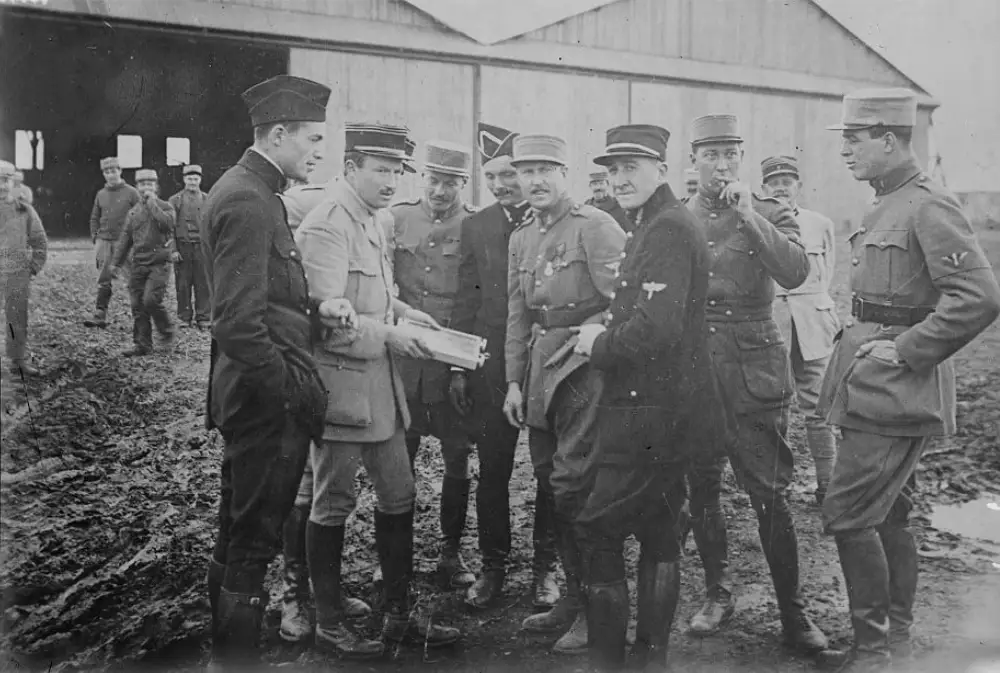
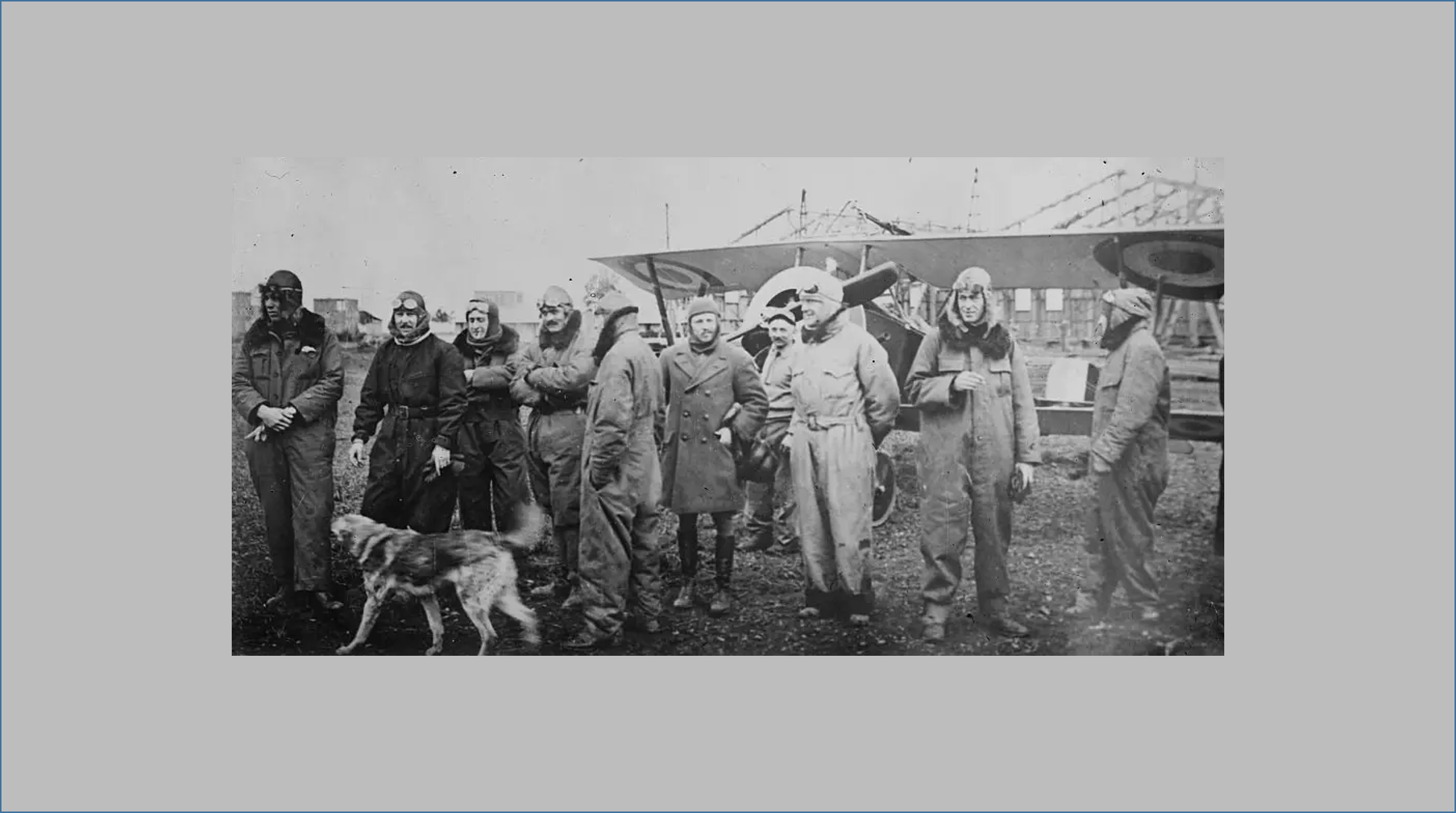
Lafayette Escadrille pilots, among them Rockwell, Prince and Chapman. They flew for France under a French captain, Georges Thenault. (Photo: Wikimedia Commons.)
Lions on the flight line
For all the danger, the escadrille had a swagger that became legend. Two lion cubs, Whiskey and Soda, served as squadron mascots — and Whiskey attached himself to the unit’s greatest pilot, the ace Raoul Lufbery, following him around the airfield like a tame house cat until the cubs grew too big and had to go to a zoo.
There was a ritual, too. After Rockwell’s first victory, a relative sent him a bottle of very old bourbon. He took a single swig, and from then on every pilot who downed an enemy was entitled to one ceremonial drink from what the squadron called the “Bottle of Death.”
⇒ Read the entire article on the MiGFlug website here:
External Web Site Notice: This page contains information directly presented from an external source. The terms and conditions of this page may not be the same as those of this website. Click here to read the full disclaimer notice for external web sites. Thank you.