Remembering November 3, 1917: The First American Combat Deaths of World War I and a USDA Colleague Who Led Them
Published: 3 November 2026
By Wayne Connelly
via the USDA Historical Society & Museum
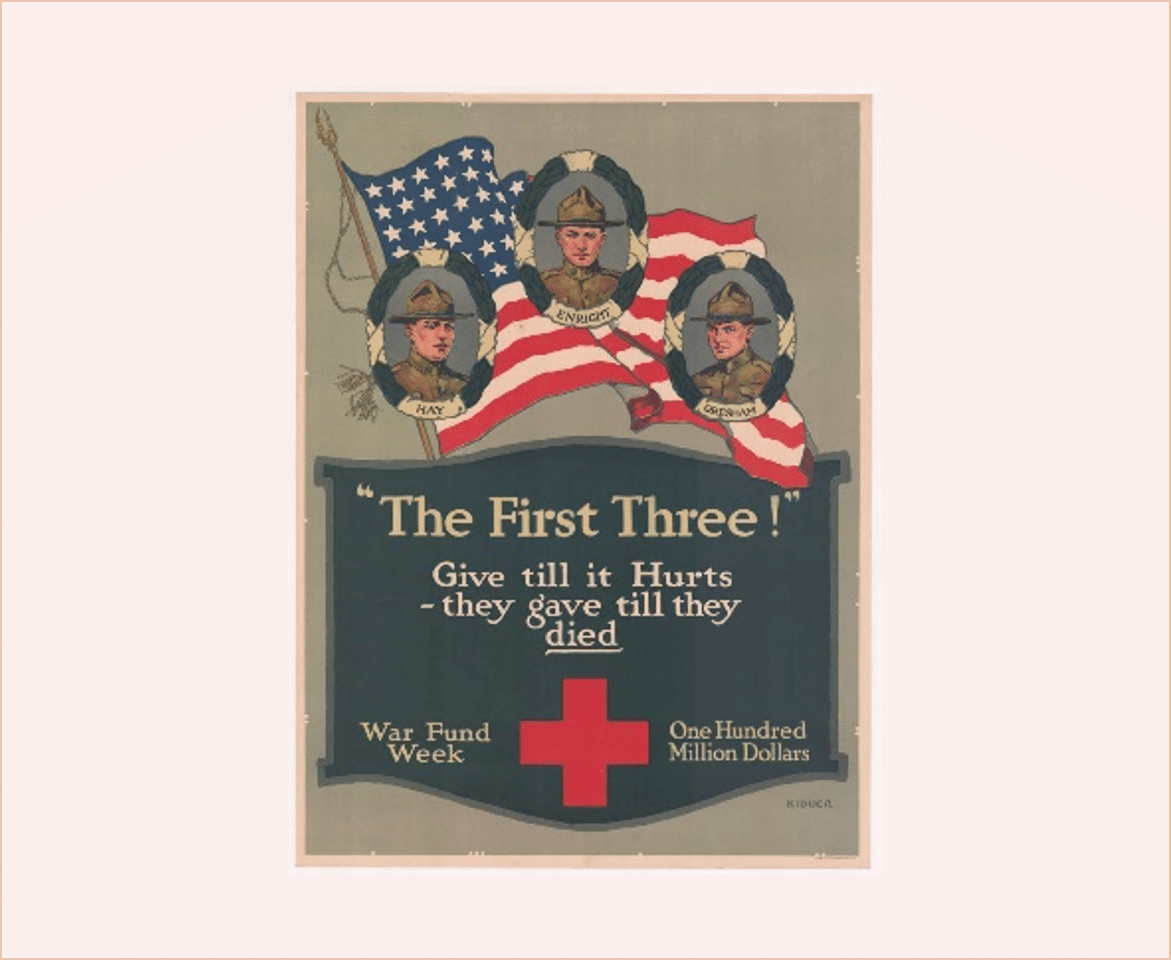
The First Three framed
"The First Three!" poster features portraits of Merle Hay, Thomas Enright and James Gresham, the first Americans to die in World War I. (LOC image)
Dear USDA Members and Friends Historical Society,
As you pass through the Whitten Building Patio today (November 3, 2026), pause to reflect on one of our own and how he is connected to the first three Americans killed in World War I.
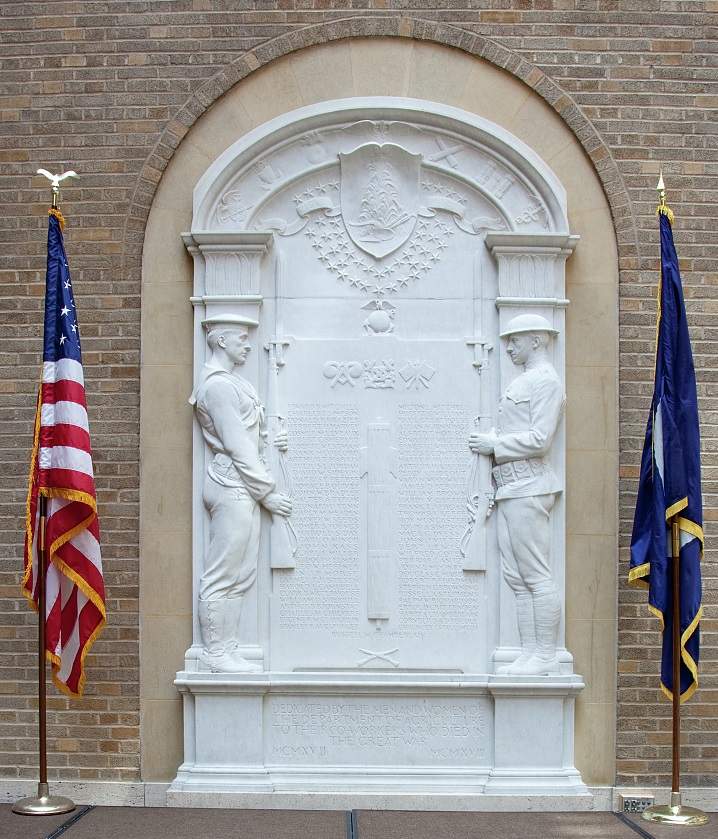
World War I memorial in the USDA Whitten Building Patio in Washington, DC. (Image courtesy the Indiana Memory website.)
On this date in 1917, three Americans became the first soldiers of the American Expeditionary Forces to die in combat on French soil. In the pre-dawn darkness near the Lorraine village of Bathelémont, a German raiding party struck a sector of trenches newly occupied by Company F, 16th Infantry Regiment, 1st Division (the “Big Red One”).
Corporal James Gresham, Private Merle Hay, and Private Thomas Enright were killed in the brief, close quarters fight that followed a sudden German barrage. Two days later the three were buried near where they fell, under a French inscription honoring them as the first soldiers of the United States to fall on French soil for justice and liberty.
Their company commander that night was Captain Willis Edwin Comfort, a 1914 graduate of Kansas State Agricultural College in civil engineering. Comfort joined USDA in 1915 as an engineer student in the Office of Experiment Stations in Kansas, before transferring to the Bureau of Public Roads in Washington. When the United States entered the war, he accepted a commission and took command of Company F.
Comfort was not in the front-line trench section the raiders stormed. He was at a listening post when the barrage began; a nearby shell stunned him briefly. Recovering, he made his way through the intense fire to rejoin his men –accounts note he took greater risks than anyone else in the company that night and was later decorated by the French for his actions. He survived the raid that claimed the first three American lives, only to be mortally wounded the following summer. On July 18, 1918, near Soissons during the Aisne-Marne offensive, he was severely wounded yet refused evacuation, led his company to its objective, and held the position until he was killed. He received the Distinguished Service Cross posthumously.
Comfort’s name is among the 69 carved on the World War I memorial in the Whitten Building Patio — the quiet marble tablet flanked by sculpted sentries that our colleagues dedicated in 1932 to USDA men who did not return.

Captain Willis Edwin Comfort’s name inscribed on the USDA World War I Memorial.
Today, as you pass through the Patio, pause for a moment at the memorial. Remember not only the three names that once appeared in newspapers across the country, but also the engineer from Kansas who led them, survived the raid, and later gave his own life. Their sacrifice is part of the larger record of service that the USDA Whitten Building memorial quietly keeps.
The USDA Museum, also known as the Agriculturian, is a collection of historical agricultural artifacts and art housed within the U.S. Department of Agriculture’s South Building in Washington, DC. The museum’s official Instagram presence is managed by Wayne Connelly under the handle @usda_museum_historical_society, which shares photos and videos of the collection.
External Web Site Notice: This page contains information directly presented from an external source. The terms and conditions of this page may not be the same as those of this website. Click here to read the full disclaimer notice for external web sites. Thank you.