American Dreadnoughts at War
Published: 1 August 2026
By Kimball Worcester
via the Roads to the Great War website
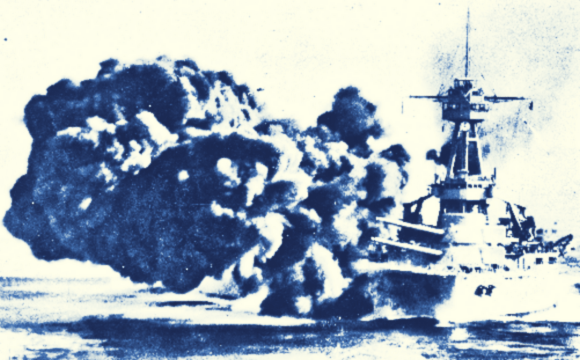
USS Texas WWI
Firing a broadside over a century ago, the USS Texas Is today the world's only surviving WWI Dreadnought battleship.
The legendary Great White Fleet, which sailed around the world from December 1907 to February 1909, had many achievements but came up short on one of President Theodore Roosevelt’s list of objectives. In the matter of impressing foreign powers with America’ naval power and readiness, all 16 battleships sent on the 43,000-mile voyage were already obsolete. For almost a year, the Royal Navy’s revolutionary all-big-gun battleship HMS Dreadnought had been at sea. Other nations, including the United States, were attempting to play catch-up with dreadnoughts under construction, but they were a long way from active service. Consequently, to knowledgeable naval observers, the American fleet seemed less than “top-of-the-line.” Reportedly, even Kaiser Wilhelm took to pointing out some of the ships’ design flaws.
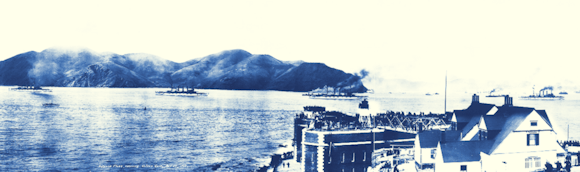
The Great White Fleet Enters the Golden Gate, 6 May 1908.
The first U.S. Navy dreadnoughts, USS South Carolina (BB-26) and USS Michigan (BB-27) would not be commissioned until 1910. The Great White Fleet, had however, succeeded in building public and political support for an accelerated naval building program. Eight more modern battleships were built and launched before August 1914. In April 1917, when the United States officially entered World War I, the U.S. Navy had 14 dreadnought-type battleships active in its battle force. This was still behind Great Britain’s 29 dreadnoughts (both battleships and battlecruisers) but close to catching up to Germany’s total of 17.
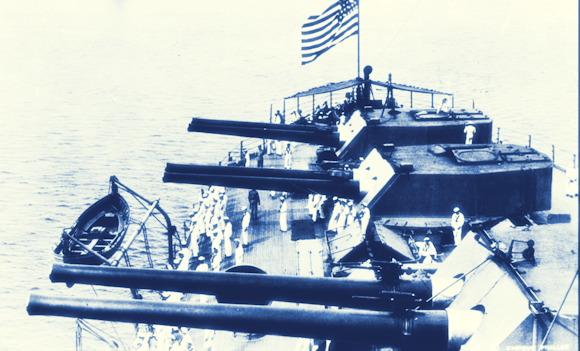
Stern View of a Wyoming-Class Dreadnought.
Valuable assets to the balance of naval power, most of the nation’s dreadnoughts found service of some type during America’s 19 months of war, but they never fought a surface battle. Ironically, the old ships of the Great White Fleet that were activated for service found a wide range of uses similar to the newer dreadnoughts, like training, convoy escort, and carrying troops.
Most of the new dreadnoughts would have to wait a quarter-century for major action, some of it tragic. Five would be deemed obsolete before the Second World War came. I thought it appropriate, in any case, that Roads to the Great War recognize their service in the First World War. These all-big-gun capital ships belonged to seven distinct classes commissioned between 1910 and 1916.
South Carolina Class (two ships):
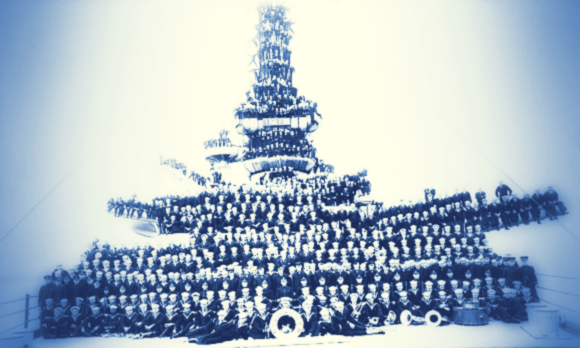
Officers and Crew of USS Michigan, 1918.
⇒ Read the entire article on the Roads to the Great War website here:
External Web Site Notice: This page contains information directly presented from an external source. The terms and conditions of this page may not be the same as those of this website. Click here to read the full disclaimer notice for external web sites. Thank you.