RE: L.A. Renames Pershing Square after Biddy Mason, founder of L.A.’s First AME Church
Published: 15 September 2026
By Courtland Jindra
Special to the Doughboy Foundation website
2838general-john-j-pershing-in-los-angeles-parade-2007.447.1.3
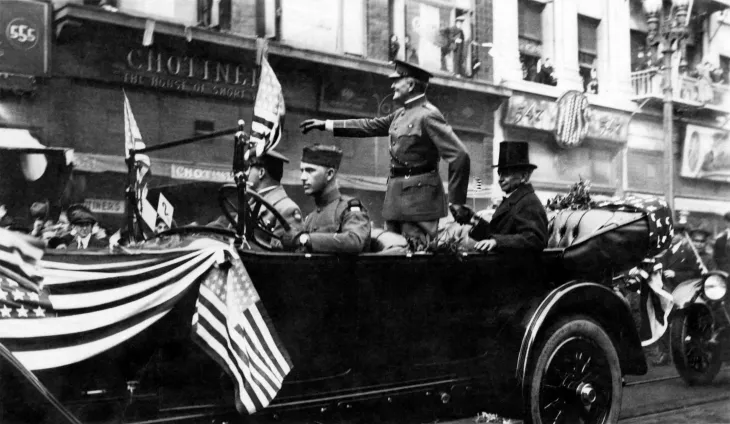
This snapshot from the Homestad Museum's holdings shows General John Pershing acknowledging the packed crowds on Broadway in downtown Los Angeles, with Mayor Meredith P. Snyder holding the hero’s hand, during Pershing's visit to Los Angeles in 1920. Contrary to what was asserted at a recent Los Angeles City Council meeting, Pershing visited Los Angeles on many occasions, and was well-known there.
(Editor’s Note: Courtland Jindra previously chronicled the effort to change the name of Pershing Park in Los Angeles, CA here. The letter below was sent to the Los Angeles Times newspaper September 8, 2026, but has not yet been published there. This article will be updated if and when the letter is published.)
A letter to the Editor of the Los Angeles Times newspaper
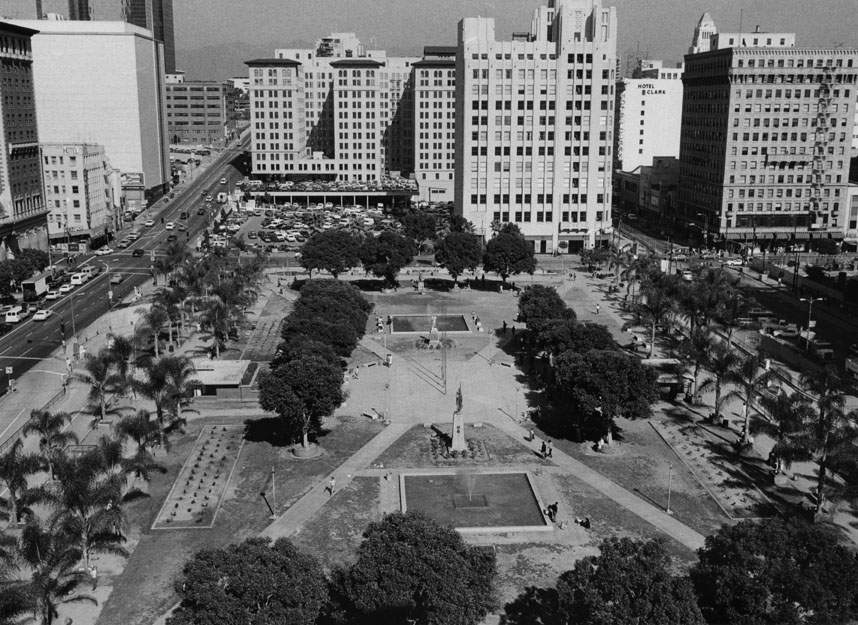
I congratulate Mason’s advocates for their victory, even though I believe the Los Angeles City Council’s decision to strip the name Pershing Square from its most high-profile park is deplorable. Biddy Mason was an important Angelino and her accomplishments are worthy of remembrance. But a park downtown is already named after her.
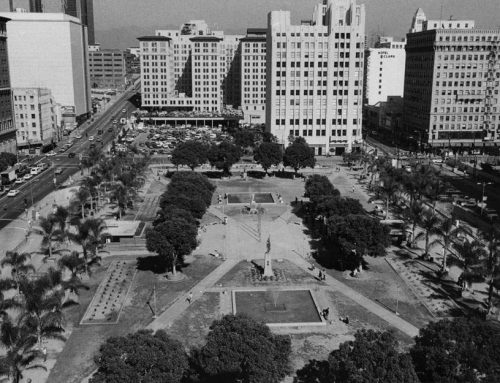
People seem to believe Pershing Square was merely honoring General John J. Pershing, and since he was not a native of Los Angeles, it doesn’t much matter if the name is changed. However, if one reads the original motion the City Council voted on in November of 1918, you see the general’s name isn’t even mentioned until well into it. France being saved, victory over German autocracy being won, and the “magnificent part played by the Army and Navy of America in bringing about this world-liberating peace” are all cited before Pershing’s name is referenced at all. Since the general was “the man to whom was entrusted the duty of leading America’s Army on the battlefield,” his was the appropriate name to represent the entirety of the American effort in the war. This motion was introduced and adopted in the immediate aftermath of the victory over Germany, and though there would be more memorials to mark the end of the conflict in the months and years to come, Pershing Square was our first.
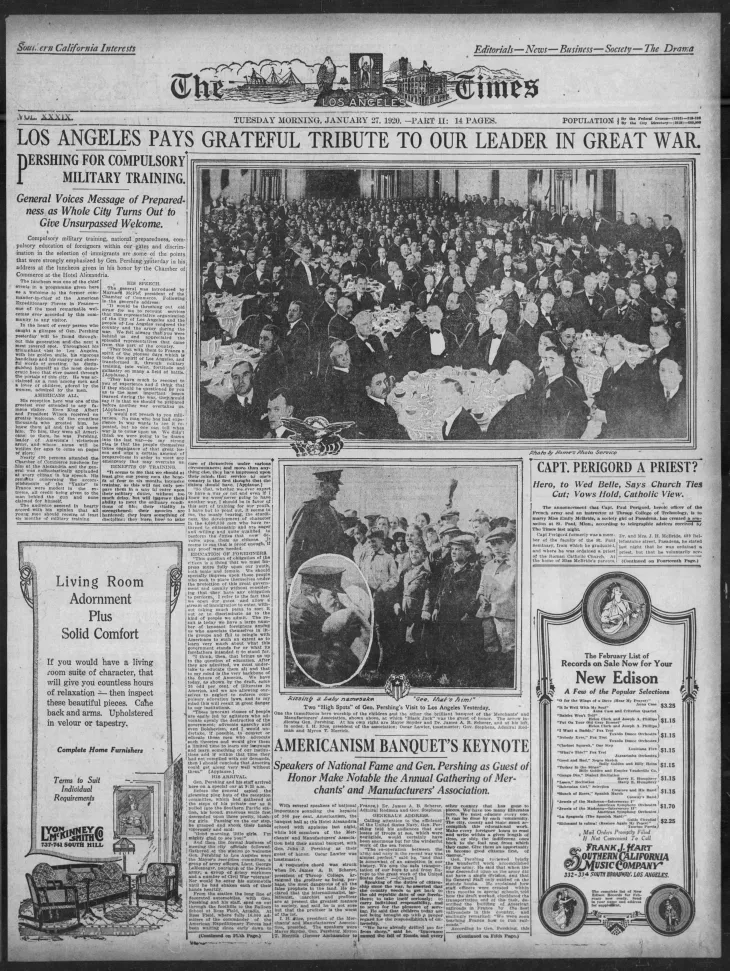
The Los Angeles Times covers General Pershing’s visit to the city, 27 January 1920.
Despite what was erroneously said by Councilmember Juardo during the 9/4/26 meeting about the general never setting foot in our city, Pershing did visit multiple times. During his first sojourn here after the war, more than fifty thousand Angelenos came to see him. The original destination for this 1920 fête honoring Pershing was supposed to be the park that for now still bears his name – but so many folks showed up, it had to be moved to the bigger Exposition Park to accommodate the crowd.
It is true that there are other memorials, both large and small, to carry on the memory of SoCal’s war effort, so perhaps according to some, that one easily can be changed without losing anything. However, now I have to wonder if any of our war memorials honoring our veterans are truly safe. Just a few years ago, USC attempted to sell the naming rights of the Los Angeles Memorial Coliseum – arguably our grandest memorial to The Great War. It took a lot of pushback to alter that deal. But if just a handful of years later, our city’s oldest park, the most prominent one in all of downtown, can be changed, will a deal selling the naming rights to the Coliseum be successful next time?
And what about some of the other memorials throughout the city? Despite his fame being over a century old, General Pershing is still well known by many people. Someone like Ross Snyder, for whom a park is also named, is much less well known. If General Pershing’s namesake can be stolen, no memorial park is safe.
Captain Ross Snyder, alumnus of what is now Harvard-Westlake High School, served in the 4th Division and in July of 1918 commanded his battalion under heavy enemy artillery and machine-gun fire after three of the previous battalion commanders had become casualties. He reorganized his battalion and directed its movements in the attack, constantly exposing himself until he was killed by enemy machine-gun fire. Snyder was posthumously awarded a Silver Star for this action.
That is just one example of the numerous remembrances to The Great War, most hidden in plain sight, that dot nearly every corner of Los Angeles Country. Once the precedent gets set that memorials are expendable because there are already “enough” of them, I truly am troubled where that may lead. It is a disgrace to our veterans, a disgrace to our heroes of the past, present and future. “Lest we forget,” goes the saying. We are forgetting.
Courtland Jindra served as a Managing Board Co-Director of the California WW1 Centennial Task Force.
External Web Site Notice: This page contains information directly presented from an external source. The terms and conditions of this page may not be the same as those of this website. Click here to read the full disclaimer notice for external web sites. Thank you.