From Camp Sherman to Cleveland: How WWI Reshaped Ohio’s Military Geography
Published: 18 September 2026
By Sarah Whitfield
Special to the Doughboy Foundation website
CAMP-SHERMAN-REVIEW-3-
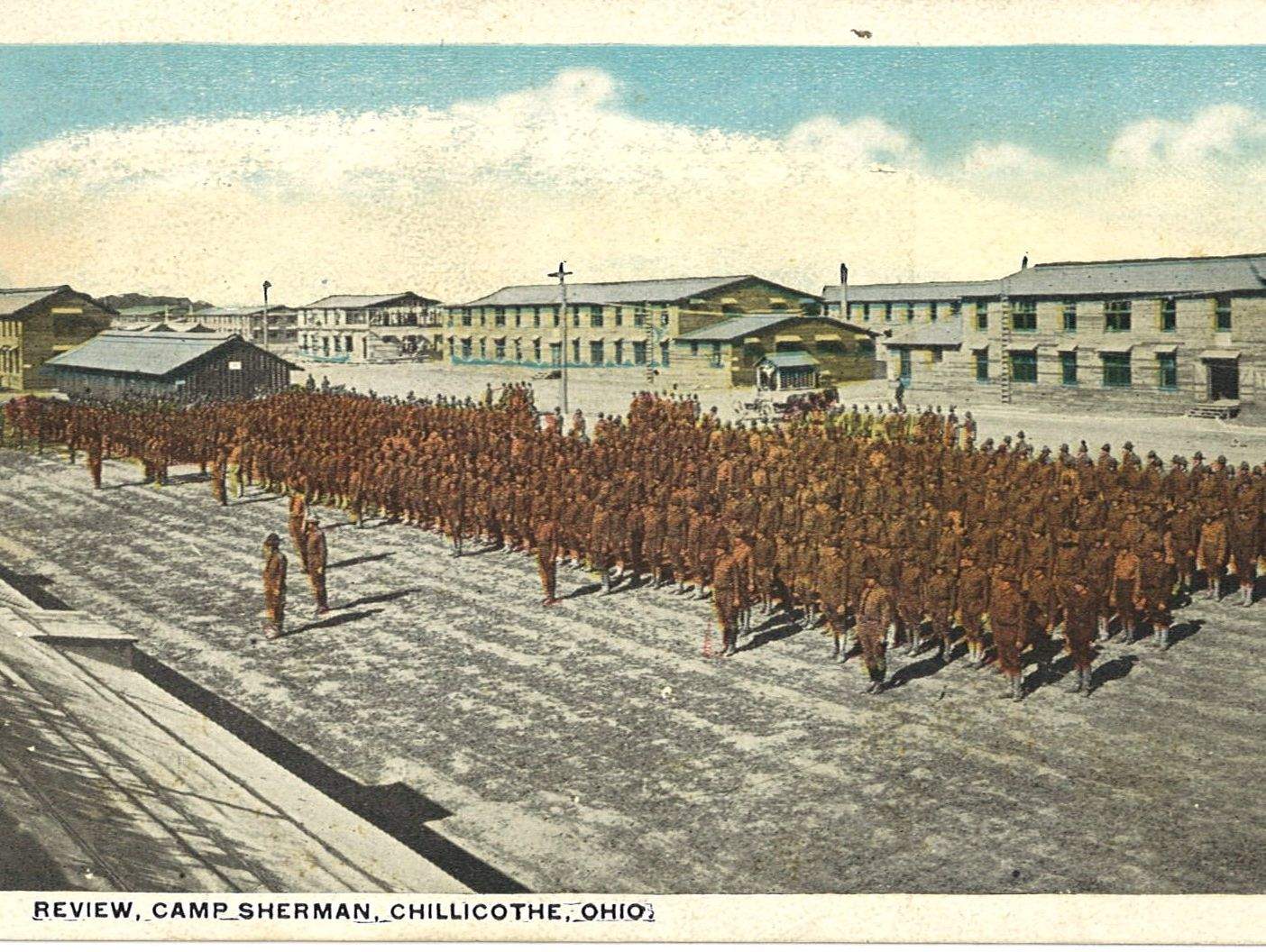
This postcard shows a troop review at Camp Sherman during World War I. (Photo: Card courtesy of the Ross County Historical Society)
In June 1917, the fields north of Chillicothe held nothing but farmland and a handful of dirt roads. By December, more than 2,000 buildings stood on that same ground, and over 40,000 soldiers had passed through what became Camp Sherman. How WWI reshaped Ohio’s military geography can be measured in exactly that kind of speed. Entire cities of wood and canvas rose in months, on land that had been growing corn only weeks earlier. Industrial plants in Cleveland retooled almost overnight. Small towns swelled to several times their prewar size. Ohio didn’t just contribute soldiers to the war. It physically rearranged itself to build them.
How Did WWI Reshape Ohio’s Military Geography So Quickly?
Ohio’s wartime transformation moved at a pace almost nothing in peacetime construction could match. The federal government needed training capacity immediately after the April 1917 declaration of war. Chillicothe’s flat land, rail access, and reliable aquifer made it an obvious choice for one of sixteen new national training camps.
Fourteen thousand construction workers built roughly two thousand structures in a matter of months. Chillicothe’s population nearly quadrupled almost overnight, jumping from 16,000 to 60,000 residents. That kind of rapid shift wasn’t unique to Ohio. Population movements sparked across the country by the war followed a similar pattern nationally. Workers and recruits flowed toward wherever the war effort needed them most, and small towns everywhere absorbed the overflow.
What Made Camp Sherman Such a Massive Undertaking?
Camp Sherman trained four full Army divisions between 1917 and 1918, drawing recruits from Ohio, West Virginia, and western Pennsylvania. Its scale earned it the nickname “Ohio’s Soldier Factory.” The 83rd and 84th divisions shipped out to France before the armistice. The 95th and 96th were still training when the war ended in November 1918.
The camp also formed the 332nd Infantry Regiment. It was the only American unit to serve on the Italian front during the war. None of this came without cost. A Spanish flu outbreak swept through the camp in September 1918. It infected roughly eight thousand people and killed over a thousand within two months.
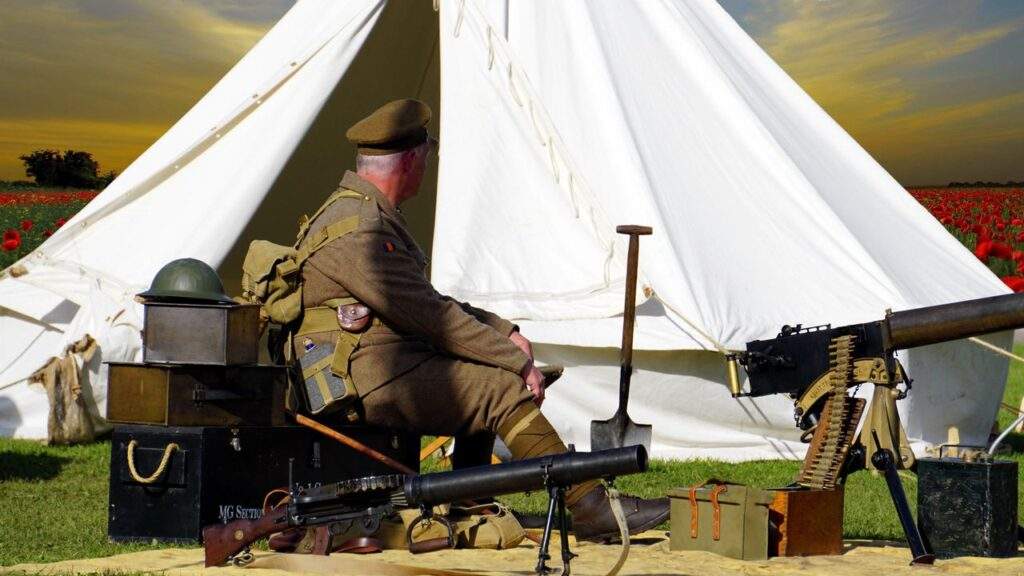
Many were trained at Camp Sherman, the training site that transformed Chillicothe almost overnight.
How Did Cleveland’s Factories Answer the Call?
While Chillicothe grew a camp from open land, Cleveland retooled an entire industrial base that was already humming before the war even started. By 1917, Cleveland was the sixth-largest city in the country, built on iron, steel, and machine-shop manufacturing. Its factories shifted quickly toward uniforms, trucks, weapons, and chemicals for explosives. The White Motor Company alone produced 18,000 trucks for the U.S. and its allies.
By the fall of 1918, Cleveland’s industries had turned out an estimated $750 million worth of munitions since the war began. Cleveland’s own mayor, Newton D. Baker, went on to serve as U.S. Secretary of War, giving the city an unusually direct line to federal war contracts. Industrial cities across the country followed a similar script during those years. Chicago’s meatpacking industry quietly became one of the war’s essential supply chains. It fed troops on both sides of the Atlantic from stockyards nowhere near a battlefield.
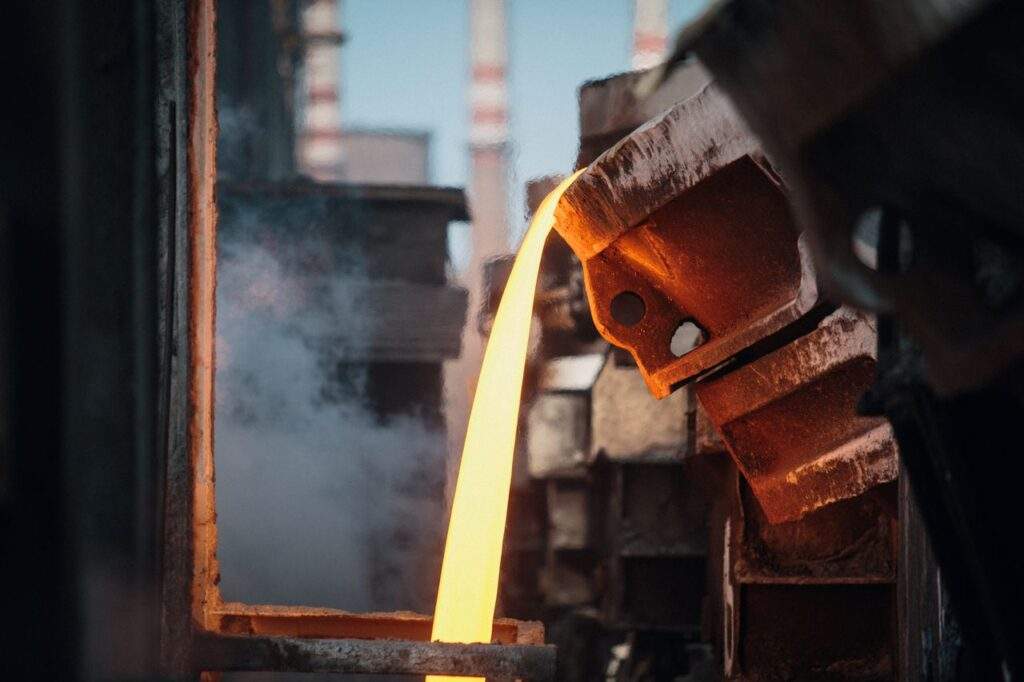
Wartime contracts turned Cleveland’s iron and steel plants into round-the-clock producers of trucks, uniforms, and munitions.
Did Other Ohio Cities Feel the Same Industrial Pull?
Cleveland wasn’t the only Ohio city pulled into wartime production, even though its factories drew the most national attention. Akron’s rubber plants scaled up output for military vehicles and aviation equipment. Youngstown’s steel mills fed the same supply chains that armed American divisions overseas. This pattern of industrial cities absorbing sudden wartime demand played out well beyond Ohio’s borders too. Industrial hubs like San Francisco and Los Angeles reorganized their shipyards and factories around the same urgent production needs, even though neither city saw combat. Ohio’s contribution stood out mainly for its concentration. Training, manufacturing, and population growth all converged within the same few hundred miles of the state.
What Does the Historical Record Say About Ohio’s Wartime Role?
The scale of Ohio’s involvement is documented in detail by the state’s own historical archives, held today by an organization chartered specifically to preserve that record. According to the Ohio History Connection’s military records collection, more than 154,000 Ohioans were drafted during the war. A total of 256,000 draftees, volunteers, and National Guardsmen represented the state in uniform. The 166th Ohio Infantry Regiment served with the famous 42nd “Rainbow” Division, drawing soldiers from 26 states. Camp Sherman itself sat on land the federal government retained even after the buildings came down. That land today includes a national historic park, a VA hospital, and a state correctional facility. That layered use of the same ground, across more than a century, is its own quiet record of how permanently the war reshaped it.

Land once occupied by Camp Sherman’s barracks now holds a VA hospital and a national historic park.
The Geography War Left Behind
How WWI reshaped Ohio’s military geography wasn’t a single event. It was dozens of overlapping ones, from a training camp built on farmland to factories that never stopped running day or night. Chillicothe, Cleveland, Akron, and Youngstown each carry a piece of that history in their layout today, whether or not most residents notice it. Anyone curious about this history has an easy next step. Visit the Ohio History Connection’s archives. Or walk the ground where Camp Sherman once stood, now shared by a national park and a veterans’ hospital, and see what a century of change actually looks like.
 Sarah Whitfield is a content writer collaborating with Ready 2 Roll Moving. She writes about American history and small-town heritage for regional publications across the Midwest.
External Web Site Notice: This page contains information directly presented from an external source. The terms and conditions of this page may not be the same as those of this website. Click here to read the full disclaimer notice for external web sites. Thank you.