World War I showed hemispheric insecurity could constrain American global power
Published: 20 April 2026
By Joshua Dulaney
via the Modern War Institute website
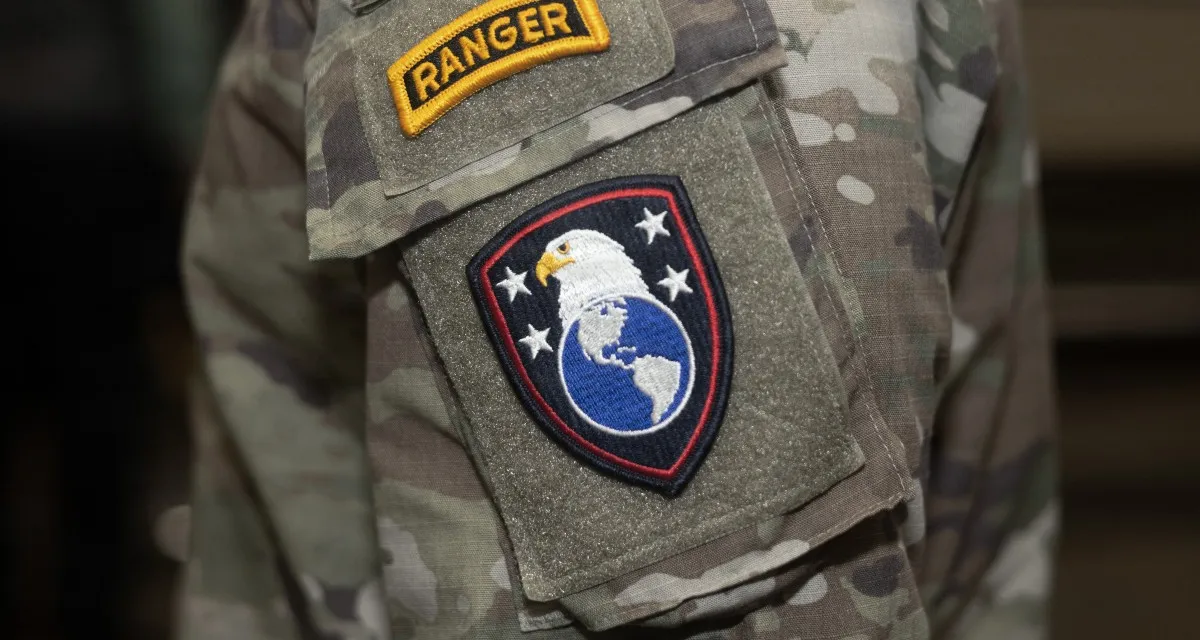
Ranger logo
Mind the GAPP: Strategic History and the Case for US Army Western Hemisphere Command
In May 2025 I was assigned to the core team that planned the consolidation of three Army commands—Army North, Army South, and Forces Command—and the establishment of the new Army Western Hemisphere Command. As we worked through the command’s concept, we came up with something of an elevator pitch, telling senior leaders and stakeholders that the command would “mind the GAPP”—from Greenland to Attu, from the polar bears to the penguins. A new command would take on the responsibility of three separate, major commands, as well as take responsibility for the Army’s role in securing this vast area of responsibility. Why? History makes clear the innate strategic wisdom of this move, while the complexity and urgency of the current threat environment demand it.
The establishment of the US Army Western Hemisphere Command (USAWHC) represents the most significant reorganization of Army theater-level command in the Western Hemisphere since the creation of US Northern Command (USNORTHCOM) nearly a quarter of a century earlier. The command’s creation reflects a strategic judgment that the current threat environment in the Western Hemisphere has reached a complexity and urgency not seen since the Cold War, which the existing command architecture was structurally unsuited to address. Understanding the wisdom of that judgment requires examining how the United States has historically managed the relationship between hemispheric security and global power projection.
The foundational strategic logic is straightforward: The United States cannot project power globally when its homeland and immediate approaches are under threat. Two centuries of American military history has repeatedly validated the principle of a hemispheric security prerequisite. Each major failure to secure the hemisphere produced a crisis that redirected military resources inward, degraded the nation’s capacity to act abroad, and ultimately compelled institutional reform.
The War of 1812 established the precedent. Britain, engaged simultaneously in the Napoleonic Wars, calculated that neutralizing American interference was strategically preferable to tolerating it. By blockading American ports, disrupting Atlantic trade, and projecting power from its Canadian and Caribbean positions, Britain demonstrated that an underdeveloped continental defense created exploitable vulnerability. The burning of Washington in 1814 was not merely a symbolic embarrassment; it was evidence that the young republic could not assert itself abroad while paralyzed at home. The postwar institutional response—a permanent standing army, a professional officer corps, and a sustained investment in coastal fortification—reflected a recognition that hemispheric security was a prerequisite for national relevance.
The Zimmermann Telegram illustrated the same dynamic at a higher level of strategic sophistication. Imperial Germany, facing American entry into the European theater of World War I, sought to fix US military attention in the Western Hemisphere by inducing Mexico to open a southern front with the promise of recovering Texas, New Mexico, and Arizona. The proposal was, in essence, an application of hemispheric coercion as a strategic tool: create a security dilemma close to home sufficient to absorb American capacity that otherwise would challenge German forces in Europe. Mexico’s decision to decline the offer does not diminish the strategic logic. Germany had correctly identified the mechanism by which hemispheric insecurity could constrain American global power.
Read the entire article on the Modern War Institute website here:
External Web Site Notice: This page contains information directly presented from an external source. The terms and conditions of this page may not be the same as those of this website. Click here to read the full disclaimer notice for external web sites. Thank you.