What Vehicles Did The Army Use Before The Jeep?
Published: 13 September 2026
By Chole Clougher
via the JALOPNIK website
intro-1789227526
Think of the U.S. Army, and you think of Jeep. While the small 4×4 might be seen as the archetype when it comes to military transport, the U.S. Army had been experimenting with various different answers to the question of mobilization for decades prior to its arrival. In fact, American soldiers made use of everything from converted civilian vehicles through to larger, specialized trucks and even horses to get around before the first Jeep arrived in 1940.
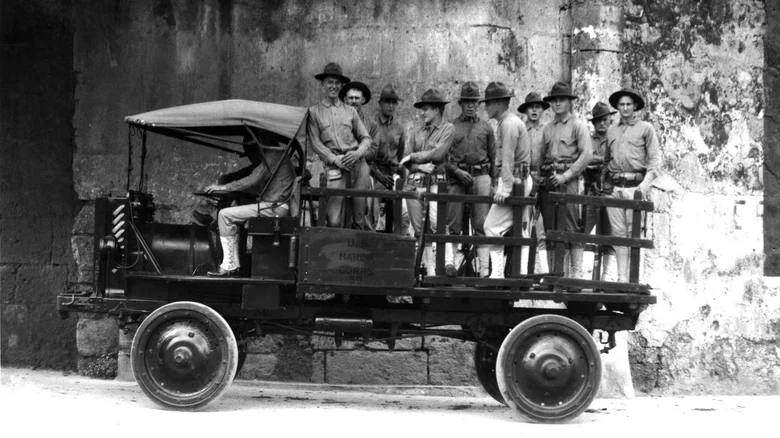
To replace mule-drawn units, the Jeffery Quad was developed in 1913. It boasted four-wheel drive and proved very effective across difficult terrain, demonstrating the importance of having specialized vehicles to improve the efficiency of specific military teams and tasks. Thousands were allegedly sold, it seeing use not only in the U.S. but also across Europe and into Russia, and motivation to the sturdy Quad typically came in the guise of a Buda-built inline-four. As useful as it was, especially off-road, the Quad did have its limitations. A top speed of 14 mph was no doubt faster than moving under mule-power alone. But as trucks and cars got ever more advanced, more effective alternatives soon surfaced.
American automakers played an important role for Army transportation before the Jeep.
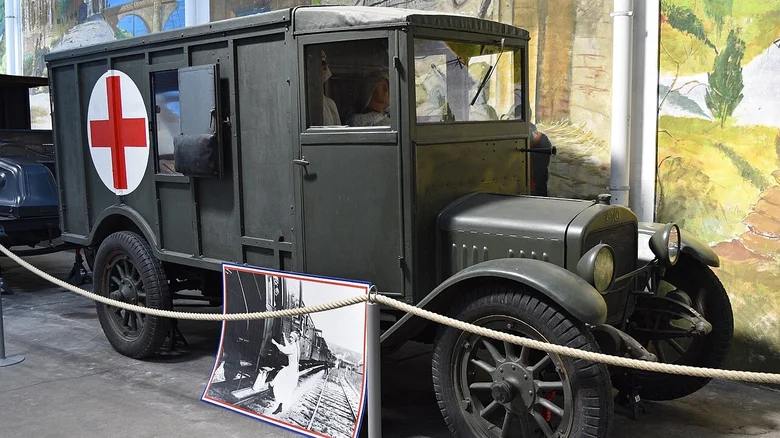
A major turning point for U.S. Army transportation then came during the 1916 Punitive Expedition to Mexico, which marked the Army’s first major test of motor vehicles in the battlefield. Here, Quads were used, but crucially, motorized truck companies were also sent to support General John J. Pershing’s forces. Among the vehicles used during the expedition were several Dodge Brothers cars, including Pershing’s own 1915 Dodge Brothers four-cylinder touring car that still survives and runs today, plus a variety of other touring models and cargo trucks, such as GMC Model 15 three-quarter ton trucks.
Other similar GMC models — all powered by the Continental L-Head inline-4 engines pushing up to 35 hp — would go on to serve both as ambulances and as the Army’s standard AA trucks during World War 1. Early Dodge models like the Model 30 used by Pershing himself utilized the same L-Head engines. Ford’s simple-looking but complex to pilot Model T also had a role to play, with the Army adapting the inexpensive, mass-produced car for various military duties during the First World War, most commonly as ambulances. Ford also once built a mile-long factory to build bombers, so the Blue Oval brand has always been keen to assist with war efforts. But while the Model T is certainly impressive off-road, the terrain did prove too tricky for these adapted civilian vehicles at times, so a more specialized and four-wheel-drive answer was still required.
Further development lead us to the Jeep
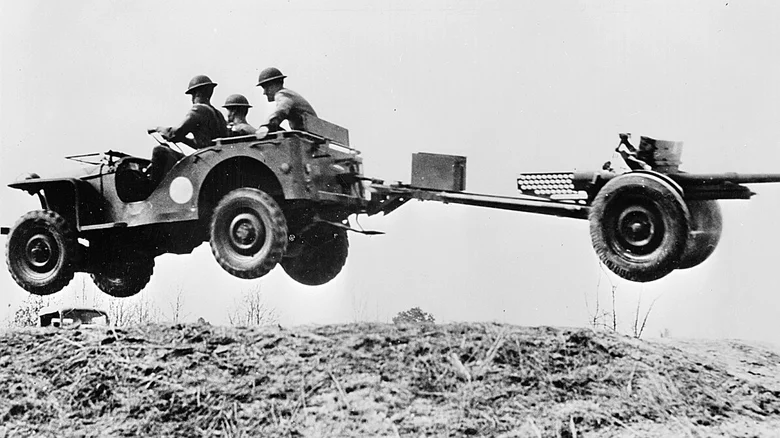
Models such as the Dodge Model 30 and various converted civilian cars used in the First World War and the Mexican Expedition proved that vehicles had a place on the battlefield. Then, during the interwar years, an interesting creation dubbed the Howie-Wiley “Belly Flopper” caught the U.S. Army’s attention. It was essentially a rolling chassis on which a machine gun could be mounted, controlled with pedals and steered using a lever arm, with the driver lying down flat. It wasn’t a massive success, and its use-case was certainly niche, but it did at least demonstrate that the Army was beginning to experiment with smaller, lighter reconnaissance vehicles.
⇒ Read the entire article on the JALOPNIK website.
External Web Site Notice: This page contains information directly presented from an external source. The terms and conditions of this page may not be the same as those of this website. Click here to read the full disclaimer notice for external web sites. Thank you.