Uncle Sam’s Little Soldiers: Mobilizing American Youth during World War I
Published: 1 September 2026
By Emmanuel Destenay
Special to the Doughboy Foundation website
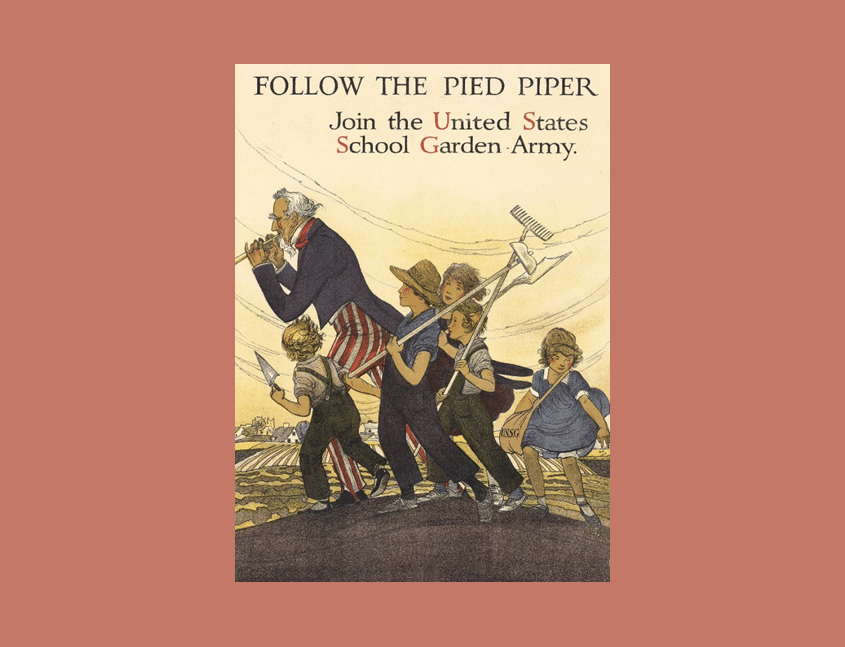
Destenay header image
"Follow the Pied Piper: Join the United States School Garden Army," 1918. Courtesy of the Tennessee State and Library Archives, Nashville, Tennessee. Poster for the United States School Garden Army depicting Uncle Sam playing the flute and being followed by boys and girls. Children are carrying tools such as hoes, rakes, and shovels.
Engaging and Mobilizing American Children during Neutrality
On February 22, 1917, in New York City’s Hippodrome, three thousand children marching in formation came to a halt, saluted the American flag, and sang the national anthem. Representing the city’s five boroughs, the youth demonstrated their loyalty to the United States in what was the first large-scale mobilization of the Junior Patriots’ League. Among the assembled were African American cadets from Clason Point Military School, Boy Scouts and Camp Fire Girls, members of the Junior Police Force, and wealthy children from Fifth Avenue. As they presented the American flag, children went through the manual of arms, wigwagged (passed messages by flag), and practiced carrying wounded on an imaginary battlefield. Held on George Washington’s birthday, the event was carefully orchestrated and perfectly executed. When the display finally came to an end, Dudley F. Malone, the federal collector of New York City’s port, proclaimed, “If anyone tells us that there is no patriotism in the young men and women of America, he does not know what he is speaking about. If any man thinks that America is for peace at any price, he does not know the spirit of the country.” Loud cheers echoed throughout the Hippodrome.
In February 1917, the United States had not yet stepped into the global war. However, although the country remained officially neutral, American adults and children had been engaged in war-related missions across the country. Private individuals had created mechanism to tap the energies and hearts of young people across the nation since August 1914. Between August 1914 and April 1917, civic leaders and educators mobilized to engage children in civic activities. They worried that explicit propaganda in all forms would radicalize children and dislocate the social fabric of American society. They feared that the kind of social discontent that was roiling Europe would manifest itself in the United States.
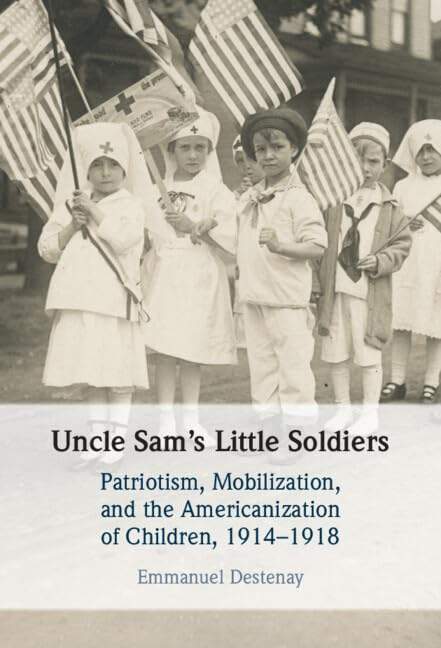
Gilded Age and Progressive Era civic leaders and educators sought to engage children in educational activities. Junior patriotic leagues gave youth opportunities to participate in civic activities and learn about being responsible citizens. In this, civic leaders and educationalists answered both to nineteenth-century ideals and current anxieties fanned by the magnitude of the European war. Junior civic leagues existed before 1914. They traditionally engaged children in civic improvement projects such as beautification. Squads of young people went into neglected neighborhoods, swept the streets, and spoke to the residents about the dangers of dirt, pests, and vermin. When the school authorities and the officers of the Commercial Club of Lincoln, Nebraska, sought to give the boys of Lincoln an outlet for good citizenships, they founded the Junior Civic and Industrial League in 1913. Within three years, 1,500 boys were participating, laying cement sidewalks around school buildings, planting trees and flowers, and visiting neighboring milling companies and industries. In Detroit, the song “Clean Up, Clean Up, Detroit,” was even written to engage local children in community services. In April 1914, Brunswick’s Junior Civic League, Georgia, had already inaugurated its second meeting. “Clean-up days” had long been a custom in Dawson, Georgia, by May 1914.
Understandably, when war broke out in Europe in August 1914, initiatives multiplied to keep youth occupied across the United States. In December 1914, Montgomery, Alabama, was organizing youth leagues to instill “the precious fruits of citizenship in the minds of the growing little ones.” Their motto was: “If you would love your city, you should make your city beautiful.” Bryan, Texas, opened its Junior Civic League in March 1916. In less than a week, 266 youth joined the newly established league in Pensacola, Florida, to plant trees on school grounds and other public spaces. Armed with hoes and sickles, children in Brownsville, Tennessee, battled weeds around the city. In Conway, Arkansas, African American pupils planned three “clean-up days,” in cooperation with the municipal authorities. Nearly one thousand youth worked with the police to make Cleveland, Ohio, a cleaner place to live. Boys notified property owners who did not obey the municipal ordinances to keep their lots clean. Though local and state initiatives converged in their fight against dirt and willingness to mobilize children in harmless activities, they were gradually eclipsed by another organization that combatted the deadliest disease of the time: tuberculosis, the disease that bacteriologist and epidemiologist Edward O. Oti termed “the great white plague.” In 1915, a group of epidemiologists in New York City launched the Modern Health Crusade. It gradually superseded all local sanitary organizations and mobilized thousands of children in a battle against vicious invisible diseases. In less than four years, three million “crusaders,” as they were called, across the United States had enrolled in the Modern Health Crusade.
In parallel, local initiatives to engage children in positive, patriotic, and altruistic activities of the war effort mushroomed. A few weeks after war broke out in Europe, students in Schenley High School, in Pittsburgh, were making of surgical cases for the American hospitals in France. Between November 1915 and March 1916, children in Scarsdale, New York, made more than 2,200 bandages and 3,800 gauze compresses, along with other articles destined for war hospitals in Europe. From its founding in October 1914 to October 1916, the Bronx chapter of the American Red Cross shipped 72,000 hospital dressings and garments to Europe. In its magazine, the American Red Cross claimed that children in the Bronx schools regularly “turned up their noses at lollypops and ice-cream cones and other luxuries, in order especially to provide, through the Red Cross, necessities and comforts” for European war victims. Schools proved particularly effective sources of funds. German-American children in Cincinnati, Ohio, collected $426,000 in 1915 alone to help widows, orphans, and those suffering in Germany and Austro-Hungary. In December 1915, in an attempt to raise financial support for European children, volunteers gave a speech to children in Roger’s Hall School in Lowell, Massachusetts, which resulted in 1,000 low-income children raising $83. As the American Red Cross increased its connection to public schools, children contributed to the organization and became even more visible in the war effort.
Conversely, others sought to prepare the nation’s youth for an inevitable war. Children, they contended, could not be cocooned from the real world, especially in such catastrophic times, for they, too, had a duty to help protect the nation. A proponent of the great preparedness plan for national defense, Grace Carley Harriman (also known as Mrs. Oliver Harriman) envisioned a nationwide movement in American schools to foster patriotism and bring together poor and rich children. Her efforts led to the creation of the Junior Patriots’ League in 1915. Hamilton Fish, Jr., commander of the African American 369th Infantry Regiment (commonly known as the Harlem Hellfighters) was its president. Mrs. Harriman and Mrs. Theodore Roosevelt, Jr., were vice-presidents. A social leader and philanthropist, Harriman established the league’s goals: to prepare for a possible military intervention of the United States in Europe, American children needed to fully grasp what was required from them. Harriman was convinced she could enroll two million youth across the United States into “a great movement for democracy” and “a clearing house of patriotism.” As did other preparedness advocates, Harriman sought to develop boys’ physical abilities.
In short, between August 1914 and April 1917, Americans seized the opportunity presented by World War I to promote their respective agenda. Gilded Age and Progressive Era reformers and educators believed American youth needed to participate in civic activities to better themselves, while advocates of preparedness argued that children needed to defend and protect the nation. A myriad of war-related activities offered children the possibility to develop an altruistic mindset while helping Uncle Sam.
How and Why the Wilson Administration Mobilized American Youth
By April 1917 children had, to a certain extent, already been mobilized. Local and state authorities had organized youth-oriented organizations. However, those individual initiatives never properly rivalled with the two federal youth-oriental organizations that the Wilson administration created when Congress declared war on the Central Powers. Once Congress declared war on the Central Powers in April 1917, the Wilson administration created two nationwide organizations that marshalled the nation’s youth. Both organizations significantly increased power in Washington and permitted the federal government to intrude in children’s realm (and in the households). US intervention permitted federal authorities to control American youth and implement a specific agenda.
Charles Eliot, the president of Harvard University, and Marie Mattingly Meloney, the founding editor of the Kentucky Magazine, introduced the idea of a youth-focused arm of the American Red Cross to the federal government, arguing that the American Junior Red Cross would foster a sense of citizenship, and instill moral qualities in the nation’s children. Henry Davison, the chair of the American Red Cross, tasked Henry Noble MacCracken, the president of Vassar College, with heading the organization. On September 2, 1917, Davison publicly announced that through the American Junior Red Cross, American children would learn “service for others and unselfish giving.” On September 15, 1917, Wilson called on American youth to “find a chance to serve the country.” He promised the American Junior Red Cross would teach American youth to serve high and religious ideals. By blending patriotic ideals, national goals, and humanitarian considerations, Wilson sought to reach the hearts and minds of children across the nation. Importantly, the American Junior Red Cross would operate through the nation’s schools. Schools would thus become beacons of juvenile humanitarianism.
The goal of the American Junior Red cross was to use the infrastructures of US public schools and turn children into global Samaritans. US Commissioner of Education Philander Claxton stressed that all activities needed to be undertaken during school time. For example, in Ashland, Oregon, each grade was assigned a particular mission: two evenings a week, students collected bed socks and undershirts for hospital supplies. Students at the Carlisle Indian Industrial School spent an entire evening a week on hospital garments and surgical dressings. In Utah, similar initiatives were preferred. The state authorities decided that twenty-five minutes each day would be dedicated to “service work,” which allowed children to knit staggering amounts of clothes for the military. Female students attending the (all-Black) Charles Summer High School in St. Louis, dedicated thirty minutes each day knitting for American troops.
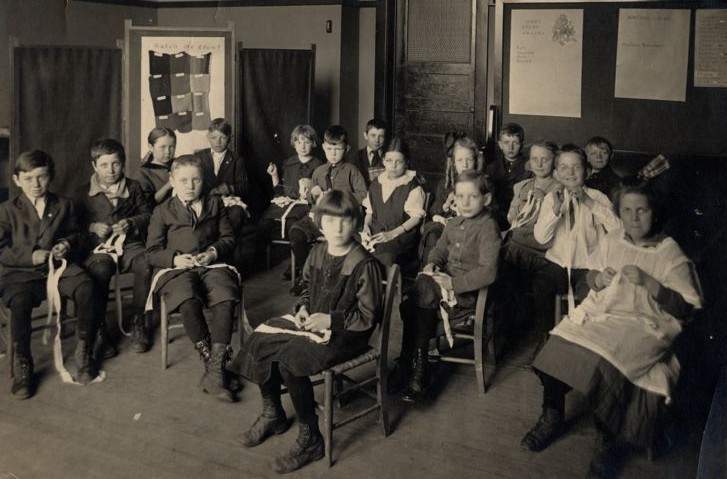
American Junior Red Cross at Mankato High School, Minnesota, 1918. Courtesy of Blue Earth County Historical Society, Mankato, Minnesota. Boys and girls from Mankato High School knitting and sewing. Sitting on chairs in the middle of the classroom, they are looking up at the photographer.
Although public emphasis was on education through humanitarian activities, various parties had different agendas for what the American Junior Red Cross should be and what it could accomplish. At the most basic level, it was a source of additional aid (goods and funds). It was also a means to instill civic participation. But at state and federal levels, politicians envisioned the American Junior Red Cross as a means to herald patriotism. Children ought to know that the nation was fighting for democracy and that a struggle for human liberty was taking place on the Somme. Indeed, many within the American Red Cross branded the juvenile organization “a war emergency activity” that would boost morale and teach children how to defend their homeland. Wilson pragmatically conferred to the American Junior Red Cross the mission of “organizing the soul of this nation so that all citizens shall be intelligent, unselfish, and patriotic.” A parallel was even drawn between the “great army of citizens which stands back at the front” and all those children walking down the streets to collect clothes, bed linens, and pieces of fabric. Schools operated as conduits for political propaganda. Children’s participation was regarded as a duty and children’ wartime labor as a solution to alleviate the burden on adults.
Similarly, the organization of the United States School Garden Army (USSGA) in February 1918 contributed to nurture national pride among school children and to instill in them the idea that they had the duty to feed Europe. The federal Bureau of Education initiated the United States School Garden Army to mobilize children aged nine to sixteen. Wilson assumed the position of commander-in-chief of that “army of school gardeners.” Under the authority of the commissioner of Education, Philander Claxton, it was proposed to enlist 5,000,000 youth and 40,000 teachers to increase the production and conservation of food across the nation. Herbert Hoover, in his capacity as director of the US Food Administration, was convinced that to win the war, the United States needed to “enlist as nearly as possible 100 percent of the United States’s twenty-two million households in an army that will wholeheartedly support food conservation.”
Although some schools had already developed gardens before February 1917, those initiatives had been private. Through the United States School Garden Army, vacant lots in cities, towns, and villages would be put to use. Most importantly, as Wilson publicly acknowledged, the initiative was, in part, an effort to “nationalize, unify children’s behavior.” With the creation of a federal entity, the US Bureau of Education hoped that the program would be active in every state and that it would “give children the patriotic and Americanizing impulse.” Not only would children help stave off food shortages, but their activity as patriotic gardeners would blend away cultural differences and reinforce their American identity. Interestingly, the Food Administration insisted that children needed to feel guilty. In suggesting that “three times a day, when they sit down to eat,” children ponder the sufferings of European orphans, the Food Administration was trying to reach children (and their parents).
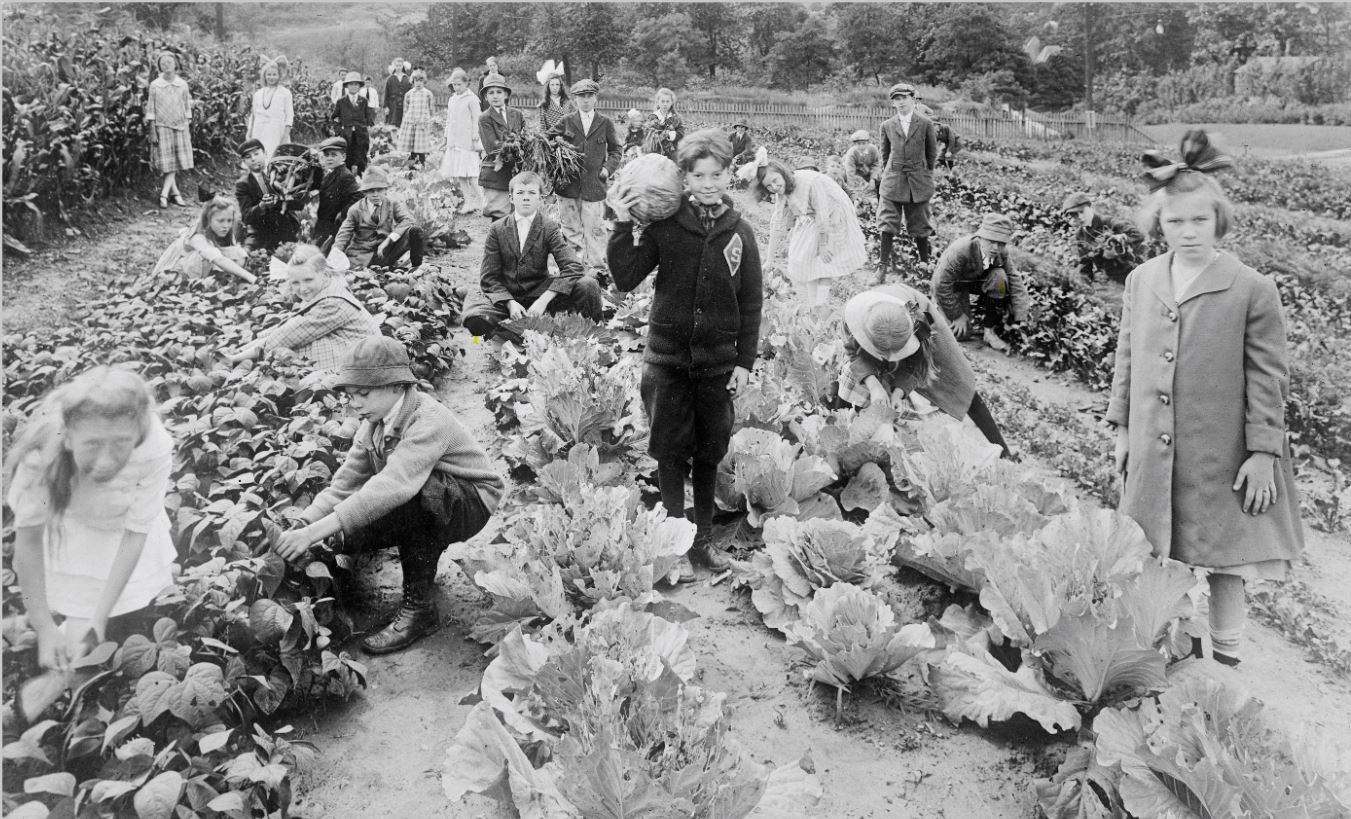
Gathering produce from the school garden of Steuett School, Pittsburgh, Pennsylvania, 1918. Courtesy of the Library of Congress, Washington, DC. Boys and girls from Steuett School, Pittsburgh, Pennsylvania, harvesting vegetables, are displaying large cabbages for the photographer.

When embarking on this project I really wanted to understand how American youth had experienced World War I. understandably, American youth had no direct experience of war. No trenches cutting through their towns, no planes dropping bombs on villages, no deafening artillery sounds to disturb their sleep. Compared to European children who experienced war and its attendant traumas, such as displacement, starvation, and fear, American youth could simply imagine what war was like. Through the United States School Garden Army, the federal government introduced children to the adults’ world where adjustments, compromises, and sacrifices had to be made. Children learned to sacrifice themselves and through sacrifices they got connected to the millions of starving children (and adults) in Europe. Compared to the American Junior Red Cross that theoretically taught children about the European catastrophe, gardening concretely showed them the material meaning that resulted from war—food shortage and hunger. Most importantly, guilt was a powerful psychological tool that was used to pressure youth into adhering to wartime behavior. When Anna Hedges Talbot, the director of Junior Membership and School Activities of the American Red Cross, asserted that American youth needed to “fulfill their obligation as young citizens” and “help carry the burden,” she publicly revealed the demand adults were making. Children were not spared the national effort. And that entailed sacrifices such as “turning up their noses at lollypops and ice-cream cones.” Even the simple act of treating themselves with a candy could be clouded by a feeling of guilt knowing that orphans in Europe were starving. They were made aware of the need to sacrifice. In truth, federal authorities may have underestimated the heavy burden that was being put on little shoulders.
Why Studying World War I in Relation to Youth Is Important
When writing my third book America’s French Orphans, I came across several occurrences that evidenced that American children had been engaged in war-related humanitarian actions between August 1914 and November 1918. Originally, in this book, my intention was to show that during the entire course of the war, the Fatherless Children of France Society, a Franco-American humanitarian organization created in Paris in 1915 by the French industrialist Émile Deutsch de la Meurthe, mobilized American men, women, and children. Compared to other humanitarian organizations such as the American Red Cross, the Fatherless Children of France Society gave Americans a choice on how to spend their money. With a subscription of $36.50 per year, anyone could become a sponsor and “adopt” an orphan in France. Americans were provided with a choice as to how their dollars would be used. They chose the child by name, location, age, and gender. In giving the donors such freedom, the Fatherless Children of France Society reinforced the notion of donors as actors of change. It nurtured a special bond between the orphan and the godmother/godfather across the Atlantic. When consulting reports and letters written by French orphans, I was intrigued to see that American youth greatly contributed to helping French widows and their orphans. From New York City, the executive committee of the Fatherless Children of France Society urged local chapters to bring the suffering of France’s orphans to the attention of American youth. American boys and girls “adopted” French orphans individually. For wealthy families, sponsoring a French could be an unexpected birthday present. On April 28, 1918, for instance, the Omaha Daily Bee reported that “Harry got a French child as a birthday present.” At times, students joined forces to adopt several “brothers and sisters in France.” In Omaha, for instance, 400 French orphans were sponsored by seventeen elementary and high schools, along with clubs, societies, and Sunday school organizations. In Cheyenne, Wyoming, eight girls adopted a 12-year-old French “sister.” I was fascinated to see how a binational organization had developed so much energy to tap their hearts and minds of American adults and their children. And when this book eventually came out, I decided to embark on another project to analyze how local, state, and federal authorities had dealt with American youth during the conflict.
Uncle Sam’s Little Soldiers interweaves the histories of childhood, World War I, and American history. It blends social, cultural, medical, and political history and draws from a vast array of primary sources found in more than one hundred local libraries, secondary schools, state depositories, university special collections, and, most importantly, federal records. Importantly, I discovered that beyond altruistic and humanitarian considerations, political gains loomed large. My research demonstrates that in reaching out to children, federal authorities knew they could influence parents. During a conference of the American Junior Red Cross for the Pacific Division held at San Francisco in September 1918, A. B. C. Dohrmann, the assistant manager of the Pacific Division of the American Red Cross, publicly stated that the goal of the American Junior Red Cross was “to educate the children and through them, the parents in regards to the ideals, work, and methods of the American Red Cross.” Federal authorities sought to neutralize disloyalty among Americans, and in designing a nationwide network of American Junior Red Cross clubs, the federal government used schools as means to thwart disloyalty. It was hoped that indoctrinating children would encourage their parents’ support. In the evenings, during supper, children might tell their parents about starving orphans in Europe and the need to ship parcels to France. In short, it was hoped that children would eventually thwart the antiwar movement within the household. Ironically, the American Junior Red Cross even provided an eleventh commandment: “Parents, Obey Your Children.”
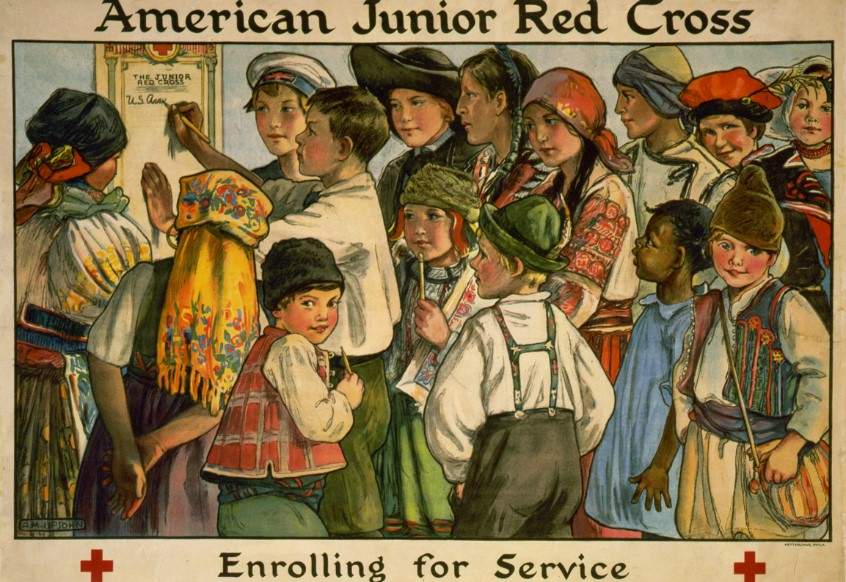
Children enrolling for service in the American Junior Red Cross. A. M. Upjohn. Courtesy of the Library of Congress, Washington, DC. Poster depicting several children waiting to enroll in the American Junior Red Cross. Many are wearing traditional European costumes.
Simultaneously, I realized that during World War I, traditionally antagonistic groupings eventually found a common ground and were able to advance their respective agendas. Particularly important was their shared acceptance that World War I brought together different streams that had competed against one another at the turn of the century. Gilded Age and Progressive Era educators and reformists concurred with politicians and advocates of preparedness that assimilation was necessary. Gilded Age and Progressive Era reformers supported the two youth-oriented organizations precisely because they would ultimately Americanize the diverse ethnic and linguistic tribes that populated the United States. I was intrigued to find several occurrences of the word assimilation, especially since Americans have traditionally tended to emphasize integration rather than assimilation.
Americanization and assimilation were not simply wartime concerns; they reflected long-term expectations. At a conference organized by the National Security League in January 1917, Frederick Winsor, the head of the Middlesex School Concord in Massachusetts stated: “Fifty years ago, the public-school children of the city of Boston were practically solidly English-speaking children of English-speaking parents. Today in many of our larger cities, there are schools where the children of English-speaking parents are the exception.” Across the United States, foreign-born children and children of foreign-born parents grew up without learning English. While gathering data for the final report of the Immigration Commission, William Dillingham found that 44 percent of children born to non-English-speaking foreign-born fathers lagged behind. Students born to Italian fathers (63.6 percent) and Polish Jewish fathers (66.9 percent) were the largest groups with delays. Dillingham’s evidence showed that foreign-born adults needed to learn English so that their children would fare better at school. When Dillingham submitted his forty-two volumes to the federal government in 1908, he could have anticipated that World War I would bring into sharp relief the conclusions of the Immigration Commission. The problem became particularly apparent when a significant portion of the young men reporting for military training did not speak English sufficiently; this not only made coordination difficult, but some did not even understand orders, which could severely compromise the outcome of a battle. Language thus became an issue of national security. Decades of immigration had turned cities like Chicago, Boston, and New York into spaces where groups grew up alongside and lived next to each other. But for some, they were not sufficiently bonded to American ideals. Samuel Gompers, the president of the American Federation of Labor, stated in 1914 that “there were several hundred foreign-language publications within the United States, formulating and directing opinion among the foreign born.”
In order to patch up the nation, all foreign languages had to be abolished. That was precisely the position of the National Security League. Its educational director, Robert McElroy, engaged in a campaign to “abolish the use of all foreign tongues, to suppress the teaching of German in public schools, and to bring all of the races of our country to the point where the use of English will be instinctive to them.” Gradually, across the United States, German (as well as foreign languages such as French, Italian, and Swedish, to mention only a few) were banned to promote “100 % Americanism.”
Americanization, broadly defined, encompassed integration, social reforms, and social welfare. Gilded Age and Progressive Era labor unions, immigrant societies, and educationalists promoted integration to foster a sense of belonging within immigrant communities. They sought social reforms to better the everyday lives of immigrants and help them integrate into American society. By 1917, however, calls to “Americanize all” shifted in meaning and purpose – from progressive social concerns to politically driven mandates. Americanization became a security issue. Assimilationists coherently seized the opportunity presented by World War I to promote a broader Americanization campaign among the nation’s youth population. They petitioned to assimilate ethnic and linguistic groups and successfully rallied politicians, educationalists, state councils of defense, and federal authorities. Assimilationists defeated integrationists. Politicians, state councils of defense, patriotic societies, and countless private citizens stood up against the teaching of German in schools. They claimed that these measures would shield children from propaganda and eradicate disloyalty. Parents, too, were concerned that their children would be indoctrinated by autocratic ideas. Patriots unwittingly transformed the curricula in secondary schools and higher-education institutions, temporarily eliminating a European language that millions of hyphenated Americans cherished. That cultural war (as I am tempted to term it) loomed large. Many German-Americans witnessed the loss of their roots and culture as the Anglophone majority irreversibly hijacked American identity. “Fashioning a new people,” as the federal Bureau of Education claimed, entailed precisely this.
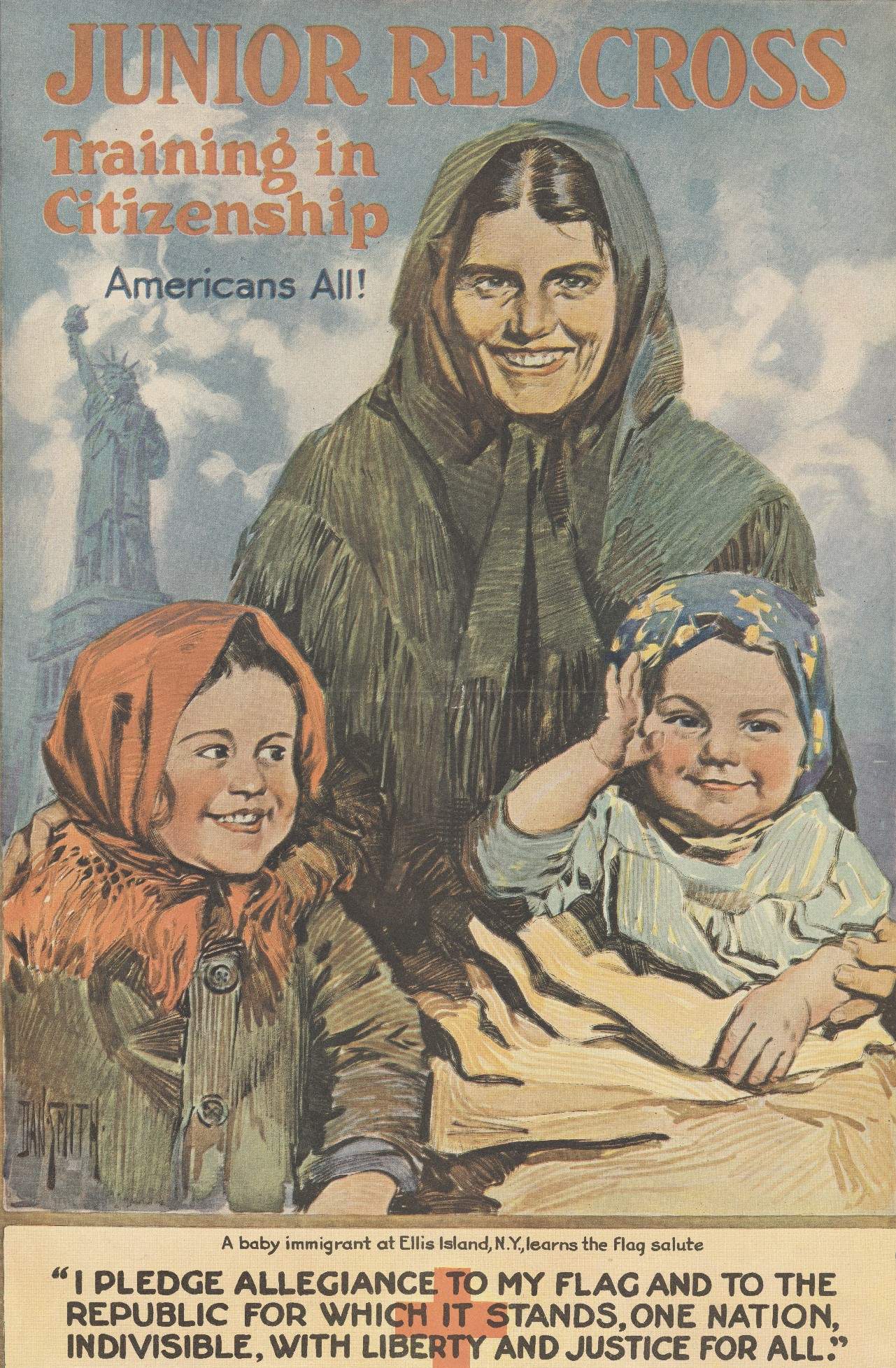
American Junior Red Cross Poster, 1918. Courtesy of Hoover Institution Library and Archives, Stanford University, Stanford, California. Poster circulated by the American Junior Red Cross in 1918 depicting an old woman holding a toddler on her knees, while a young girl is looking at the baby. They are wearing traditional Eastern European clothes. Behind them is the Statue of Liberty.
How Americans Engaged their Youth in the 1920s
In not-so-distant hindsight, American leaders knew that they had failed to protect the European continent from tyranny. Leaders of patriotic societies such as the American Protective League admitted that nonintervention allowed atrocities in Europe to go unchecked for nearly three years. “Troubled but unparticipating,” wrote Emerson Hough, in his official history of the American Patriotic League, “[Americans] stood aloof and watched the soil of all Europe redden with the blood of men—and of women and children.” As early as August 1914, accounts of cruel behavior shocked worldwide when atrocities against Belgian civilians began to circulate. As future leaders of American ideals, children needed to be groomed as “better citizens of the better world.” American youth were engaged in shaping a future international order that would protect people’s (and children’s) rights worldwide.
In 1919, Wilson repositioned the American Junior Red Cross as a diplomatic tool in US-led reconstruction programs in Europe. American children waged war against starvation, diseases, and death abroad. They sponsored children overseas and projected the image of American plenty and generosity worldwide. Chapters of the American Junior Red Cross built schools across Europe. From September 1918, Pittsburgh schoolchildren collected more than $30,000 to help establish a farm school in France, eventually raising $42,000 so that in October 1921, the Pittsburgh Farm School opened its doors in Fontaineroux (Seine-et-Marne). By then, fifteen agricultural schools in France had received contributions from American Junior Red Cross members. Through $50,000 collected from the United States, the Tirana Vocational School in Albania opened in 1922. “Thanks to the American boys and girls,” read a letter said to be written by an Albanian child, “we have the Albania Vocational School. I am very happy and have always in mind the American children who are showing such kind hearts.” American children corresponded with youth in France, Austria, Poland, Albany, Italy, Romania, and Czechoslovakia. When in 1920, the Bureau of School Correspondence and Educational Material opened in Paris in 1920 its mission was to supervise correspondence between American and European children. American children also corresponded with youth in the US territories of Hawaii, the Philippines, Puerto Rico, and the Virgin Islands. In Puerto Rico alone, for instance, more than 100,000 children belonged to the Junior Red Cross in 1920. Through the organization, the United States reinforced its overseas empire and Americanized foreign lands. In overseas territories, the American Junior Red Cross was a conduit to not only the idea of America but its wealth. It also promoted the idea of the exotic other. “Dear Friends in France,” “Schoolmates in Italy,” “Comrades in Puerto Rico”: as American children were encouraged to envision international brotherhood, thousands of objects reached all the corners of the planet as children exchanged small cultural artifacts such as rugs, pottery, handmade wooden tokens, and pieces of fabric. “Some magic wand had opened up a whole new fairy-land to our children,” claimed the American Red Cross, “and children can have the opportunity of really corresponding with children in other parts of America and in other lands.” A new narrative gradually emerged; “America is the Lafayette of nations.”
At the same time, Americans who had witnessed firsthand the catastrophe in Europe and its drastic consequences on European children began to promote education in internationalism. They sought to school American children on the ideas of right, freedom, and international order. R. P. Lane, the European director of the American Junior Red Cross, stated that developing an international consciousness in the American youth was “now the aim of the Junior Red Cross.” From his office in Paris, Lane pondered how best to develop this international consciousness that would infuse American youth with progressive ideals of order, brotherhood, and cooperation. In order to achieve such goals, American schools modified the curriculum to offer courses on international relations and develop a comprehension of the international system. Those Americans supporting that direction in education were convinced that cooperation was the only remedy to break down prejudices, avoid future conflicts of the magnitude of World War I, and foster an international system of cooperation. Introducing courses in international relations would necessitate that teachers be “made to realize the grave need of instilling an international consciousness in their future students.” At the local school level, children would learn geography and economics, about the source of the cotton—India—in the trousers and dresses they were wearing, and how their clothes differed from those of French or German children. Familiar steel and iron products could be examples to stir children’s curiosity. A new approach to teaching could significantly foster a greater sense of responsibility in American children and help them see themselves not only as Americans but also as citizens of the world. Rather than filling American children’s minds with chauvinistic and jingoistic ideas of superiority in splendid isolation, the American Junior Red Cross leadership envisioned a new approach that would reshape children’s worldview, what the United States commissioner of Education. Claxton meant in differentiating between patriotism and “American patriotism:” the United States, Claxton said, had gone to war “not for indemnity, not to increase our territory, not for material advantage, but that we may serve the world, that we may make the world safe for democracy and that all peoples may be free. This is the spirit of American patriotism.” America’s singular patriotism revolved around caring for other nations and protecting the world from autocracy and despotism.
In the aftermath of World War I, the American Junior Red Cross became a national and international conduit for Americanization. From being a wartime emergency organization, its focus shifted to support political and imperial goals. America’s youth had helped save and feed Europe. They had fed and recued orphans, civilians, and soldiers across Europe. They were now ready to combat hunger and fight Bolshevism across Europe.
Emmanuel Destenay, PhD (FRHistS FHEA), Research Fellow, Sorbonne University, received his PhD in Contemporary History from Sorbonne University in 2014. His doctoral research was funded by the Institute for Strategic Research of the French Ministry of Defense and examined the experiences of demobilization of Irish veterans of the First World War. His thesis received the 2015 PhD Prize from the Irish Foundation of France. He held Research Fellowships at Oxford University (2011-2012), Stanford University (2015), and University College Dublin (2016-2019). He is a Fellow of the Higher Education Academy (FHEA) and a fully-qualified teacher in English, French and History. He has received several awards from professional achievements (2015, 2016) and a Students’ Teaching Award (2015) from Exeter University. Emmanuel has written several articles in international refereed journals. His most recent articles appeared in the Journal for British Studies, Modern American History and Rural History. Economy, Society, Culture. He is the author of America’s French Orphans: Mobilization, Humanitarianism, and the Protection of France, 1914–1921, and Conscription, US Intervention, and the Transformation of Ireland 1914-1918: Divergent Destinies.
External Web Site Notice: This page contains information directly presented from an external source. The terms and conditions of this page may not be the same as those of this website. Click here to read the full disclaimer notice for external web sites. Thank you.