The Tragic Service of Regimental Telephone Officer George K. Sabine, 6th Field Artillery, 1st Division
Published: 21 October 2026
By Michael Santoro
Special to the Doughboy Foundation website
George K. Sabine header image
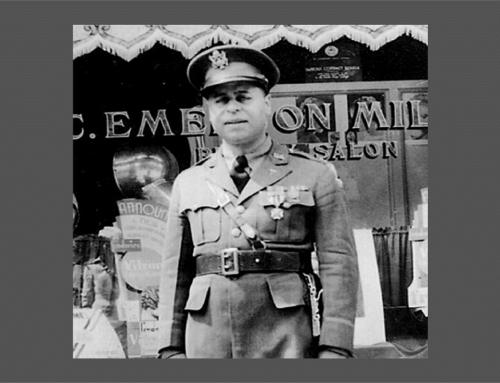
I am honored to share the story of a Harvard graduate that excelled in his work in France enough be sent home as an instructor in April of 1918, but having been slightly gassed in France, he was extremely vulnerable to the Spanish Flu, which took his life in January 1919, while he was still in the service of the Army. This is an incredible grouping that I had to piece together from a total of four different eBay listings from three different sellers, over the course of two months. I can only assume the family’s estate recently sold or went up for auction, and there were a couple of other items that I didn’t end up getting.
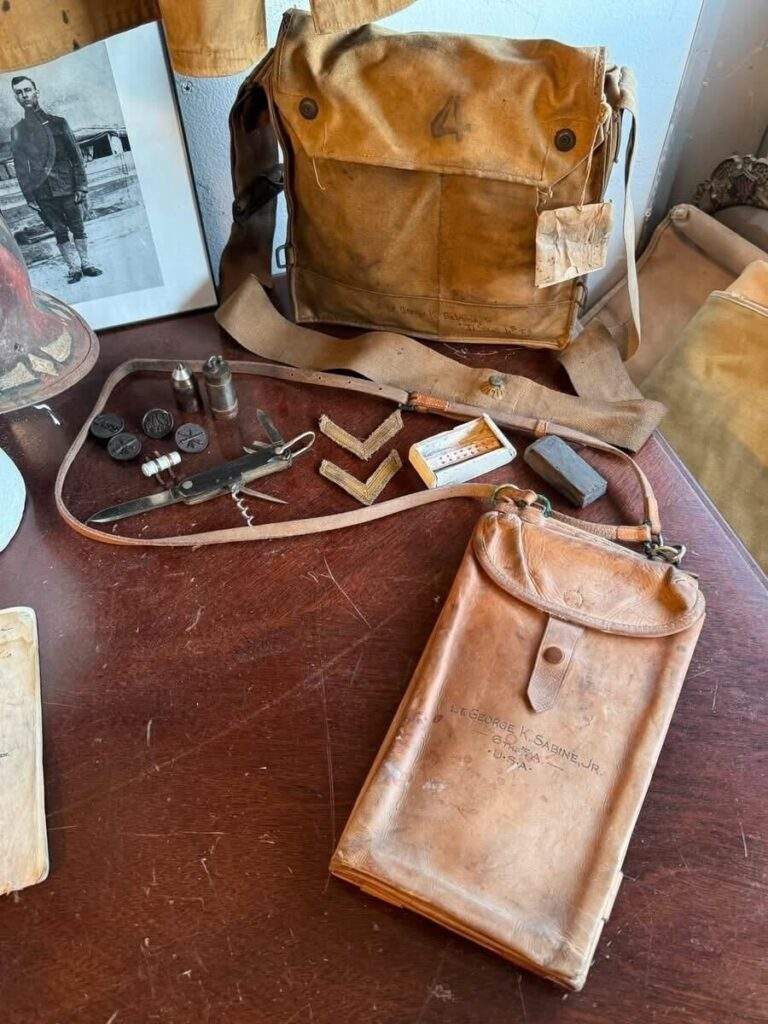
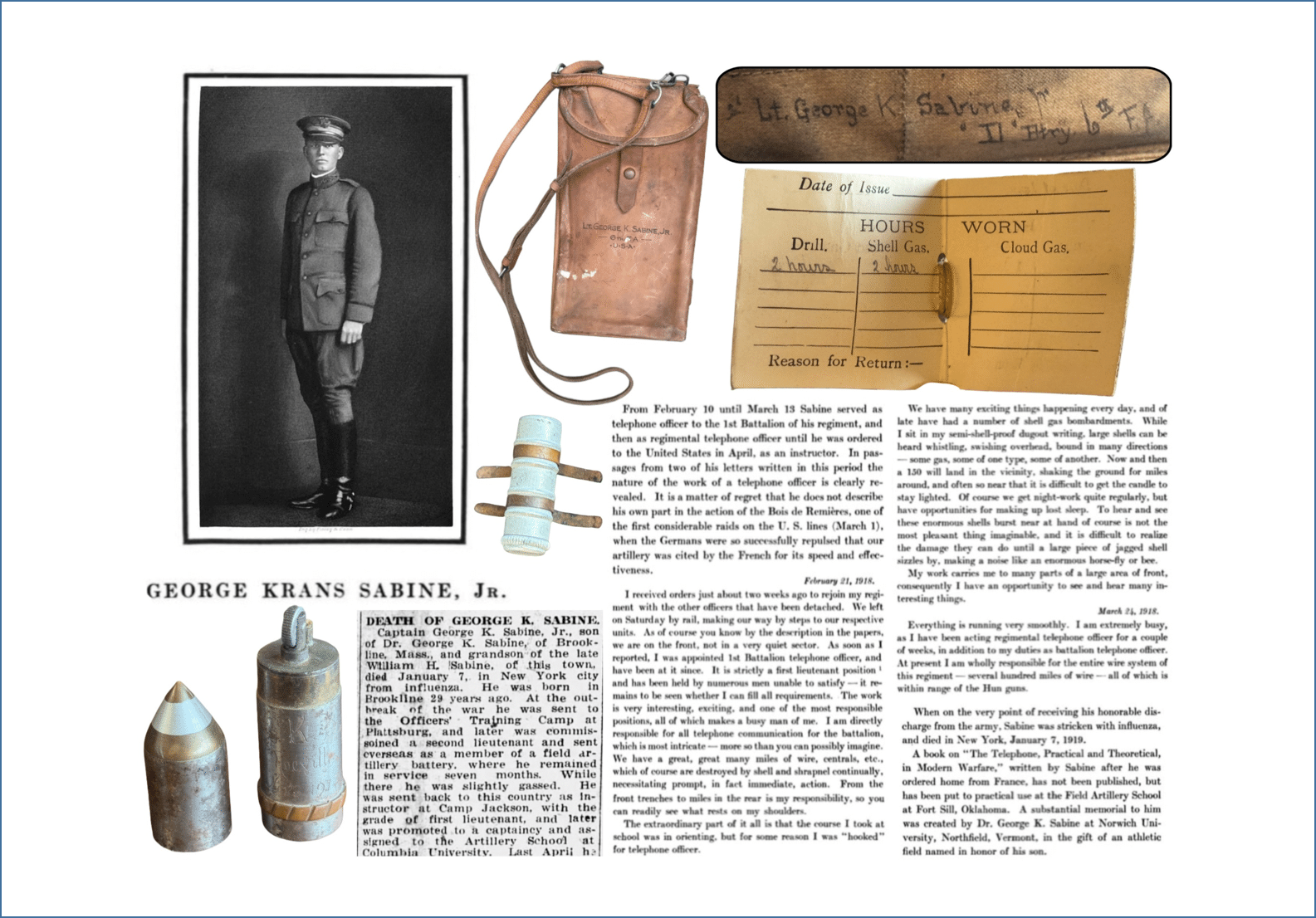
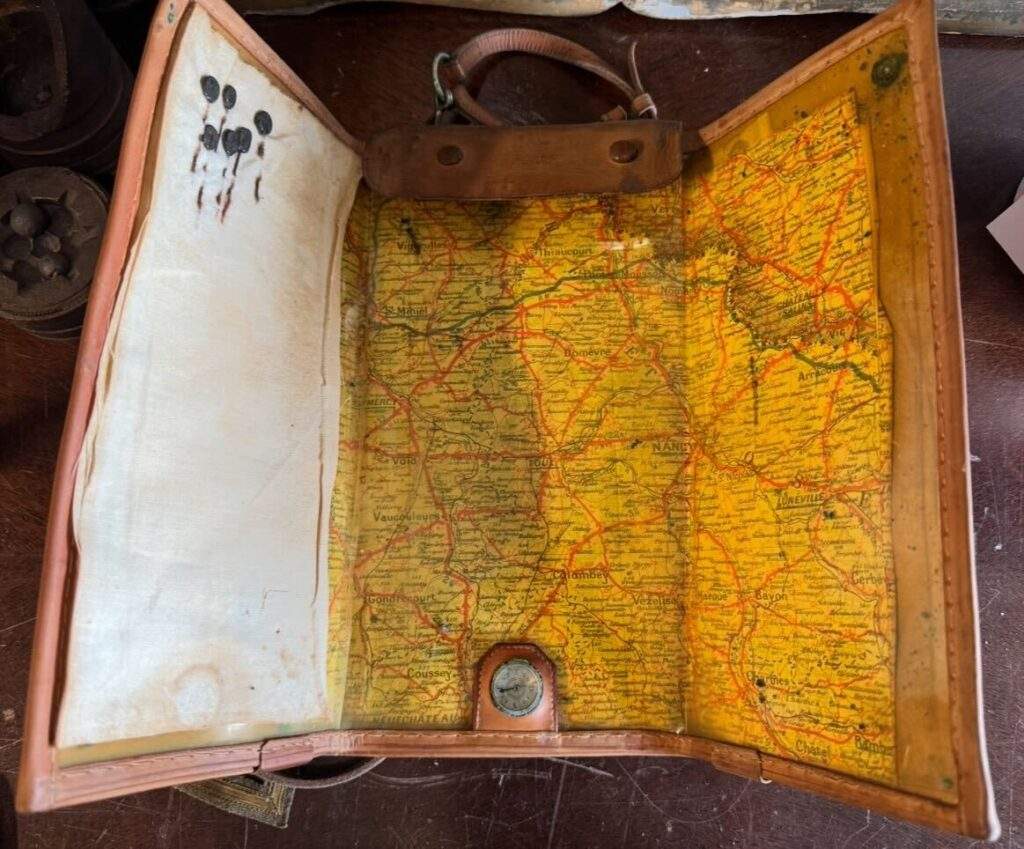
This macabre grouping consists of a British gas mask bag, a French map case with map & integral compass, a 1917-dated & named trench lighter that still sparks, and perhaps most interesting of all, a U.S. Signal Corps pigeon message capsule. This group is identified to Lieutenant George K. Sabine Jr, Battery D & Later Headquarters, 6th Field Artillery, 1st Division. Sabine arrived as a Reserve Officer in France in September 1917, and on October 1st was assigned to Battery D of the 6th Field Artillery Regiment. On November 4th, he went to the front at Hoeville with the 2nd Battalion, just after the 1st Battalion of his regiment fired the first shot of the war for the United States. The spirit in which his work in the army was done appears in a single sentence from a letter written in France to his father: “Whatever I do in this war, whatever part I play, it is my best, and it is done out of love, honor, and respect for the people I adore, worship, and think about always.”
One of Sabine’s fellow officers expressed this about him:
“Until November 4 (1917), he worked very hard getting the horses of the battery in condition. He was exceptionally capable in the care of horses and the handling of the men, and throughout the hard maneuvers of the winter, D Battery was always superior to the rest of the battalion in the matter of draught as a result of his training. Also, during the period of training at Valdahon he did a great deal of firing and studying French methods of firing.”
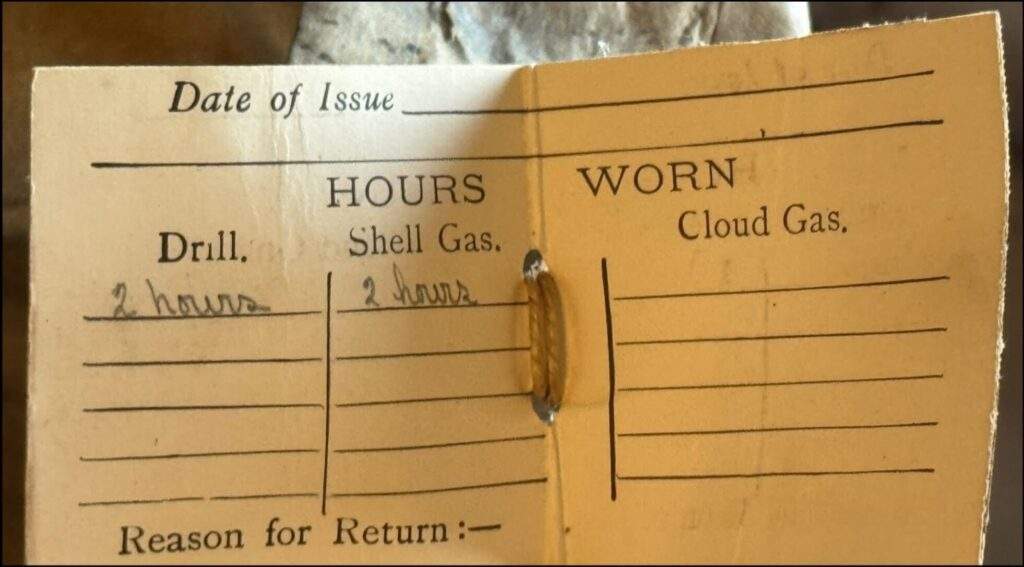
In December 1917, he was put in charge of telephone communications for the entire regiment. While in France, he was slightly gassed, and indeed the record card on his British gas mask bag records having been worn in shell gas for two hours.
From February 10 until March 13, Sabine served as telephone officer to the 1st Battalion of his regiment, and then as regimental telephone officer until he was ordered to the United States in April, as an instructor. A February 21st, 1918 letter from Sabine to his father reads:
“As soon as I reported, I was appointed 1st Battalion telephone officer, and have been at it since. It is strictly a first lieutenant position and has been held by numerous men unable to satisfy — it remains to be seen whether I can fill all requirements. The work is very interesting, exciting, and one of the most responsible positions, all of which makes a busy man of me. I am directly responsible for all telephone communication for the battalion, which is most intricate — more so than you can possibly imagine. We have a great, great many miles of wire, centrals, etc., which of course are destroyed by shell and shrapnel continually, necessitating prompt, in fact immediate, action.”
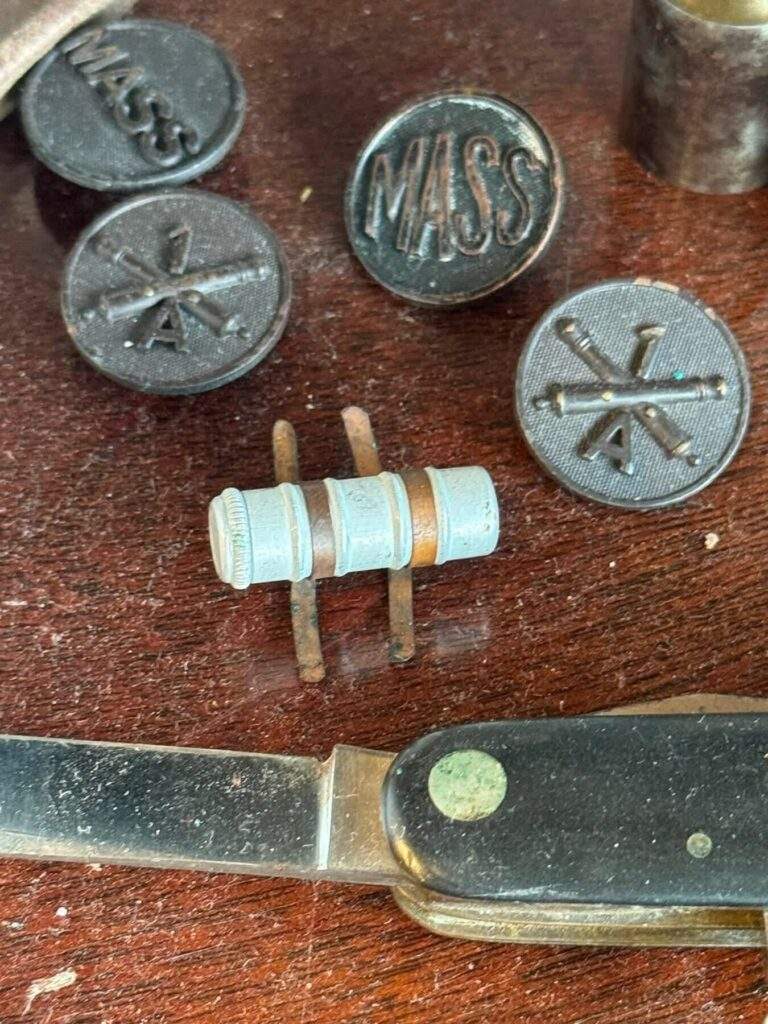
In Sabine’s belongings is an extremely rare U.S. Signal Corps Pigeon message capsule, identifiable by its copper bands used to affix it to the pigeon’s leg. Being in charge of several facets of communication, he likely would’ve used quite a few of these during his time with the 6th Field Artillery.
A March 24th, 1918 letter to his father reads:
“Everything is running very smoothly. I am extremely busy, as I have been acting regimental telephone officer for a couple of weeks, in addition to my duties as battalion telephone officer. At present I am wholly responsible for the entire wire system of this regiment — several hundred miles of wire — all of which is within range of the Hun guns.”
In April 1918, after seven months overseas, Sabine was chosen to return to the United States as an instructor, being assigned to Camp Jackson and later to the Artillery School at Columbia University. Upon his arrival home on April 29th, 1918, he was married to Miss Marion Jefferson. The newspaper notice of the marriage notes “The groom has been at the front in France for six months and is now in this country to instruct officers.”
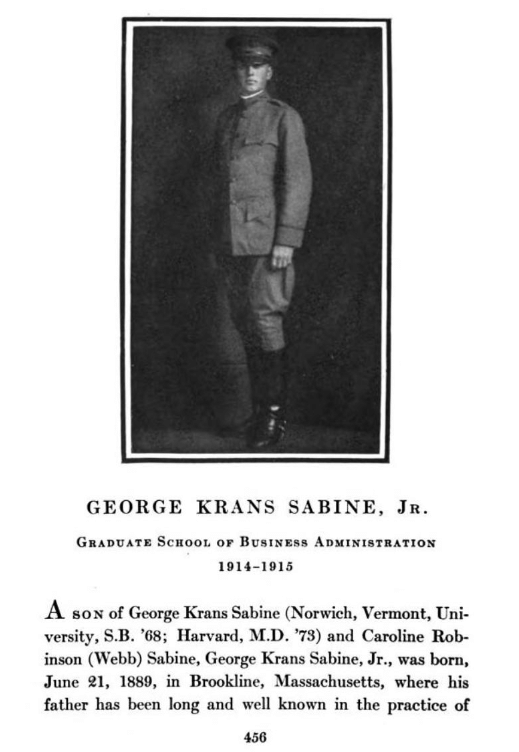
While at Columbia University, Sabine wrote a book that was never published, on “The Telephone, Practical and Theoretical, in Modern Warfare”. On January 7th, 1919, while still in active duty, Sabine died of influenza / pneumonia, very likely exacerbated by his touch of gas in France. Although his book was never published, it was soon put to practical use at the Field Artillery School at Fort Sill, Oklahoma.
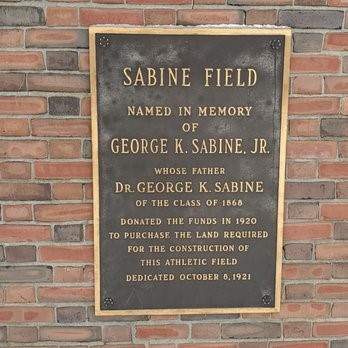
The Sabine Athletic Field, a 3,000 capacity stadium at Norwich University, was named in George K. Sabine Jr.’s honor by his father, who donated the money to have it built.
Overall, the group includes an original U.S. Signal Corps Pigeon Message Capsule, his British Gas mask bag, his French-made map case with a great French map & compass inside, a trench art lighter named to Sabine that still sparks, a multi-tool, four of his enlisted collar discs, two small unidentified boxes, and two cuff chevrons, likely one for 6 months overseas and one for his wound (gas). I am sure more of Sabine’s items are out there, and I will always be keeping an eye out so that I can complete his group further. A big thanks to the Doughboy Foundation for the opportunity to share Sabine’s story.
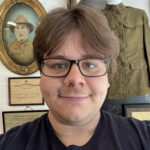 Michael R. Santoro is a historic researcher & antiquarian of the First World War. After finishing his Bachelor’s and Master’s degrees in Architecture & Historic Preservation at the University at Buffalo, New York, he spent a year developing a museum in Gettysburg, Pennsylvania, and another year freelancing research in order to preserve the stories of soldiers long forgotten.
He now works full time at International Military Antiques in Gillette, New Jersey as a Historical Research Specialist & Authenticator, preserving countless items & stories across all nations and eras.
External Web Site Notice: This page contains information directly presented from an external source. The terms and conditions of this page may not be the same as those of this website. Click here to read the full disclaimer notice for external web sites. Thank you.