The Only Vermont Hello Girl: Sarah Adeline Fecteau Reiber, 1895-1922
Published: 20 August 2026
By Donna Diamond Ayres
The Hello Girls Military Honors and Remberance Program (M-HARP)
Special to the Doughboy Foundation website
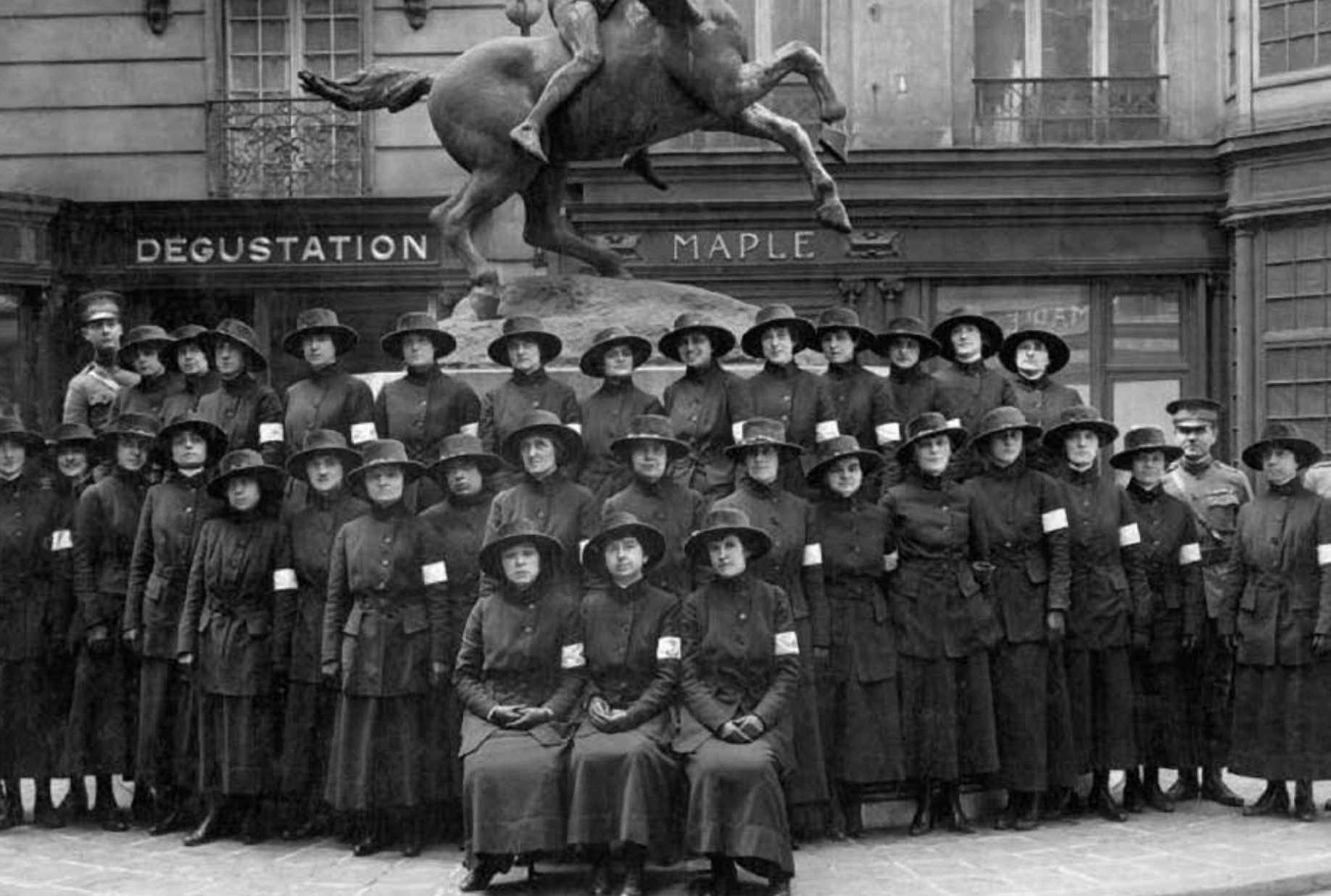
Attachment_D_HelloGirls_Group_1_photo_1918
Photo of the First Group of the U..S Army Signal Corps Female Telephone Operators, known as The Hello Girls, in Paris in 1918. Sarah Fecteau is believed to be the 7th operator from the right in the middle row, just behind the seated chief operator and two supervisors at center. [1]
Hello Girl of the Month for August, 2026
The only Hello Girl to hail from Vermont, Sarah Adeline Fecteau was born in the Village of White River Junction, Town of Hartford, on 23 August 1895, the second child of Napoleon Fecteau, a construction laborer, born in Quebec, Canada, and Adeline (Fountain), born just across the river in Hanover, New Hampshire. Both parents were of French Canadian descent, and Sarah spoke French at home before learning English.
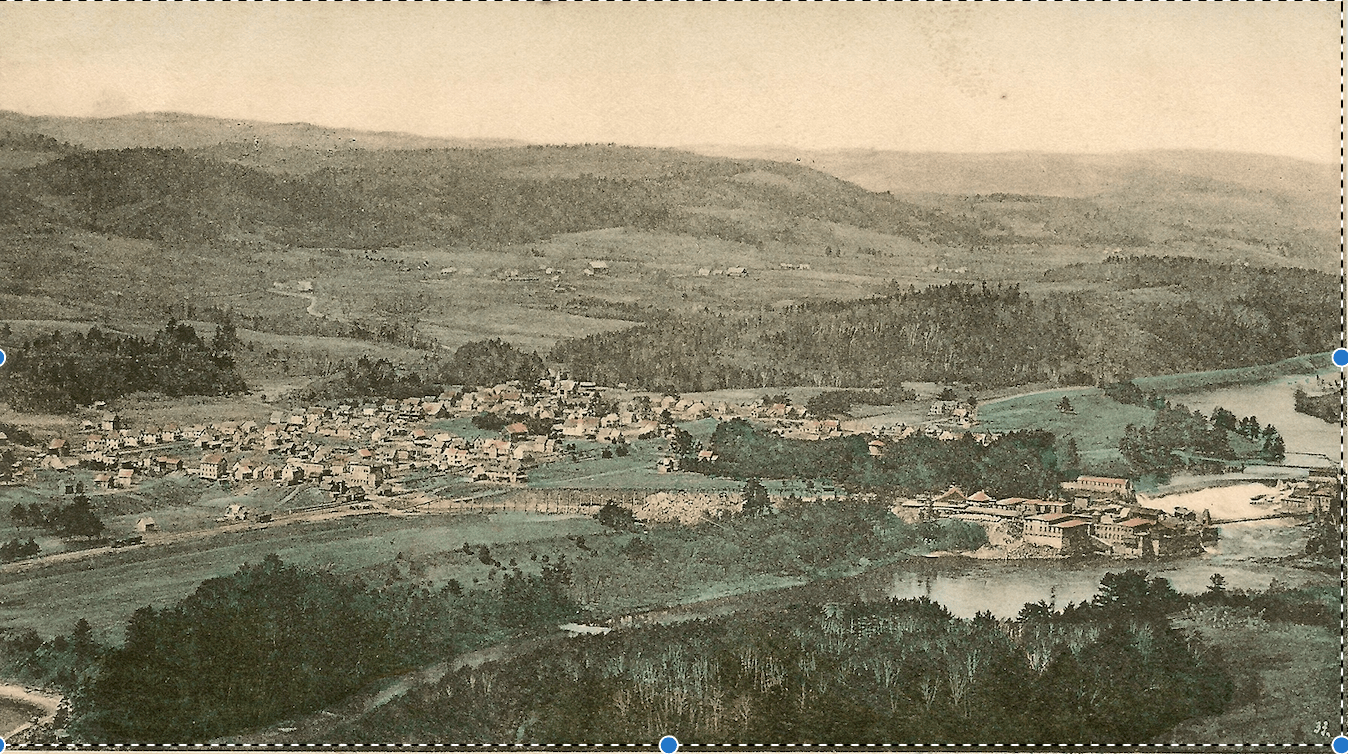
White River Junction, Vermont, circa 1900 (Courtesy of the Hartford, Vermont, Historical Society)
The growing Fecteau family eventually moved to the nearby Village of Wilder, where Sarah and her siblings attended the local schools. By the 1910 U.S. Census, when she was 14, Sarah’s family included her parents and five siblings: Chester (16), Henry (12), Olive (7), Francis (4) and Mary (2). Her youngest brother Archie and sister Gertrude were born in 1911 and 1914, respectively. After completing her schooling, Sarah left the family home, moved to a boarding house, and found employment as an operator at the White River Junction New England Telephone exchange, where she gained local, toll and supervisory experience.
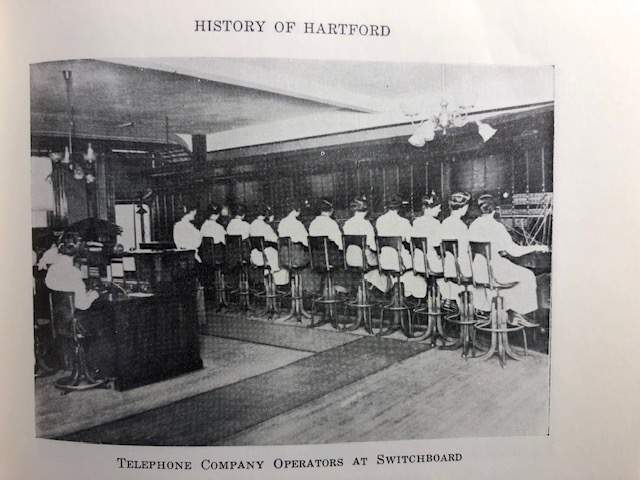
Operators at White River Junction Exchange (Courtesy of the Hartford, Vermont, Historical Society)
In late 1917, Sarah wrote a letter in response to an advertisement she had noticed in the Boston Post regarding the Army’s need for French-speaking telephone operators to serve overseas. She asked that they “kindly send particulars” and noted that she had “three years experience at both toll and local work and can also talk both French and English.” Following acceptance of her application, she took the Army oath on 10 January 1918, and was sent to New England Telephone in Lowell, Massachusetts, for further training. According to interview notes in her military file, her supervisor in White River Junction had attested to her competence as an operator, as well as to her character, punctuality and attendance. Because she spoke a French Canadian dialect, she was required to meet with a Parisian doctor from Boston, who reported that they had “talked fluently together” and that she would be able to “handle the language in France.”
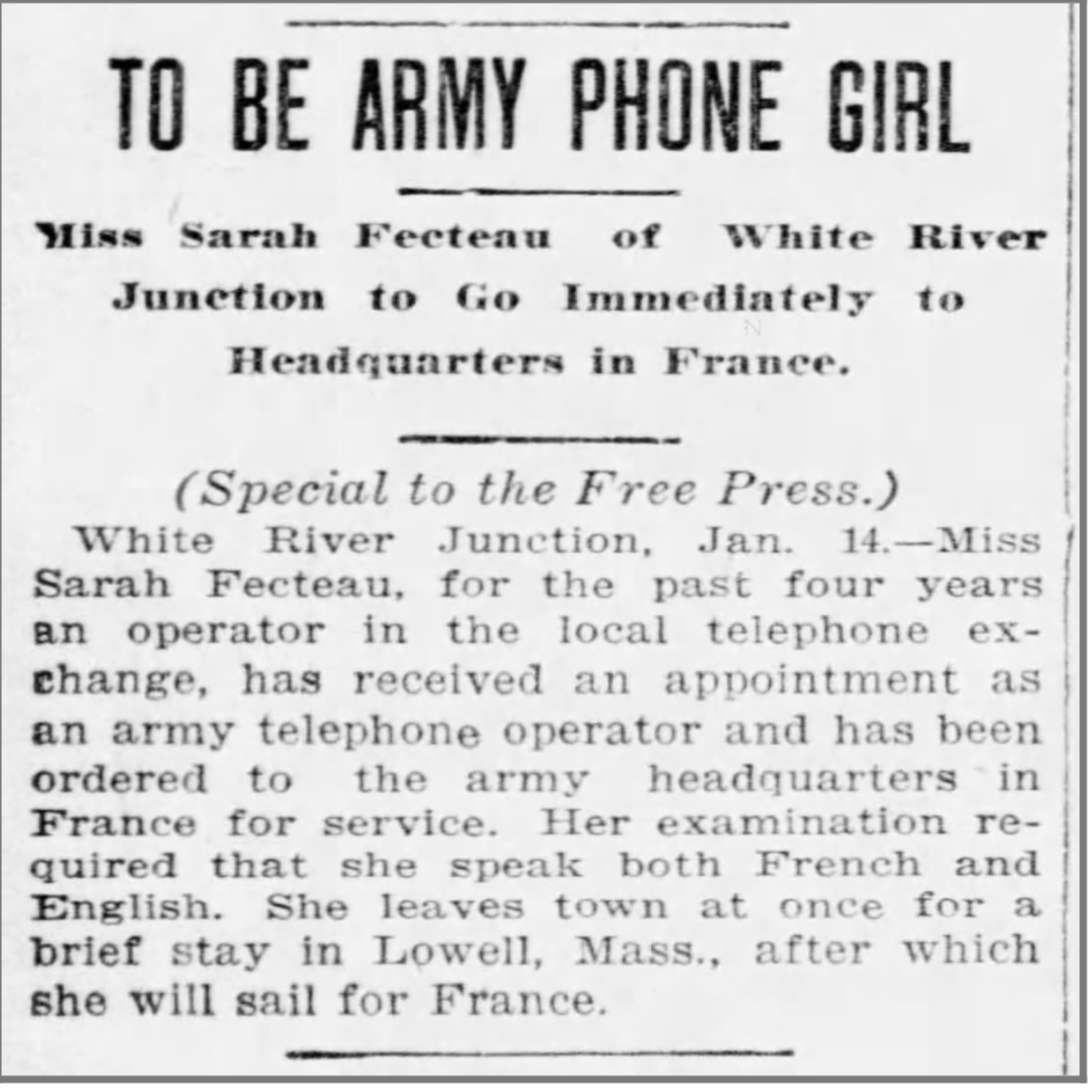
“To Be Army Phone Girl” Burlington Free Press, Burlington, VT, 15 January 1918
In January and February 1918, newspapers all over the state of Vermont – including the Burlington Free Press, the Montpelier Evening Argus, the St. Albans Daily, the Brattleboro Reformer, the Barre Daily Times, the Randolph Herald and News, and the Newport Express & Standard – carried the news that “Miss Sarah Fecteau, for the past four years an operator in the White River Junction telephone exchange, has received an appointment as an army telephone operator and has been ordered to the army headquarters in France for service.”
“Sara Angeline Cecelia Mary Fecteau” appeared on the U.S. Army Transport Service Passenger List as one of the first group of 33 women in the U.S. Army Signal Corps Telephone Operators Unit, shipping out to France on 6 March 1918, aboard the Celtic. On 15 March 1918, the Barre Daily Times reported that, “The first New England telephone unit, including Miss Sarah A. Fecteau of White River Junction, has arrived in France. The members wear a standard uniform, which must be worn at all times.”
According to her military record, during her time in France, Sarah consistently received the highest reviews on her progress charts and was promoted to Supervisor on 1 June 1918. In July, the Boston Post printed one of her letters home from “Somewhere in France,” in which she recounted some of her experiences, including air raids in Paris and a visit to “The Chateau” in Brest, noting that this was “where in olden times princesses and queens were imprisoned and hung; also where knights were put to death, and everything is the same as of old. Around here is where all the wickedness took place, and of all the romantic places, it is most wonderful.”
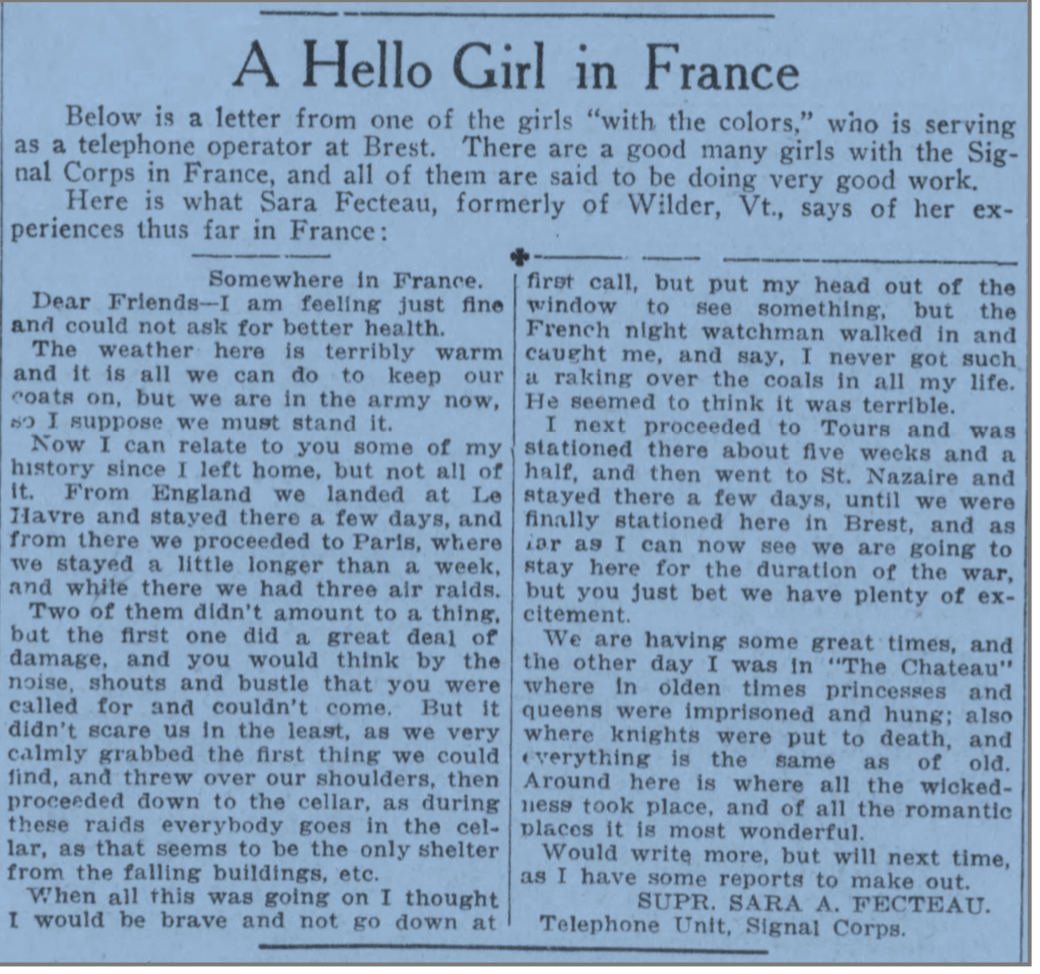
“A Hello Girl in France” Boston Post, 21 July 1918
Later that year, the 6 October 1918 Boston Sunday Post carried a story, titled “What N.E. Hello Girls Are Doing ‘Over There,’” in which Sarah Fecteau was quoted highlighting the differences between the French telephone operators, who “never stay at the board, and when a light comes in they very slowly lay down their sewing or reading and answer this one light,” and the American operators, who “are always on the job at the switchboards.”
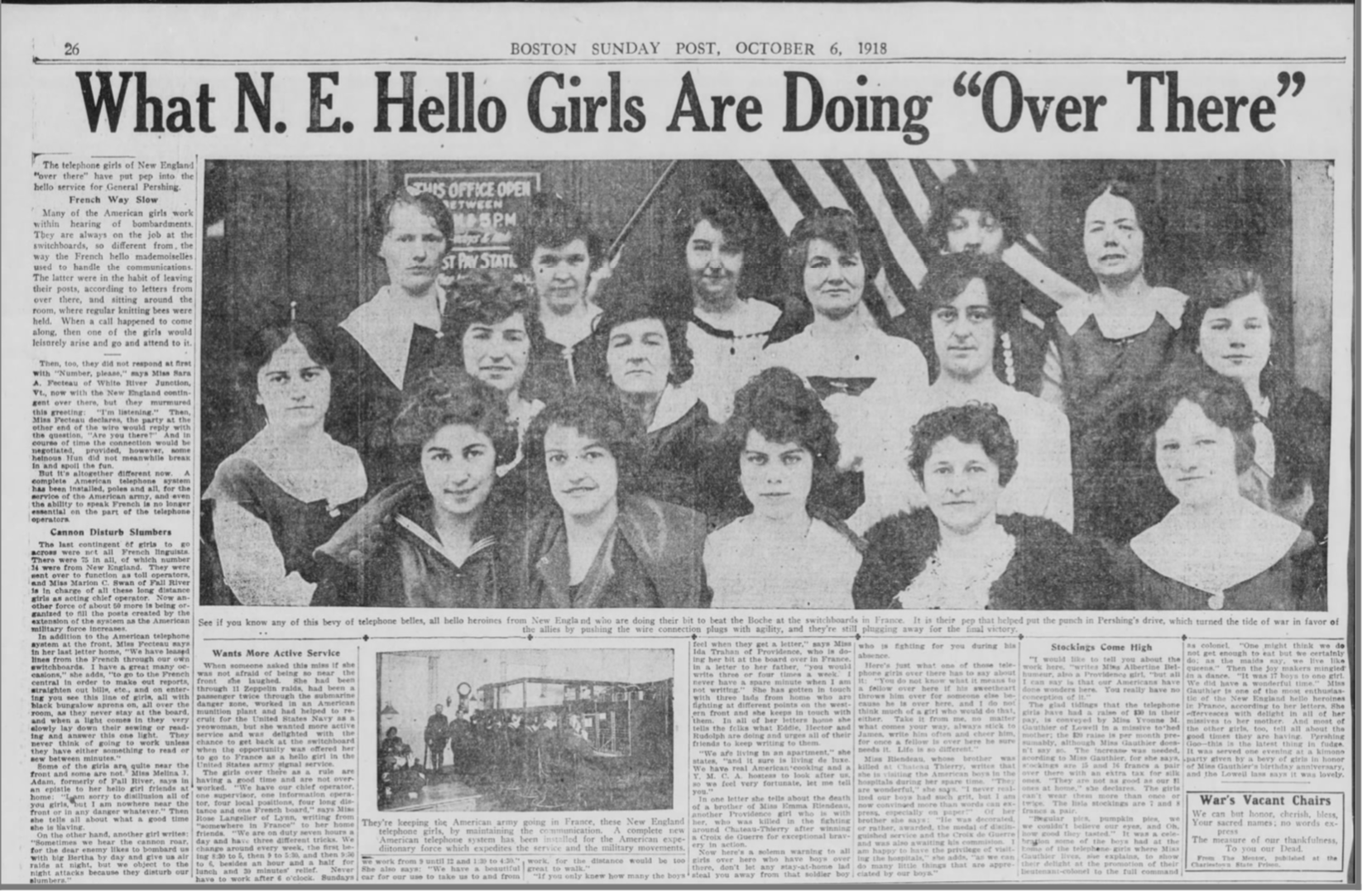
“What New England Hello Girls Are Doing ‘Over There’” Boston Sunday Post, 6 October 1918. (Sarah is believed to be the 2nd from the right in the middle row [2])
On 10 July 1919, the Junction City Republic in Kansas announced that “A war time romance, culminating in a wedding in Paris . . . that will interest our readers is that of Carl Reiber of this city and Miss Sarah A. Fectau of Wilder, Vermont.” The paper noted that the couple married on 26 May 1919, and that “Mrs. Reiber has been here with him, and has been the honoree of several social numbers.” Another article, titled “Affair for Overseas Bride,” published in the Junction City Union, explained that the couple had met the year before when they were both serving in Brest. “Soon after, Mr. Reiber, who was in the intelligence department, was ordered away from Brest, but the friendship begun there did not lapse and when he returned a year later, they were married at Paris.”
By 1920, Sarah and Carl Reiber were living in Chicago, where Carl was working as a mechanical engineer and Sarah was employed as a telephone operator. Sadly, Sarah Fecteau Reiber died of appendicitis on 19 August 1922, just four days before her 27th birthday, at her home in Chicago. Her obituary in the 31 August 1922, edition of The Landmark in White River Junction, Vermont, stated that “she volunteered for service abroad at the first call for 100 telephone operators for the World War . . . [and that] she was the only girl from Vermont who crossed overseas for this service.” Sarah’s husband, whom the Vermont Standard in Woodstock described as having served as “a major in a signal service corps attached to the First Division, A.E.F., and her mother accompanied her body home to Vermont for burial. The Standard reported that, “a detail of members of Hartford Post No. 26, of the American Legion, acted as bearers and a salute was fired and taps were sounded following the service at the grave.” [3]
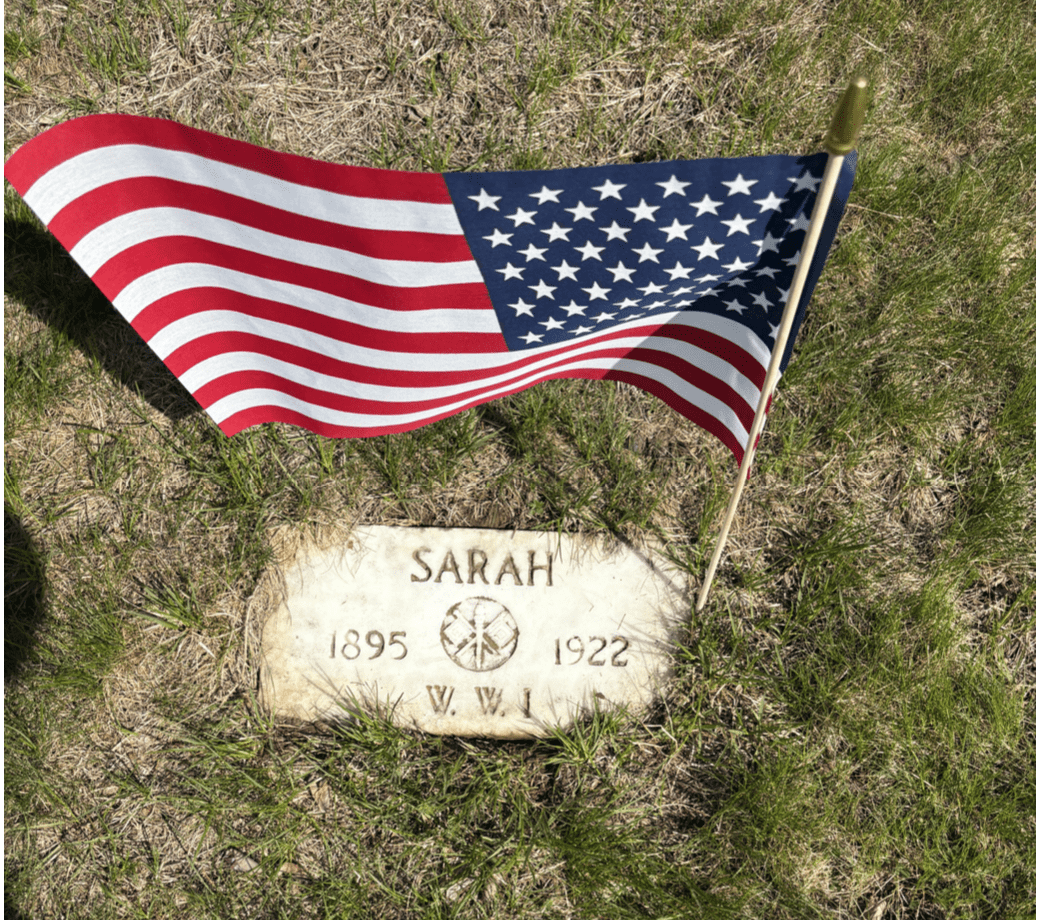
Sarah Fecteau Reiber Grave Marker at Mount Olivet Cemetery, White River Junction, Vermont
Sarah Fecteau Reiber is buried in the Mount Olivet Cemetery in White River Junction, Vermont, in the Fecteau family plot, along with her parents and other family members. Her white marble grave marker recognizes her World War I service in the U.S. Army Signal Corps, and her name is engraved on the World War I Monument in Veterans Park in White River Junction. [4]
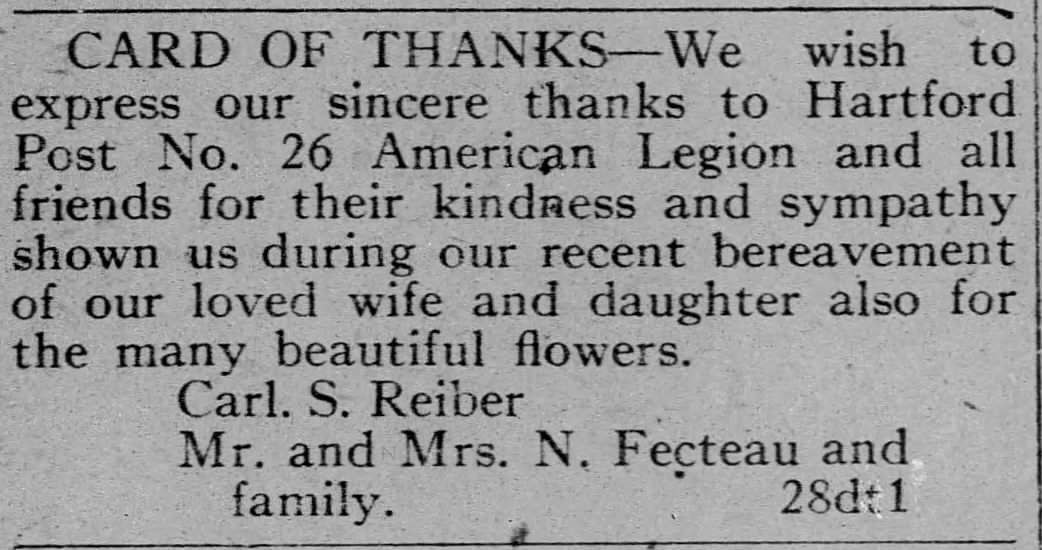
Fecteau Family, Card of Thanks. The Landmark, 31 August 1922
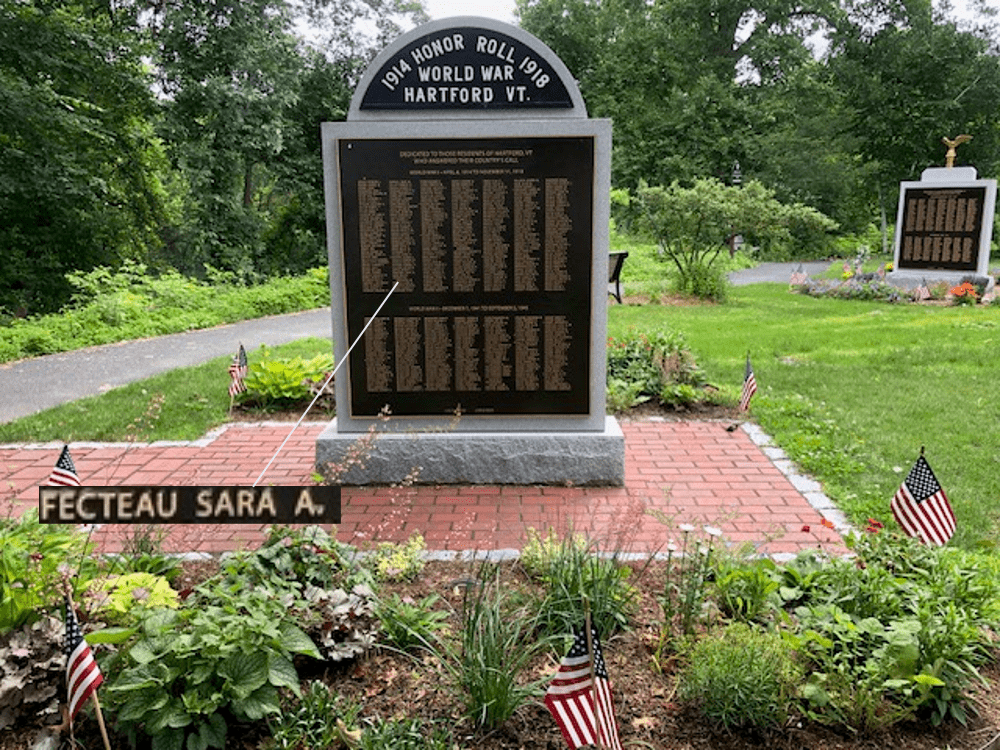
Sarah Fecteau’s name (inset) on the World War I Memorial at Veterans Park, White River Junction, Vermont
Notes:
[1],[2] Despite best efforts, including recent visits to the Hartford, Vermont, Historical Society; the Hartford and Wilder libraries; Hartford High School; and the Special Collections Library at Dartmouth College, no clearly identified photographs of Sarah Fecteau Reiber have been found. Since we know that Sarah is in the First Group photo and that she almost certainly is in the October 1918 Boston Post photo, with the help of my colleagues on the M-HARP research team, using process of elimination and FamilySearch’s “Compare-a-Face” online tool, we believe we have identified Sarah Fecteau in each of those photographs.
[3] Although the U.S. Army would not officially recognize the Hello Girls as World War I veterans until 1979, our research has revealed that, in some cases, local American Legion and VFW posts did treat them as fellow veterans. This was the case in White River Junction, Vermont, and Sarah’s family specifically expressed their appreciation to Hartford American Legion Post No. 26 in a “Card of Thanks” that was published in The Landmark on 31 August 1922.
[4] At the unveiling of the new World War I Memorial in 2024, I had the opportunity to meet and share Sarah’s story with the Commander of the current American Legion Post No. 84 in White River Junction, Vermont. He kindly wrote to his senator in support of the Hello Girls Congressional Gold Medal and encouraged the members of his post to do the same. American Legion Post 84 continues to ensure that a flag is placed at Sarah’s grave each year on Memorial Day.

This biosketch, written by Donna Diamond Ayres, grandniece of a Hello Girl and member of the Hello Girls M-HARP research team, is based on Sarah Fecteau’s military record and on genealogical research, including documents and articles found on sites, such as Ancestry.com, Newspapers.com, FamilySearch.org and FindaGrave.com.
External Web Site Notice: This page contains information directly presented from an external source. The terms and conditions of this page may not be the same as those of this website. Click here to read the full disclaimer notice for external web sites. Thank you.