Marie Alexine Lassalle: French émigré and American war heroine
Published: 20 October 2026
By Melody Lassalle
Special to the Doughboy Foundation website
Lasalle 5
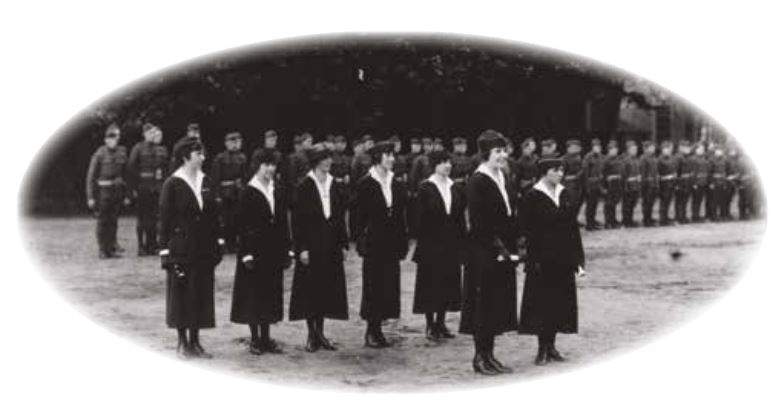
Signal Corps Female Telephone Operators Unit © National Archives
Marie Alexine Lassalle was born on August 19, 1891 in Ogeu-les-Bains (Pyrénées-Atlantiques)[1]) of Pierre Lassalle and Élisabeth Ségalas. She was their third child.
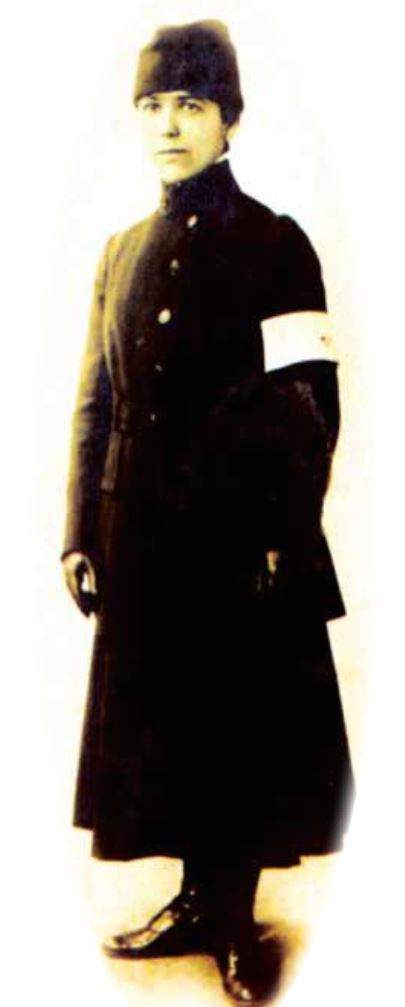
Operator Marie Alexine © National Archives at College Park
At the age of 17, in 1908, she decided to follow in the footsteps of her brother Jean Lassalle and emigrate to America. She left Le Havre on June 13 aboard La Provence and arrived at Ellis Island, New York, on the 18th. From there, she traveled to California.
Marie did not rely on her brother to support her, but managed on her own in San Francisco. She found employment as a domestic servant with the Lyons family and was registered with them in the 1910 U.S. federal census. Henry Lyons, the head of the family, was a clothing merchant.
When war broke out in Europe, Marie Lassalle worried about her family back in France, especially her other brother, Jean-Baptiste, who had been taken prisoner of war. At the time, there were few opportunities for women to contribute to the war effort other than volunteering.
Shortly after the United States entered the war in April 1917, a problematic situation arose among male telephone operators in France. They were poorly trained, slow, and quick to anger. Yet it was vital to translate and transfer calls as quickly as possible, but the men were taking more than a minute to transfer a single call.
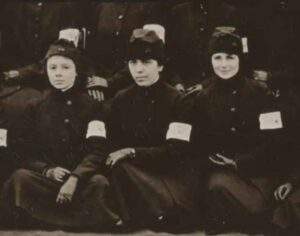
At the Marie Alexine Center © National Archives at College Park
The problem was brought to the attention of General Pershing.[2] Because women dominated the telephone operator profession in the United States, a plan was developed to train bilingual women in English and French within the U.S. Army Signal Corps.[3] They would replace the men then in office. This was not an easy task, since the American army did not yet allow the enlistment of women.
When recruitment began, Marie jumped at the chance to help her homeland and her new country. More than 7,000 women applied to become Signal Corps telephone operators, but only 450 were selected for training. They received training from AT&T employees.[4] in various cities across the United States. After completing this program, they were sent to Camp Franklin, Maryland, for formal military training. Two hundred and twenty-three women were ultimately selected for active service.[5] Marie was one of them.
The operators were nicknamed “Hello Girls,” a designation that some of the older ones were not particularly fond of.[6].
Marie was assigned to the 4th unit, which embarked on June 28, 1918, from New York aboard the Lapland. The women were expected to conduct themselves professionally at all times and adhere to the army’s code of conduct. They served in over 75 locations in France and England.
The Army was not prepared to house women in war zones. Therefore, arrangements were made with the Young Women’s Christian Association.[7] to house them.
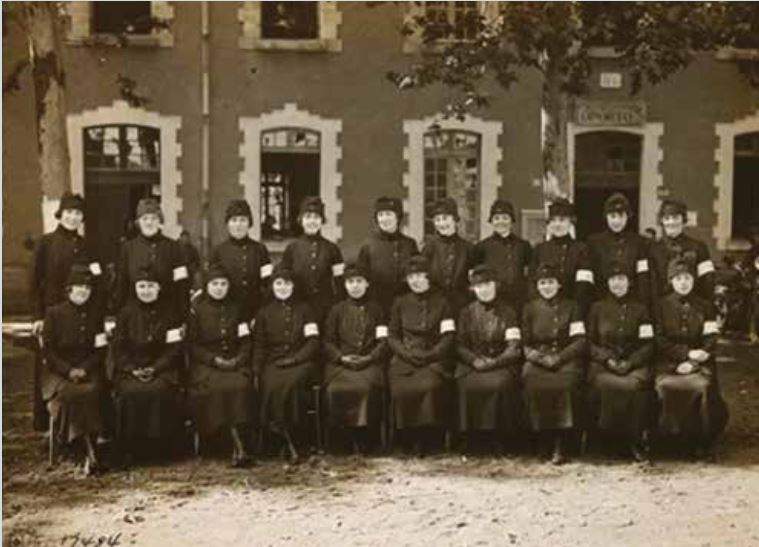
The 4th Hello Girls unit in Tours © archivesdotcom
Marie spent part of her service in Tours, France. The work there was intense. The teams worked around the clock, and the women had to work quickly and efficiently. Their
Their performance was remarkable: they reduced the average call transfer time from over a minute to just a few seconds. They thus tripled the volume of calls handled previously by their male predecessors.[8]
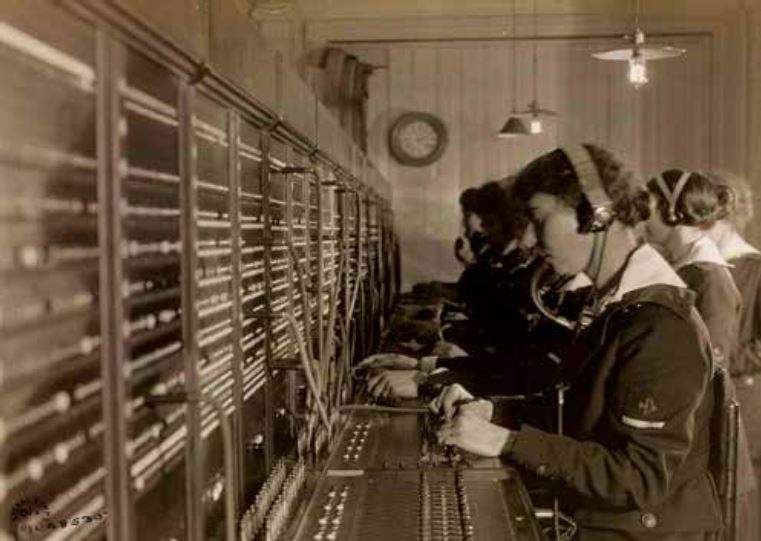
Hello Girls operators at the switchboards. © National Archives NARA
After the war ended, the operators were demobilized between 1919 and 1920. After more than a year of service, Marie boarded the Niagara in Bordeaux on August 8, 1919, to return to United States.
Back in San Francisco, Marie worked as a seamstress and fashion designer. She took a trip to France in 1927 to visit her parents, who were then living in Escout, a few miles fromOgeu-les-Bains.
Marie became an American citizen in 1932. She remained active in the veterans’ community as a member of the American Legion. She never married and had no children, but her nephews and nieces always remembered her fondly as “Aunt Marie.”
The U.S. Army and government quickly forgot about the women of the Signal Corps. Those who had served during World War I had to fight for many years to be recognized as army veterans. They did not obtain this recognition that came in 1977, when President Jimmy Carter officially granted them the status of a military veteran. Unfortunately, Marie was no longer there to receive the honors. She died in 1967 at the age of 76 in Oakland, California.
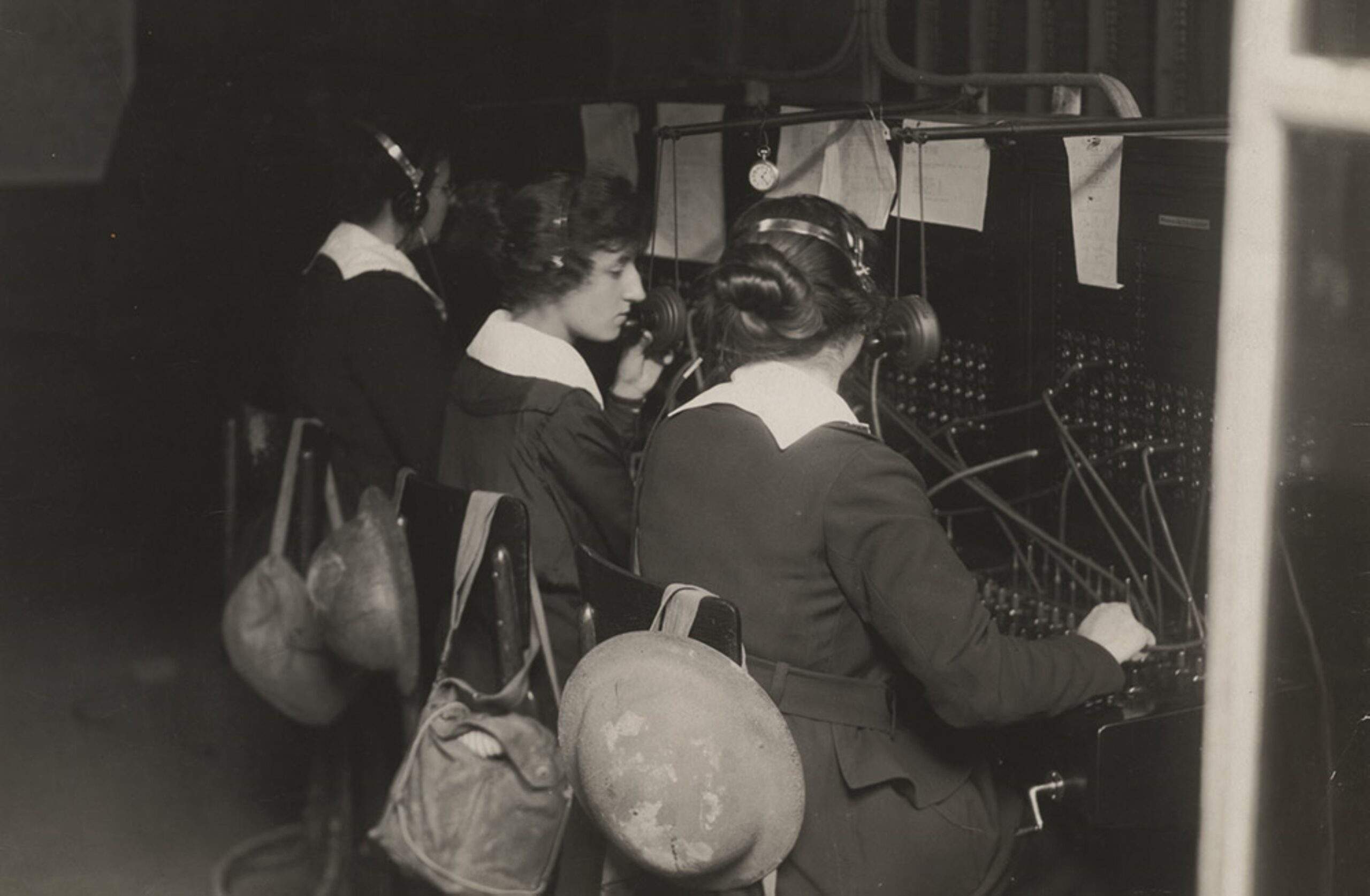
The Hello Girls telephone operators running the switchboards during critical action in World War I. © National Archives at College Park
In recent years, renewed efforts have been deployed to pay tribute to these women. In December 2024, the US Congress awarded them the Congressional Gold Medal, one of the highest honors in the country.
Notes:
[1] The Pyrénées-Atlantiques department was called Basses-Pyrénées until 1969.
[2] John Joseph Pershing (1860-1948): Commander of the American Expeditionary Force in France from June 1917 until the end of the war.
[3] The United States Army Signal Corps is responsible for military communications.
[4] The American Telephone and Telegraph Company (AT&T) was the main company of US telecommunications at the beginning of the 20th century.
[5] “A Congressional Gold Medal for the WWI Hello Girls! », The United States Foundation for the Commemoration of the World Wars, site of the United States World War One Centennial Commission, Accessed April 21, 2026.
[6] “Hello Girls,” literally “the hello girls,” a familiar nickname given at the end of the 19th century to American telephone operators, who answered “hello” — the equivalent of the French “allô” — when opening calls. The English word “Girls” refers to young girls, teenagers, or young women; when applied to adult women, it can be perceived as reductive or even condescending.
[7] Young Women’s Christian Association (YWCA): an international Christian organization for mutual aid and social action for women and girls.
[8] Elizabeth Hoffman, The Hello Girls, Cambridge (Massachusetts), Harvard University Press, 2017, cited by Wikipedia (in English), “Hello Girls”, accessed on April 21, 2026.
Melody Lassalle and Her Ancestors from Béarn
Jean Masounabe, Member of the AME Research Committee
Melody (Mel) Lassalle lives in California; she is the granddaughter of Jean Lassalle, who was born in Ogeu-les-Bains in 1888 and left for California in 1907. Jean married Anna Mazères-Sallenave in San Francisco; she was born in San Francisco to parents from Béarn who had emigrated in the 1880s.
Jean Lassalle, Melody’s grandfather, had two sisters and one brother. Three members of this sibling group served in World War I:
- Jean, the eldest, served in the U.S. Army from September 1917 to May 1919 as a cook. His division was sent to France and arrived there just a few days before the Armistice of November 11, 1918. Since his unit was ordered to return to the United States, he did not even have the opportunity to see his hometown or his family again. After his demobilization, he continued to serve in the California National Guard until 1941.
- Marie Alexine, born in Ogeu in 1891, served in the U.S. Army and was sent to France (see article).
- Jean-Baptiste, born in Ogeu in 1894, remained in France. He was drafted in September 1914 into the 14th Infantry Regiment and taken prisoner in September 1915 at Vienne-le-Château, in the Marne department. He died in December 1918 at the Saarbrücken prisoner-of-war camp.
In Melody’s extended family, some ancestors have been the subject of articles in the magazine *Partir*:
- Robert Mazeres: *Partir* No. 8;
- Charles Mazeres and Brigitte Breilh: Partir No. 12, the AME website (www.asso-memoire-emigration.org/page/3516709), and Mel’s blog (post titled “Wedding Photo Wednesday: Mazeres-Breilh”);
- Charles Mazeres-Salenave: Partir No. 17;
- Esteban Casaux: Partir No. 21 and 22 and Mel’s blog (post “52 Ancestors: A Branch Of My French Tree In Spain”);
- Annie Lounibos: Partir No. 24 and the AME website (www.asso-memoire-emigration.org/page/3517175).
To learn more about Melody Lassalle and her genealogical research on her ancestors from France, visit her blog in English: http://www.researchjournal.yourislandroutes.com/category/french-roots
External Web Site Notice: This page contains information directly presented from an external source. The terms and conditions of this page may not be the same as those of this website. Click here to read the full disclaimer notice for external web sites. Thank you.