Kiffin Rockwell – Fighting for All Humanity
Published: 12 May 2026
By Steve Tom
Special to the Doughboy Foundation website
Aviation_Kiffin_Rockwell_Museum_of_History
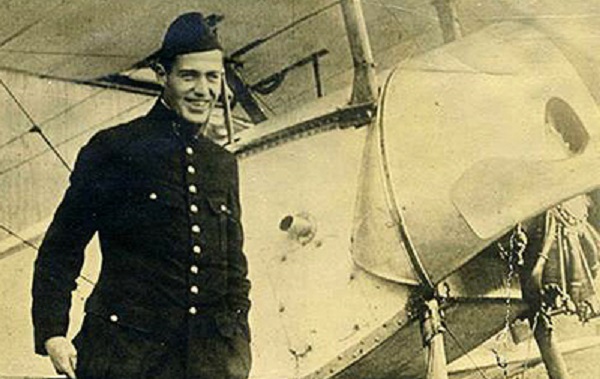
Figure 7: Kiffin poses beside his Nieuport 11 fighter after being assigned to Luxeuil in 1916.
In movies and video games World War I aerial combat looks glamorous, and it appears to be easy to shoot down an enemy plane. It was neither. Most dogfights took place at altitudes above 12,000 ft, and many were fought between 15,000 and 20,000 ft. At those altitudes pilots were gasping for breath in the thin air and struggling to avoid frostbite in temperatures that could drop below -40 °F. Bundled up in their insulated “teddy bear” suits, heavy gloves, and facemasks, they didn’t view open cockpit warfare as glamorous. And it was difficult enough to hit a target that was maneuvering in three dimensions under the best of circumstances. When your body was numbed by cold and your brain was numbed by oxygen deprivation, it was nearly impossible. Most pilots never shot down a single plane. Thousands of rounds of ammunition might be fired in a dogfight involving dozens of airplanes, with no victories scored by either side. It was especially rare for a novice pilot to shoot down an enemy plane, as they were much more likely to fall victim to a more experienced pilot than to be the victor. Early in the war flight training only taught pilots to take off, land, and do basic maneuvers such as loops and rolls. No training in aerial combat was provided, because the whole concept of air combat was so new the instructors didn’t understand it themselves. Pilots learned combat skills on the job, which meant experienced pilots had the upper hand. Amazingly, one early pilot, flying alone and attacking the first enemy plane he’d ever seen, probably firing a machine gun for the first time in his life, scored a victory. The fact that he only fired four or five rounds during that air battle was extraordinary. Kiffin Yates Rockwell was clearly not an ordinary pilot.
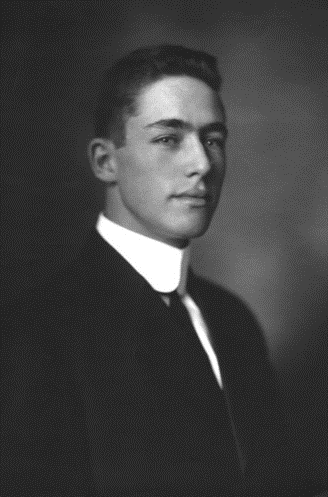
Figure 1: Kiffin Rockwell at Washington & Lee University, c. 1910.
I first became aware of Kiffin on my sixteenth birthday, when my great-great Aunt Grace Rockwell gave me a copy of a privately printed book, War Letters of Kiffin Yates Rockwell. Inside the book, as a bookmark, was a photograph of Kiffin with a handwritten note on the back from his mother. Aunt Grace said he was a distant relative, but it must have been very distant because I’ve never found the connection. Nevertheless, the book fascinated me. I searched libraries and bookstores, trying to learn more about Kiffin, but to my surprise there were no biographies of him. He was referenced in several books about the Lafayette Escadrille, a squadron of American volunteers who fought for France years before the US entered World War 1, but no one had written a biography.
Fifty years later, when I had retired from an Air Force career and a civilian engineering career, there were still no biographies of Kiffin Rockwell. I decided to write one myself. I believed this remarkable American deserved to be remembered. I scoured all the books, magazines, and Internet sources I could find but came up with very little new information. Fortunately, the bibliographies in those books pointed me to several archives that had a trove of letters and other original source documents, and the Internet allowed me to connect with other people who were interested in Kiffin. Among them were Kiffin’s nephew, Kenneth Rockwell; Marc McClure, a professor who was creating a video documentary on Kiffin; and Steve Ruffin, a historian who was writing a photo history of The Lafayette Escadrille. Kenneth and Marc have, sadly, since passed on, but Steve became my mentor and trusted proofreader. With their help, and a few years researching the thousands of documents I had photographed at various archives, I was able to document Kiffin’s life.
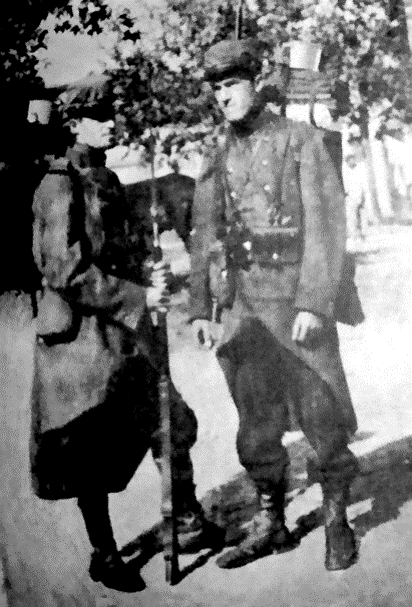
Figure 2: Kiffin (right) and his brother Paul in the Foreign Legion, 1914.
Kiffin was born in Newport Tennessee, grew up in Asheville North Carolina, and entered the war from Atlanta Georgia, with the result that all three states claim him as their own. A strong-willed, idealistic young man he astonished friends when on August 2nd, 1914, the day before Germany declared war on France, he announced he was going to fight for France. He convinced his brother Paul to come with him, and by the end of the week they were sailing to Europe. The laws at that time stipulated they would lose their American citizenship if they swore allegiance to any other country. These oaths were a requirement to join the regular British or French armies, but the French Foreign Legion did not require such an oath so they joined the Legion. Paul was seriously injured by a shell and invalided out of the Legion in early December, but Kiffin soldiered on. The Legion was a tough unit. Living conditions were brutal, and discipline was harsh. He spent week after week in the trenches with no shelter, poor food, and a plague of lice. He was nearly killed when he and the poet Alan Seeger were guarding a remote outpost at night. A grenade landed at their feet, sputtered, and did nothing else. It was a dud. Kiffin and Alan barely escaped the German raiding party that rushed their position after throwing the grenade, but a corporal who was running to their aid was shot dead. Yet Kiffin’s biggest complaint was that they never attacked. As he put it, he was fighting for “the cause of all humanity,” and he didn’t think sitting in a trench waiting for the Germans to attack was the way to win that war.
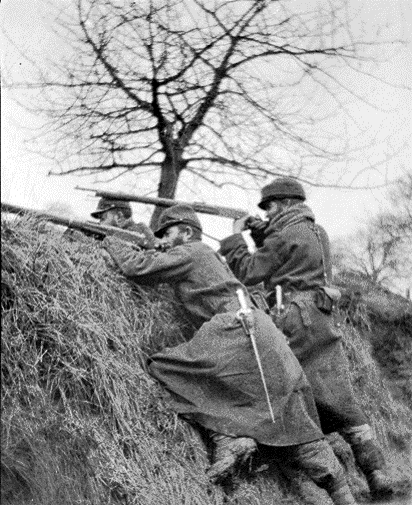
Figure 3: Kiffin (foreground) firing from an early trench. Note the beards. French infantrymen were nicknamed “poilu” meaning “hairy ones” because they had little opportunity to shave in the trenches.
In May 1915 Kiffin finally got to participate in an attack against the German lines as part of the Second Battle of Artois. The Legion, along with thousands of other French troops, attacked a German salient (bulge) north of Arras, hoping to eliminate the salient and cut German supply lines. The attacking French troops were mowed down by German artillery, machine gun, and rifle fire but whenever one man fell, another would step forward to take his place. Kiffin described their bravery as “the finest sight I have ever seen.” They were slowly pushing the Germans back, rushing forward thirty or forty yards before dropping to the ground with their backpacks in front of them for protection. When the fire eased, they would rush forward again. Kiffin kept this up for five hours, advancing about two miles, before he was shot through the thigh. Fortunately, the bullet missed the bone, but his fellow Legionnaires convinced him it was pointless for him to try to keep going forward with such a serious wound. He crawled to the rear. When darkness fell, he was able to stand up and, using a stick as a makeshift crutch, hobble toward the rear. It took him four days to hobble and hitchhike to a hospital.
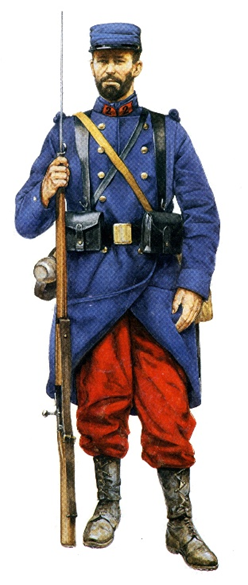
Figure 4: Artist’s drawing of Kiffin in his Foreign Legion Uniform
Kiffin was lucky his untreated wound did not get gangrene, as many soldiers lost their limbs or their lives to that infection. After several months he was considered fit for duty, but his wound still bothered him when he marched. The Legion marched everywhere. A fellow American, former Legionnaire, and friend named Bill Thaw, who had transferred to Aviation, convinced Kiffin to apply for a transfer to that branch. Aviators didn’t march. They could fight the Germans while sitting down. Kiffin’s transfer was approved, and he proved to be a natural pilot. His assignment to a combat unit was held up because the French had decided to group the American volunteers into a single escadrille (squadron), hoping the publicity would gain support in America. The squadron would eventually become known as the Lafayette Escadrille. Not surprisingly, Kiffin chafed at the delay. He didn’t care who he flew with, as long as he could fight the Germans and help win the war. The French ignored his requests to join a French squadron, and in April 1916 Kiffin was finally assigned to a combat unit as part of the American Escadrille.
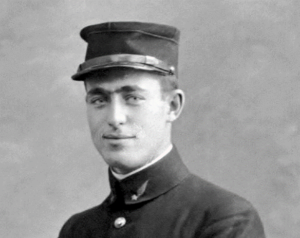
Figure 5: Kiffin after earning his pilot’s license. He is wearing a new uniform, has shaved, and is sporting his newly acquired wings on his collar.
Seven American pilots were originally assigned to the squadron. Bill Thaw, Norman Prince, Elliott Cowdin, and Bert Hall had experience flying French reconnaissance and bombing planes, but they had very little experience flying fighters. Victor Chapman, Jim McConnell, and Kiffin Rockwell had never flown in combat. They were commanded by an experienced French pilot, Captain Georges Thénault, with an experienced French pilot, Lt. Alfred de Laage de Meux, as his second-in-command. They were initially assigned to Luxeuil-les-Bains, a quiet sector in the foothills of the Vosges mountains. The unit was officially designated N124, with the “N“ signifying they would be flying Nieuport 11 airplanes, the newest and best fighter in the French inventory. “Would be” was key, as when the pilots arrived they had no planes. The Battle of Verdun was raging one hundred miles north of Luxeuil and the French were sending every Nieuport they had to that battle. The planes began to trickle in around the first of May, and by May 13th the squadron was ready for its first “official” patrol. (Eager to start, Kiffin had managed to squeeze in a few solo patrols before this.) Kiffin led the squadron over the lines, but they encountered no hostile aircraft – even when Kiffin led the squadron over a German aerodrome and proceeded to do loops and rolls trying to taunt the Germans into coming up. The pilots began flying individual patrols after that.
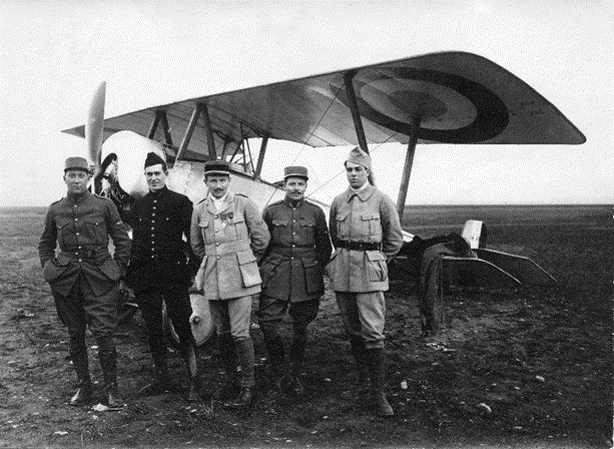
Figure 6: The first pilots to arrive at Luxeuil pose beside an unarmed Nieuport 10. Left to right – Jim McConnell, Kiffin Rockwell, Capt. Thénault, Norman Prince, and Victor Chapman. Sometimes called the “Tragic Photo” because within a year four of the five would be killed.
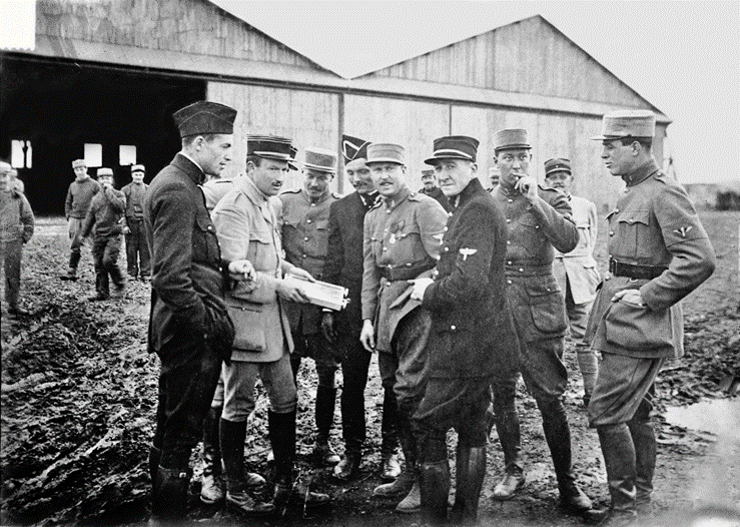
Figure 8: Captain Thénault “briefing” his pilots. (Staged for a film crew.) Left to right – Kiffin Rockwell, Capt. Thénault, Bill Thaw (hidden behind the captain), Norman Prince, Lt. de Laage, Elliot Cowdin, Bert Hall, Jim McConnell, and Victor Chapman.
On May 18th, Kiffin spotted a German two-seater above the lines. He had started to return to his airfield because his engine was misfiring, but he abandoned that idea as soon as he saw the German plane. His flight training had not included any mock dogfights or combat tactics. There’s no record that he had ever fired a machine gun in the air. The Legion had taught him how to attack with a bayonet, though. Ignore the enemy bullets and charge. That’s how he attacked this plane. He described it in a letter to his brother Paul:
I saw a Boche [German] machine about seven hundred meters under me and a little inside our lines. I immediately reduced my motor and dived for him. He saw me at the same time and began to dive towards his lines. It was a machine with a pilot and mitrailleur [gunner], with two mitrailleuses [machine guns], one facing the front and one [at] the rear that turned on a pivot, so he [the gunner] could fire in any direction. He immediately opened fire on me and my machine was hit, but I didn’t pay any attention to that and kept going straight for him, until I got within twenty-five or thirty meters of him. Then, just as I was afraid of running into him, I fired four or five shots, then swerved my machine to the right to keep from running into him. As I did that, I saw the mitrailleur fall back dead on the pilot, the mitrailleuse fall from its position and point straight up in the air. The pilot fell to one side of the machine as if he was done for also. The machine itself first fell to one side, then dived vertically towards the ground with a lot of smoke coming out of the rear. I circled around, and three or four minutes later saw a lot of smoke coming up from the ground just beyond the German trenches.
Kiffin had scored the first victory for the Lafayette Escadrille. Later that day the Squadron received orders to move to Verdun. They had not yet begun to come together as a team, and they still had much to learn about air fighting, but the situation at Verdun was so critical that the French couldn’t afford the luxury of keeping a fighter squadron in a quiet zone. They needed every pilot they could get at Verdun.
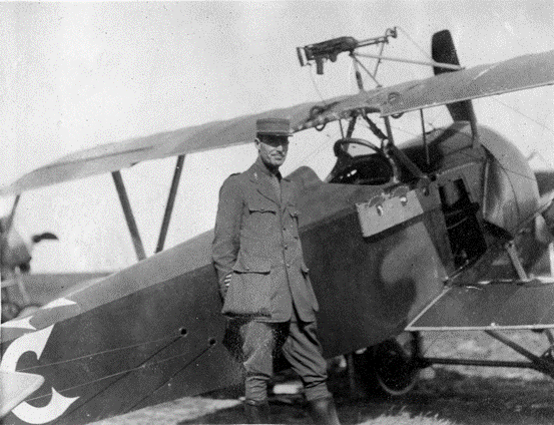
Figure 9: Kiffin standing in front of Elliot Cowdin’s Nieuport 11. The machine gun mounted on the top wing and spare ammunition drums beside the cockpit are clearly visible.
Verdun was called “The Inferno” by the troops who fought there, and it was no picnic for the pilots who flew above it. It was the first major air battle in history, with hundreds of planes on both sides fighting for control of the sky. Thousands of pieces of artillery kept the battlefield under constant bombardment for ten months. An estimated 60 million shells fell on an area smaller than the city of Brooklyn NY – fifteen shells for every square foot of ground. Planes were cut in two by flying shells. Kiffin wrote “This is a regular hell around here in the way of excitement and the world going crazy. Impossible to express with words one’s impressions. I am badly played out for lack of sleep.” He regularly flew as many as four 2-hour patrols a day over Verdun, and the rest of the squadron flew almost as much. Many of those patrols took him far behind the enemy lines. His squadron mates insisted he shot down several enemy planes which were not confirmed because the French only confirmed victories that were observed by ground troops or by pilots from a different squadron. He was wounded in the face when an enemy bullet shattered his windscreen and peppered his face with fragments. He was back in the air a few days later, but he hid his upper lip behind a thick moustache after that.
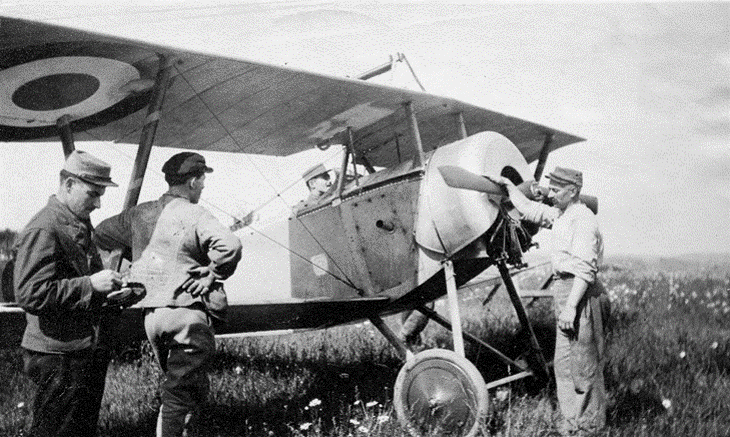
Figure 10: Kiffin in a patched-up Nieuport previously flown by Victor Chapman. Kiffin flew so much he wore out several planes and often flew planes previously assigned to other pilots while awaiting a new plane. The mechanic on the left is loading bullets into an ammunition drum.
The long summer days meant Kiffin could fly several patrols during the sixteen hours of daylight, getting up before dawn for a morning patrol, and finishing an evening patrol as the stars were becoming visible. He was frustrated several times when he managed to gain an advantage over his opponent in a dogfight, only to have his machine gun jam. (The squadron did not yet have synchronized guns, so he was forced to rely on a lightweight Lewis machine gun mounted on the top wing to fire over the propeller. Its ammunition drum held 47 rounds – enough for a five second burst before reloading.) The strain of daily combat was taking its toll. He lost weight. He criticized friends and argued with Capt. Thénault. He refused to take leave and pushed himself still harder. Finally, on September 9th, 1916, Kiffin’s hard work was rewarded. He attacked a Rumpler C-II “Walfisch” bomber/observation plane at 10,000 feet. His gun jammed three times during his attack, but he managed to clear the jams and force the plane to crash within the German lines. Ground observers confirmed the victory. (German records indicate that the pilot and the observer survived the crash, although the observer was seriously injured.) Two days later the squadron was taken out of the intense combat at Verdun, given a week’s leave in Paris, and sent back to Luxeuil to provide air support for a planned strategic bombing mission against the Mauser factory at Oberndorf.
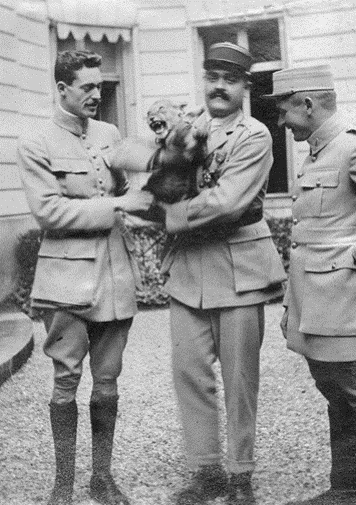
Figure 11: Bill Thaw holds the lion cub Whiskey in Paris while Kiffin (left) attempts to pet him. Fellow pilot Paul Pavelka (right) looks on.
After months of frustration, having a confirmed victory followed by a week’s leave seems to have done Kiffin a world of good. His letters took on a cheerier tone and photographs show him smiling, although he looked much older than his twenty-four years. While relaxing in Paris he chipped in with several fellow pilots to purchase a pet that would become the squadron’s famous mascot – a baby lion cub named “Whiskey.” He could also look forward to the squadron’s receiving new aircraft in Luxeuil – the Nieuport 17. Finally, he would have a belt-fed machine gun synchronized to fire through the propeller! (The plane was also equipped with a drum-fed Lewis on the top wing as back-up, as early examples of the belt-fed gun were prone to jamming.)
When the pilots arrived at Luxeuil they discovered their planes had not yet arrived. The Battle of Verdun was still raging, and the British had launched an offensive at the Somme which was putting an additional strain on the supply of French aircraft. When a few planes did begin to trickle in there were only enough ammunition belts to arm two planes.
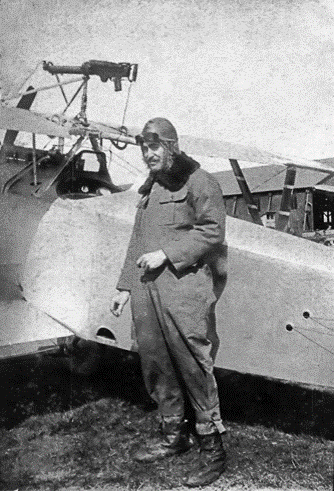
Figure 12: A smiling, but older-looking Kiffin stands beside his Nieuport 17 after the squadron returned to Luxeuil. This picture was taken two days after Kiffin turned 24, and the day before he was shot down and killed.
Capt. Thénault assigned one of the two planes to Kiffin, and the other to Raoul Lufbery. They flew two patrols on September 22nd but encountered no enemy aircraft. They flew another patrol the next morning and ran into three enemy Fokkers. Lufbery’s gun jammed early in the dogfight and a German bullet broke a spar on his Nieuport. He and Kiffin successfully disengaged from the Fokkers and Kiffin covered Lufbery as he flew to the nearest French airfield and landed for repairs. Kiffin continued the patrol on his own. He spotted a German Albatros two-seater, flying in almost the same location where Kiffin had scored his first victory four months previously. Kiffin had learned much about aerial combat during those months, but for some reason he decided to make the same bold headlong dive at the enemy plane that had succeeded the first time. Once again, he ignored the enemy fire and did not begin firing himself until a collision seemed imminent. This time, however, it was the German plane that swerved to avoid the collision. Kiffin’s plane continued its dive, shedding a wing and spinning violently into the ground. Kiffin had been shot in the chest, and his lifeless hands no longer controlled the plane. That afternoon Capt. Thénault gathered the squadron’s pilots and tearfully announced “The best and bravest of us all is no longer here.”
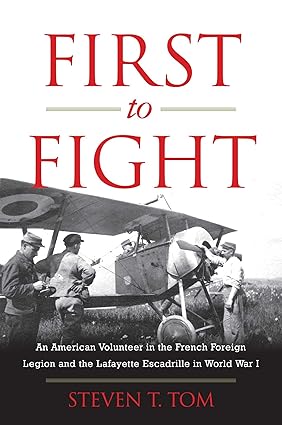 When I began writing my biography of Kiffin my goal was to finish it by the 100th anniversary of Kiffin’s death. I succeeded. I had learned much about researching and writing, but I still didn’t know anything about publishing. I was excited whenever a new WW1 book came out, and I assumed agents and publishers would jump at the chance to publish a biography of Kiffin Rockwell. It wasn’t that easy. I spent the next year contacting more than a hundred literary agents, tailoring each query letter to their particular interests, and preparing book proposals in formats requested by agents who wanted additional information. Finally, I found the right agent. He found a publisher within a few months, but the publisher had a two-year backlog. Three other biographies of Kiffin Rockwell were published as I waited for the release of my book, but I still met my goal. My goal had not been to publish the first, or the only biography of Kiffin. My purpose had been to ensure this remarkable American would not be forgotten. The other books helped achieve that goal.
In 2014 my wife and I took a trip to Europe to celebrate our 30th wedding anniversary. We visited Luxeuil, where Kiffin is now buried. My wife brought some flowers to place on his grave. When we found his grave, we were astonished to find it was already decorated with fresh flowers. As my wife placed her bouquet beside them, we heard the unmistakable sound of military jets overhead. The Lafayette Escadrille still exists as a French Air Force unit, and at the time they were stationed at Luxeuil. Two Mirage fighters were flying over Kiffin’s grave, as if they were keeping watch over their fallen comrade. I later learned the fresh flowers we found had been placed there by a Lafayette Escadrille veteran’s group on Memorial Day. That is not a French holiday, but the squadron knew it was an American holiday and Kiffin was an American. The French have not forgotten the Americans who gave their lives to help save France during World War I.
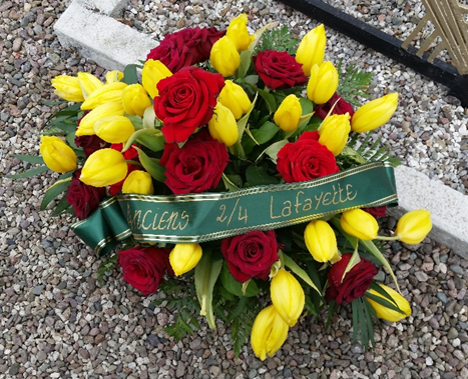
Figure 13: Flowers placed on Kiffin’s grave by French.
 Steve Tom grew up in northern Indiana, traveled around the world during a 20+ year Air Force career, and continued to travel during a 20-year career as a professional engineer. He has had a lifelong interest in World War I, and when he retired from his engineering career he wrote First to Fight, a biography of Kiffin Rockwell published by Stackpole Books. He followed this book with The Aviator, a biography of Kiffin’s fellow pilot Jim McConnell published by Schiffer Military. (Read the backstory of The Aviator here.) Steve has also had a lifelong interest in antique cars, not as objets d’art to be tucked away in a garage but as living history to be driven and used for daily transportation. His adventures and misadventures driving vehicles such as a 1928 Ford, a $50 MGA, and several other rolling wrecks are documented in his book Flaming Floorboards. (The title comes from the fact that he has had the wooden floorboards of old cars catch fire while he was driving them.) Steve has a PhD in mechanical engineering and is a member of the League of World War One Aviation Historians. Excerpts from his books, a photo supplement to First to Fight, non-fiction articles, and short stories are available on his author web site at www.random-writings.com.
Photo Credits:
Figure 1: Photo courtesy of Sybil Robb
Figure 2: Paul Ayres Rockwell Collection, Special Collections Department, Washington and Lee University, Lexington, VA
Figure 3: Paul Ayres Rockwell Collection, Special Collections Department, Washington and Lee University, Lexington, VA
Figure 4: Illustration courtesy of Military Illustrated magazine, October/November 1988 issue, back cover.
Figure 5: Kiffin Y. Rockwell Papers, WWI Papers, Military Collection, State Archives of North Carolina, Raleigh, N.C
Figure 6: Paul Ayres Rockwell Collection, Special Collections Department, Washington and Lee University, Lexington, VA
Figure 7: Author’s collection.
Figure 8: Paul Ayres Rockwell Collection, Special Collections Department, Washington and Lee University, Lexington, VA
Figure 9: Paul Ayres Rockwell Collection, Special Collections Department, Washington and Lee University, Lexington, VA
Figure 10: Kiffin Y. Rockwell Papers, WWI Papers, Military Collection, State Archives of North Carolina, Raleigh, NC
Figure 11: Kiffin Y. Rockwell Papers, WWI Papers, Military Collection, State Archives of North Carolina, Raleigh, NC
Figure 12: Kiffin Y. Rockwell Papers, WWI Papers, Military Collection, State Archives of North Carolina, Raleigh, NC
Figure 13: Author’s photo.
External Web Site Notice: This page contains information directly presented from an external source. The terms and conditions of this page may not be the same as those of this website. Click here to read the full disclaimer notice for external web sites. Thank you.