How World War I ace Eddie Rickenbacker survived 24 days at sea
Published: 22 September 2026
By Stephen Ruiz
via the We Are The Mighty website
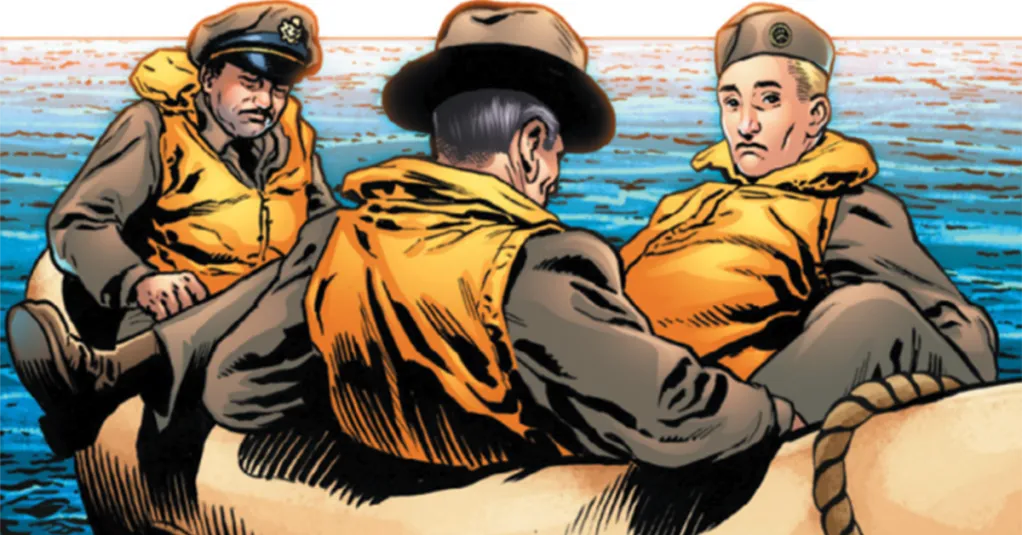
eddie-rickenbacker-survival-at-sea-courtesy
Eddie Rickenbacker didn't know whether he and 7 others would ever be rescued after their plane went down in the Pacific Ocean in 1942. (Association of the United States Army)
On October 21, 1942, a B-17D Flying Fortress encountered navigational problems over the Pacific Ocean.
Those issues caused the aircraft to veer off course and miss its scheduled refueling stop. Without any gas left, the pilot, Capt. William Cherry, ditched the plane in the water between Hawaii and New Guinea.
Besides Cherry, seven other men were on board, and they quickly filled three life rafts. One of the survivors was World War I flying ace Eddie Rickenbacker, who was en route to deliver a secret, verbal message to Gen. Douglas MacArthur.
Rickenbacker, who died on July 23, 1973, at the age of 82, once contended that he made it through 135 close calls with death during his lifetime. Spending 24 days at sea certainly qualifies.
“We did not know where we were, and no one else did, either,” Rickenbacker confided in his autobiography. “We were the only ones in the whole world who knew we were alive.”
Rickenbacker’s time adrift in the Pacific provides the basis for the Association of the United States Army’s latest graphic novel, “Medal of Honor: Eddie Rickenbacker.”
Struggling with Low Morale
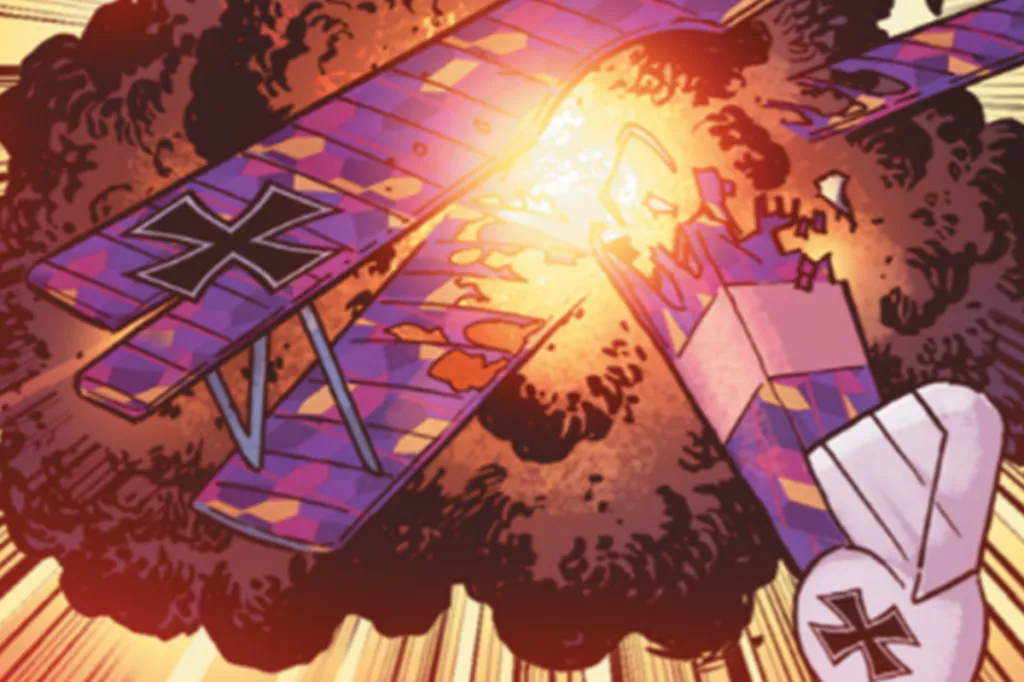
The most recent AUSA graphic novel is about Eddie Rickenbacker, one of the greatest fighter pilots ever. (AUSA)
The graphic novel weaves a tale of Rickenbacker trying to distract his companions from their life-threatening predicament. In its telling, he regaled them with his exploits as a fighter pilot. In reality, Rickenbacker—who shot down 26 enemy targets during WWI—had little time for nostalgia.
Rickenbacker, who received the Medal of Honor after shooting down two German planes in 1918, had to stay focused on the present. It wasn’t pretty. Their food supply consisted of only four oranges, and they had very little water. In addition, most of the men had ditched their clothing in case they had to swim, leaving them painfully exposed to the brutal sunlight. Some sustained blisters so severe that they howled in agony.
Rickenbacker remained in his suit, and a hat covered his head. Although his clothes provided some protection from the sun, he still suffered. Rickenbacker developed sores on his body as a result of the saltwater that splashed on him, according to American Heritage, a history media outlet.
Whatever pain that Rickenbacker felt, he was determined not to succumb to the negativity of his situation. He was equally focused on making sure the other men didn’t, either, even if that meant becoming confrontational and sometimes flat-out mean.
“I used every trick I knew on them,” Rickenbacker said in his autobiography. “To some, I spoke with encouragement…, but others required stronger medicine. I rode them; I tore them to pieces; I struck at every raw nerve in their bodies. One of the men screamed back at me, ‘Rickenbacker, you’re the meanest, most cantankerous so-and-so that ever lived!”
⇒ Read the entire article on the We Are The Mighty website here:
External Web Site Notice: This page contains information directly presented from an external source. The terms and conditions of this page may not be the same as those of this website. Click here to read the full disclaimer notice for external web sites. Thank you.