America’s Children at War
Published: 17 June 2026
via the Roads to the Great War website
WWI Children
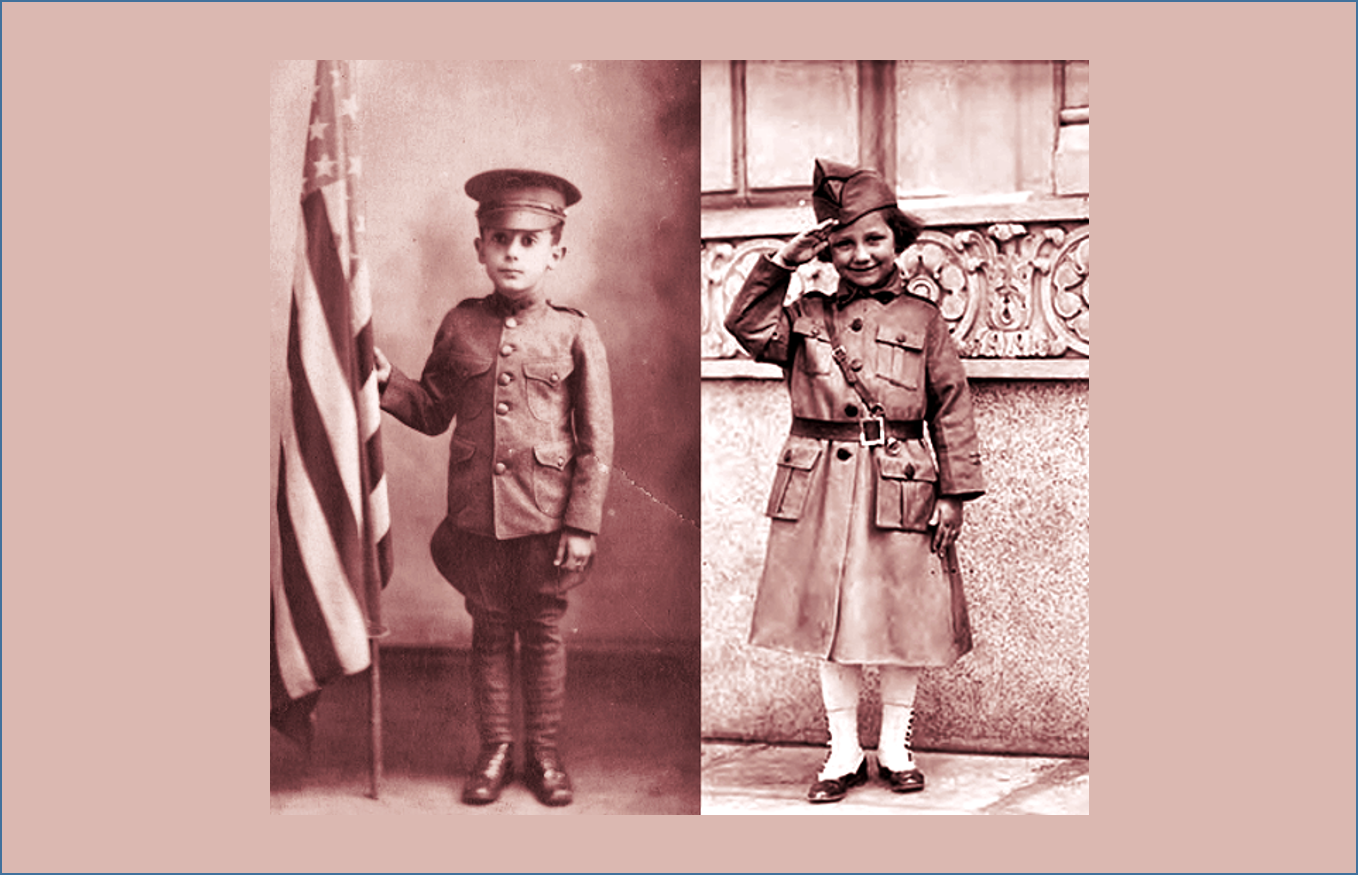
America’s schoolchildren served on the home front during World War I. Although American children were geographically removed from the physical destruction of the European front, World War I deeply impacted their lives.They were ceaselessly encouraged to actively contribute to the war’s home front by planting Victory Gardens, collecting scrap metal, and participating in the Junior Red Cross to raise millions in war bonds. This, along with the government’s call for children to help with the war effort, meant, quite simply, that children were forced to grow up quickly. As a consequence, the war was life-changing for hundreds of thousands of children throughout the country.
Probably, most significantly, they were their nation’s first generation to experience massive propagandizing. The Committee on Public Information (CPI) worked with schools and organizations, providing lesson plans and activities for teachers through their biweekly newsletter, National School Service. “Public schools are the most important agency” to “stimulate the patriotism of the child” as well as to advance “the cause of democracy.”
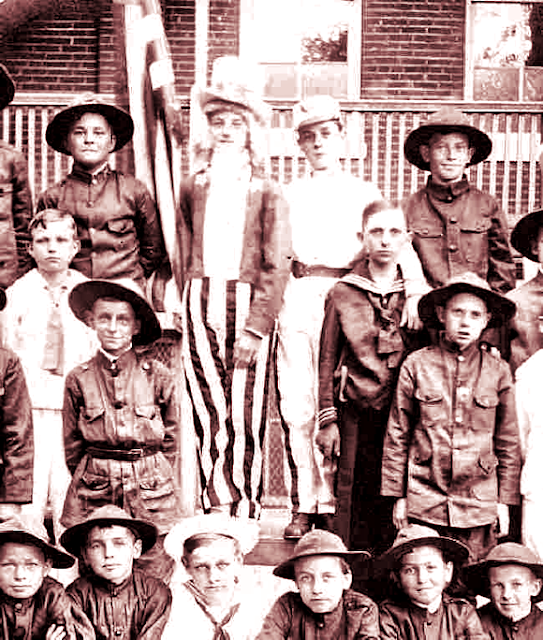
Four major themes were stressed: food production and conservation, thrift through War Saving stamps and Liberty bonds, patriotism, and service through organizations such as the Junior Red Cross. Teachers were encouraged to incorporate “true incidents of the war illustrating patriotism, heroism, and sacrifice” into story times for the younger children. Older students could have discussions around questions such as “Why save sugar?” and “What kind of world is safe for democracy?”
——
“No one has got quite so much fun out of the war as Billy and his inseparable companions, Fritters, George and Bean-Pole Ross. Clad in the khaki uniform of the Boy Scouts, with United War Campaign, Red Cross, War Saving, first, second, third, and fourth Liberty Loan buttons, small American flags and service pins spread across their chests, they have lived the war from morning to night.”
Florence Woolston, in a New Republic article, writing of her 12-year-old nephew Billy
——–
Children were also viewed as a conduit to adults: “Every school pupil is a messenger from Uncle Sam,” encouraging parents to purchase Liberty Bonds and to participate in war efforts. Secretary of the Treasury William McAdoo appealed directly to children:
“Every little girl and every little boy and every big girl and every big boy in the United States can help their Government in this great war, and help our noble sons and brothers who are fighting this war for us, by saving their money and lending every cent of it to the Government.”
How could children contribute? “They could sell and buy war bonds and stamps, plant gardens, help on the farm, save peach pits, knit sweaters, build cabinets, post bills… They could send old newspapers to troops… They could make Christmas gifts… They could mail music to the front… They could raise pigeons…” More than 11 million children joined the Junior Red Cross, others worked via the Boy Scouts, Girl Scouts, YMCA and YWCA, and the United States School Garden Army.
Read the entire article on the Roads to the Great War website here:
External Web Site Notice: This page contains information directly presented from an external source. The terms and conditions of this page may not be the same as those of this website. Click here to read the full disclaimer notice for external web sites. Thank you.