A “Gift” from the Great War—The Universal Passport System
Published: 10 June 2026
via the Roads to the Great War website
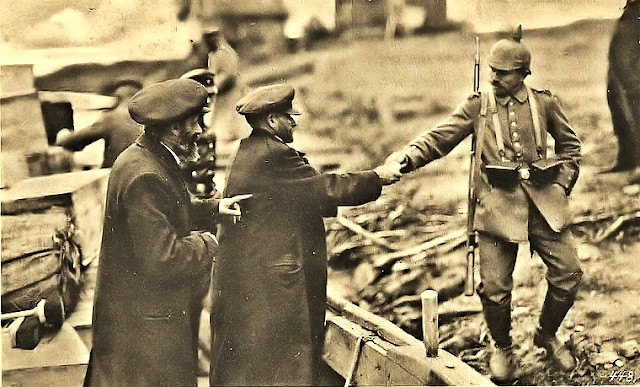
Passport control
Wartime Passport Control on the Nemunas River between Tilsit and Kaunas
A 1922 International Labor Organization’s report succinctly summarized the impact of the war on international travel. It pointed out that for much of the 19th century, migration was, generally speaking, unhindered and each emigrant could decide on the time of departure, arrival or return, to suit his own convenience. In periods of peace, passports were a rare requirement, although there were notable special cases, such as the border between the Ottoman and Russian empires and pre-unification.
But World War I’s outbreak brought harsh restrictions on freedom of movement. In 1914, warring states of Great Britain, France, Germany, and Italy were the first to make passports mandatory, a measure rapidly followed by others, including the neutral states of Spain, Denmark, and Switzerland. The British were the first to issue modern-style, photo-ID booklets.
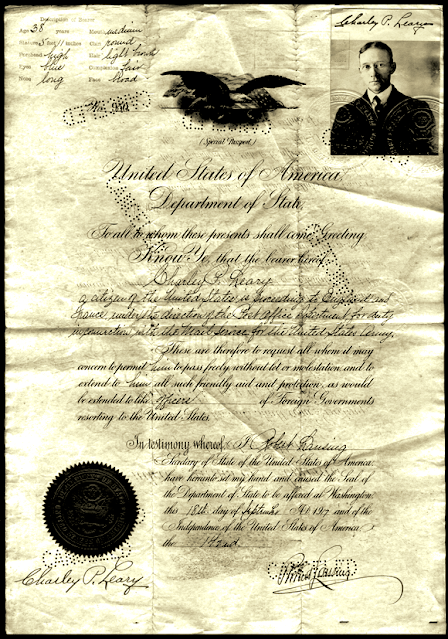
Special Wartime Passport for a U.S. Postal Worker.
At the end of the war, the regime of obligatory passports was widespread. In reaction, the 1919 Treaty of Versailles, which established the League of Nations, stipulated that member states commit to “secure and maintain freedom of communications and of transit.” To facilitate freedom of movement, participants agreed instead to establish a uniform, international passport, issued for a single journey or for a period two years. This is how we ended up with the format of the passports we use today. Participants also decided to abolish exit visas and decrease the cost of entry visas.
The first passport implementation conference was held in Paris in 1920, under the auspices of the League of Nations (the predecessor of the United Nations). Part of its Committee on Communication and Transit’s aim was to restore the prewar regime of freedom of movement.
Fences, however proved easier to build than to dismantle. The conference initially recognized that restrictions on freedom of movement affect “personal relations between the peoples of various countries” and “constitute a serious obstacle to the resumption of normal intercourse and to the economic recovery of the world.”
Read the entire article on the Roads to the Great War website here:
External Web Site Notice: This page contains information directly presented from an external source. The terms and conditions of this page may not be the same as those of this website. Click here to read the full disclaimer notice for external web sites. Thank you.