Built in a Hurry: How World War I Shaped American Industry, Veteran Care, and a Lasting Health Legacy
Published: 27 October 2026
By Laura Wright
Special to the Doughboy Foundation website
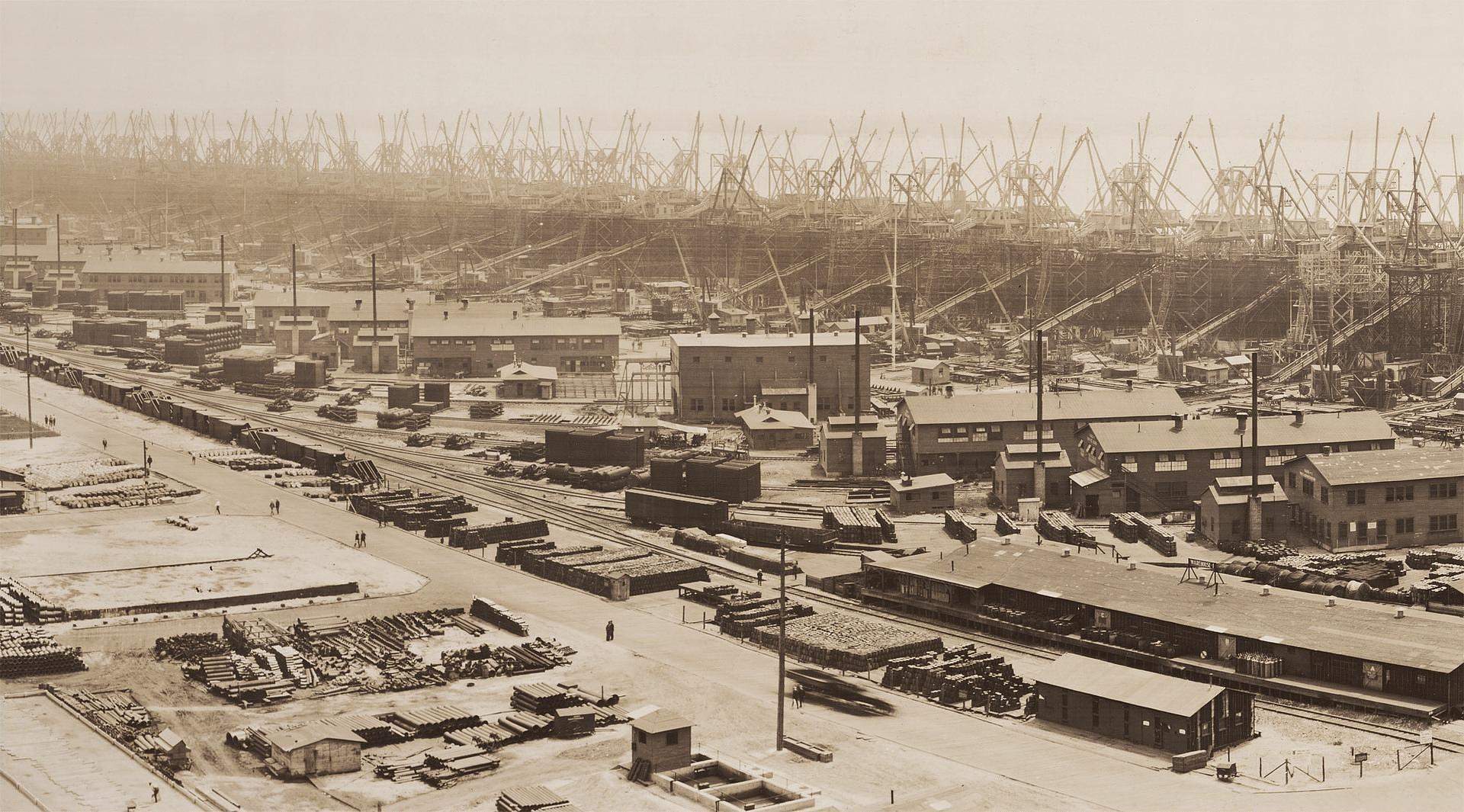
Hog Island shipyard_1
Hog Island Shipyard, which produced 122 ships during and after World War I. (Source: Smithsonian National Museum of American History.)
When the United States entered World War I in April 1917, the country wasn't ready. Its army was small, factories needed to ramp up production, and there weren't enough ships to carry American troops and supplies across the Atlantic.
The country had to act quickly. New shipyards opened, factories switched to military production, and thousands of Americans went to work supporting the war effort.
World War I changed how America built ships, employed workers, and cared for veterans. It also increased demand for industrial materials like asbestos, whose long-term health risks would take decades to fully understand.
A Nation Learns to Build
One of the largest shipbuilding projects of World War I took place at Hog Island, along the Delaware River near Philadelphia. The federal government established the shipyard in 1917 to help meet the urgent demand for cargo ships and troop transports.
Hog Island became one of the world's largest shipyards, with production numbers that were extraordinary for the time:
- Employment: The shipyard employed approximately 30,000 workers at its peak.
- Output: Workers built 122 cargo ships and troop transports over four years.
- Production rate: The yard launched one ship every five and a half days at peak production.
The shipyard launched its first vessel, the Quistconck, in August 1918, but it wasn't completed until December, after the war had ended. None of Hog Island's ships entered service before the November 1918 Armistice.
Still, the work at Hog Island had a lasting impact. The shipyard used prefabricated components to speed up construction, helping establish methods that would later influence Liberty and Victory ship production during World War II.
Hog Island even has a place in Philadelphia food history. According to one popular story, shipyard workers brought large sandwiches to work that became known as "hoggies," eventually giving the hoagie its name. Historians still debate whether the story is true.
The Workers Who Kept America Running
Building ships and producing military equipment required a much larger workforce. With millions of men entering military service, factories and shipyards began hiring people who previously had fewer opportunities in industrial jobs.
Women took on work traditionally held by men, including jobs in manufacturing and shipbuilding. Many Black Americans also moved from the rural South to northern industrial cities during the Great Migration, seeking better-paying work and an escape from segregation.
At Hog Island, workers learned to rivet steel plates, operate machinery, and assemble large sections of ships. Their efforts helped American factories and shipyards meet production demands that would have seemed impossible just a few years earlier.
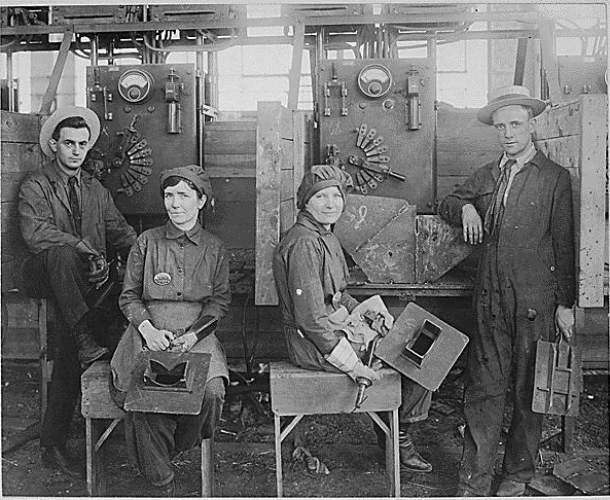
Women working as electric welders at Hog Island Shipyard during World War I. (Source: The Encyclopedia of Greater Philadelphia, National Archives photograph.)
The effects reached well beyond the workplace. Industrial jobs brought families to new cities, increased demand for housing, and changed American communities.
How Asbestos Became Part of Wartime Industry
Ships built during World War I depended on steam-powered engines, boilers, and miles of piping. These systems produced intense heat, and preventing fires was an important part of keeping ships safe.
Asbestos was one material used to protect equipment from high temperatures. It was durable and naturally resistant to heat and fire.
By the time the United States entered the war, asbestos was already used in several industrial products, including:
- Boiler insulation: Insulated hot equipment and helped prevent heat loss.
- Brake linings and clutch parts: Withstood heat generated by friction in machinery.
- Gaskets and packing: Sealed engine components exposed to high temperatures.
- Pipe coverings: Insulated steam pipes and protected nearby surfaces from heat.
Historical records show that asbestos was part of U.S. Navy supply planning during World War I. In July 1918, the Navy published a notice seeking bids for asbestos felting, millboard, packing, paper, and plaster for delivery to Navy yards.
The notice included proposed purchases of 47,750 pounds of asbestos paper and 271,000 pounds of asbestos plaster.
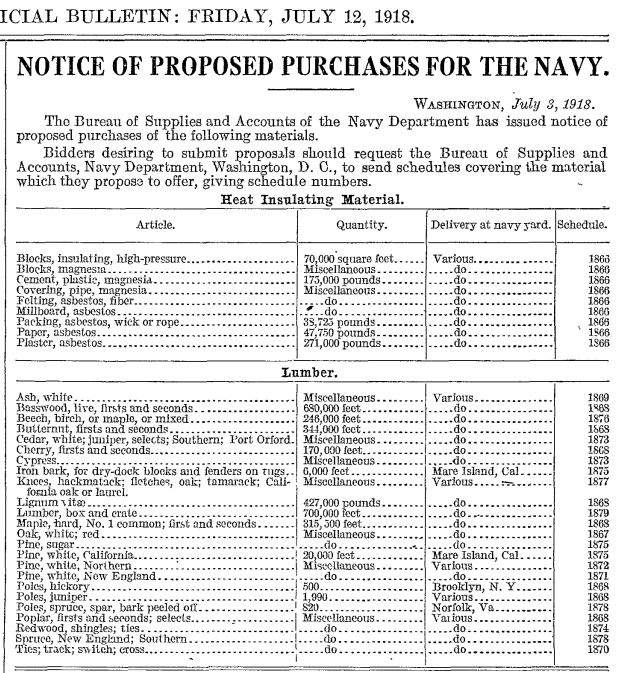
A July 1918 Navy purchasing notice listed several asbestos products requested for U.S. Navy yards.
But workers who handled asbestos could inhale tiny fibers released into the air. Once inside the body, those fibers can remain for years and cause serious health problems.
When the Doughboys Came Home
After the war ended in November 1918, millions of American service members returned home. Many were dealing with injuries, illnesses, or psychological trauma from their time in combat.
Caring for these veterans became a major challenge. Although the federal government had established benefits during the war, the programs were spread across several agencies. Veterans often struggled to get medical care, disability compensation, and other assistance.
How Veterans' Care Changed After World War I
- 1917: The War Risk Insurance Act expanded disability compensation and insurance protections for service members.
- 1921: Congress established the Veterans Bureau to coordinate benefits, medical care, and rehabilitation.
- 1930: The Veterans Administration was created to oversee federal veterans' programs and services.
- 1989: The Department of Veterans Affairs began operating as a Cabinet-level department.
Despite these changes, the early system struggled to care for veterans with tuberculosis, physical disabilities, and psychological conditions that were not well understood. As hospitals and services expanded, these programs helped lay the foundation for the VA health care system that serves veterans today.
The Health Risks That Took Decades to Understand
While American industry grew quickly during World War I, research into workplace health hazards moved much more slowly.
Doctors had begun documenting the dangers of asbestos exposure before the war. In the early 1900s, British physician H. Montague Murray reported lung damage associated with asbestos dust. In 1918, American statistician Frederick L. Hoffman published findings about respiratory disease among workers in dusty industries, including asbestos manufacturing.
During the 1920s, physicians further documented asbestosis, a chronic lung disease caused by breathing in asbestos fibers. But another serious asbestos-related disease remained poorly understood: mesothelioma.
Why Mesothelioma Can Develop Decades After Exposure
Mesothelioma is a rare and aggressive cancer that usually affects the lining of the lungs or abdomen. It is primarily caused by asbestos exposure, but the disease often doesn't develop until 20 to 50 years or longer after exposure.
This long delay made it difficult to connect the disease to earlier jobs or military service. For example, a worker exposed to asbestos in a shipyard could feel healthy for decades. By the time symptoms developed, the person might have been retired for years.
In 1960, researchers in South Africa published important findings linking asbestos exposure to mesothelioma. Studies involving American insulation workers during the 1960s provided further evidence.
By then, asbestos had been used in American factories, ships, and other workplaces for generations. Because mesothelioma was not widely recognized earlier, it's impossible to know how many workers and veterans from the World War I era developed the disease.
How Asbestos Exposure Still Affects Veterans Today
The use of asbestos in military equipment continued long after World War I. Throughout much of the twentieth century, asbestos-containing materials were common on Navy ships, in shipyards, and in military vehicles and buildings.
Veterans could have encountered asbestos in:
- Brakes and clutches: Heat-resistant components used in military vehicles and machinery.
- Older military buildings: Insulation and construction materials containing asbestos fibers.
- Pipes, valves, and gaskets: Heat-resistant materials used in shipboard piping systems.
- Ship engines and boilers: Asbestos insulation used to contain heat and prevent fires.
Navy veterans and shipyard workers were among those at greater risk because they often worked in enclosed spaces around asbestos-containing equipment.
Today, the Department of Veterans Affairs recognizes the connection between asbestos exposure and several serious illnesses, including mesothelioma. Veterans may qualify for VA disability compensation and health care benefits if they can establish that their illness is related to asbestos exposure during military service.
Veterans concerned about asbestos exposure should speak with their doctor about their military work history and any symptoms. They can also review the VA's information about asbestos exposure and disability benefits.
Support for Veterans and Families Facing Mesothelioma
A mesothelioma diagnosis can leave veterans and their families with questions about treatment, financial assistance, and what to expect. Because the disease is rare, it can also be difficult to find people who understand what living with it is like.
Mesothelioma Hope offers free resources for patients, veterans, caregivers, and loved ones. Its monthly virtual support group gives people a place to ask questions, share experiences, and connect with others affected by mesothelioma.
The meetings are held online, so participants can join from home. Patients and families can learn more about Mesothelioma Hope's support group and register for an upcoming session.
Remembering the Full Story of World War I
World War I changed American industry and the lives of the people who worked in it. Shipyards like Hog Island introduced new production methods, while factory jobs brought opportunities to women, immigrants, and Black Americans moving north.
The war also brought lasting changes to veterans' care. Programs created to support returning doughboys eventually developed into the Department of Veterans Affairs.
At the same time, materials once considered useful, including asbestos, exposed workers and later generations of service members to health risks that weren't fully understood at the time.
The history of World War I includes the soldiers who fought overseas and the people who worked to support them at home. Remembering their contributions also means understanding the conditions they faced and the lessons that continue to matter for veterans and their families today.
 Laura Wright is a journalist and content strategist with more than 18 years of professional experience. She attended college at the University of Florida, graduating magna cum laude with a bachelor's degree in journalism in 2008. Her writing has been featured in The Gainesville Sun and other regional publications throughout Florida.
External Web Site Notice: This page contains information directly presented from an external source. The terms and conditions of this page may not be the same as those of this website. Click here to read the full disclaimer notice for external web sites. Thank you.