Springfield 1903 & M1917 Enfield Guide: America’s WWI & WWII Bolt-Action Rifles
Published: 25 October 2026
via the National Armory website

Springfield Armory header
The M1903 Springfield and the M1917 “American Enfield” are the two bolt-action .30-06 rifles the United States fought with in World War I, and both served again in World War II. A Springfield has a slim receiver marked “U.S. / SPRINGFIELD ARMORY” (or ROCK ISLAND ARSENAL, REMINGTON or SMITH-CORONA) with “MODEL 1903,” while the M1917 is a larger rifle with a dog-leg bolt handle, tall “ears” protecting the rear sight, and a receiver ring marked “U.S. MODEL OF 1917” over WINCHESTER, REMINGTON or EDDYSTONE.
A Short History of the Springfield 1903 and M1917 Enfield
After the Spanish-American War exposed the Krag-Jorgensen against Spanish Mausers, Springfield Armory developed a Mauser-pattern rifle that was adopted on June 19, 1903. It was first chambered for the round-nose .30-03; in 1906 the Army adopted the spitzer .30-06 and rifles were rechambered to match. Rock Island Arsenal joined Springfield in production.
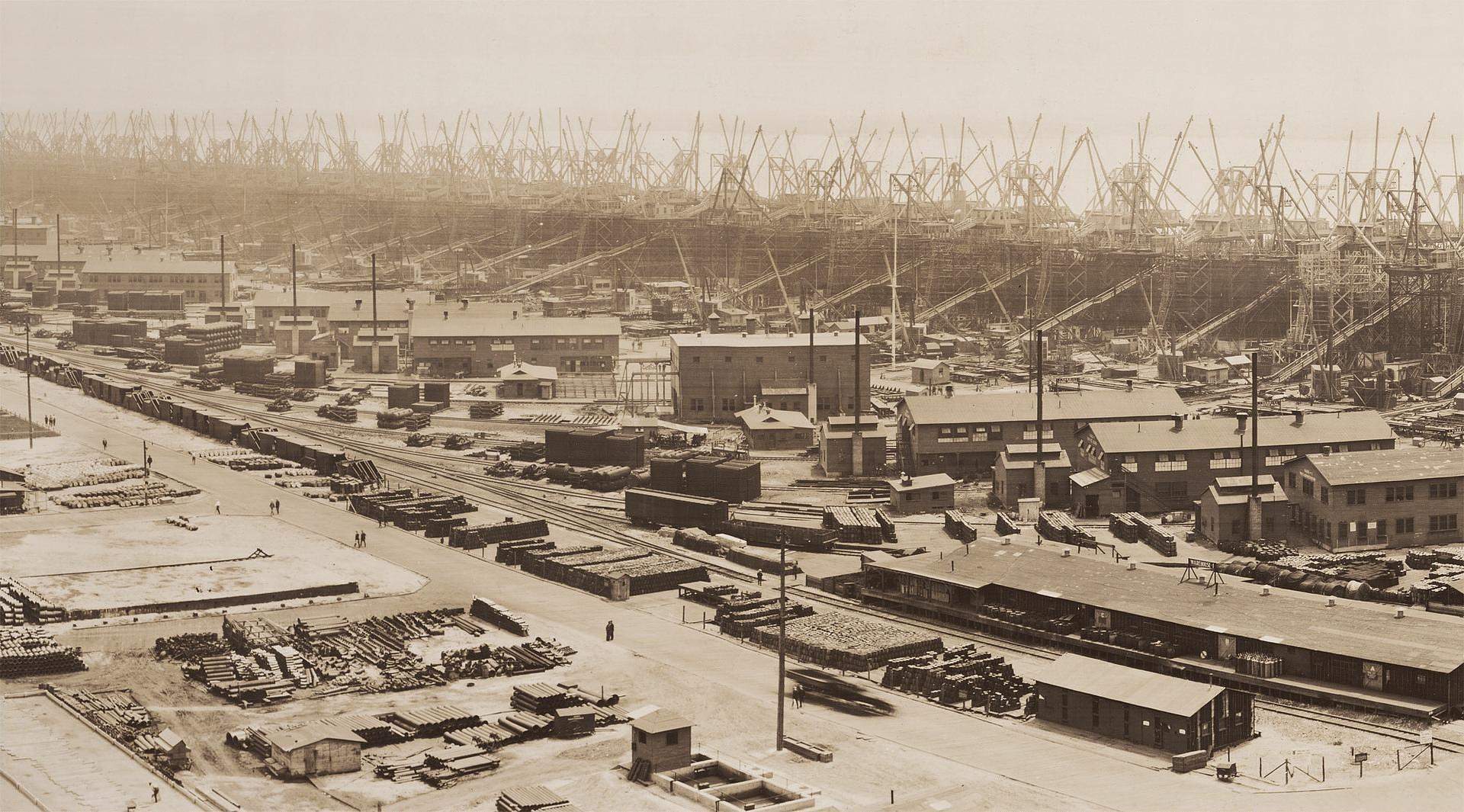
When the U.S. entered the war in April 1917, the two arsenals could not make Springfields fast enough. Winchester, Remington and the Remington-run Eddystone plant in Pennsylvania, however, had just finished building the British Pattern 1914 rifle in .303 and had their tooling in place. Ordnance redesigned the P14 for the rimless .30-06, and the M1917 was born. Eddystone built about 1,181,908, Remington about 545,541 and Winchester about 465,980, for a total of roughly 2.19 million rifles, more than twice the wartime Springfield output. That is why about three quarters of the American Expeditionary Forces in France carried the M1917, not the Springfield most people picture.
The M1 Garand replaced both as the standard rifle (see our M1 Garand guide), but Garand production could not meet demand in 1941-42. Springfields went back into production at Remington and Smith-Corona, and M1917s were rebuilt for training, second-line troops and Lend-Lease.
Springfield M1903 Variants
M1903 (1903-1930s)
The classic 24-inch barreled rifle with a straight-grip stock, a barrel-mounted rear sight and a magazine cutoff on the left of the receiver. Later production and rebuilds received the C-type pistol-grip stock.
M1903 Mark I (1918-1920)
Built to accept the secret Pedersen device, which converted the rifle to fire a .30-caliber pistol-sized cartridge semi-automatically from a 40-round magazine. Mark I rifles have an oval ejection port cut through the left side of the receiver, a matching relief in the stock, and a modified sear, trigger and cutoff. About 101,775 were made before the program was cancelled and the devices destroyed. Most Mark I rifles were later fitted with standard parts, but the ejection port remains the giveaway. Our 1919 Springfield Armory M1903 Mark I with the Pedersen device cut is a good example of the feature.
⇒ Read the entire article on the National Armory website here:
External Web Site Notice: This page contains information directly presented from an external source. The terms and conditions of this page may not be the same as those of this website. Click here to read the full disclaimer notice for external web sites. Thank you.