Aircraft of World War I: Fighters, Bombers, and Aces
Published: 19 October 2026
via the First Flight Centennial website
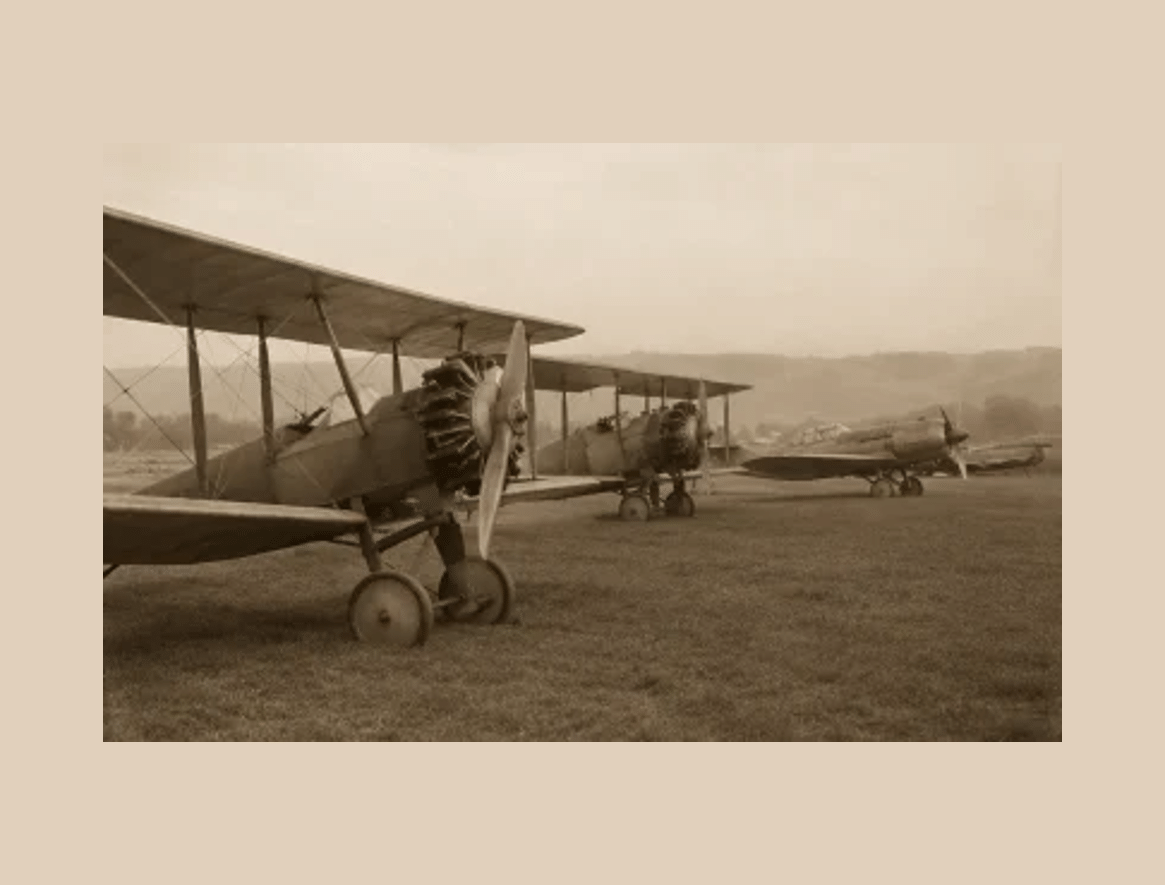
WWI Aircraft framed
Aircraft of World War I began as fragile eyes above the battlefield, then became scouts, artillery spotters, fighters, bombers, and instruments of public fear. In 1914, most combatant nations had only a handful of military airplanes, used chiefly to locate enemy positions and correct artillery fire. Four years later, pilots were dueling above the trenches, raiders were reaching London, and a few machines had become enduring symbols: the Fokker Eindecker, Sopwith Camel, SPAD XIII, and the Red Baron’s triplane.
Reconnaissance made the airplane indispensable
Reconnaissance was the airplane’s first and most important military job. From the cockpit, pilots photographed enemy positions, observed troop movements, and directed artillery fire. Throughout the war, that work continued even after fighters came to dominate its popular memory. With an observation report, a distant battery could correct its aim rather than fire blind.
That burden was shared by balloons. From a tethered balloon, observers watched the battlefield and sent information directly to headquarters by telephone. Despite their apparent stillness, balloons could offer a sustained view of ground activity that an aircraft passing overhead could not.
Those missions explain the rapid development of aerial combat. Seeing an opponent’s guns and positions gave an army a practical advantage; disrupting that view gave the other side a reason to defend its own aircraft and attack. From initially unarmed reconnaissance machines came specialized fighters, bombers, trench strafers, and night fighters. By war’s end, even the Sopwith Camel was used for low attacks on troops and for dropping 25-pound Cooper bombs.
The Fokker Eindecker changed how a fighter could fire
The Fokker Eindecker, a German single-seat monoplane that flew from May 1915, is considered the world’s first specialized fighter aircraft. Its importance went beyond the airframe. A forward-firing gun let the pilot aim the whole airplane at a target.
Synchronization gear, also called interrupter gear, made that arrangement possible. By stopping a machine gun when a propeller blade crossed its barrel, the mechanism let shots pass safely through the propeller arc. Anthony Fokker built the first working prototype by linking a cam on the oil pump of an Oberursel rotary engine to the trigger of a Parabellum machine gun. Earlier, on July 15, 1913, German designer Franz Schneider had filed a synchronization patent, but the military initially overlooked it.
In April 1915, French pilot Roland Garros used propeller deflector blades on his Morane-Saulnier. After his aircraft was captured, German work on synchronization accelerated. The resulting Eindecker advantage helped create the 1915–16 period remembered as the Fokker Scourge, when Allied air forces suffered heavy losses.
⇒ Read the entire article on the First Flight Centennial website here:
External Web Site Notice: This page contains information directly presented from an external source. The terms and conditions of this page may not be the same as those of this website. Click here to read the full disclaimer notice for external web sites. Thank you.