Strength Without Violence: The American Friends Service Committee in World War I
Published: 1 October 2026
via the Arch Street Meeting House Preservation Trust website
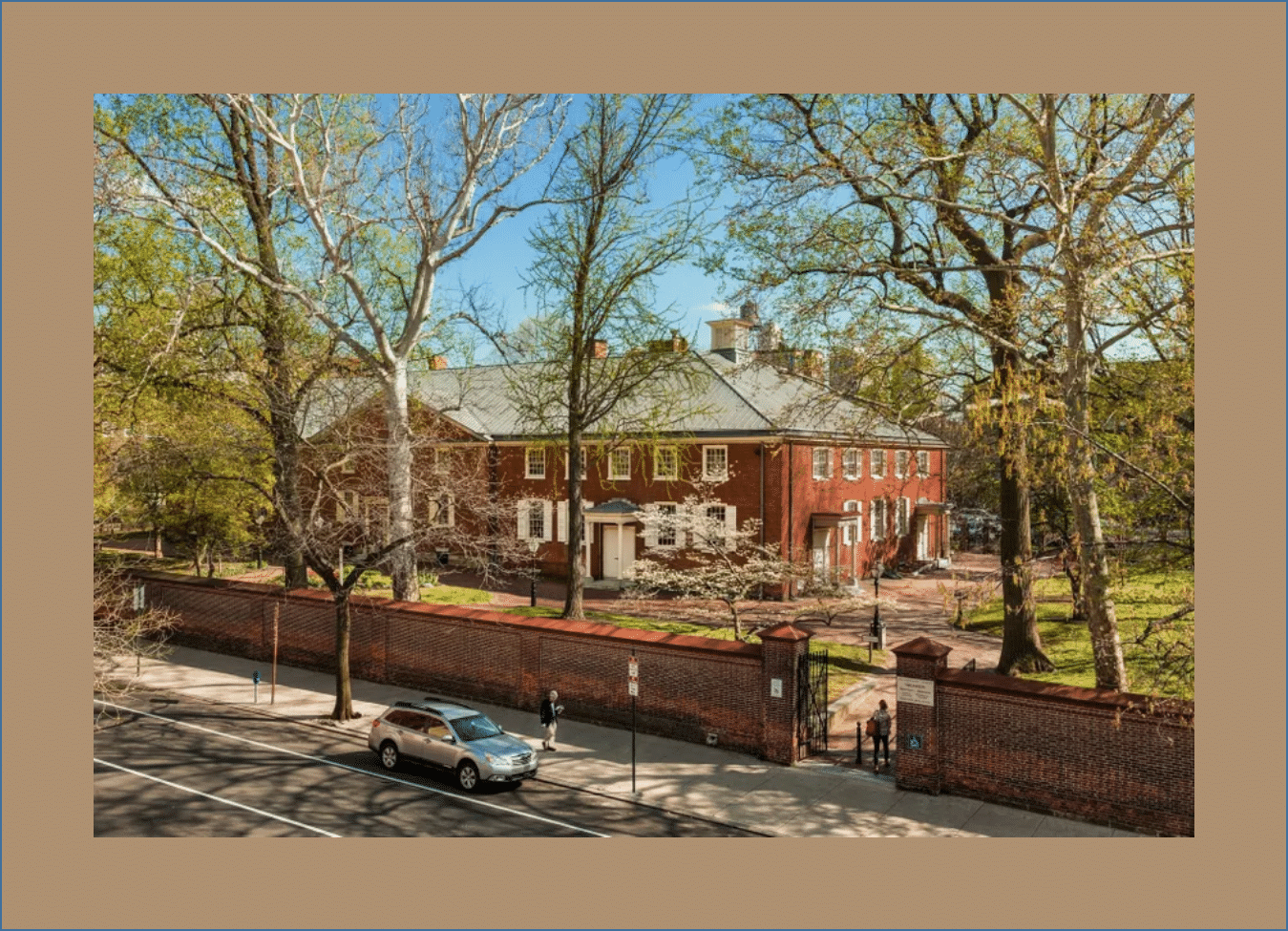
Arch Street Meeting House framed
Arch Street Meeting House
The year is 1917 and Europe has been at war for three years at this point in time. Germany had just sunk several merchant ships moving supplies to the United States’ allies, prompting President Woodrow Wilson to enter the United States into World War I. A draft was introduced, requiring those chosen to fight, or face time in prison. However, there were groups like the Quakers, who had religious beliefs that did not allow them to fight in a war. The most notable of these is the idea that, because God exists in everyone, there is no excuse to harm any other person. However, some Quakers did still fight, believing that fighting was the fastest way to end the war. This would lead to any Quakers who fought being “read out of their meeting” for doing so, which was, in summary, being disowned by the Quaker faith. However, most had wanted a different way to serve the country, one that would allow them to hold true to their pacifistic beliefs at the same time. From their pleas, the American Friends Service Committee, or AFSC, was formed in 1917 by members of the Religious Society of Friends in America and Canada, after which the American Friends Service Committee would go on to have a major impact on the relief progress in World War I by leading the charge in reconstruction efforts as well as mass feeding programs after the war.
Through the AFSC, Quakers, as well as other Conscientious Objectors, (People who, due to conscious or religious reasons, would refuse to participate in war) to help the United States and its allied countries without raising arms. The AFSC would primarily focus on helping the victims of the war off the battlefield. Here, members of the AFSC would help the citizens living all across Europe. During the war, A large portion of their work was reconstruction. One example of their work was seen in Lorraine, France. Here, volunteers would be tasked with assisting with the reconstruction of the 200 Square Miles that the town had consisted of, needing to rebuild over 95% of the town’s homes, shops, and businesses. They also worked together to found a Maternity Hospital, as well as helped feed refugee children.
France however was not the only place that was harmed by the destruction caused by World War I, and the AFSC knew this as well, so they got to work, spreading out to several other countries to help them recover. These countries would include Austria, Hungary, Russia, Germany, and more. The largest of those relief efforts being Quakerspeisung, or “Quaker Feeding” in Germany. Germany specifically was hit extremely hard with the aftermath of the war, due to their extreme rationing of food during the war causing less to be available to the people, as well as the fact that Germany was in severe debt due to the Treaty of Versailles. This led to hundreds of thousands of people starving to death in what became known as the Turnip Winter (1916-17). However, after the war, Quakers from Europe and America both took over the relief operations in Germany to help feed the people, specifically the children between the ages of 2 and 14 as well as nursing or pregnant mothers would receive food such as bread, soup, beans, and rice. The amount of people involved was incredible, with a thousand Quaker volunteers supported by about 50,000 German citizens willing to help. Over the course of Quakerspeisung alone, over 5 million children were fed, showcasing the monumental effect that the Quakers had during the recovery of Europe after World War I.
⇒ Read the entire article on the Arch Street Meeting House Preservation Trust website here:
External Web Site Notice: This page contains information directly presented from an external source. The terms and conditions of this page may not be the same as those of this website. Click here to read the full disclaimer notice for external web sites. Thank you.