The Story of WWI Medal of Honor Recipient, Milo Lemert
Published: 9 June 2026
By James B. Angel
Special to the Doughboy Foundation website
James_Angel_framed
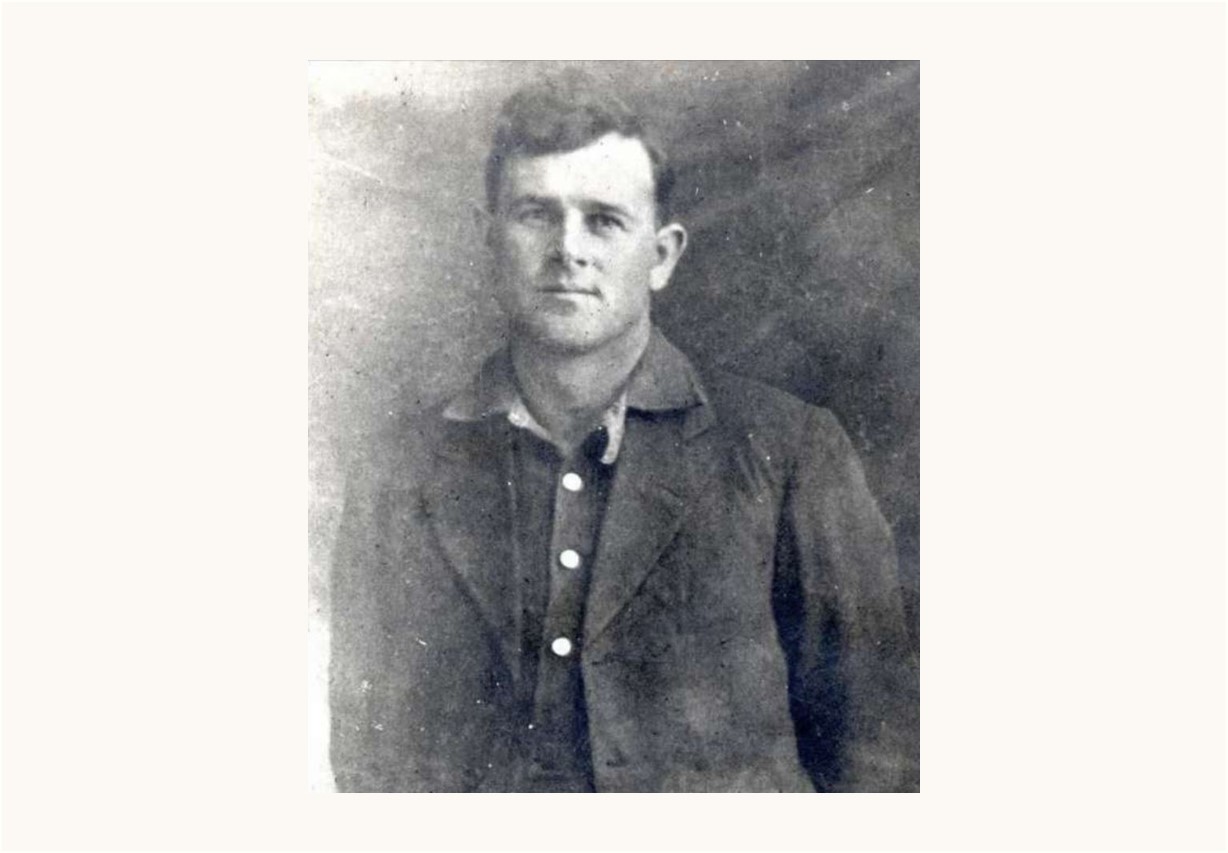
First Sergeant Milo Lemert (Medal of Honor Society)
“He gave his life for his country, and there wasn’t an ounce of cowardice in his big body. He died like a man and hero.”
– Nathan Lemert
Milo Lemert was born on March 25th, 1890, to Edward and Harriet Lemert in Marshalltown, Iowa.[i] His father, a thrice-wounded Civil War veteran who served with an Ohio regiment, would move his family to the town of Crossville, Tennessee, in 1912. Milo would spend his formative years here, and in other locations across the country, working and sending home money to his family.
Following President Woodrow Wilson’s call for volunteers during World War I, Milo and his brother, Nathan, enlisted in the Tennessee National Guard in June 1917. In October 1917, Milo was assigned to Company G, 119th Infantry Regiment, 30th Division. He subsequently trained with his unit at Camp Sevier, South Carolina, where his natural leadership abilities helped him quickly rise to the rank of sergeant.[ii] During this time, he would also meet and marry Nellie Snodgrass on September 29th, 1917. Nellie, who was also from Crossville, was teaching at a women’s college near the camp.
After the completion of training, His unit was sent overseas, with him arriving in France in May of 1918. The 30th Division was assigned to British command; after their arrival, the unit would begin to train with the B.E.F (British Expeditionary Forces).
“The 119th Infantry was very fortunate in receiving a cadre of instructors from the 9th Black Watch and the 9th and 10th Gordon Highlanders, under the command of Brig. Gen. N. S. Hubbard, 118th Infantry Brigade (British) and under the direct supervision of Col. Cruickshank, Lt.-Col. Sworder, Lt.-Col. Lord Gordon and Lt.-Col. Anderson. The training was divided into two phases, i. e.: A and B. While in this area, phase A was mastered. This training consisted of 36 hours of instruction for the first week, 25 hours for the second week, 26 hours for the third week, and 20 hours for the fourth week.”[iii]
By July of 1918, the 119th Infantry Regiment began to help the B.E.F man the trenches in the area near Ypres; there they would conduct “Phase B” of the training. The following month, the regiment was assigned to the canal sector.
“The Canal sector was the general line extending from immediately southeast of Ypres, about two miles southwest to Elzenwalla, inclusive, on both sides of the Ypres-Commines Canal, and the country on this immediate front was very low and wet, thus causing many hardships upon the troops occupying it. To the right of the Canal sector stood Mount Kemmel, from the top of which the Germans had a dominating view of the entire sector, thus causing camouflaged screens to be erected on all main roads leading towards the front, and making it very difficult to move about during the day”[iv]
In late August, Milo and his regiment began to do combat patrols on the German lines while they were in the sector.
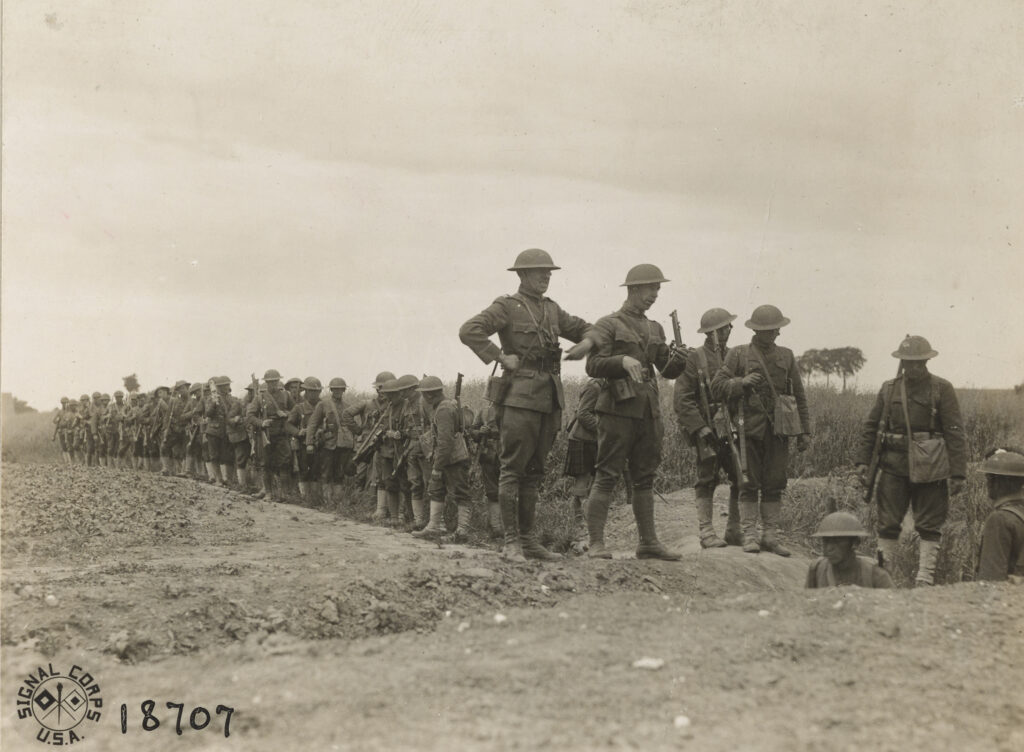
The 119th Infantry, July 8, 1918. (NARA)
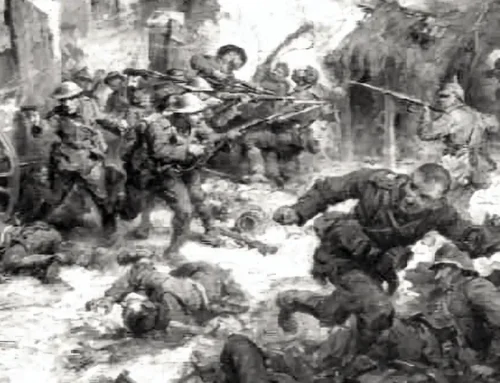
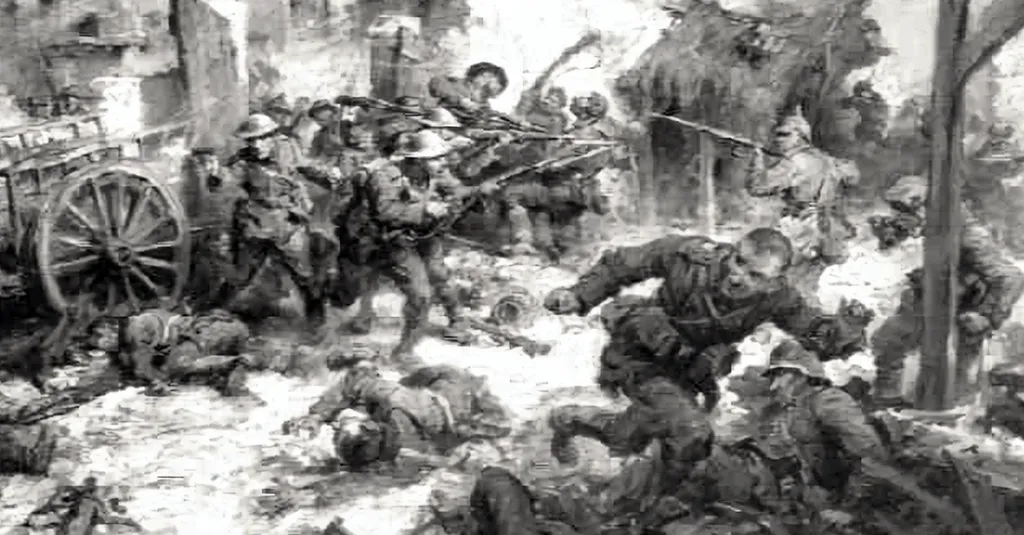
The unit would be assigned to various sectors until further being assigned to break the Hindenburg Line and to take the St. Quentin tunnel, located near Bellicourt, France. On the morning of September 29th, 1918, at 5:50 AM, the regiment was ordered to attack. The regiment would meet heavy German resistance with machine gun positions. In this engagement is where Milo would perform the actions for which he would be awarded the Medal of Honor. A fellow member of his regiment, Litton Thurman, would write about Milo and this action:
“And with coolness and courage led the command forward throughout the day… With a few other men, he faced heavy machine gun and grenade fire to charge an enemy emplacement. We went over the top Sunday morning and took one of the strongest points on the famous Hindenburg Line that they had been holding for four years. We drove them about three miles in four hours, and we sure had some hard fighting and had several casualties. Milo Lemert was killed by my side as we were going into a machine gun post, but we took it, and many others, and the Huns were thick, and the ground was covered with the dead.” [v][vi]
First Sergeant Lemert’s Medal of Honor Citation would read.
“Seeing that the left flank of his company was held up, he located the enemy machine gun emplacement, which had been causing heavy casualties. In the face of heavy fire, he rushed it single-handed, killing the entire crew with grenades. Continuing along the enemy trench in advance of the company, he reached another emplacement, which he also charged, silencing the gun with grenades. A third machine gun emplacement opened up on him from the left and with similar skill and bravery he destroyed this also. Later, in company with another sergeant, he attacked a fourth machine gun nest, being killed as he reached the parapet of the emplacement. His courageous action in destroying in turn 4 enemy machine gun nests prevented many casualties among his company and very materially aided in achieving the objective.”[vii]
Single-handedly destroying three machine-gun positions and helping assault a fourth, Lemert’s actions saved the lives of many of his fellow soldiers and contributed significantly to the success of the attack. He was mortally wounded while advancing on the final position.
Tragically, September 29, 1918, was also the first anniversary of Milo and Nellie’s wedding.
Milo’s brother, Nathan, would later write home to his mother, letting her know of the death of her son:
“By the time you get this letter, you will have heard of Milo getting killed in battle September 29th. I don’t see why he couldn’t have gotten through. Some of the boys got through without a scratch. There is no use to grieve tho [SIC] , Mama. He was willing and ready to go. He gave his life for his country, and there wasn’t an ounce of cowardice in his big body. He died like a man and hero. No one can die a braver death than he did….. He was right in the heaviest of the fighting, ‘trying to keep the boys together and run out a nest of machine guns when a machine gun bullet got him through the body. His last words were ‘I am finished, boys, give them hell.’ I wish that every man who has to die over here could die like he did: like a man fighting for his country. I helped bury him. We put him with the rest of our boys who were killed. They certainly did put up a fight. I wish you knew how brave our boys are.”[viii]
In 1919, Neile would be presented with the Medal of Honor at the courthouse in Crossville; by 1921, his body would be returned to the United States, where he would later be buried in Crossville. Milo’s story is one of the many Tennesseans who ultimately gave their life in the fighting in the First World War.
In May of 1919, a poem was published in the local newspaper in his honor.
“Facing the foe in that place of death,
Mid shot and shell,
Fighting for us with his latest breath,
Our hero fell.
He died that the home-fires might burn on,
He gave his all,
That the world might live secure from harm,
And tyrant thrall.
O, glorious death! Though our tears fall fast
For that brave life,
Too swiftly sped in its youth’s glad morn,
By red war’s strife.
The flowers will bloom on that blood-stained field,
As the years pass by,
And the glorious tale will live for aye,
Forever and aye.
Over the seas in France he sleeps,
Under the sod;
But his dauntless soul moves on with God,
At home with God.”
Mrs. Lillian Benedict
Pomona, Tennessee[ix]
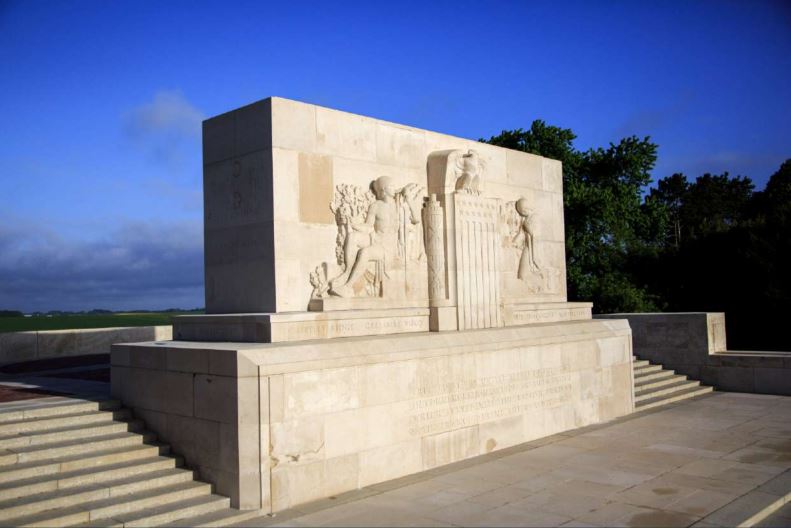
The Bellicourt American Monument is located just north of the village of Bellicourt in the Aisne department of France. (ABMC)
[i] Fold3, “Lemert, Milo — Page 1, U.S. WWI Draft Registration Cards, 1917–1918,” accessed June 3, 2026, https://www.fold3.com/image/552670795/lemert-milo-page-1-us-wwi-draft-registration-cards-1917-1918.
[ii] Fold3, “Oct 1917, Page 8, U.S. Morning Reports, 1912–1939,” accessed June 3, 2026, https://www.fold3.com/image/707397596/oct-1917-page-8-us-morning-reports-1912-1939
[iii] Conway, Colean Berkley 1893-; Shuford, George A. History 119th Infantry, 60th Brigade 30th Division, U.S.A Operations in Belgium and France, 1917-1919, 1920 (7,12,17,45,46)
[iv] Conway, Colean Berkley 1893-; Shuford, George A. History 119th Infantry, 60th Brigade 30th Division, U.S.A Operations in Belgium and France, 1917-1919, 1920 (7,12,17,45,46)
[v] Crossville Chronicle, “November 6, 1918 Issue,” November 6, 1918, accessed June 1, 2026
https://www.loc.gov/item/sn85042757/1918-11-06/ed-1/
[vi] It is of note that Sgt. Litton Thurman would receive the Distinguished Service Cross for this action.
[vii] Fold3, “Milo Lemert, U.S. Medal of Honor Recipients, 1863–2013,” accessed June 1, 2026, https://www.fold3.com/sub-image/299300897/lemert-milo-us-medal-of-honor-recipients-1863-2013
[viii] Crossville Chronicle. (Crossville, TN), Nov. 6 1918. Accessed June 1, 2026 https://www.loc.gov/item/sn85042757/1918-11-06/ed-1/.
[ix] Crossville Chronicle, “May 7, 1919 Issue,” May 7, 1919, https://www.loc.gov/item/sn85042757/1919-05-07/ed-1/

James Angel
James Angel is a military historian, focusing his research primarily on Tennesseans in the military and how veterans reintegrated into American society. James currently holds a B. A. in History from Piedmont University and is working on earning an M.S. in Educational Psychology from the University of Tennessee. He is also a U.S. Army veteran and takes part in living history events across the nation.
External Web Site Notice: This page contains information directly presented from an external source. The terms and conditions of this page may not be the same as those of this website. Click here to read the full disclaimer notice for external web sites. Thank you.