A Visit to the National WWI Museum and Memorial in Kansas City and Why We Should Remember World War I During America 250
Published: 9 June 2026
By George Whitehair
Executive Director, Boston Legacy Foundation
Special to the Doughboy Foundation website
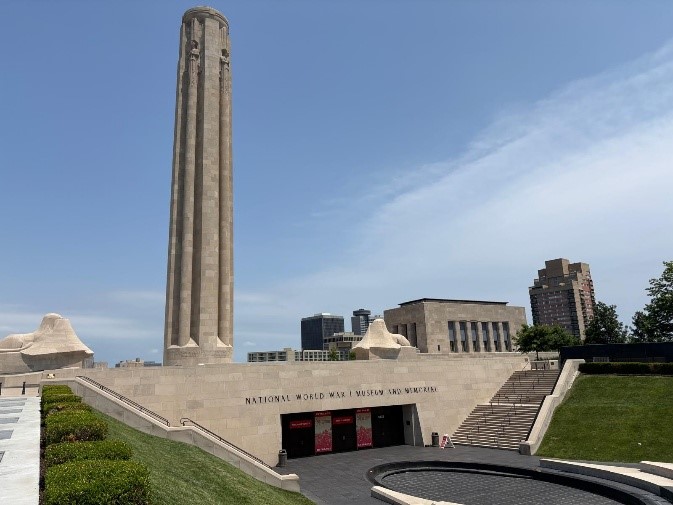
WWI Museum
The front of the National World War I Museum and Memorial In Kansas City, MO.
As part of my research into Dr. Frank Boston and the Officers of Fort Des Moines, I recently visited the National WWI Museum and Memorial in Kansas City, Missouri. The museum contains more than 300,000 artifacts connected to World War I, and every room opens another window into a part of history many of us never fully learned.
During my visit, I had the opportunity to meet Natalie Lovgren, Specialist Curator for Women, Communities of Color, Indigenous Peoples and WWI. We talked about the importance of preserving history and telling stories that are often overlooked. Lovgren reminded me that many African American veterans returned home from World War I knowing that they were “marking the end of one war and the beginning of another, the fight for racial equality at home.” That observation stayed with me because it helps explain the generation that produced men like Dr. Frank Boston and many of the officers who trained at Fort Des Moines.
That conversation made me think about the upcoming America 250 celebrations. As we celebrate our nation’s history, we should also remember the First World War and the generation that lived through it.
What struck me most was how little many of us know about World War I. Most people think about Europe and the trenches. But the war reached Africa, Asia, the Middle East, and other parts of the world. Millions of people were affected. Entire communities were changed.
The visit also connected to my work on Dr. Frank Boston. Before becoming a surgeon and community leader, Dr. Boston belonged to a generation shaped by the First World War. He served in the Medical Reserve Corps and came of age at a time when military service and citizenship carried special meaning for African Americans.
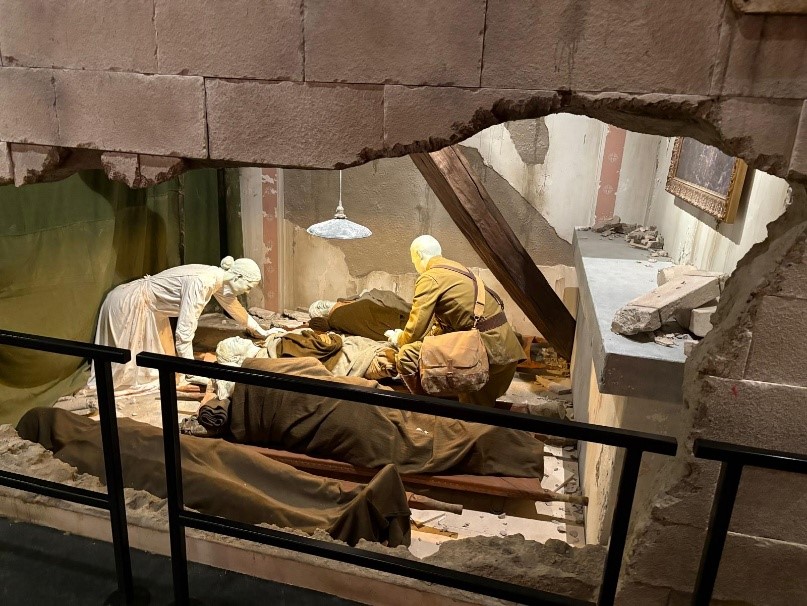
Field surgery exhibit inside the Museum.
Many of the Black officers who served during the war received their training at Fort Des Moines in Iowa. The camp became the first place where African American men were trained as officers in the United States Army. More than 1,200 men completed the program. They went on to serve their country and later became leaders in medicine, education, law, business, and public life.
Walking through the museum reminded me that World War I was not only about battles fought overseas. It was also about the people who came home and helped shape the country we know today.
I would encourage anyone visiting Kansas City to spend time at the museum. It reminds us that history is larger than what we often learn in school, and that many stories still deserve to be told.
As America marks its 250th anniversary, we should also remember the First World War and the men and women whose lives were shaped by it. Their stories are part of our story. Remembering them is part of remembering America.
For more information about the National WWI Museum and Memorial visit www.theworldwar.org. To learn more about Dr. Frank Boston visit www.bostonlegacyfoundation.com.
George Whitehair is the Executive Director of the Boston Legacy Foundation, and the lead researcher, historian, and author of the Dr. Frank Boston book.
External Web Site Notice: This page contains information directly presented from an external source. The terms and conditions of this page may not be the same as those of this website. Click here to read the full disclaimer notice for external web sites. Thank you.