Lessons from WWI for Outthinking Adversaries: The Future of Warfare in a Multi-Domain World
Published: 18 December 2024
By Capt. Bol Jock
via the Army.mil website
size0-full
Military historians, professionals, and strategists attributed U.S. military victories in World Wars I and II to two basic points:
- The U.S. possessed deeper industrial capacity to support the war, and
- As a result of American cultural norms and values, U.S. Soldiers were better prepared to outthink their adversaries.
While these variables’ impact on American success in the World Wars is debatable, the discussion frames a larger, crucial question for the U.S. Army: What should the Army focus on to remain the dominant land force in future wars?
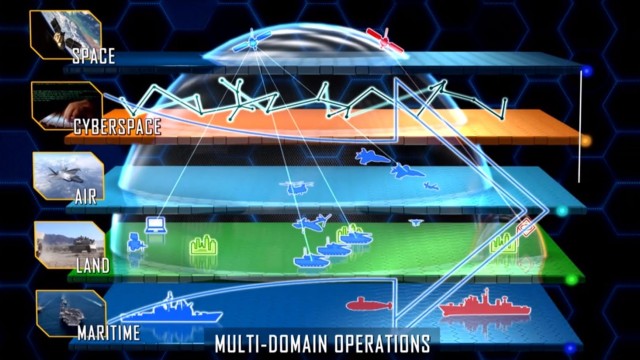
The Army, along with other elements of the U.S. government, continually reflect on this question. Most recently, the Army introduced modernization efforts, including the multidomain operations (MDO) concept and its subsequent doctrine. These efforts emphasize adapting to the evolving nature of war by the integrating information and warfighting capabilities across multiple domains.
Other national capabilities, such as irregular warfare (IW) and counterterrorism (CT) forces, could be used to prevent our adversaries from escalating conflicts from competition to general war. However, if preventative IW and CT measures fail, the U.S. Army prioritizes employing smart Soldiers and synchronizing their military and intelligence actions in time, space, and purpose to generate outsized battlefield effects.
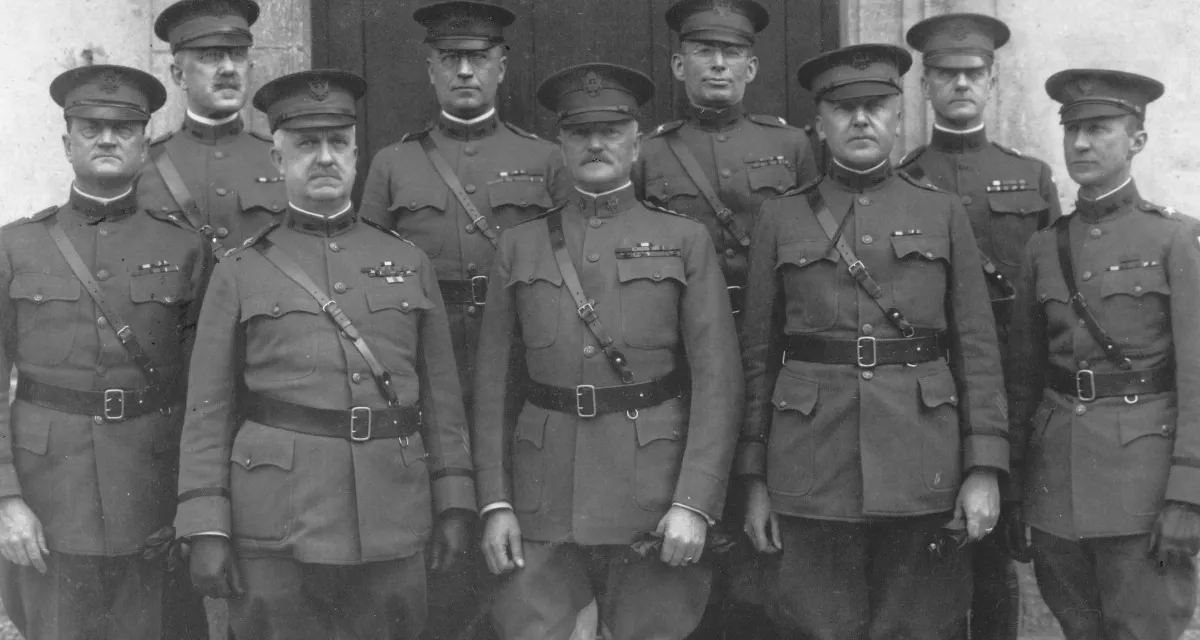
Pershing and his General Staff at Headquarters Chaumont in France during WWI.
The Army may also leverage historical lessons from its past victories to think about how to address emerging battlefield challenges. Regardless of the solution, adapting to warfare’s evolving complexities and emphasizing the ability to outthink our adversaries is a critical requirement.
The purpose of this article is to advocate for increasing the American Soldier’s ability to outthink the Army’s adversaries within the MDO context, paying special attention to ensuring that Soldiers understand how to integrate technology and multidomain capabilities beyond a pure combat situation. To help illustrate this point, I briefly examine the evolution of Army doctrine from WWI to today.
MDO Definition
In response to the 2018 National Defense Strategy Commission (NDSC) report, military scholars and professionals identified the need for a new Army operating concept to account for how the Army and the joint force would explain fighting and winning against our adversaries in new and contested domains. This call to action helped fuel today’s MDO doctrine, which the Army articulates in its Field Manual (FM) 3-0, Operations.
FM 3-0 defines MDO as “the combined arms employment of joint and Army capabilities to create and exploit relative advantages, defeat enemy forces, and consolidate gains.” MDO is the Army’s approach to address the evolving character of modern warfare by focusing on the integration of its elements of combat power across five domains — land, sea, air, space, and cyberspace. However, the Army went a step further and also incorporated new domains and threats, such as cyber and unmanned air systems, into MDO. Nonetheless, it is important to appreciate that many of MDO’s conceptual elements can be traced back to WWI and WWII.
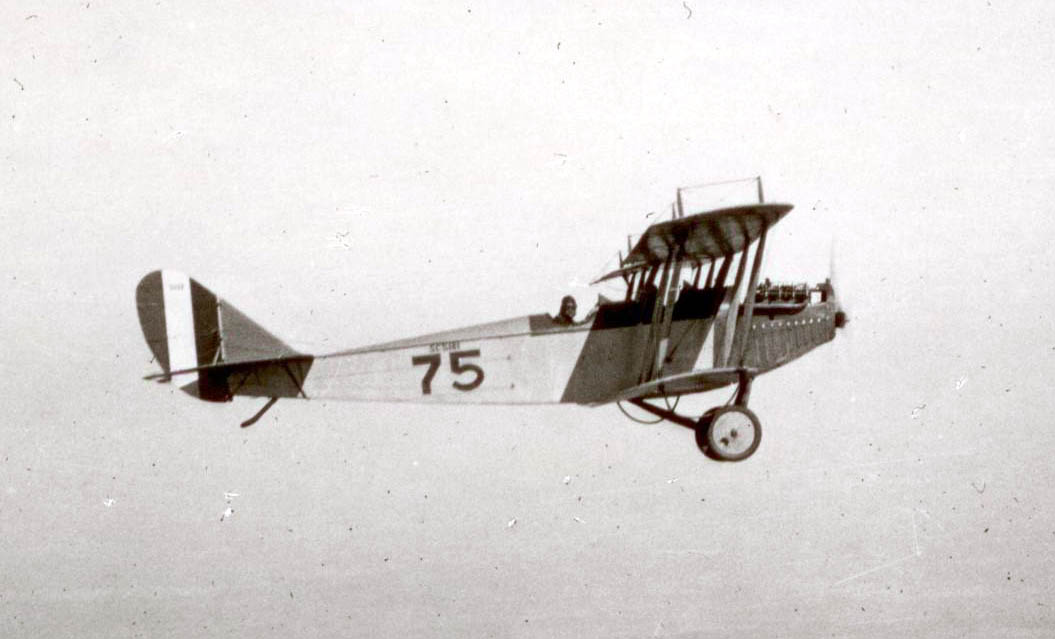
The U.S. Army used the Curtiss JN-4 “Jenny” for reconnaissance and light bombing in WWI.
Evolution of Military Doctrine
WWI and WWII
Military scholars and professionals argue that MDO principles are not new to the Army nor the Department of War. During WWI, the U.S. Army synergistically combined maneuver, fire, and air support, creating a combined arms doctrine that allowed the Army to suppress enemy fire and seize objectives while applying rudimentary, multi-domain principles. The Army’s use of the Curtiss JN-4 “Jenny” for reconnaissance and light bombing illustrates this approach. Initially produced as a training biplane, the Jenny also served in various roles, including reconnaissance and light bombing, and became one of the most iconic American aircraft of the war. Similarly, in WWII, the integration of aerial artillery spotters into the Army’s existing combined arms teams also gradually nudged the Army toward multidomain operations and tactics while demonstrating how U.S. Soldiers are keenly aware of the need to outthink their adversaries.
⇒ Read the entire article on the Army.mil website.
External Web Site Notice: This page contains information directly presented from an external source. The terms and conditions of this page may not be the same as those of this website. Click here to read the full disclaimer notice for external web sites. Thank you.