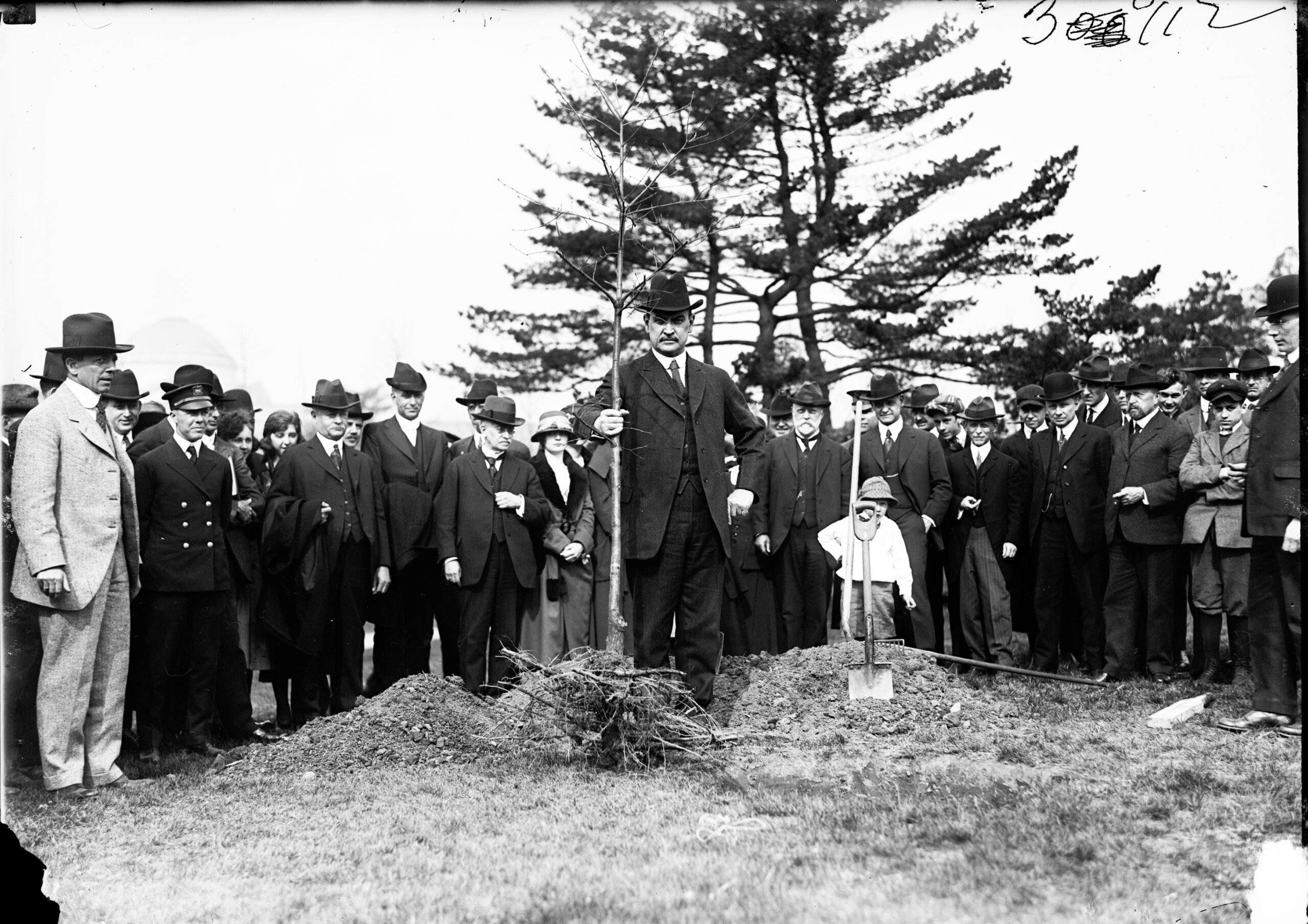
U.S. Army honors Wisconsin son, killed on an Italian battlefield in WWI
Published: 6 November 2026
By Staff Sgt. Richard Cole
U.S. Army Garrison Italy
via the U.S. Army website
U.S. Army honors Wisconsin son, killed on an Italian battlefield in WWI
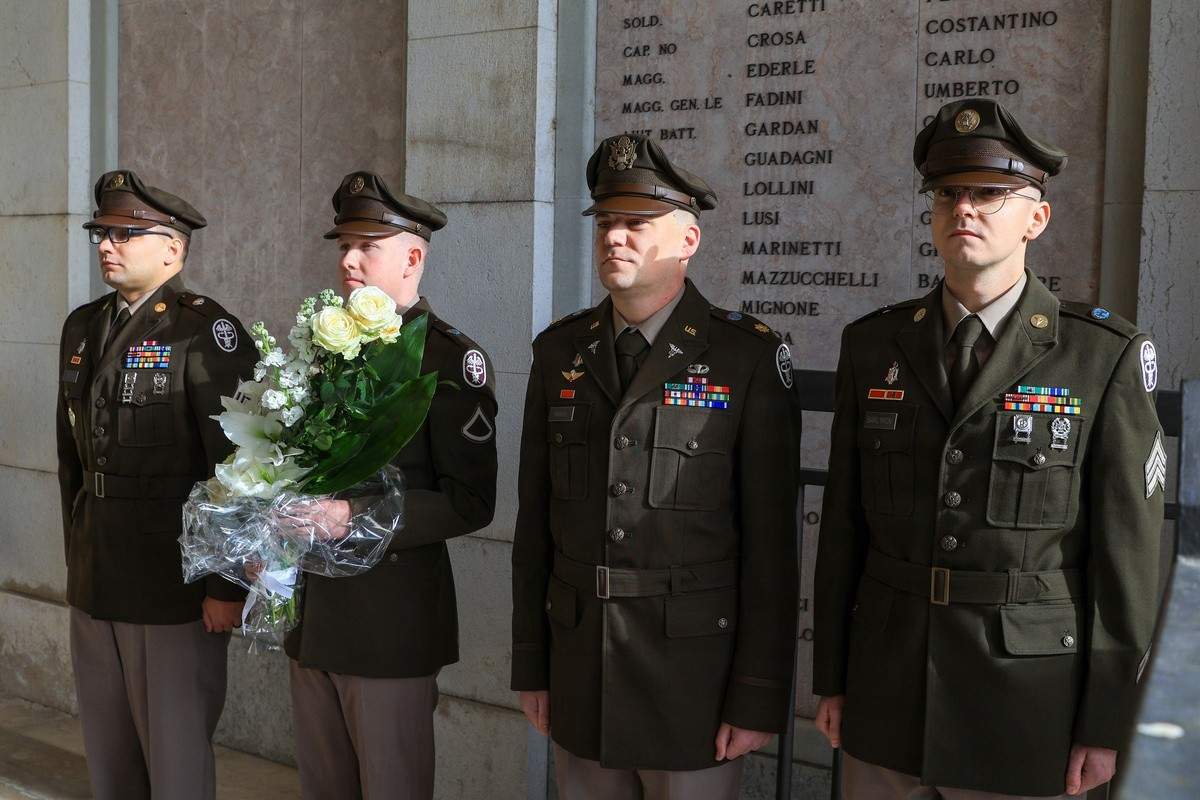
Soldiers assigned to the U.S. Army Health Clinic - Vicenza prepare to lay a bouquet of flowers at a memorial shrine for Lieutenant Edward Michael McKey during a ceremony at Sacrario Militare di Fagarè, Italy, Nov. 4, 2026. McKey was an American Red Cross ambulance driver killed along the Piave River front on June 15, 1918, during the Battle of the Solstice. He was the first ARC member killed in Italy during World War I and remains the only American buried in an Italian military memorial cemetery. (U.S. Army photo by Staff Sgt. Richard Cole) (Staff Sgt. Richard Cole)
SAN DONÀ DI PIAVE, Italy – Lt. Edward Michael McKey, an American Red Cross volunteer, arrived in Italy with a simple purpose – to help those caught in the devastation of war.
He carried no rifle. Instead, he used his skills as an artist and humanitarian to serve on the front lines – where the Red Cross supported allied troops with ambulance services and supporting morale.
On June 15, 1918, an Austrian artillery shell killed him along the Piave River. His sacrifice forever connected him to Italy. He is the only American buried at Sacrario Militare di Fagarè – an Italian military memorial cemetery not far from Venice.
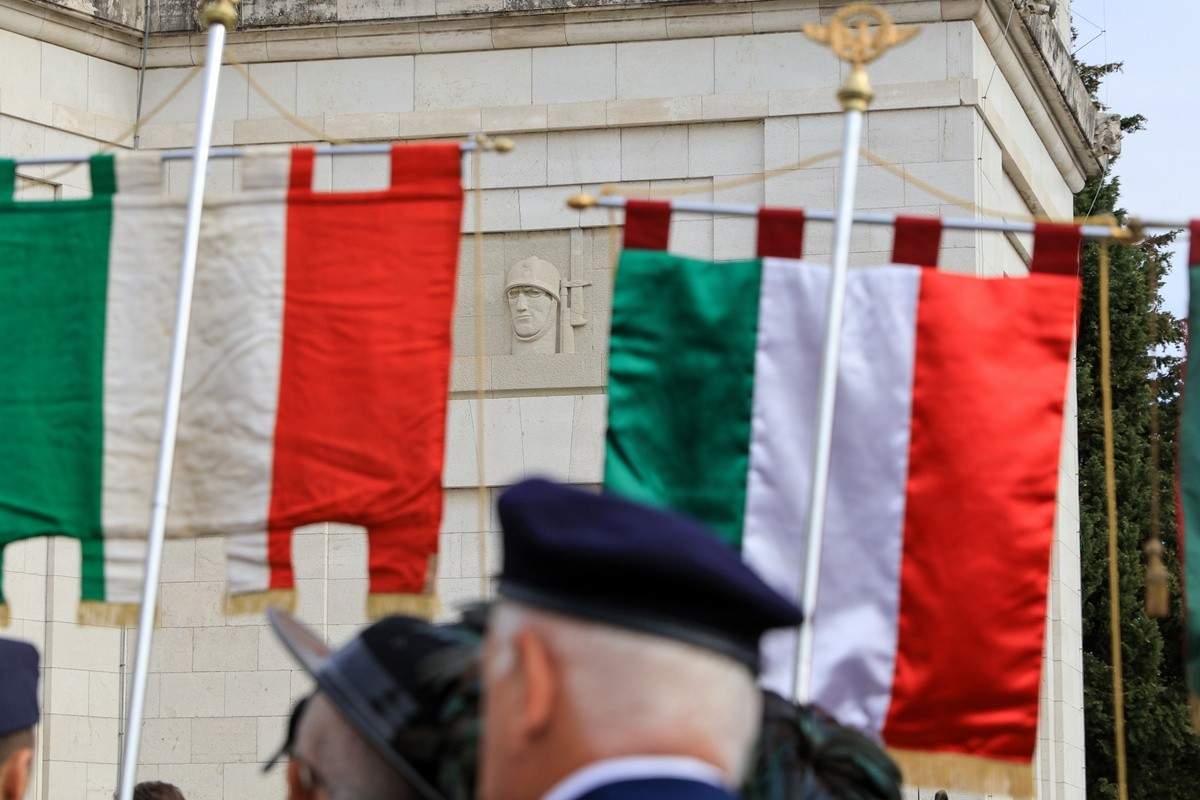
Italian national banners line the grounds of the Sacrario Militare di Fagarè during a ceremony for Giornata dell’Unità Nazionale e delle Forze Armate (National Unity and Armed Forces Day) in Fagarè della Battaglia, Italy, Nov. 4, 2026. Observed annually on Nov. 4, the national holiday marks the anniversary of Italy’s victory in World War I and pays tribute to the service and sacrifice of the Italian Armed Forces, past and present. (U.S. Army photo by Staff Sgt. Richard Cole)
On Nov. 4, the Italian Armed Forces Day, four medical Soldiers from the U.S. Army Health Clinic – Vicenza joined Italian partners at Fagarè della Battaglia to honor McKey and the allied forces who fell during the war.
McKey’s sacrifice highlights a longtime partnership between the United States and Italy that began when he, and other Americans like writer Ernest Hemingway, chose to share WWI hardships and found a mutual commitment on the battlefield.
Born in Janesville, Wisconsin, and raised in Minnesota, McKey built a career as a portrait artist with a studio in New York City after studying art. His passion for creative expression eventually took him across Europe, though Italy held a special place in his heart. A contemporary biography described him as an ardent lover of the country. McKey envisioned retiring to an old villa in Florence, recalling poet Robert Browning’s words, “Open my heart and you will see, Graved inside of it, Italy.”
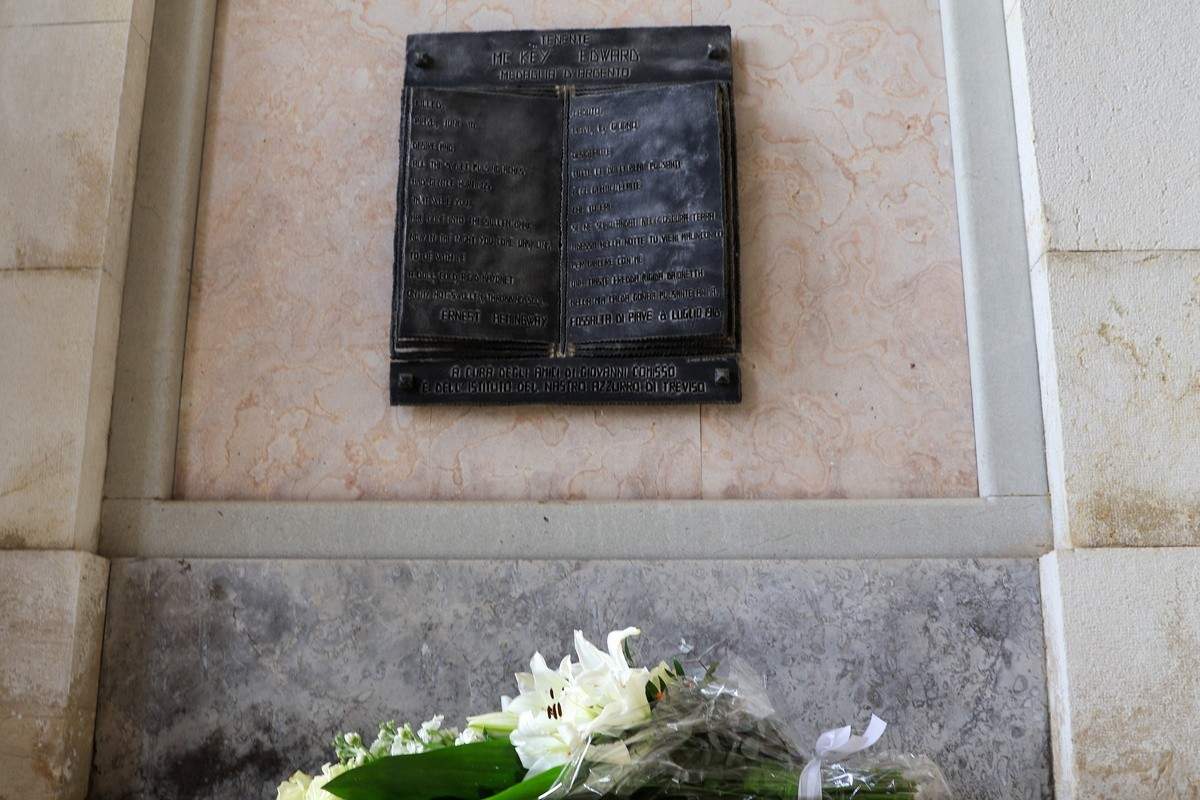
A bouquet of flowers lies at a memorial shrine for Lieutenant Edward Michael McKey during a ceremony at Sacrario Militare di Fagarè, Italy, Nov. 4, 2026. McKey was an American Red Cross ambulance driver killed along the Piave River front on June 15, 1918, during the Battle of the Solstice. He was the first ARC member killed in Italy during World War I and remains the only American buried in an Italian military memorial cemetery. (U.S. Army photo by Staff Sgt. Richard Cole)
When World War I began, McKey volunteered with the Ambulance Field Service in France, earning the French War Cross. In December 1917, he traveled to Italy and joined the American Red Cross, driving ambulances and mobile canteens along the front lines, where he befriended Hemingway.
On June 15, 1918, the first day of the Battle of the Solstice, also known as the Second Battle of the Piave, an Austrian shell exploded beside McKey in San Donà di Piave. He became the first American Red Cross member killed in Italy during the war.
Hemingway was also wounded nearby during the fighting. Hemingway survived and later honored McKey with a poem inscribed on a bronze tribute. Hemingway’s poem, “Killed, Piave, June 18,” reads:
Desire and
All the sweet pulsing aches
And gentle hurtings
That were you,
Are gone into the sullen dark.
Now in the night you come unsmiling
To lie with me
A dull, cold, rigid bayonet
On my hot-swollen, throbbing soul.
— Ernest Hemingway
McKey’s service was part of a broader American presence in the region.
In the fall of 1918, the U.S. Army’s 332nd Infantry Regiment arrived in Veneto to support Italian forces. Known as the “American Lions,” they were the only American infantry regiment assigned to the Italian front. They supported the offensive across the Piave River and contributed to the Allied victory at Vittorio Veneto, adopting Venice’s historic Lion of St. Mark as their unit patch. Today, that symbol lives on in the insignia of U.S. Army Southern European Task Force, Africa, headquartered in Vicenza, carrying forward a legacy rooted in mutual alliance.
For Staff Sgt. Patrick Smith, Noncommissioned Officer-in-Charge of the Primary Care Clinic, rendering honors carried deep personal significance. When assigned previously at Fort Sam Houston, he rendered honors for 57 service members in four months.
“It gave me a deep-seated respect for the service and sacrifice of those we serve alongside and those who came before us,” Smith said.
⇒ Read the entire article on the U.S. Army website.
External Web Site Notice: This page contains information directly presented from an external source. The terms and conditions of this page may not be the same as those of this website. Click here to read the full disclaimer notice for external web sites. Thank you.