The Modern US Passport is a Product of World War I
Published: 20 November 2025
via the History.com website
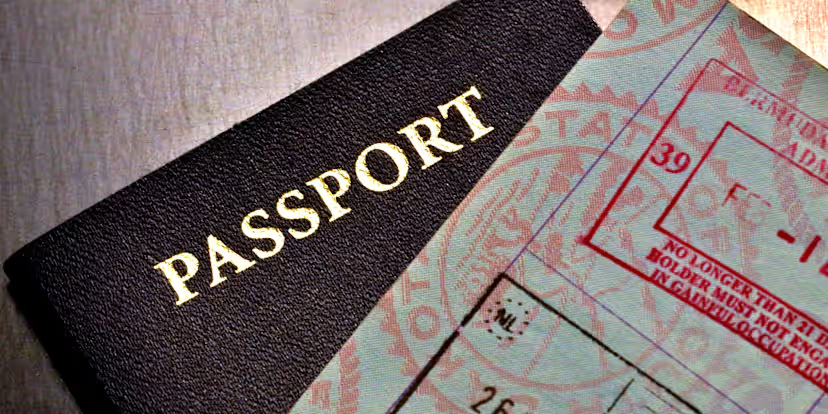
Passport
8 Surprising Facts About US Passports.
The word “passport” comes from the French words passer and port, meaning “to leave a port or harbor.” For centuries, travelers received passports from foreign governments, not their own. A passport was a type of “permission slip” to cross borders into a foreign land. George Washington, for example, granted a passport to the foreign ship Amazon during the Revolutionary War so it could deliver supplies to British and German prisoners of war.
The United States has been issuing passports since 1782, but the document has changed significantly in both appearance and function over the centuries, says Arizona State University professor Patrick Bixby, who wrote License to Travel: A Cultural History of the Passport. What started out as “informal” documents issued to diplomats and aristocrats became instruments of national security.
Here are eight surprising facts about the history of the U.S. passport.
1. Modern US Passports Have Something in Common with the World’s Oldest Passport
“The history of the passport starts in ancient Egypt 3,500 years ago,” says Bixby. “Royal messengers traveled with clay tablets marked with cuneiform characters that essentially carried a threat from the king, saying, ‘This is my guy. Don’t mess with him or you’ll have to answer to me.’”
The world’s oldest passport is part of the Amarna tablets dating to the 14th century B.C. On it, King Tushratta of Mitanni wrote: “I am sending herewith my messenger Akiya to the King of Egypt, my brother, on an urgent mission (traveling as fast) as a demon. Nobody must detain him. Bring him safely into Egypt! (There) they should take him to an Egyptian border official. And nobody should for any reason lay hand on him.”
Bixby points out that the modern U.S. passport contains strikingly similar language from the State Department: “The Secretary of State of the United States of America hereby requests all whom it may concern to permit the citizen/national of the United States named herein to pass without delay or hindrance and in case of need to give all lawful aid and protection.”
2. The First US Passports Were Letters, Not IDs
In 1782, while still fighting the Revolutionary War, the Continental Congress authorized the Department of Foreign Affairs to issue passports to Americans traveling abroad. Those early U.S. passports weren’t the standardized ID documents they are today but letters written to foreign governments requesting entry and safe passage for the traveler.
Since passports weren’t strictly required to travel abroad, fewer than 100 of these “letters of safe conduct” were issued by the U.S. government each year through 1818. Until the Civil War, applying for a passport meant sending a personal letter to the secretary of state—that’s how few passports were issued.
The only Americans who were asked to show a passport were travelers on diplomatic missions or people seeking some kind of special favor from a foreign government. When Benjamin Franklin was serving as the American ambassador to France in 1780, he used his skills as a printer to make a passport for one of his aides—never mind that Franklin had no real authority to do so.
“Franklin printed this thing up, signed it, put his official stamp on it and that was that,” Bixby says. “The whole thing was rather ad hoc at that point across Europe and the rest of the world.”

Benjamin Franklin received at the French court in Versailles, 1778. (DeAgostini/Getty Images)
3. Black Americans Were Denied Passports Until the 14th Amendment
In 1856, Congress passed a law restricting passports to U.S. citizens. The following year, the Supreme Court handed down its infamous decision in Dred Scott v. Sandford, which said that Black Americans, whether enslaved or free, were not U.S. citizens.
Before the Dred Scott decision, some states had conferred citizenship on free Black men, and a few of those men had applied for passports. The National Archives recently found a passport application from 1834 for Robert Purvis, a wealthy and educated Black man from Philadelphia. It’s not clear, however, if the passport was granted.
Frederick Douglass, the famed abolitionist, was refused a U.S. passport in 1859, Bixby says. Douglass was in the United Kingdom and wanted to travel to France, a lifelong dream. Napoleon III had just survived an assassination attempt (by a foreigner), so France required a passport to enter the country. George Dallas, the U.S. minister to Britain, denied the application “true to the decision of the United States Supreme Court, and true, perhaps, to the petty meanness of his own nature,” wrote Douglass.
The 14th Amendment, ratified in 1868, repealed the Dred Scott decision and granted birthright citizenship to Black American men. As Bixby reports in his book, Douglass finally got his passport in 1886 on the eve of his honeymoon. All those years later, he hadn’t forgiven George Dallas.
“This man is now dead and generally forgotten, as I shall be,” Douglass wrote, “but I have lived to see myself everywhere recognized as an American citizen.”

Abolitionist Frederick Douglass (Alamy Stock Photo)
3. The Modern US Passport is a Product of War
In the 18th and 19th centuries, the U.S. government didn’t require American citizens to carry a passport during times of peace, but war was a different story. For two years during the Civil War, for example, passports were required to leave or enter the United States. Secretary of State William Seward used passport restrictions to prevent fighting-age men from fleeing the country. He also required passport applicants to take an oath of allegiance, which remained in place until 1973.
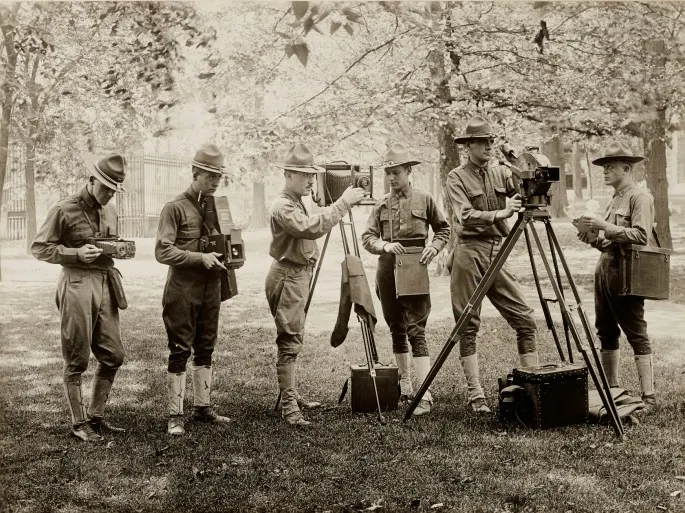
The modern U.S. passport was born during World War I. The push for a standardized international ID began in Europe, where countries already embroiled in the war feared espionage and sabotage by foreign agents and began requiring passports from all travelers, including Americans.
The U.K. issued its first ID-style passport in 1914, and the U.S. quickly followed suit. When America entered the war in 1917, the government required all steamship passengers to have their passports examined by customs officials. It was national security concerns more than a century ago that established the familiar ritual of examining passports both leaving and coming home.
“The modern passport is a product of warfare,” Bixby says, “and the fears and suspicion that are native to warfare attached themselves to the document. Even in times of relative peace, we still have to prove who we are.”
⇒ Read the entire article on the History.com website.
External Web Site Notice: This page contains information directly presented from an external source. The terms and conditions of this page may not be the same as those of this website. Click here to read the full disclaimer notice for external web sites. Thank you.