The Chemistry of World War I Gas
Published: 2 July 2026
By James Patton
via the Roads the Great War website
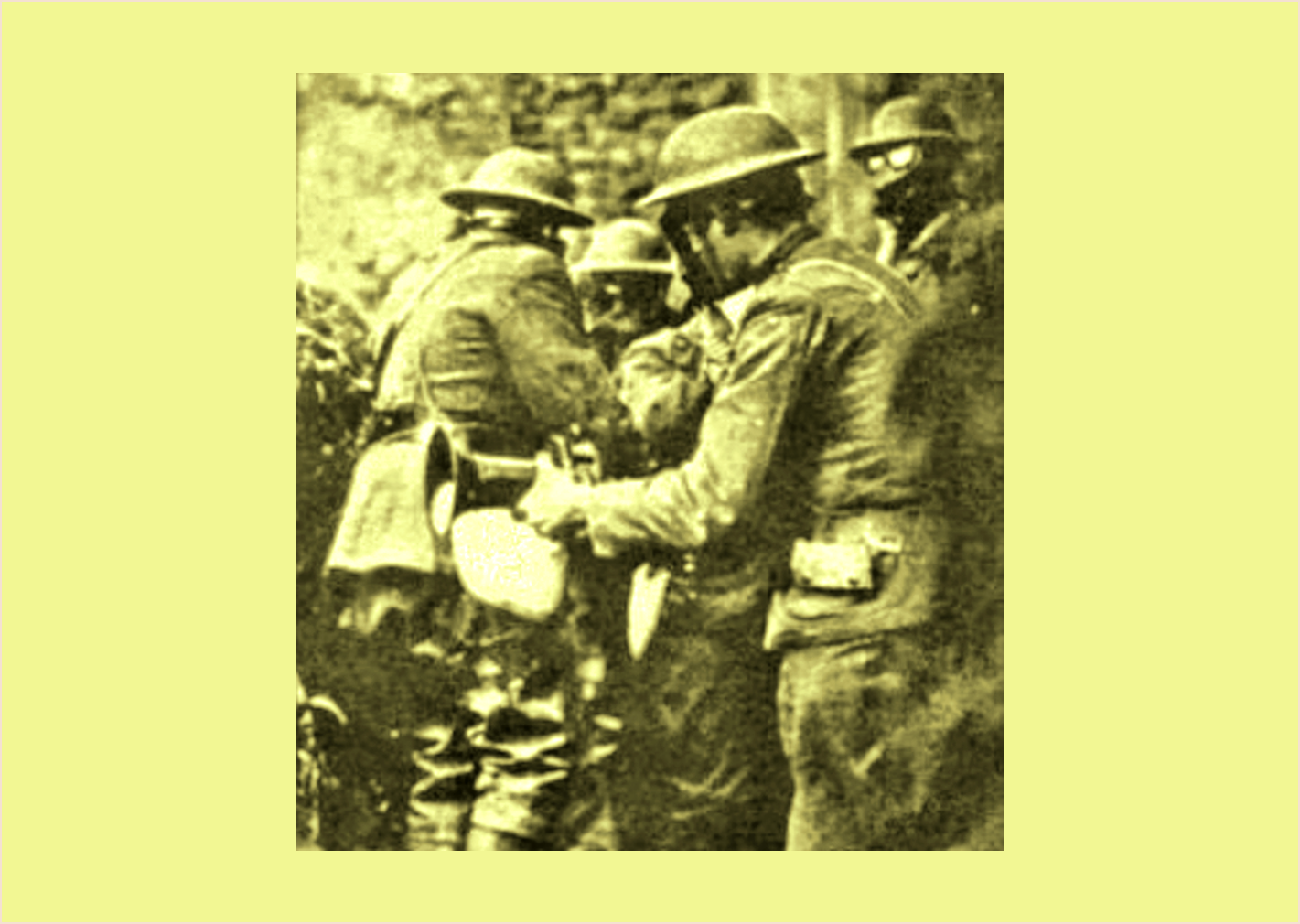
The Gas Alarm Is Sounded
The Gas Alarm Is Sounded.
An enduring hallmark of WWI, along with the trenches and the mud, is the large-scale use of chemical weapons, commonly called simply “gas.” Although chemical warfare caused less than one percent of the total deaths, the treatment of many thousands of gassed soldiers was a significant drain on manpower. The “psy-war.” or fear factor, was itself a formidable weapon. Chemical warfare was subsequently prohibited by the Geneva Protocol of 1925. Chemical warfare has been occasionally used since then but never in WWI-scale quantities. Although deployable inventories have been largely eliminated, production of some of the subject chemicals continues as they have peaceful uses—for example, phosgene is an industrial reagent, a precursor of pharmaceuticals (including some anti-cancer drugs), certain plastics, and other important organic compounds.
Several chemicals were weaponized in WWI. It began in August 1914 when France deployed gas grenades against the Germans. The Germans followed, gassing the Russians in January 1915. The agents used by the French was ethyl bromo acetate (BrCH2CO2CH2CH3 ) described as “fruity and pungent,” while the Germans used xylyl bromide ( C6H4(CH3)(CH2Br)). which is described as smelling “pleasant and aromatic.” Both are colorless liquids and have to be atomized. Both are lachrymatory agents (“tear gas”); they irritate the eyes and cause uncontrolled crying. Large doses can cause temporary blindness. If inhaled they can cause gasping. These symptoms usually resolve within 30 minutes after contact.
The German set up a gas warfare program, headed by future Nobel Laureate Fritz Haber (1868–1934), who had previously developed the process by which nitrates could be made from atmospheric nitrogen. Haber’s first chemical weapon was chlorine gas (Cl₂,) which was debuted in April 1915. Chlorine gas is diatomic, about two and a half times denser than air, pale green in color and with an odor which was described as a “mix of pineapple and pepper.” If inhaled, it will react with moisture in the lungs to form hydrochloric acid (HCl), which will quickly lead to death. Even at lower concentrations, it can still cause coughing, vomiting, and eye irritation.
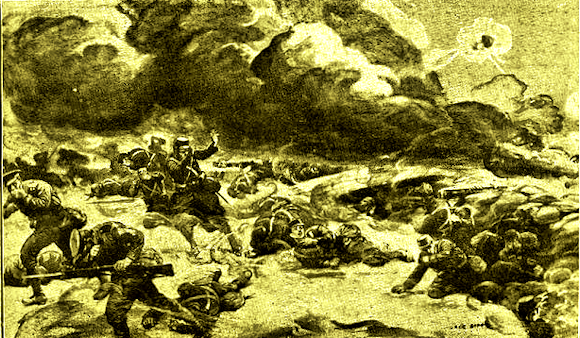
Early Depiction of Gas Attack at Second Ypres, 1915.
Chlorine can be deadly against unprotected soldiers, and it’s estimated that over 1,100 were killed in the first use during the Second Battle of Ypres. But that day the Germans weren’t prepared for how effective the gas would be and were therefore unable to exploit the gap in the line that was created.
Chlorine’s usefulness was short-lived. Its color and odor made it easy to spot, and since chlorine is water-soluble, even soldiers without gas masks could reduce its effects by placing water-soaked rags over their mouth and nose. It was reported that Canadian soldiers at 2nd Ypres used urine-soaked hankies for protection, but the chemistry of the chlorine reacting with the ammonia in the urine produces two additional irritants: chloramines (such as NH2Cl), which can cause coughing, nausea, and even trigger asthma attacks, and cyanogen chloride (CNCl), which irritates the eyes, nose, and bronchial tract. Releasing the chlorine gas as a cloud was very hard to manage, as the British learned to their detriment when they released chlorine gas at Loos in September 1915. The wind shifted on them, carrying the gas back onto their own men.
Phosgene, carbonyl dichloride (COCl2), was Haber’s next product, probably first used by the Germans in December 1915 at Ypres. Phosgene is a colorless gas, with an odor likened to that of “musty hay,” but for the odor to be detectable, the concentration has to be at least 0.4 parts per million, or several times the level at which harmful effects will occur. Phosgene is highly toxic due to its ability to react with proteins in the alveoli of the lungs, disrupting the blood-air barrier and causing suffocation.
Read the entire article on the Roads to the Great War website here:
External Web Site Notice: This page contains information directly presented from an external source. The terms and conditions of this page may not be the same as those of this website. Click here to read the full disclaimer notice for external web sites. Thank you.