Sentinels of Memory: How Personal Keepsakes Preserve World War I Service Stories
Published: 30 June 2026
By Alex Kidder
Special to the Doughboy Foundation website
Challenge Coin article header image
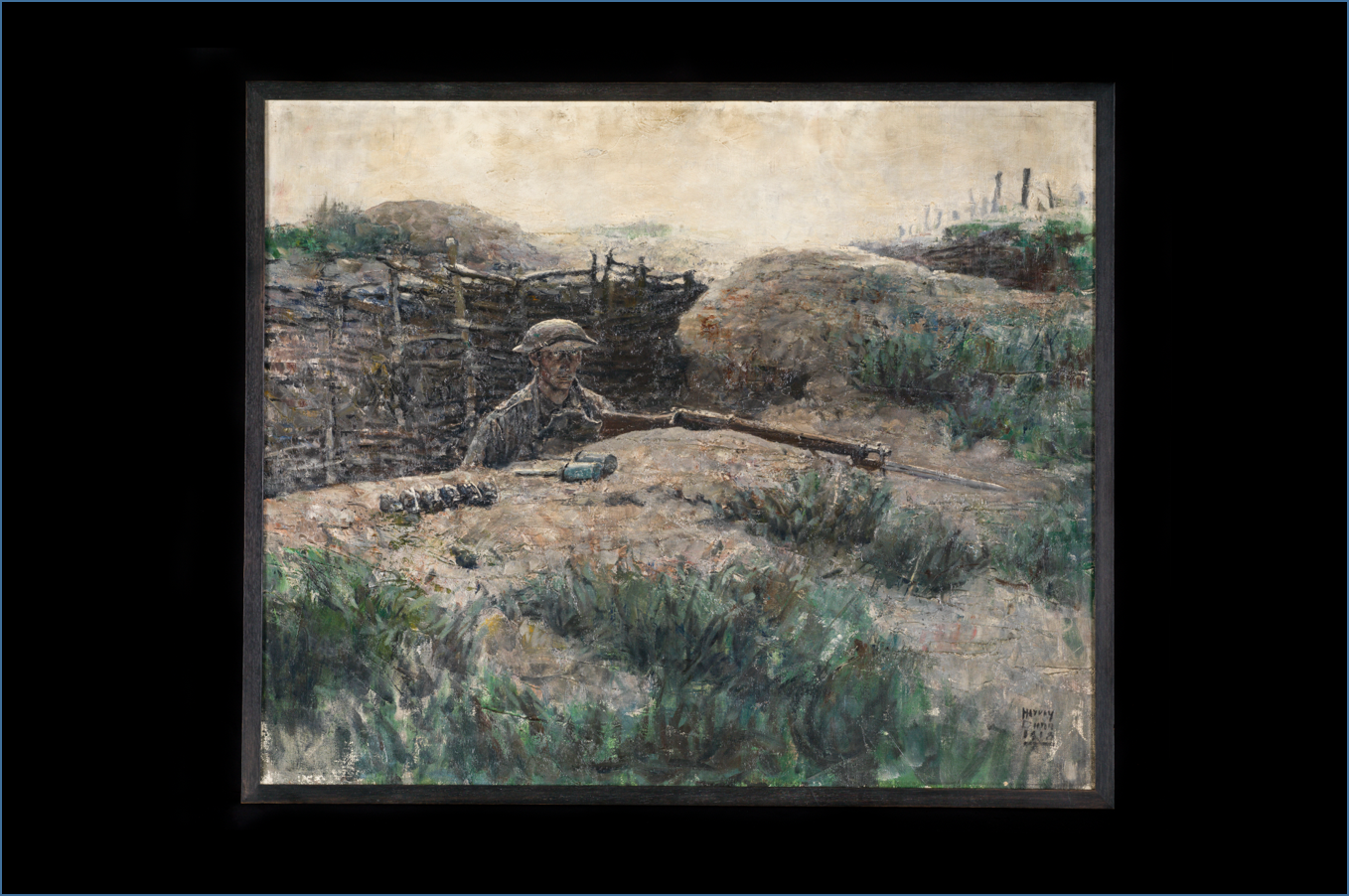
”The Sentry”, A 1918 painting by Harvey Thomas Dunn depicting an American soldier looking out of a trench. | Photo by Smithsonian | Public Domain
More than a century after the guns fell silent along the Western Front on November 11, 1918, the First World War has slipped entirely out of living memory. Every one of the 4.7 million Americans who mobilized for the conflict has passed on, and the firsthand voices of the trenches went with them. What remains is physical. The objects these men and women carried, wrote, and brought home are now the closest thing we have to their testimony.
For the families who keep them, these keepsakes do something no history book can. A letter, a dented helmet, a tarnished medal takes the vast and abstract story of the Great War and anchors it to one person, one name, one life. They are how a great-grandchild comes to meet a man they never knew.
Why Do a Soldier’s Letters Matter Most?
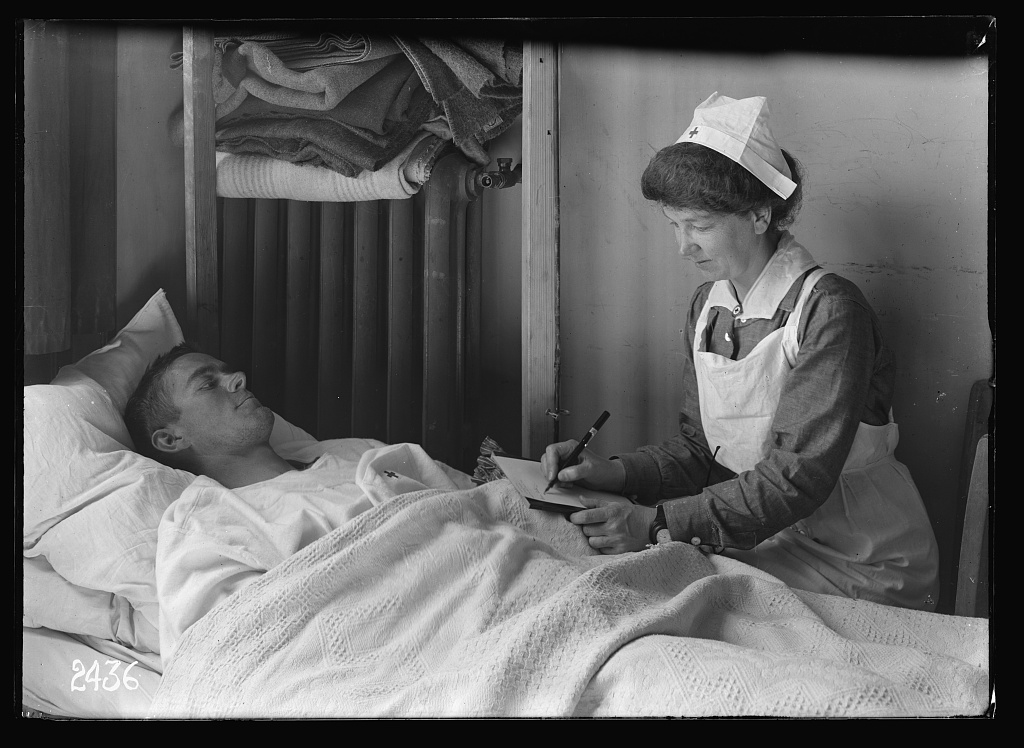
Nurse writing a letter home for a wounded American soldier at the American Military hospital No. 1, Neuilly; Photo by Hine, Lewis Wickes, 14 June 1918. | Library of Congress | Public Domain
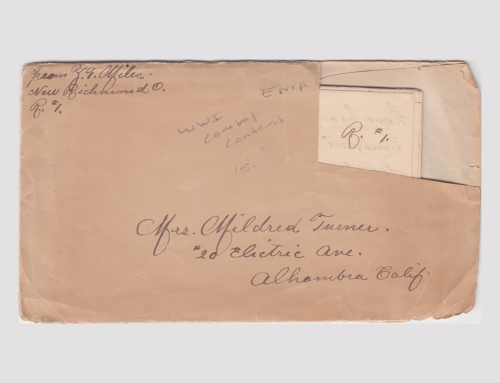
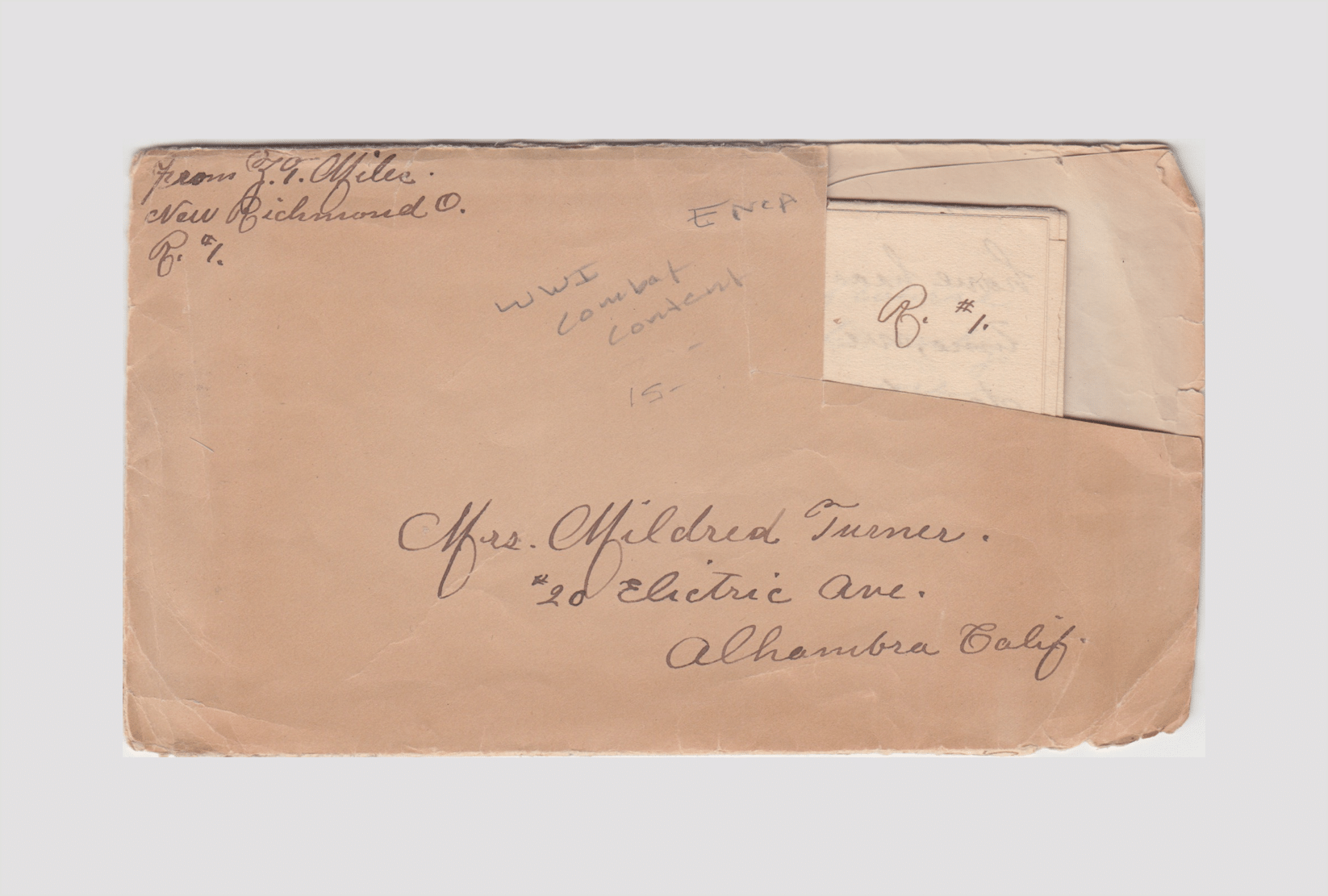
For many descendants, paper is the most precious inheritance. Wartime letters map a soldier’s journey in his own hand, even when they hide its worst moments. Men writing home often spared their families the horrors of the trenches, yet the letters still trace where he went and who he was becoming.
The letters of Private Raymond W. Maker, a wireman from Framingham, Massachusetts, who strung communication lines across the mud of France, sat unread for generations until his grandson, combat veteran Bruce “Doc” Norton, and his wife Helen transcribed them, bringing the frozen trenches and ruined villages back to life. Diaries, though discouraged by censors, could be even more candid. First Lieutenant Charles Hamilton Houston kept one while serving in the segregated 92nd Division, recording both the artillery fire and the prejudice he faced as a Black officer. That experience helped shape the man who would later become a towering figure in the legal fight against segregation. Through such documents, an ancestor stops being a name on a family tree and becomes a person.
What Can a Dog Tag or a Patch Reveal?
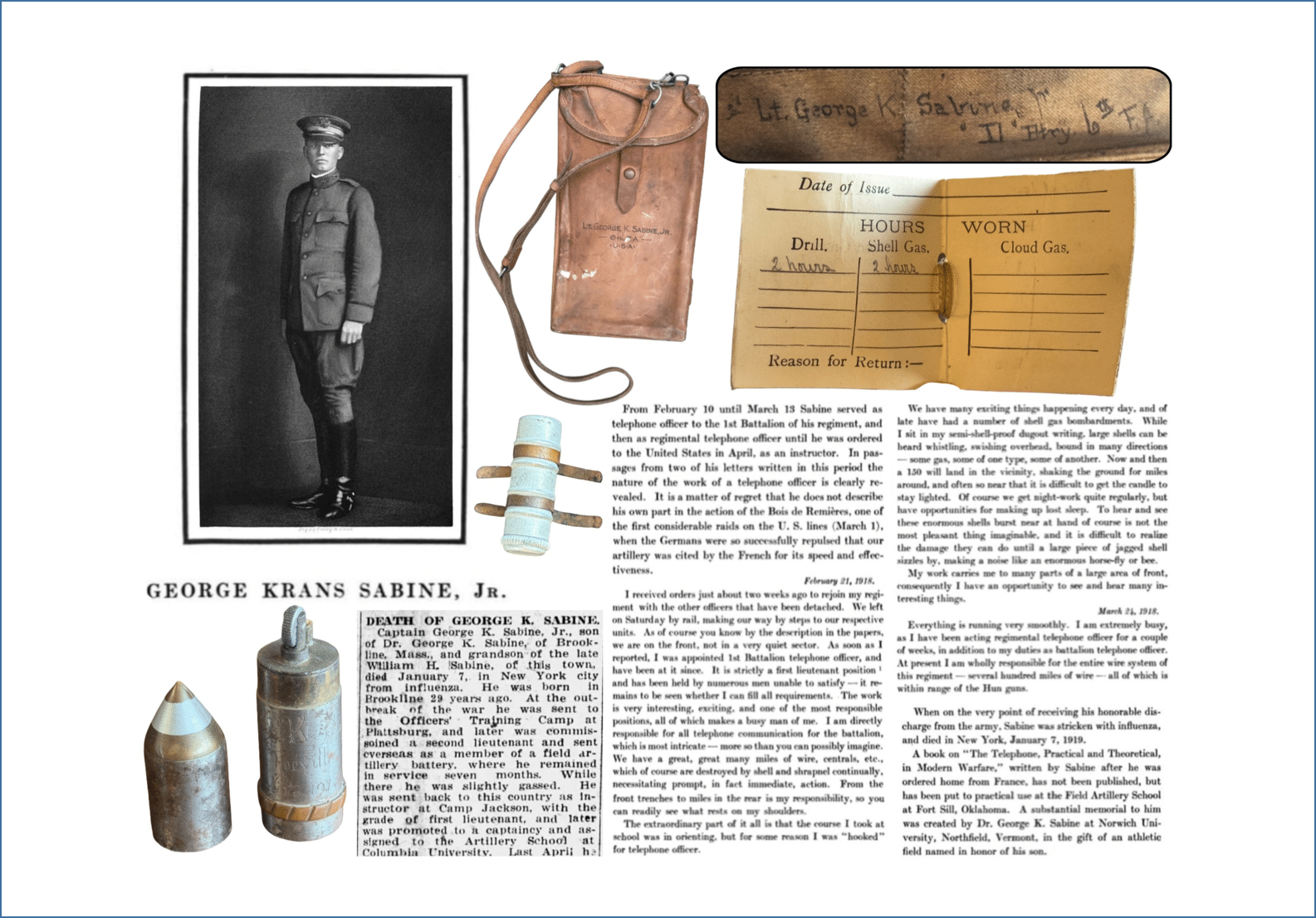
Some of the smallest keepsakes carry the most history. The standardized identity disc, the dog tag, was largely a product of this war. On July 6, 1917, the Army ordered that every soldier be issued two aluminum tags about the size of a silver half-dollar, each hand-stamped one character at a time. The pair had a grim logic. If a man fell, one tag stayed with his body and the other was removed to mark his grave. A surviving dog tag in a family’s collection is often the single object that was physically closest to their ancestor through the entire war.
The shoulder patch was born here too. The 81st “Wildcat” Division, formed at Camp Jackson, South Carolina, arrived in France in 1918 wearing a cloth wildcat on the sleeve. High command first ordered it removed, but General John J. Pershing saw what it did for unit pride and approved it, opening the door for every division to wear its own insignia. A century later, families often identify exactly which division an ancestor served in from the colorful patch still sewn to a stored uniform coat.
How Did Doughboys Make Beauty From Battle?
Not every keepsake came from a quartermaster. The M1917 steel helmet, designed to turn shrapnel from above, often came home painted with a division’s insignia, a plain badge of having survived. And in the long idle stretches behind the lines, soldiers made trench art. The favorite canvas was the spent brass casing of the French 75mm field gun. Using iodine to lay down stencils and bent nails to engrave, men decorated these shells with their unit names, the dates 1917 and 1918, and places like Verdun and the Argonne. They turned the wreckage of industrial war into something personal and even beautiful, and those casings now sit on mantels as quietly eloquent as any medal.
Which Medals Truly Belong to the Great War?
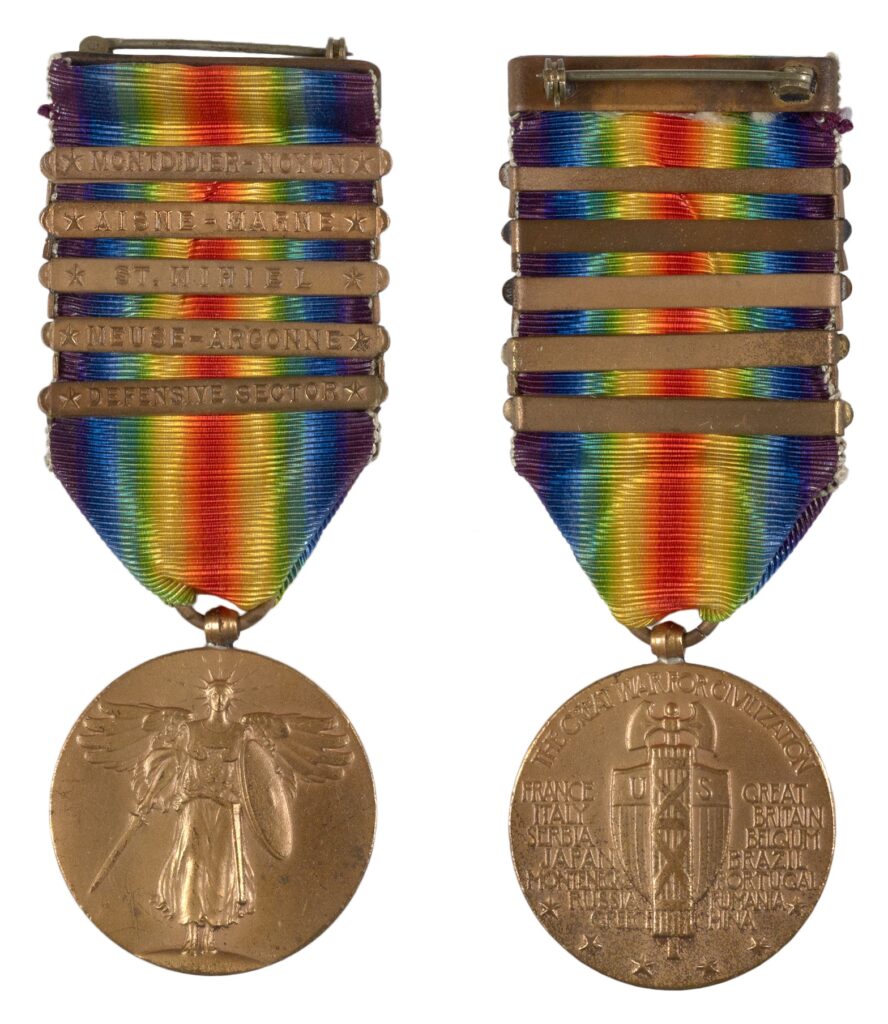
1918 World War I Victory Medal; Photo by Maine State Library | Public Domain
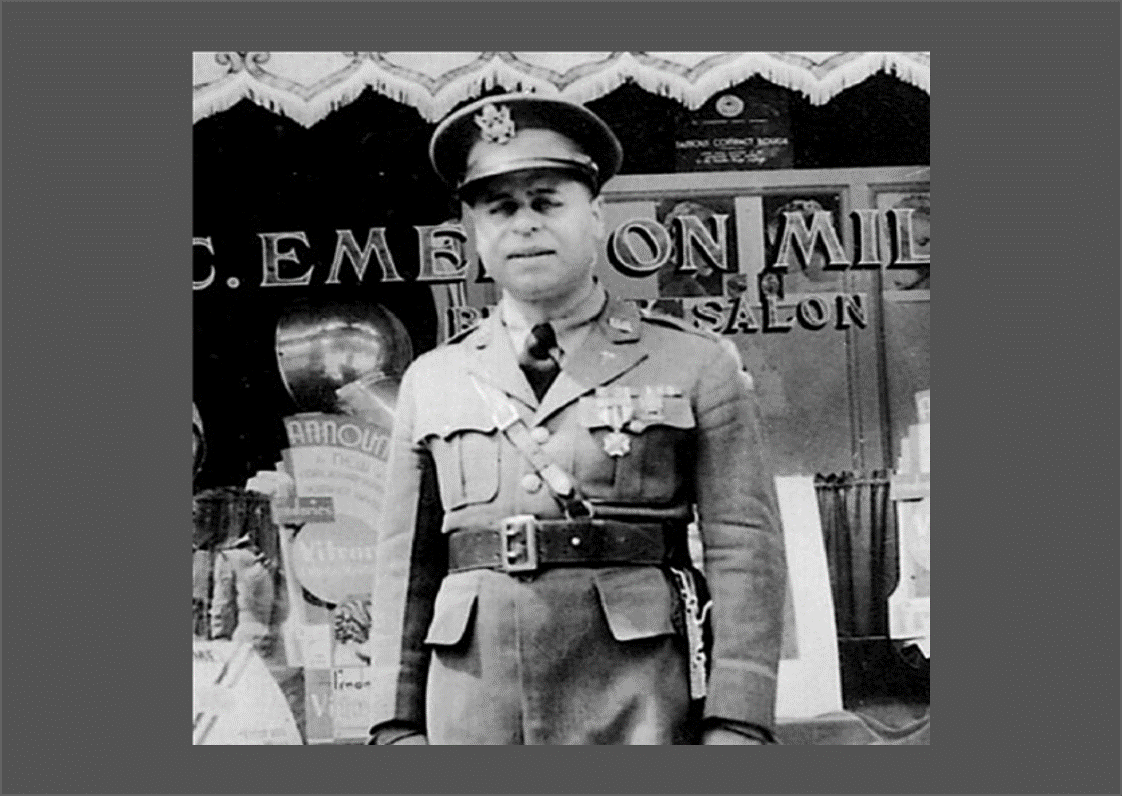
Families sorting through an inherited box often struggle to tell a genuine Great War decoration from a later addition. The central one to know is the World War I Victory Medal, established in April 1919 and designed by the American sculptor James Earle Fraser. Its bronze face shows a winged Victory, and its reverse reads “THE GREAT WAR FOR CIVILIZATION.” Small bronze clasps on the ribbon named the battles a soldier fought, from Saint-Mihiel to the Meuse-Argonne, so the medal itself becomes a record of his campaigns.
Two other items often turn up. The Victory Button, a small star-on-wreath lapel pin designed by sculptor Adolph Weinman, was given to honorably discharged veterans to wear on civilian clothes, struck in bronze, or in silver for those wounded in action. The Purple Heart is the great source of confusion. It did not exist in its modern form during the war. It was revived in 1932, and World War I veterans received it retroactively, so a Doughboy’s Purple Heart was almost always awarded in the 1930s or later, never pinned on in France. Many families also hold handsome bronze or silver medals struck by individual states for their returning sons, genuine and meaningful, but civic honors rather than federal awards.
Did Doughboys Carry Challenge Coins?
There is one beloved keepsake that, for all its wonderful story, almost certainly never sat in a Doughboy’s pocket. As someone who makes coins for a living, I would rather be honest about it. The popular legend holds that the challenge coin was born in a World War I flying squadron, when a downed American pilot, stripped of his papers, escaped to French lines and was spared from a firing squad only because he could produce a bronze medallion bearing his unit’s insignia.
It is a marvelous tale, and it is not true. No privately minted unit coins from the period survive in the major collections, including the National WWI Museum and Memorial, and bronze was rationed so tightly for munitions that striking souvenir tokens would have been nearly impossible. The squadron the story names lost the young lieutenant at its center to anti-aircraft fire. He was never captured and never saved by a coin. Historians trace the real challenge coin tradition to Special Forces units in the early 1960s, and the famous “coin check” to the Vietnam era, with the WWI version largely popularized by a magazine article in 1994. The custom challenge coins that units hand out today are a genuine and moving tradition, simply a far younger one than the legend claims. Honoring the real Doughboy means not borrowing his name for a story that belongs to a later generation.
How Do Families Recover a Story Lost to Fire?
There is a hard reason these physical keepsakes matter so much. On July 12, 1973, a fire at the National Personnel Records Center in St. Louis burned for nearly a full day and destroyed roughly 80 percent of the Army personnel files for soldiers discharged between 1912 and 1960. No copies existed. For a great many World War I veterans, the official record of their service simply no longer survives.
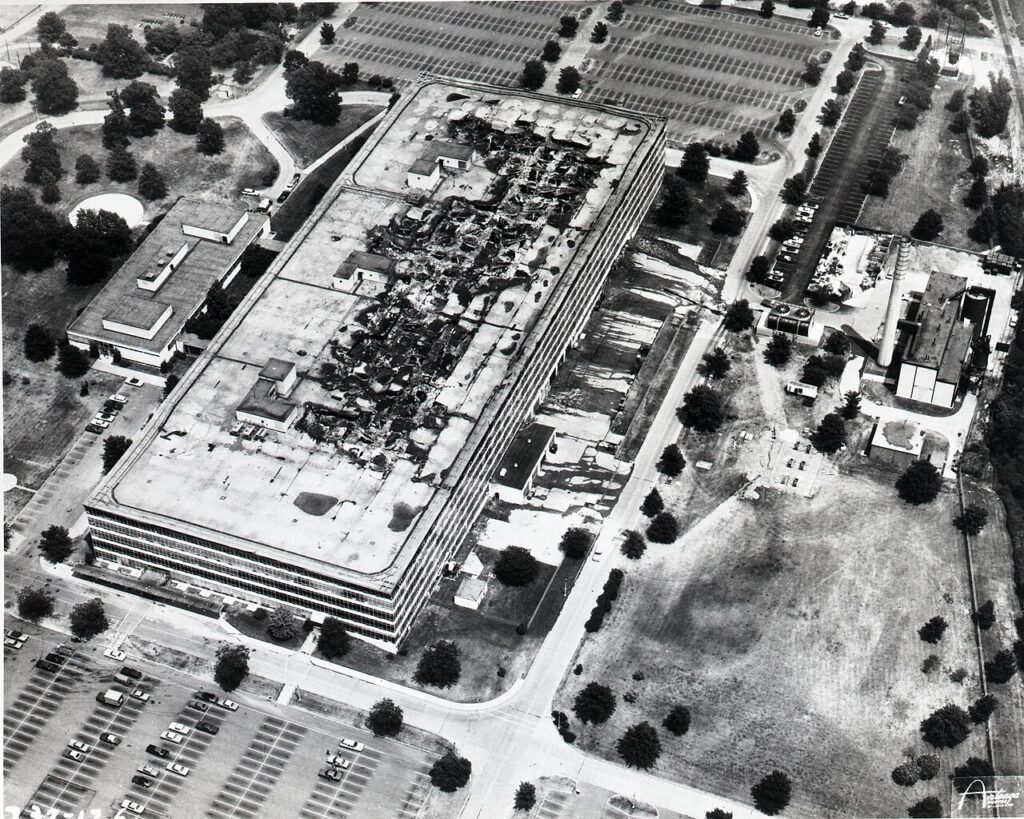
Damaged building following the 1973 fire at the National Personnel Records Center; Photo by U.S. National Archives | Public Domain
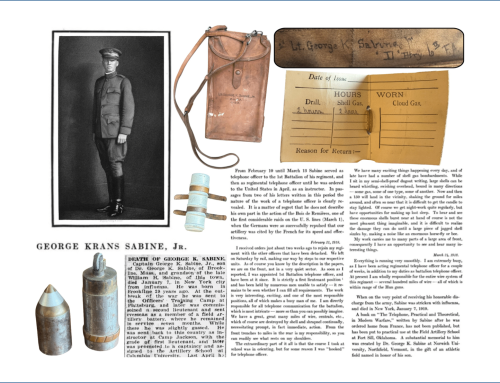
That loss puts extraordinary weight on what families kept. A grandfather’s letters, his discharge papers, the clasps on his Victory Medal may now be the most complete record of his war that exists anywhere. Historians rebuild service stories from surviving auxiliary records like unit morning reports and draft cards, and the Doughboy Foundation, through its Stories of Service program, invites descendants to add their transcribed letters and scanned photographs to a permanent archive. In that way, a shoebox in an attic becomes part of the national memory.
Keeping Faith With the Doughboy
The objects endure because someone chose to keep them, and because they answer the oldest fear of anyone who serves, that once they are gone they will be forgotten. That same impulse stands today in Pershing Park, where the National WWI Memorial’s sculpture “A Soldier’s Journey,” unveiled in 2024, carries a young soldier from his daughter’s hands into the war and home again. It is the largest free-standing high-relief bronze in the Western Hemisphere, and it tells across sixty feet what a single letter or dog tag tells in the palm of a hand.
Both do the same work. They insist that the millions of Americans of the Great War be remembered not as a statistic but as individuals, each with a name, a face, and a story worth carrying forward. To preserve a keepsake is to keep faith with the Doughboy. It is to make sure that, a century on, he is still here to be known.
 Alex Kidder is the CEO of KidderCorp, a veteran-owned business specializing in the design and manufacturing of custom challenge coins. He brings years of expertise to preserving military traditions and helping organizations tell their unique stories through physical craftsmanship.
External Web Site Notice: This page contains information directly presented from an external source. The terms and conditions of this page may not be the same as those of this website. Click here to read the full disclaimer notice for external web sites. Thank you.