Putin Can Learn 3 Big Lessons From World War I
Published: 3 August 2026
By Konstantin Gaivoronsky
via the Moscow Times website
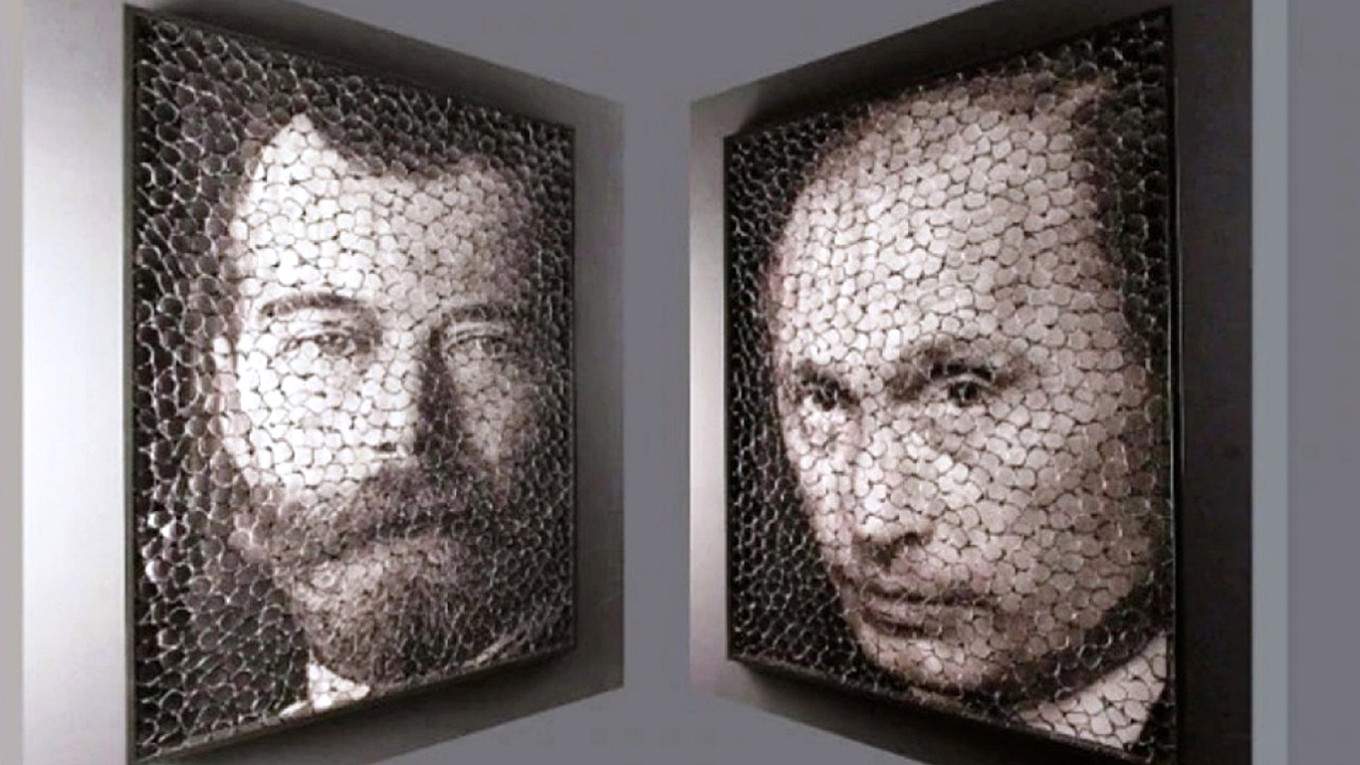
Tsar Nicholas II of Russia and Vladimir Putin
Tsar Nicholas II of Russia and Vladimir Putin (David Datuna)
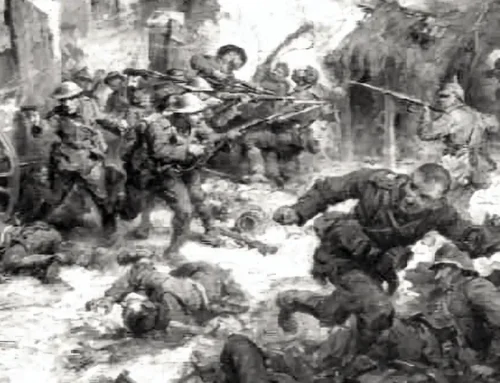
It has become commonplace to compare the war in Ukraine to World War I, with its desolate blasted landscapes and grinding trench warfare. Beyond the battlefields, there are political parallels as well.
Last year, Alexei Bayer, editor of The Globalist publication, published an article in which he argues that President Vladimir Putin is ignoring the lessons of that war.
In his view, Putin may soon discover that Russia is too exhausted to keep fighting and, just like Kaiser Wilhelm, may face a full-scale uprising by a people he dragged into an entirely unnecessary, stupid and bloody war.
Bayer even wonders how Putin, who speaks fluent German, failed to draw the key lessons from German history as they relate to Russia.
The answer is very simple.
Firstly because Putin likely considers the collapse of the Russian Empire in February 1917 more important than Germany’s interwar fate.
Second, people often draw whatever lessons they want from history. Putin, it seems, has indeed drawn the conclusions that matter most to him. One only has to try to look at it through his eyes.
Lesson 1: don’t mobilize too many people
Russia lost World War I in part because of excessive mobilization. That truth is not obvious today, but 100 years ago it was clearly articulated by analysts and direct participants alike.
The Russian Empire mobilized around 15.5 million men into the army, which allowed it to maintain a force of roughly 7 million at any one time. Such numbers were hugely excessive for that war and left the country with too many unproductive mouths to feed.
World War I very quickly turned into what the Germans called “Materialschlacht” — a battle of materiel — whoever fired more explosives in metal casings at those trenches, not how much cannon fodder they packed into them. By that measure, the Russian army lagged behind the Germans throughout the war by a factor of two to eight.
According to Soviet military specialists, the ideal size for the war would have been 3-3.5 million men. Officers at the time put the figure at 4.2 million, believing they could compensate for the shortage of shells and heavy artillery with “human material.”
With so many men mobilized and 5 million horses procured for the army, the country ran short of labor and draught animals and logistics began to crack. At the same time, railway infrastructure collapsed and the resulting lack of transport led to bread shortages in Petrograd, mass unrest and the fall of the monarchy.
Lieutenant Colonel Verkhovsky concluded that the only way to continue the war would be to demobilize partially, as “absurd” as it sounded. In 1917, some military men proposed exactly this to the Provisional Government.
That promising plan could not be implemented for political reasons. Everyone understood that such a volunteer army would hang their supposedly provisional leaders themselves as soon as the war ended.
Today, Putin faces no such political constraints. We are witnessing the implementation of precisely the idea that Russia has a volunteer army, fighting in relatively small numbers.
Small numbers, because the Russian command is conducting combat operations along a strictly limited front line. It is not trying to stretch that line at all, precisely in order to avoid mobilization. The first attempt at mobilization in autumn 2022 also turned out to be the last. Tellingly, even when Ukraine opened a new front in the Kursk region in summer 2024, Putin preferred to turn to North Korea for help rather than raise billboards in the cities calling on Russians to defend their Fatherland.
It is possible that the Kremlin will have to conduct a new round of mobilization in one form or another. But for now, Russia’s mobilization efforts then and now are simply incomparable to their scale in World War I.
⇒ Read the entire article on the Moscow Times website.
External Web Site Notice: This page contains information directly presented from an external source. The terms and conditions of this page may not be the same as those of this website. Click here to read the full disclaimer notice for external web sites. Thank you.