Patriotic Clothing Trends during WWI: A Peak into an American Trade Magazine
Published: 2 July 2026
By Kelly Bennett
via the Library of Congress website
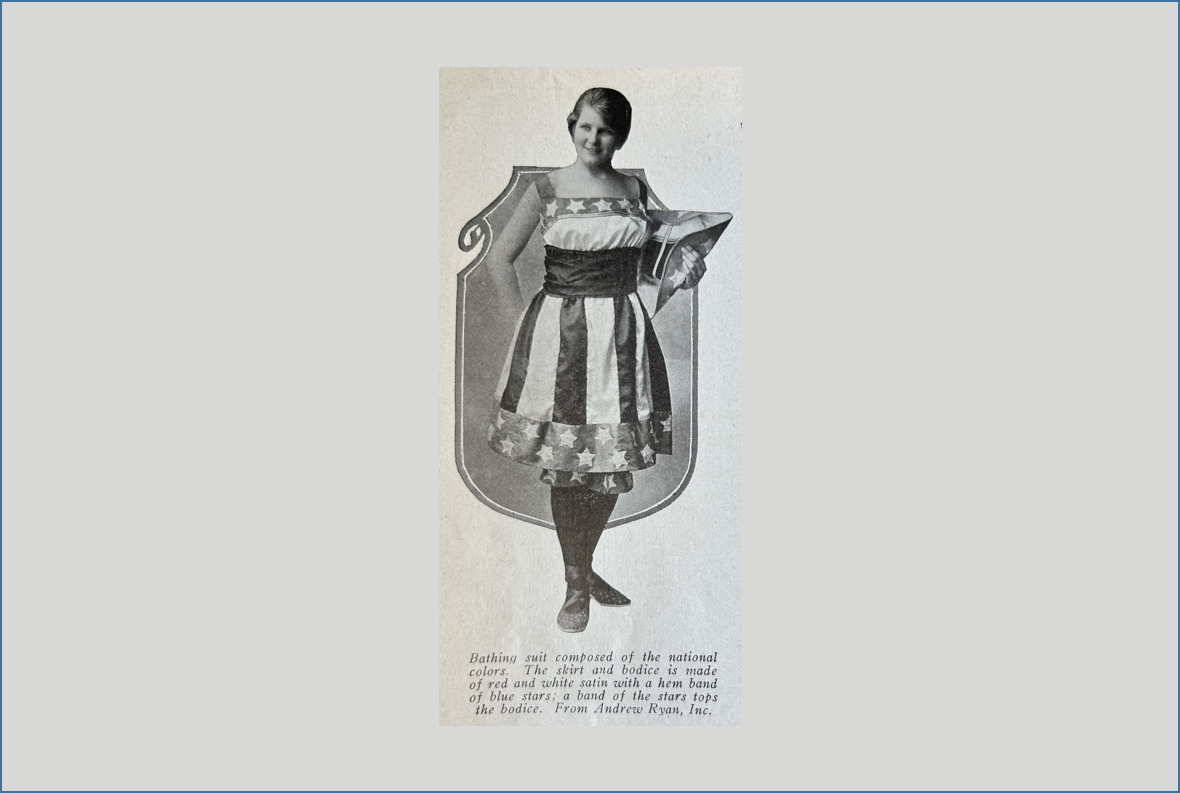
Patriotic Clothing
Photograph from article titled “Patriotic Bathing Suits” from the May 12, 1917 issue of Nugent’s: The Garment Weekly, p. 42.
This year, the Library of Congress has commemorated America's 250th anniversary by looking at how fashion has connected us through the decades. While browsing through the Library's collections, we found evidence of these connections during World War I in our fashion trade publications. The United States officially entered WWI on April 6, 1917. Patriotic and military–inspired fashion very quickly became trendy in the women's clothing industry, as was clear throughout the May 12, 1917 issue of Nugent's: The Garment Weekly.
Nugent's was a weekly trade publication that covered industry trends for clothing manufactures, buyers, and retailers published in the early 20th century. In 1917, the trends were highly influenced by current events. According to an article from the May 12, 1917 issue, which discussed military inspired women's clothing, "khaki suits [were] shown constantly…As if the manufacturer thoroughly believed in preparedness." The article went on to elaborate, "that is, women's preparedness for gardening work, for hiking and tramping, for automobiling and for the strenuous efforts that she may take this summer—they are all showing the khaki suit, some in more military fashion than others" (p. 23). Another article, on women's coats, observed, "the manufacturers seem almost limited to khaki and military features, both in coats and capes, if not in style than in color" (p. 24).
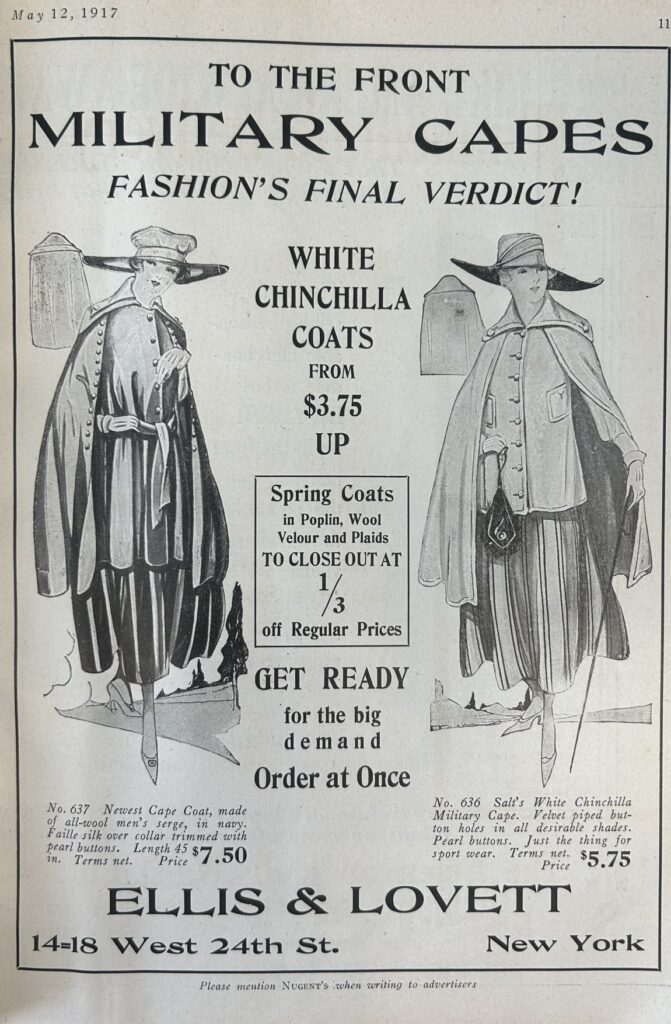
Advertisement featuring military inspired caped coats for women and the words "To the Front," from Nugent's: The Garment Weekly, May 12, 1917, p. 11.
Patriotic clothing was also on trend. An article describing printed georgettes, polka dot patterns and the resurgence of gingham also mentioned "a most remarkable shirtwaist dress…in the national colors," featuring a skirt of red, white and blue stripes, a white satin blouse, blue belt and red and blue suspenders over the shoulders (p. 22). And an article detailing bathing suit trends featured the photo shown at the start of this post. The model wore a bathing suit of stars and stripes and carried a matching "Colonial Tricorne" hat (p. 42).
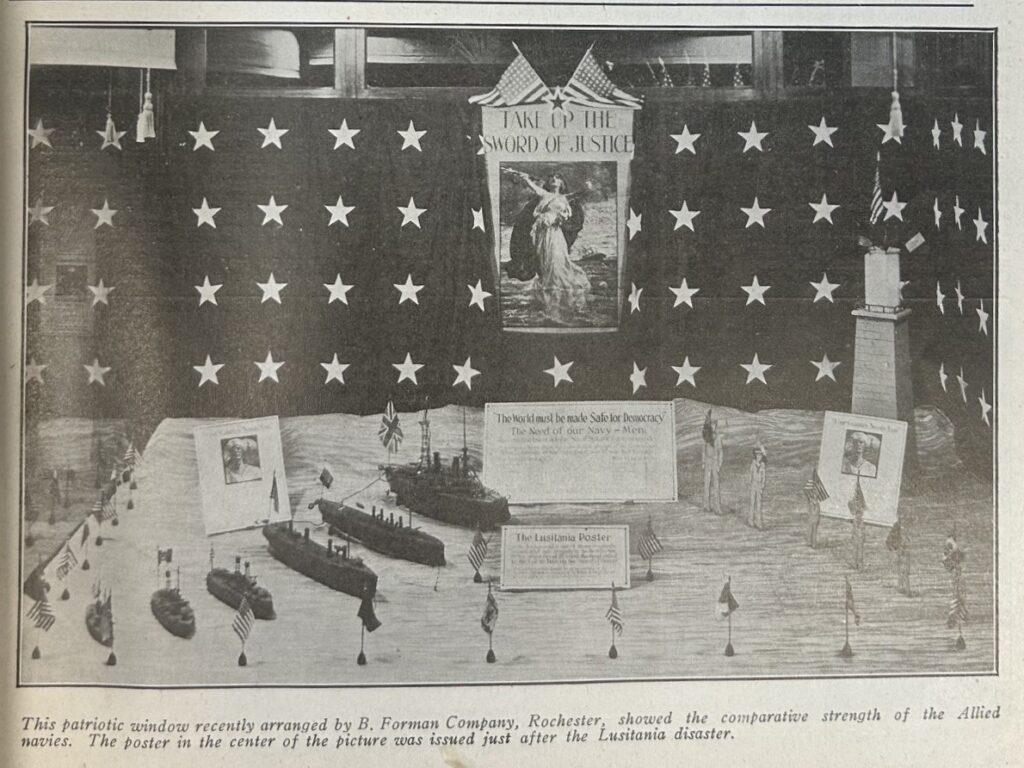
Patriotic window display at the B. Forman retail clothing store in Rochester, NY showing "the comparative strength of the Allied navies," Nugent's: The Garment Weekly, May 12, 1917, p. 51.
While patriotic colors and motifs were catching on, it seems manufacturers were more hesitant about printing a depiction of the flag itself on clothing. One article noted, "Many manufacturers and retailers…are greatly interested at the present time in the interpretation by various states of the law with regard to use and misuse of the flag" (p. 40). Indeed, there were a patchwork of state flag laws in 1917. To get some clarity, Nugent's publishing company sent a telegram to all 48 State Attorneys General, and to the Attorney General of the District of Colombia, requesting a response to the question, "is it illegal to manufacture or sell in your state a woman's or child's garment on which is embroidered or appliqued a representation of the American flag?" (p. 39).
Read the entire article on the LOC website.
External Web Site Notice: This page contains information directly presented from an external source. The terms and conditions of this page may not be the same as those of this website. Click here to read the full disclaimer notice for external web sites. Thank you.