Not fit to fight in World War I, he invented the television instead
Published: 26 January 2026
via the diamond geezer website
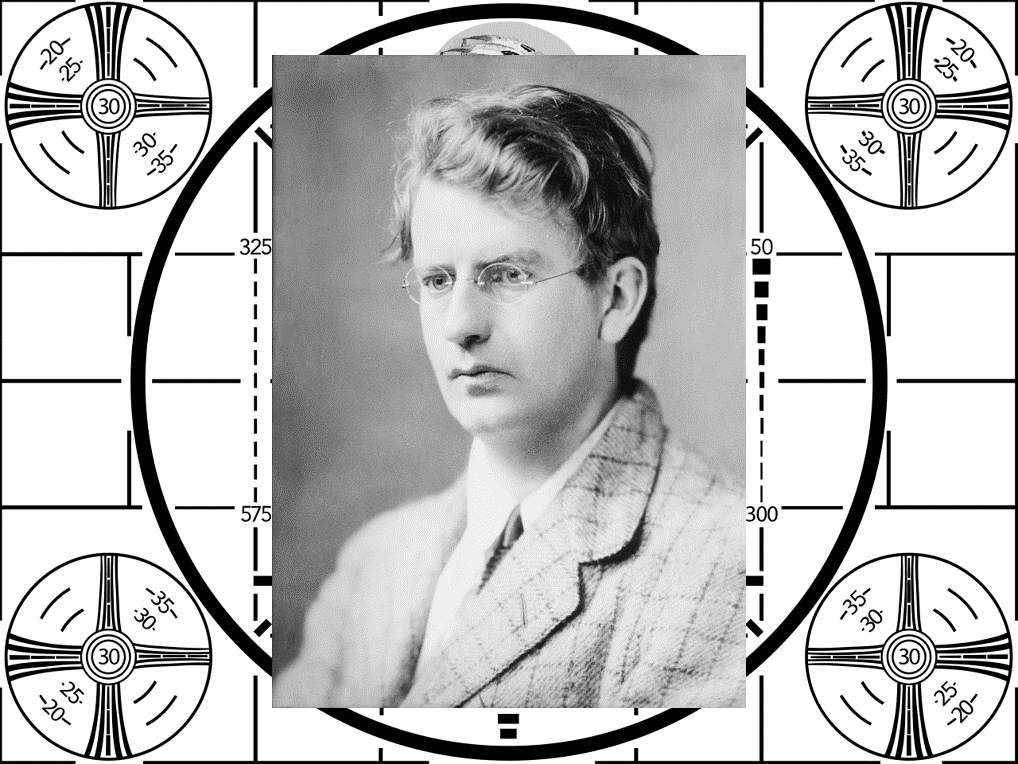
John Logie Baird in black and white TV test pattern
John Logie Baird in front of the classic RCA black and white TV test pattern
Some may debate which was the greater calamity for the world…
Television is 100 years old today.
And it was born here, above an Italian cafe in Soho.
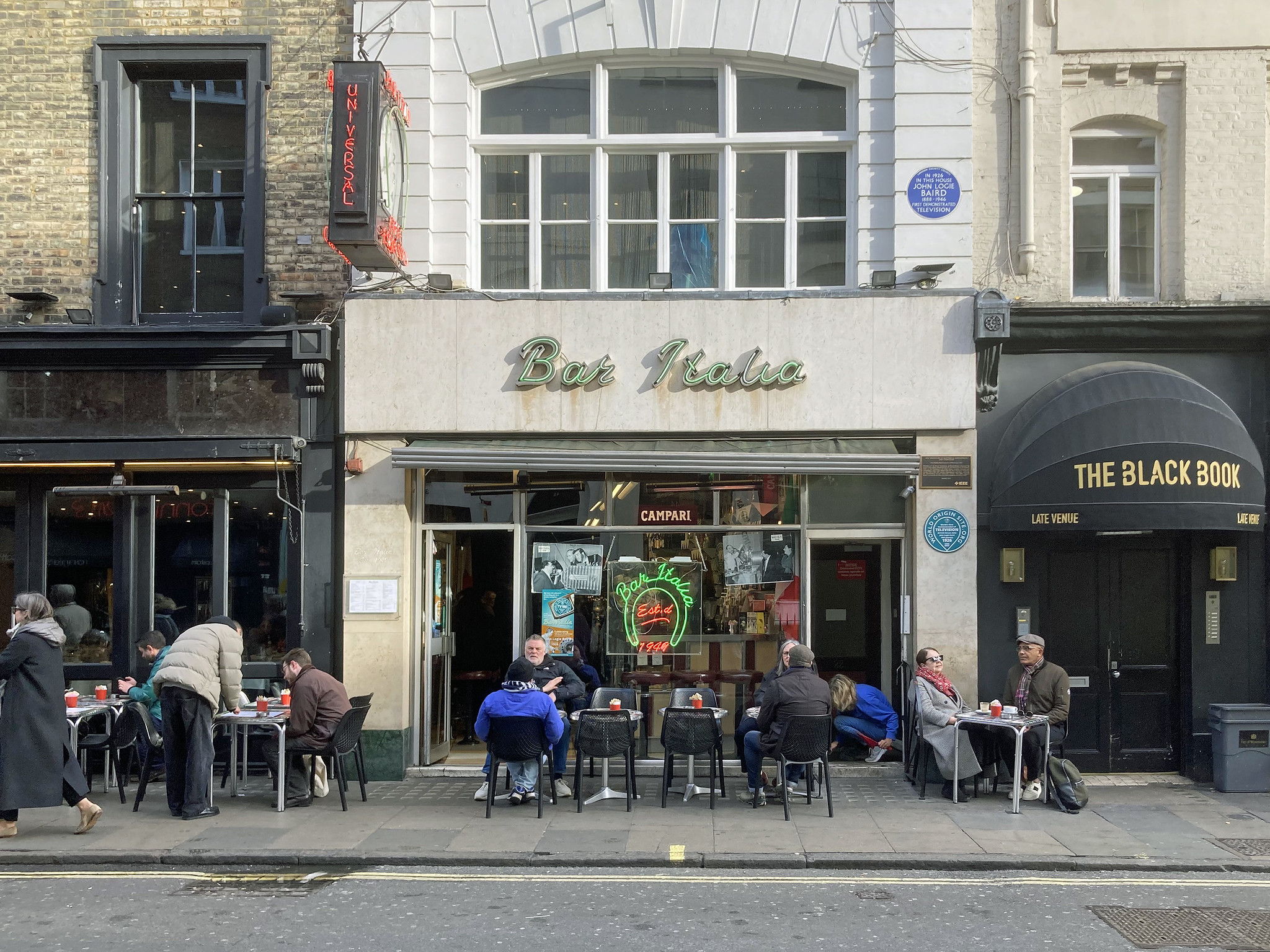
On 26th January 1926 at 22 Frith Street, in a workshop above what’s now Bar Italia, John Logie Baird first successfully demonstrated television.
The man who first demonstrated television was John Logie Baird, a former engineering apprentice from Helensburgh. And although there are other places that can plausibly claim to be TV’s birthplace, including a terraced street in Hastings, a hill in north London and Selfridges, most people agree that the decisive moment was a demonstration given to journalists in Frith Street on 26th January 1926.
Baird might never have made it to London had he not been a sickly boy. When WW1 broke out he wanted to enlist but was refused due to ill health, so took a job with the Clyde Valley Electrical Power Company helping to make munitions instead. In 1923 he moved to the south coast for the good of his health because it had a warmer climate, renting rooms at 21 Linton Crescent in Hastings. Here the first television signal transmitting equipment was constructed, with component parts including a hatbox, tea chest, darning needles and bicycle light lenses. The first image to be transmitted was the shadow of a St Johns Ambulance medal with a distinctive spiky outline, an item still on display at Hastings Museum. But his tinkering proved dangerous, and although a 1000-volt electric shock thankfully resulted in nothing worse than a burnt hand, his landlord duly asked him to vacate the premises.
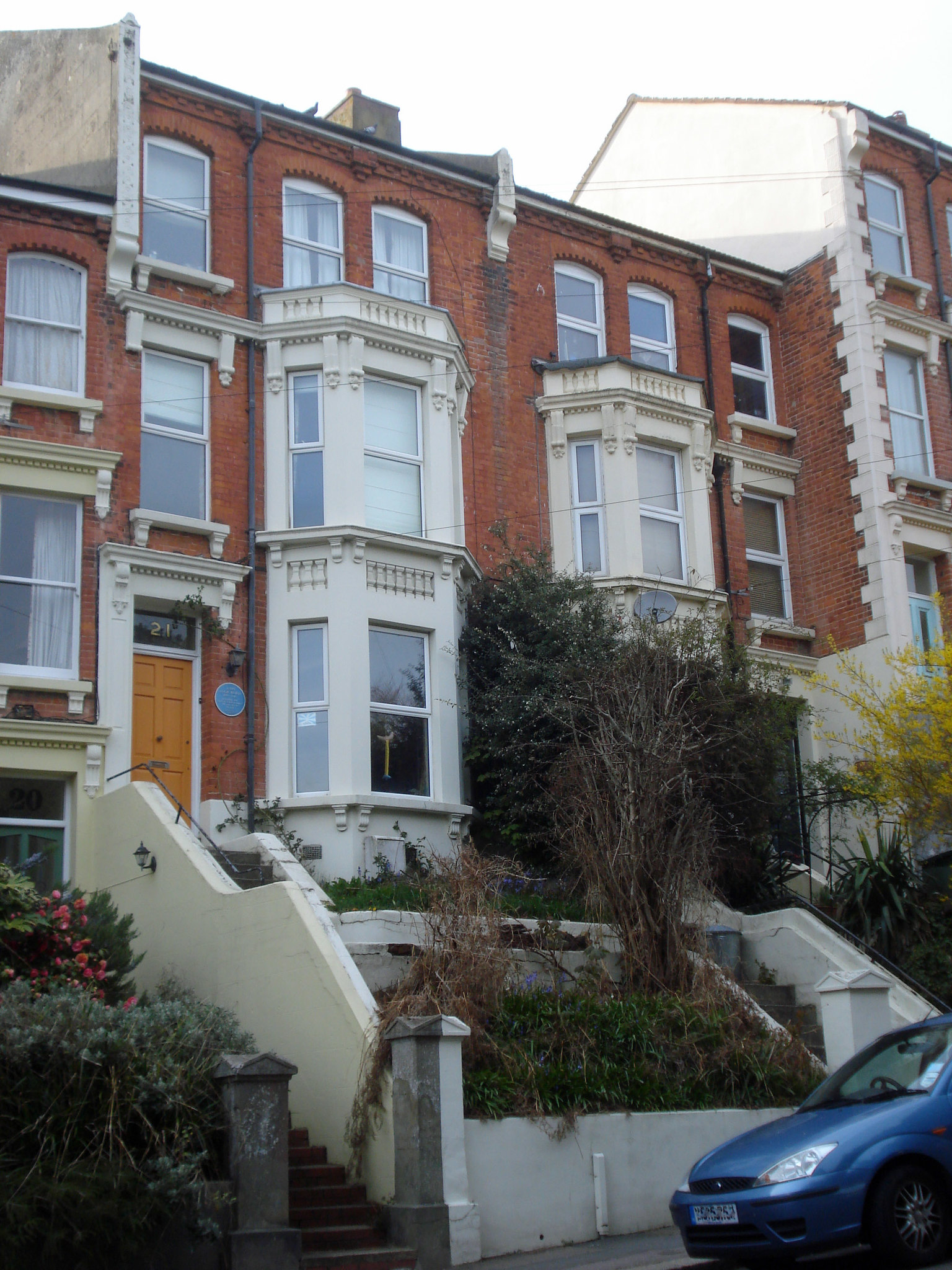
The birthplace of television. In lodgings here, John Logie Baird produced the first shadowy outline of an object (a Maltese Cross).
Baird moved to London in November 1924 in the hope of showing off his burgeoning invention, setting up a workshop in the attic at 22 Frith Street. Amongst those who dropped by was Gordon Selfridge who invited Baird to give demonstrations of his device in the Palm Court during his store’s upcoming Birthday Week celebrations. He gave three shows a day to long queues of spectators, each invited to peer down a funnel at outlines of shapes transmitted from a separate device a few yards away, including a paper mask which Baird would make ‘wink’ by covering the eyehole. At this stage Baird’s ‘Televisor’ was still electro-mechanical, the images formed by spinning discs with doubled-up lenses and perforated rectangular holes. But spectators were impressed, and Baird earned a much-needed £60 to plough back into his enterprise.
By October 1925 Baird had honed his processes sufficiently to be able to transmit an image with gradations of light and shade. Initially he used a ventriloquist’s dummy called Stooky Bill, this because it had greater contrast than a human face and also because it wouldn’t be harmed by intense heat or possible exploding glass. Later, somewhat over-excitedly, he invited a 20 year-old office worker called William Taynton to come upstairs and become TV’s first human subject. William wasn’t keen but an appearance fee of half a crown persuaded him to pick through a jungle of wires, sit in front of blazing hot lamps and stick his tongue out, for just long enough that Baird exclaimed “I’ve seen you, William, I’ve seen you. I’ve got television at last!” When the time came for a blue plaque to be unveiled outside 22 Frith Street in 1951, it was William they invited back to do the honours.
Read the entire article on the diamond geezer web site here:
External Web Site Notice: This page contains information directly presented from an external source. The terms and conditions of this page may not be the same as those of this website. Click here to read the full disclaimer notice for external web sites. Thank you.