Mislearning from War: The Case of U.S. Coastal Artillery
Published: 7 September 2026
By Kimball Worcester
via the Roads to the Great War website
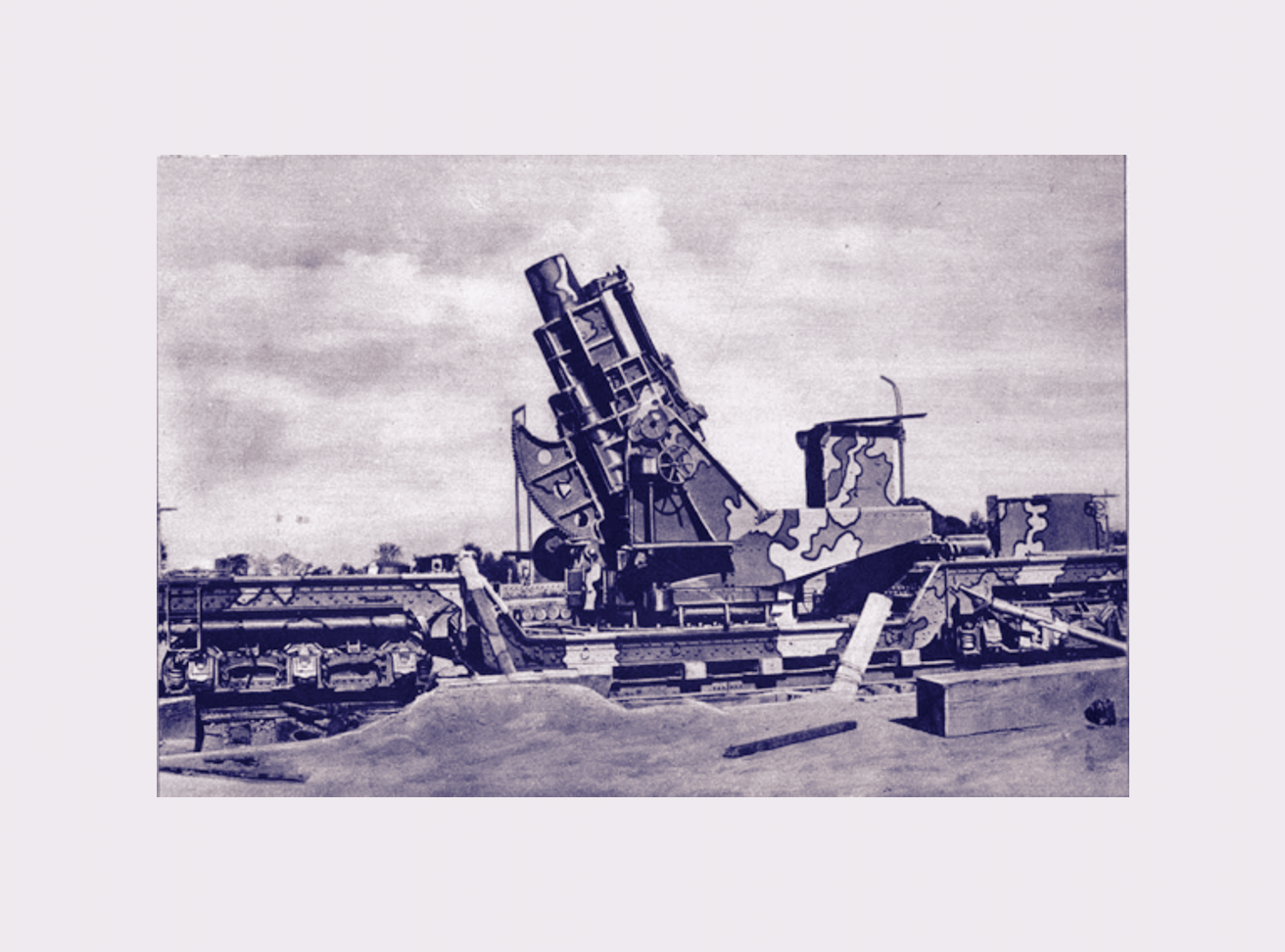
American 12-inch Mortar Railway Mount
American 12-inch Mortar Railway Mount
Editor’s Note: The U.S. entered the war largely unprepared for industrial-scale manufacturing. Consequently, U.S. Coastal Artillery Corps (CAC) units deployed to Europe were primarily equipped with British and French weaponry. The CAC converted older coastal guns onto train carriages to move them along European tracks. These larger weapons struck deep targets behind enemy lines, helping cripple German rail nodes and supply dumps. They fought prominently in the St. Mihiel and Meuse-Argonne offensives. Over 70,000 members of the CAC in 34 regiments served on the Western Front in France
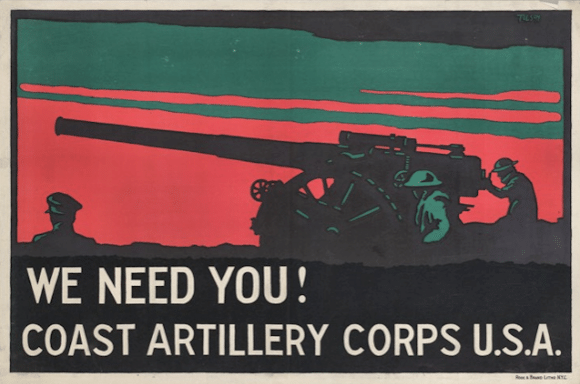
At the operational and strategic levels, there is the case of drawing a “lesson” that was an entirely erroneous application of wartime experience. The deployment of railway artillery for the coastal defenses of the United States in postwar years constituted a significant expense throughout World War II. Because the Coast Artillery Corps was the only branch of the U.S. Army with experience in indirect fire of heavy artillery before the war, Pershing had assigned it the responsibility for all heavy artillery—during World War I, those guns over five inches in diameter (about 130-mm.).
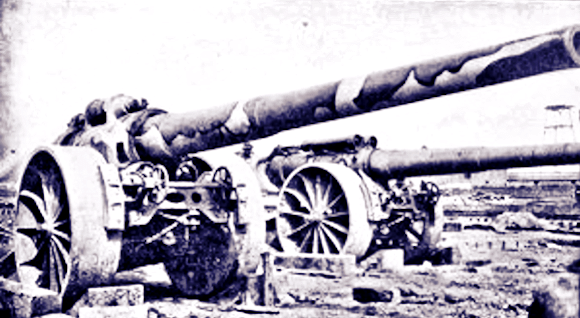
CAC Mobile Long Range Artillery
In addition to towed artillery, this included the huge siege guns 12 inches and over. Because these pieces were so heavy that French roads would not support their movement, they were mounted and moved on modified or specially designed railway flatcars. Impressed with their effectiveness as siege artillery, the men of the Coast Artillery Corps came back from their war experiences enthusiastically advocating the railroad gun as a coast artillery weapon in the United States.
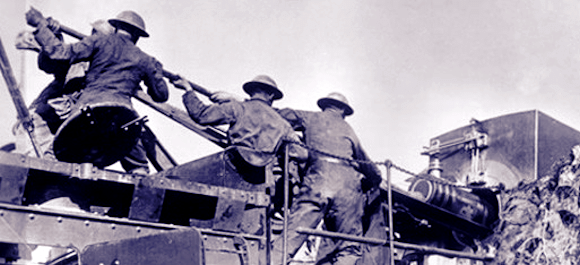
35th CAC, 80th Div. Loading a 14″ Gun on the Argonne Front
Partly because Congress increasingly saw the coast artillery fortifications as anachronistic in the emerging age of the airplane, it was reluctant to appropriate funds for manning and maintaining the seacoast forts after the war. The chief of the Coast Artillery was, however, successful in persuading Congress to appropriate funds for railway artillery by asserting that it would enhance and supplement the forts and expand their ability to defend the coastal cities. Superficially, railroad guns for the Coast Artillery sounded like a good idea—even some diehards in the corps could see that the fortifications would become increasingly vulnerable to bombardment from the air. Railroad guns, it was envisioned, would be able to range up and down the coasts at will, shelling a hostile fleet at any point.
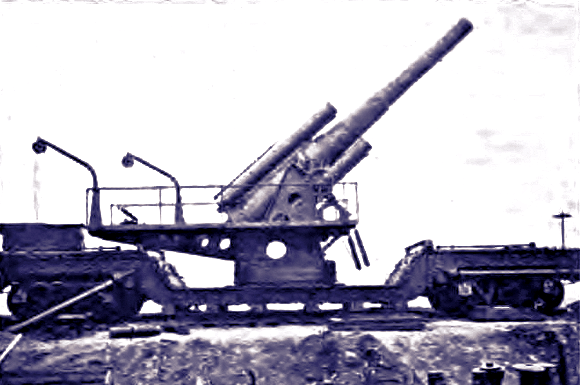
Railway Mounted 8-inch Gun of the Post-WWI Period
In practice, it was an impossible concept. The weight of the railroad artillery meant that most railroad arteries could not carry them without special reinforcement. The guns could not fire from any random point on the line but had to have special reinforced concrete hardstands on railroad spurs. In effect, they were only a little more mobile than the fortifications, with all the same vulnerabilities to attack from air or sea. In the process of deploying, manning, and maintaining railway coast artillery, the United States squandered millions of scarce dollars during the interwar period, all to field a weapon that was unable to perform its mission of destroying enemy warships and was obsolete before it was built.
⇒ Read the entire article on the Roads to the Great War website here:
External Web Site Notice: This page contains information directly presented from an external source. The terms and conditions of this page may not be the same as those of this website. Click here to read the full disclaimer notice for external web sites. Thank you.