German-Americans battle loyalty questions in World War I: Revisiting St. Louis’ history
Published: 25 June 2026
By Tim O’Neil
via the St. Louis Post-Dispatch newspaper website
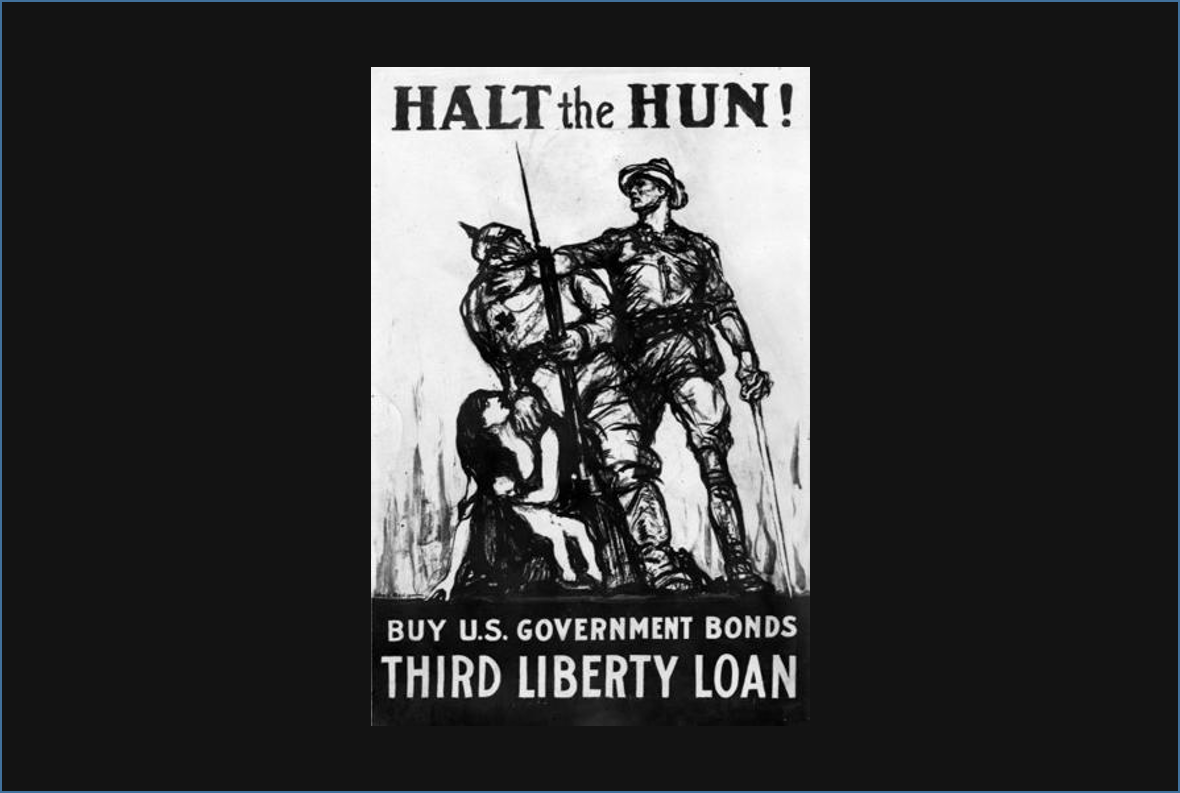
Halt the Hun framed
Only one week into the Great War, thousands of German-Americans jammed Turner Hall, at 1508 Chouteau Avenue, to defend the Fatherland and their loyalty to America. A band played waltzes and “The Star-Spangled Banner.”
They demanded “fair play” in the local press for Germany’s side of the conflict. Two veterans of the Franco-Prussian War in 1870-71 wore their medals proudly on the main platform during the rally Aug. 8, 1914.
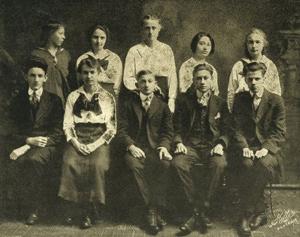
Members of the German Club at McKinley High School, 2156 Russell Boulevard, in January 1917, four months before the U.S. Congress declared war against Germany. In 1918, the city school board abolished introductory German classes. | Missouri History Museum image
Then and now, German heritage was the largest single ethnic identification in St. Louis. Thirty percent of St. Louisans either were born in Germany or had at least one parent from the old country. Many openly cheered for Germany early in the European war, and most wanted America to maintain strict neutrality.
Five months later, German societies sponsored speeches and a film, “Germany’s Side of the Great War,” at the St. Louis Coliseum, then the city’s main arena. Profits went to war widows and orphans in Germany and Austria-Hungary.
“Germany is fighting for her national honor and very existence,” former Judge Joseph Kane told the rally in January 1915.
But as the ghastly war continued — especially after a German submarine sank the British liner Lusitania in May 1915 — open sympathy for Germany became harder to maintain.
When the local German-American Alliance declined to take part in a big “Preparedness Day” parade in June 1916, former President Theodore Roosevelt denounced the group as “un-American” in a speech downtown.
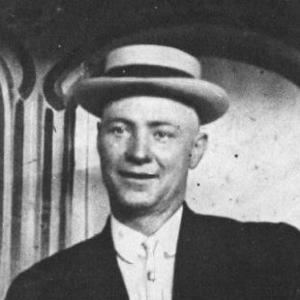
David Hickey, the first St. Louis soldier killed in action in World War I. He is buried in Memorial Park Cemetery in Jennings. Hickey Park in Baden is named in his honor. | Post-Dispatch file photo
Local officials renamed several streets, most notably Berlin Avenue, which became Pershing after American commanding Gen. John J. Pershing. Kaiser Avenue was renamed Gresham and Von Versen became Enright, both in honor of two of the first Americans killed in France. Neither was from St. Louis.
The city lost its first Doughboy on Feb. 24, 1918, when David Hickey, 38, died of shrapnel wounds on the front near the slaughterhouse of Verdun.
German-Americans rallied quickly behind the United States at war, but public campaigns whipped up hatred for the “Huns.” As usual, hysteria inspired cruelty.
St. Louis streetcar motorman William Stiefer was forced to curse the Kaiser before his co-workers. East Alton shopkeeper Morris Gotler was beaten because he didn’t close during a patriotic parade.
The worst crime here occurred in Collinsville, where a mob lynched Robert Paul Prager, a German-born coal miner, on the groundless rumor that he was a spy. Prager, 30, tried to enlist in the U.S. Navy and dutifully registered as an “enemy alien,” a wartime requirement.
But some workers at a Donk Brothers Coal Co. mine in Maryville became suspicious after Prager asked about dynamite. Prager insisted he was “heart and soul for the good old U.S.A.” His plea was fruitless. The mob grabbed him from a hiding place in City Hall on the night of April 4, 1918, marched him to a hackberry tree west of Collinsville and gave him a moment to scratch a last note to his parents in Germany. Then they hanged him.
Read the entire article on the St. Louis Post-Dispatch website here:
External Web Site Notice: This page contains information directly presented from an external source. The terms and conditions of this page may not be the same as those of this website. Click here to read the full disclaimer notice for external web sites. Thank you.