World War I Revolutionized U.S. Military Medicine
Published: 12 November 2026
By Robert Hammer
Military Health System | US Department of War
via the Texas Border Business website
World War I Revolutionized U.S. Military Medicine
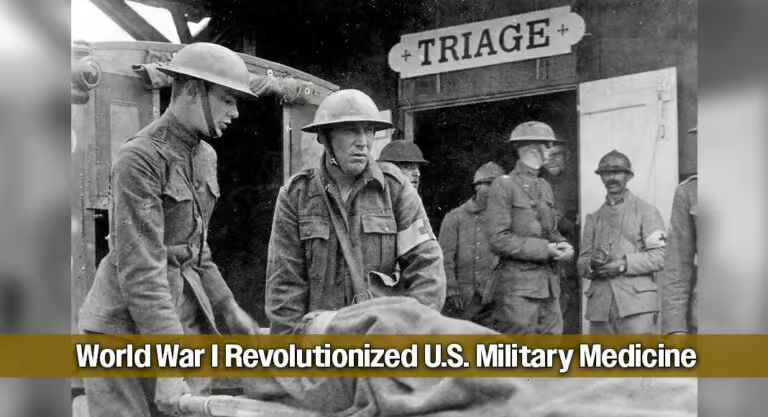
Wounded troops arrive at a triage station from a sanitary train in northeast France during World War I. Photo credit: Courtesy National Museum of Health and Medicine via USDOW
The United States participated in World War I for 19 of the 52 months, yet its military medical advancements revolutionized trauma care, on and off the battlefield.
Congress formally declared war on Germany, April 6, 1917, bringing the U.S. into the global conflict that began July 28, 1914. Throughout the war, American medical teams turned wartime lessons into lasting medical innovations, enhancing combat care from front-line surgery and blood storage to mental healthcare and physical rehabilitation.
The conflict also accelerated breakthroughs in military-civilian partnerships, aviator healthcare and other wartime medical advances — reshaping military medicine and trauma care into a highly coordinated, lifesaving system.
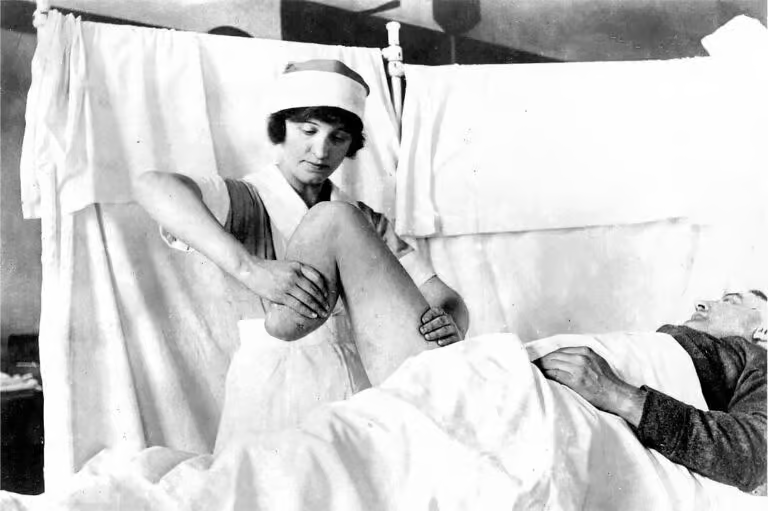
A World War I reconstruction aide provides physical therapy to a service member to strengthen his thigh muscles after an amputation. Medical innovations throughout the war, including advancements in mental healthcare, transformed combat care, leading to breakthroughs that paved the way for high-quality warfighter care today. Photo credit: Courtesy National Museum of Health and Medicine Via USDOW
During the war, the U.S. rapidly deployed mobile hospitals near the front lines to care for the wounded and sick.
“Everyone learned that forward surgery reduced infection rates, sped up recovery and saved some lives,” said Sanders Marble, Army Medical Department Center of History and Heritage senior historian.
Forward surgical units “were not just to save lives but to benefit the military by returning more patients to duty and reducing the size of the hospital system through fewer infections and shorter hospital stays,” he said.
These forward surgical units paved the path for mobile surgical hospitals introduced in later U.S. conflicts.
Blood Innovations
As surgery moved closer to the front lines, the need for transportable, long-lasting blood storage became critical.
French and British military medical teams moved from a system of direct donor-recipient transfusion — connected by tubing stitched into the limb — to indirect transfusion using syringe-loads or bottled blood for a quicker transfusion period, according to Marble.
This new method, along with advances in preservatives and storing blood on ice, provided modest stockpiles of blood ahead of military operations.
⇒ Read the entire article on the Texas Border Business website here:
External Web Site Notice: This page contains information directly presented from an external source. The terms and conditions of this page may not be the same as those of this website. Click here to read the full disclaimer notice for external web sites. Thank you.