Astoria marks Veterans Day with Doughboy, bells to toll
Published: 8 November 2026
By Jeanne Huff
via The Astorian newspaper (OR) website
There will be a Bells of Peace tolling of the bells at 1111 am on Veteran’s Day Nov 11 The Astorian
There will be a "Bells of Peace" tolling of the bells at 11:11 a.m. on Veteran's Day, Nov. 11. (File/The Astorian)
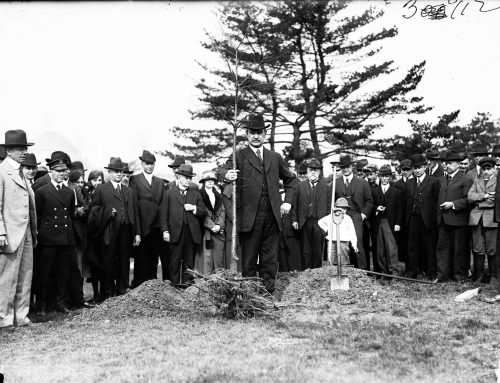
Doughboy rededication marks its centennial anniversary
At 11:11 a.m. on Wednesday, bells throughout Astoria will toll from churches, schools, military facilities and emergency service organizations to remember those who served in World War I. The pealing of bells will also commemorate the 100th anniversary of the dedication of the city’s Doughboy Monument. In addition, following the ringing of the bells, there will be a rededication at the monument followed by a reception at 12:30 p.m. with light refreshments in the Veterans Memorial Flag Room of the Astoria Public Library. The Flag Room is a memorial to local veterans and is adorned with a plaque in honor of Staff Sgt. Everett J. Salvon, who died in World War II.
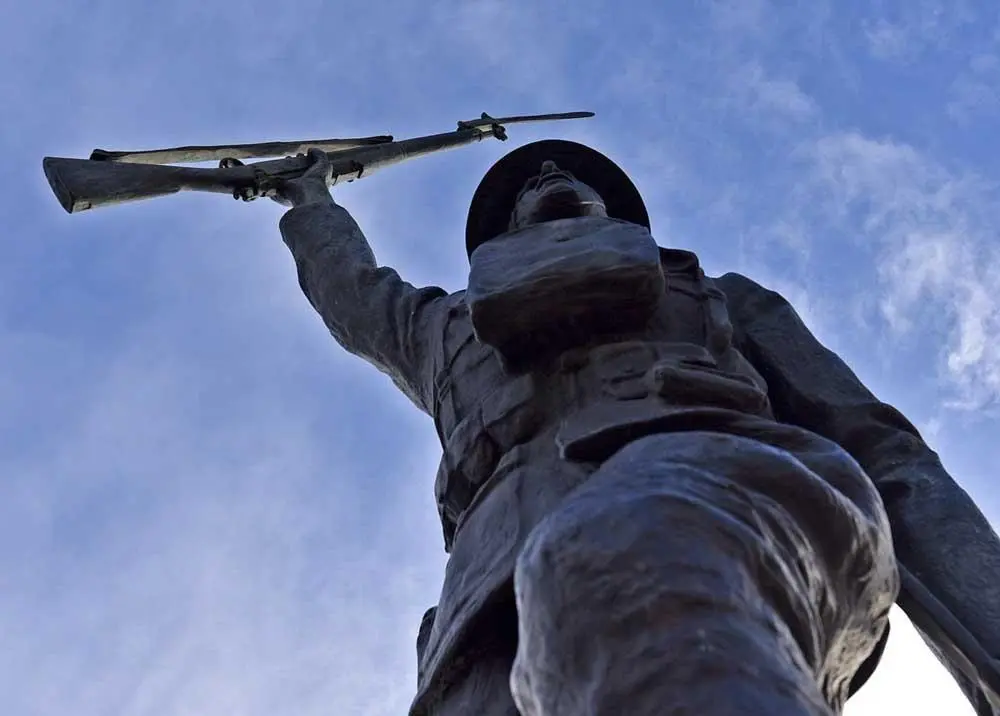
The Doughboy Monument, located at the intersection of West Marine Drive and Columbia Avenue, was added to the National Historic Registry of Places in 1984. It includes a bronze statue of a World War I soldier as well a public restroom.
The American Legion and an association of businesses in Uniontown silently raised about $5,000 to fund the purchase of the Doughboy Monument, a bronze statue by sculptor John Paulding named “Over the Top at Cantigny.” The statue honors the first major
U.S. victory in World War I, and the base and restrooms were designed by architect Charles T. Diamond.
The headline of The Morning Astorian on Armistice Day reflected the mood of the country and announced the end of World War I: “Nation Mad With Joy.”
Every Veterans Day since then, the “Bells of Peace” remind people to take a few moments at the 11th hour to remember those who served in WWI with a remembrance of a 21-peal bell tolling. Tens of thousands have participated in the ritual including states, cities, municipalities, ships, military installations, churches, schools, veterans’ organizations, museums and individuals.
Rosemary Johnson, who now volunteers as planning consultant for the City of Astoria, and also served as the city planner, was crucial in the restoration of the Doughboy Monument in 2018. She has been working on this year’s 100th celebration and rededication.
Johnson said the actual date marking the monument’s 100 years was the same day as the 100th anniversary of The Astoria Column. The city decided to wait to celebrate the Doughboy on Veteran’s Day.
Johnson also has a vested interest in the celebration and rededication. “My grandfather was in World War I. He did serve in France.” Johnson’s family is from Baltimore, Maryland. Her grandfather’s name was August Schmitt and he served from June 29, 1918 to May 25, 1919. “He was in the 111th Field Artillery Maryland National Guard. He fought in the Meuse-Argonne offensive in 1918.”
Where did the term ‘doughboy’ come from?
“Doughboy” has been the nickname for U.S. Army infantrymen, as early as 1847, but it is most commonly associated with soldiers who fought in World War I.
The origin of the name is shrouded in lore and there are several possible explanations. One theory dates back to 1916 when foot soldiers marching in General John Pershing’s American Expeditionary Forces traveled south of the border to fight rebel Pancho Villa. Mounted troops called the foot soldiers, who were covered in adobe dust, “adobes” or “dobies.” The dobies, or “Doughboys,” were redeployed to Europe just a few months later.
Another story goes that female Salvation Army volunteers who went to France, cooked millions of doughnuts and bring them to the troops on the front line — to the “doughboys.” And Wikipedia lists “a jocular explanation” for the term’s origin: “in World War I, the doughboys were ‘kneaded’ in 1914 but did not rise until 1917.”
Clatsop County’s World War I fallen heroes
There were more than 300 from the county who served in WWI. Thirty-four were confirmed to have died in battle.
The following is a list of Clatsop County World War I dead to which the monument was dedicated. Seven were killed in action, four died of wounds, and the rest died of disease, mainly pneumonia.
⇒ Read the entire article on The Astorian website here:
External Web Site Notice: This page contains information directly presented from an external source. The terms and conditions of this page may not be the same as those of this website. Click here to read the full disclaimer notice for external web sites. Thank you.