World War I Draft Registration in Prince William County
Published: 2 November 2026
via the Prnce William Living magazine website
Prince William Living header image
The War to End All Wars
The National Defense Act of 1916 was signed into law by President Woodrow Wilson on June 3, 1916, to increase the size and readiness of the U.S. military due to escalating tensions of World War I and the border raids by Pancho Villa.
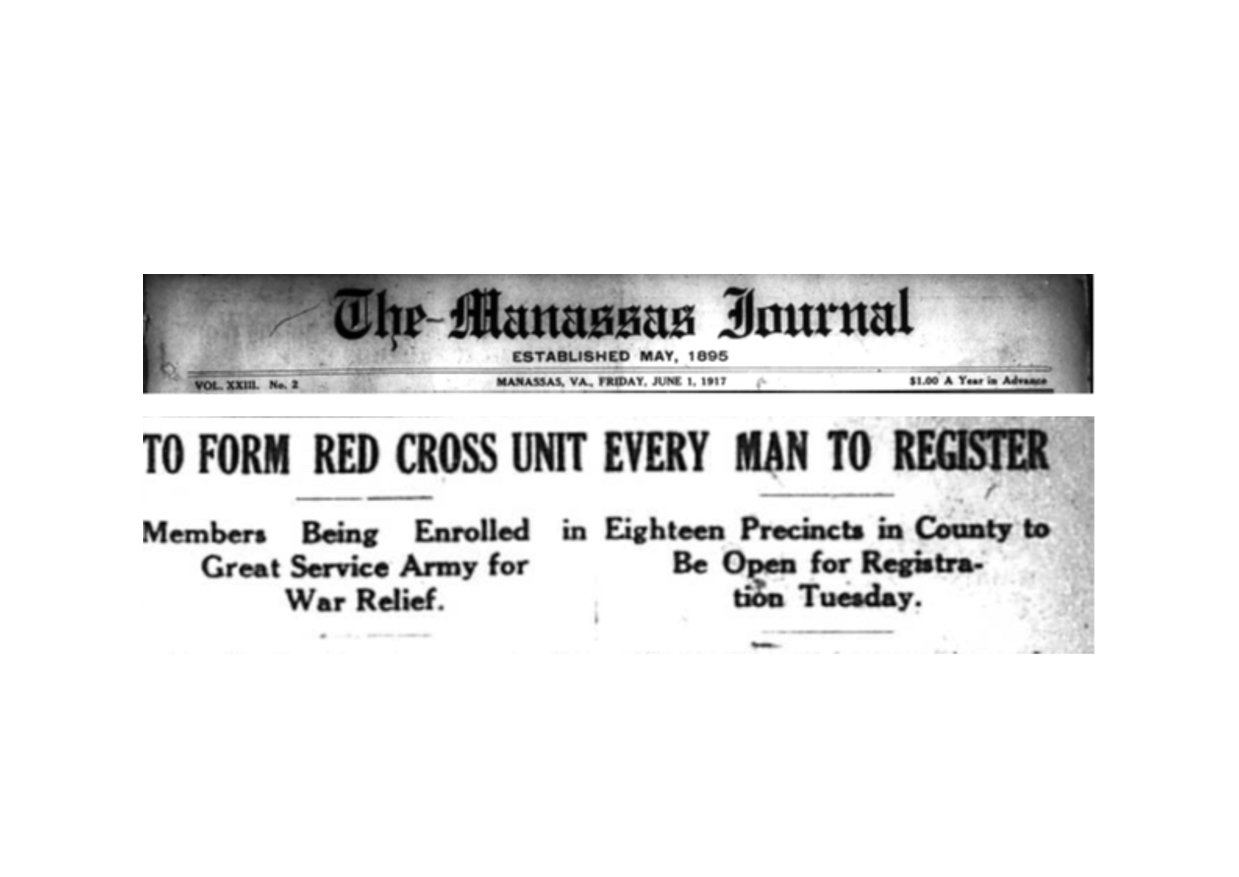
Local Newspapers Announce the Selective Draft Legislation
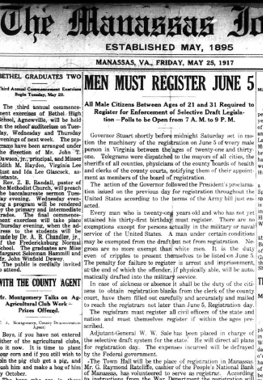 “The polls will be open in each election precinct throughout the United States from 7 a.m. to 9 p.m. on Tuesday, June 5, for the registration of every male citizen between the ages of twenty-one and thirty-one to carry out the terms of the army bill. The Prince William County board of registration appointed by Governor Stuart is composed of Sheriff Charles A. Barbee, County Clerk George G. Tyler, and Dr. J.M. Lewis.”
It goes on to say that “Every man in the county, regardless of his color, creed, family, occupation, or physical condition, must go to the registration office and answer the question asked by the registrar, who will write the answers on the registration blank and obtain the signature of each man.
According to the article, the card had information such as the name of the applicant, age, address, birthdate, natural-born citizen, naturalized citizen, or alien, place of birth, occupation, name of employer, whether the family was dependent on his support, married or single, race, previous military experience, and, if applicable, what qualifies you for exemption.
Examples of Draft Cards from Prince William County

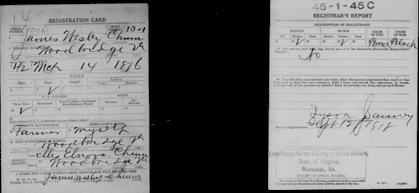
Let’s look at the first card, 45-1-45C. The first number is the state, the second is the State board number, the third is the local board, and the letter C stands for the third draft day. Mr. Chinn registered in the state of Virginia, District 1, local board number 45 during the third draft in 1918.
James Wesley Chinn was born in Woodbridge on March 14, 1876, and was 42 years old at the time of registration, a self-employed farmer; his wife was Elenora Chinn, Negro, no military experience, does not claim exemption. On the other side of the card, it gives a general physical description and any disabilities. This card was dated Sept. 12, 1918. It also has the Local Board for the Prince William County registration office located in Manassas.
As you may notice, Mr. Chinn was well above the 1916 age limit; that is because on the third registration day, Sept. 12, 1918, the government raised the age limit to 45 years old. There is a significant amount of genealogical information, society laws, and local history associated with these cards.
Example of Society Law and the Draft
During the first and second drafts (A and B), if you were listed as “Negro” or of African descent, the lower-left corner of your card was removed. In the example below, you will notice that there is a triangle shape removed from the card, which states, “If this person is of African descent, tear off this corner.”
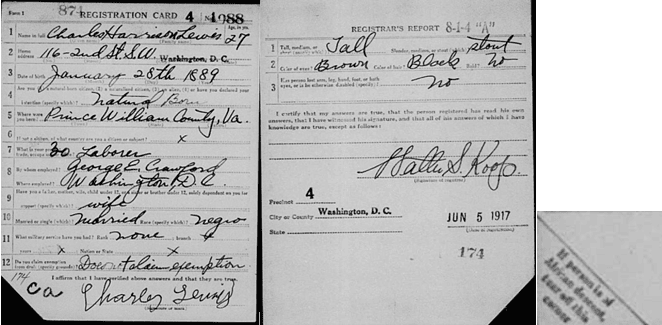
This reflected the segregation “Jim Crow” laws that impacted the United States during the early to mid-20th century. However, the cards changed by the time of the third draft, or “C” cards, in 1918, to reflect the acceptance of Black men into the military.
The Manassas Journal reported on Nov. 2, 1917, that 29 Prince William draftees were given a “Rousing Send-off” on their way to Camp Lee. There was a ceremony including the County Clerk George G. Tyler, Sheriff C.A. Barbee, chairman and clerk of the local board, Lieutenant George C. Round representing the Red Cross committee, the principal of the Manassas Industrial School, and several other members of the community.
⇒ Read the entire article on the Prince William Living website.
External Web Site Notice: This page contains information directly presented from an external source. The terms and conditions of this page may not be the same as those of this website. Click here to read the full disclaimer notice for external web sites. Thank you.