Symposium Remembers the Stories of America’s Unsung Heroes of World War I
Published: 20 September 2026
By Doughboy Foundation Staff
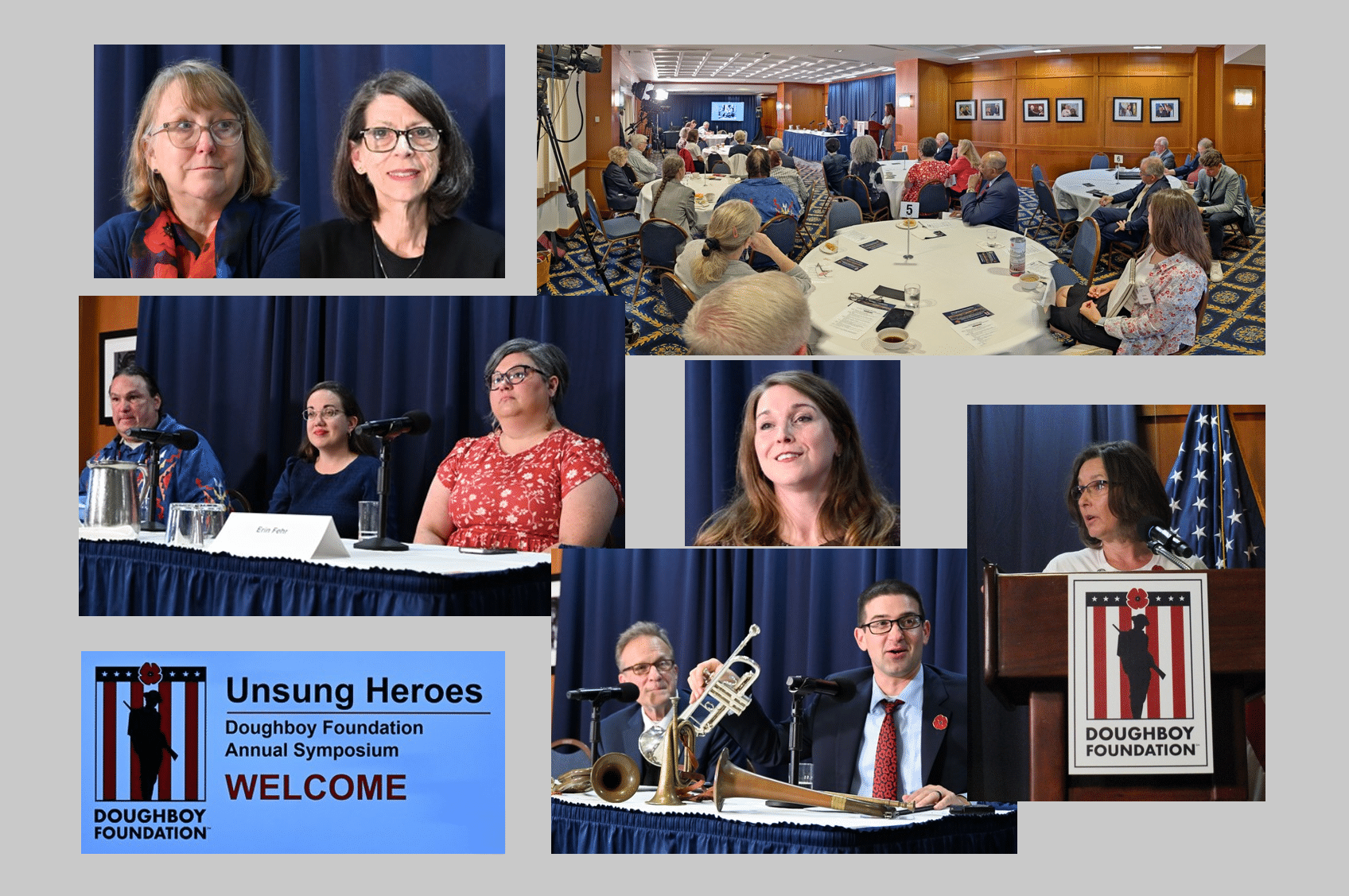
2026 SYmposium gang 1
(top left) Jerry Bell (left) related the story of the "Golden 14" Yeomen, the U.S. Navy’s First Enlisted Black Women. Susan Watson (right) remembered the service of The American Red Cross Motor Corps. (middle left, l to r) Timothy Hunts-In-Winter presented his research on Dakota and Lakota frontline soldiers and WWI Code Talkers; author Sarah Elisabeth Sawyer told the backstories of her books about Choctaw Nation soldiers in WWI; Erin Fehr of the Sequoyah National Research Center provided an overview of American Indians in WWI. (bottom center) Buglers Chris Gekker (left) and Kevin Paul presented on the history, tradition and heritage of bugling in the military and the Great War, and showed genuine WWI bugles. (bottom right) Catherine Bourgin, granddaughter of Hello Girl Marie Edmee LeRoux, talked about the Signal Corps Telephone Operators Unit, first all female unit to serve on the front lines of the U.S. Army during WWI. (center) Nealie Sutton of the American Battle Monuments Commission, highlighted the importance of “Taking Care of Those Who Made the Ultimate Sacrifice.” (Photos (c) Bruce Guthrie)
The Doughboy Foundation’s second World War I Symposium, hosted at the prestigious National Press Club in Washington, DC on September 18, 2026, offered a full day of immersive historical learning provided by experts on several largely-overlooked aspects of America’s participation in World War I.
Titled “Unsung Heroes,” the Symposium opened with the session “Getting it Done, Supporting the Troops in WWI,” spotlighting two largely unknown aspects of the essential logistics and American support networks of the Great War. Jerri Bell described the barrier-busting role of the Golden 14 Yeomen, Navy’s First Enlisted Black Women. Susan Watson related the importance of the largely-female American Red Cross Motor Corps
The next session, “The Impact of American Code Talkers in WWI Through Modern Time,” examined how Native American service members used their traditional tribal languages to transmit secret tactical messages on the battlefields of World War I, and the important Legacies of their service. Erin Fehr, Assistant Director & Archivist at the Sequoyah National Research Center (UA Little Rock), and researcher and co-creator of the Modern Warriors of World War I database, gave an overview of American Indians in WWI. Sarah Elisabeth Sawyer, Choctaw Nation tribal member, “story archaeologist,” and award-winning author, provided the backstory of her narrative biography, Otis W. Leader: The Ideal American Doughboy, and what her research for this and other related books uncovered about the Choctaw Nation’s WWI military service. Timothy Hunts-in-Winter, Citizen of the Standing Rock Sioux Tribe, talked about his historical research into Dakota and Lakota frontline soldiers during WWI.
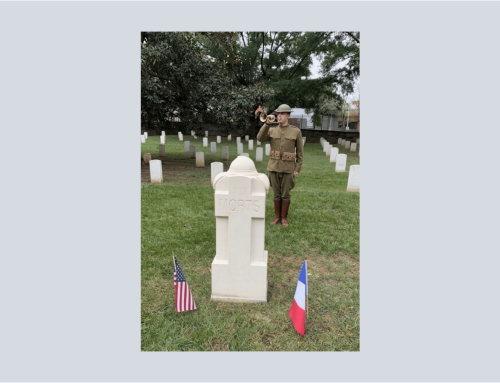
The first afternoon panel, “Music and the Wartime Trumpet,” took a deep dive into the history, tradition and heritage of bugling in the military and the vital roles bugles and buglers played in Great War. The presentation featured genuine World War I bugles, including a rare trench bugle, and General John Pershing’s own personal bugle. The session featured two experts on the military trumpet: Kevin Paul, Military Band Historian, member of a premier band in Washington, DC, and Operations Manager for the Doughboy Foundation leading the buglers for Daily Taps, and overseeing Doughboy Foundation’s AEF Headquarters Band; and Chris Gekker, Professor of Trumpet at the University of Maryland, renowned international soloist, and former faculty member at The Juilliard School.
The next panel, “Hello Girls: The Forgotten Telephone Operators,” looked into the Signal Corps Telephone Operators Unit, the first all female unit to serve on the front lines of the U.S. Army during WWI. Catherine Bourgin, granddaughter of Hello Girl Marie LeRoux, and Founding Member of the Hello Girls Military Honors & Remembrance Program (M-HARP), talked about the origin and service of the Hello Girls in WWI, their 60-year battle for recognition as soldiers, the 2024 award of a Congressional Gold Medal honoring their service, and how M-HARP is working to ensure every Hello Girl has her military service recognized on her grave marker.
Wrapping up the day’s procedings, Nealie Sutton, Executive Director for Management, American Battle Monuments Commission (ABMC), talked about the vital importance of “Taking Care of Those Who Made the Ultimate Sacrifice.” She related ABMC’s work in keeping alive the memories of all thse who served in World War I, and in all of America’s conflicts since.
Following the end of the Symposium, attendees walked to the National World War I Memorial to witness Daily Taps at 5:00 pm. After the solemn ceremony, all were treated to the Doughboy Foundation’s Final Concert of the Summer: ”From Ragtime to Swing, America Finds it’s Rhythm.”
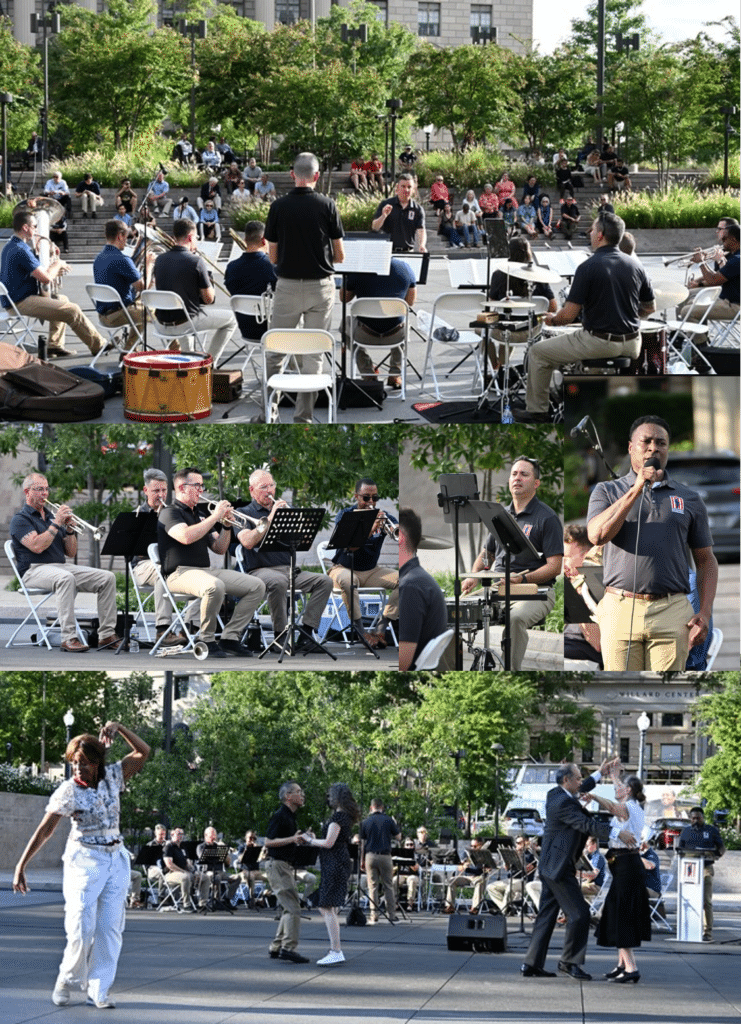
The final Doughboy Foundation 2026 Summer Concert was titled “From Ragtime to Swing, America Finds its Rhythm!” and featured period dancers.
External Web Site Notice: This page contains information directly presented from an external source. The terms and conditions of this page may not be the same as those of this website. Click here to read the full disclaimer notice for external web sites. Thank you.