Getting Those World War I Naval Mutinies Straight
Published: 10 August 2026
By Lt. Commander John D. Hayes, U.S.N.
U.S. Naval Institute Proceedings
via the Roads to the Great War website
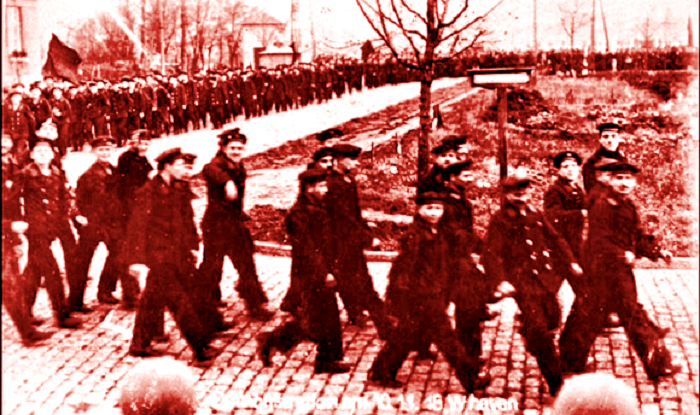
Sailors Demonstrating at Wilhelmshaven, 10 November 1918
Sailors Demonstrating at Wilhelmshaven, 10 November 1918.
(Note: I’m pretty sure that some of our readers share my difficulty in sorting out the causes of the Russian and two German Naval mutinies of the Great War. Through the miracle of the internet, however, I discovered a September 1939 article in the United States Naval Institute Proceedings by Lt. Commander John D. Hayes that clarified things for me. Here are the pertinent sections from the article. By the by, Hayes’s article also included commentary on a 1931 Royal Navy affair, which I’ve deleted from this presentation. Also his article did not address the March 1921 Naval Mutiny against the Bolsheviks that was crushed by Lenin and Trotsky. — Kimball Worcester, Roads to the Great War)
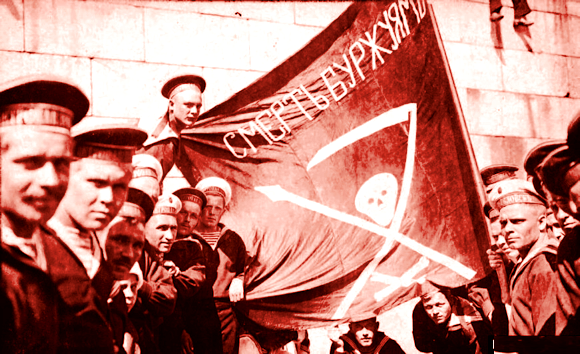
Sailors of Kronstadt Say, “Death to the bourgeoisie.”
The Russian Naval Mutinies
“The same as you, sir.”
Reply of a sailor in a loyal Russian destroyer when asked by his commanding officer what he thought of the Revolution.
The story of the Russian naval mutinies of 1917 is rather the story of the disintegration of a navy. The mutinies paralleled the revolution and were an integral part of it. There were two major mutinies, one at the naval station at Kronstadt, near Petrograd, and another a few days later among the vessels of the Baltic Fleet at the winter base in Helsingfors, Finland.
The mutiny at Kronstadt was coincident with the February revolution in Petrograd. During the first two days of this revolution Kronstadt remained quiet in a state of suspense. On February 27, the day that the guards regiments in Petrograd mutinied, the military forces at Kronstadt did the same and by midnight a naval mutiny had commenced.
By 5:30 a.m. sailors were going through the officers’ quarters gathering arms and ammunition. At this time Admiral Viren, the commandant, was arrested by the mutineers. He was shot shortly afterward while trying to address the men. The mutiny blazed a bloody trail throughout the day. The outsiders who incited it endeavored to keep it in hand, but altogether 78 officers and petty officers were murdered. Most of the rest spent long months in prison only perhaps to face a firing squad. The Kronstadt soviet was formed and it immediately became a spearhead of the revolution.
The mutiny in the Baltic Fleet at Helsingfors broke out about 8:00 p.m. on 2 March, the evening of the abdication of the tsar. But for a few radio messages and what information had passed by word of mouth, the fleet was without knowledge of the momentous events that were taking place in Petrograd during the previous six days. The commander-in-chief, Admiral Nepenin, had been requested by the leaders of the Duma to agree to the abdication of the tsar. He did so. Later, because of the temper of the men of the fleet, he sent a message to the tsar, begging his abdication in the hopes of preventing a mutiny. When the tsar did abdicate, Nepenin did not announce it to the fleet. Nevertheless, it became generally known.
Whether the abdication was a signal for a mutiny or whether it had been previously timed is not known, but at 8:00 p.m. its commencement was indicated in most battleships by a red light at the masthead. In two of the older battleships and in a number of other ships it immediately took a bloody form in murderous reprisals against officers, warrant officers, and some petty officers. In the four dreadnoughts, however, there was no bloodshed. The crews only demanded that the officers surrender their arms. In the flagship of this division, Rear Admiral Bakhirev ordered the officers to deposit their pistols in his cabin but he refused to turn them over to the crew. The crew of the yacht Krechet, in which Admiral Nepenin flew his flag, remained loyal. In the cruiser Diana the mutiny was quiet and took place only at the instigation of the crews of the battleships. No general mutiny took place in destroyers. The next day, under pressure of men from other ships, destroyer crews carried out nominal mutinies consisting of disarming their officers and confining them to the wardrooms. In the minesweepers mutiny broke out coincident with that in the battleships but was of a less brutal nature. Several officers on shore at the time were killed. Altogether 38 officers met their death on that fateful night.
The following day was quieter. However, Admiral Nepenin met his death on the second day at the hands of a mutineer in the uniform of a petty officer. The command of the fleet then passed into the hands of Admiral Maksimoff, a bombastic opportunist who professed to be in sympathy with the Revolution. By this time, a soviet was formed in Helsingfors under the leadership of a sub-lieutenant named Garfield, a member of the Bolshevist party. Thereafter the mutiny was directed from shore.
At a general mass meeting that afternoon, attended by most of the crews and many of the officers, Rodichev, a high official of the new provisional government, together with a deputy from the Duma and two members of the coming powerful Petrograd Soviet, spoke on the necessity of ceasing all tumult and keeping order and discipline. Somewhat calmed, the men returned to their ships and nominally resumed their duties.
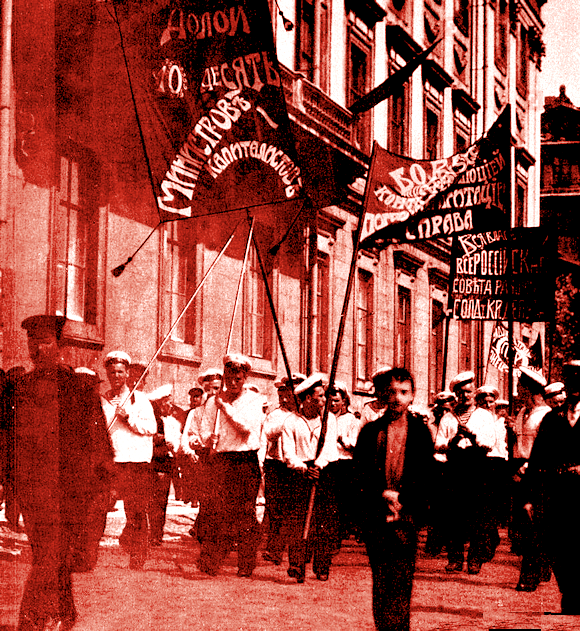
Kronstadt Sailors March in Petrograd.
At Reval (now Tallinn, Estonia), the winter base of the smaller craft of the Baltic Fleet, the February Revolution and the abdication of the tsar passed without affecting the internal organization of these units. The same was true of the few ships at the Muhu Strait. But the steady pressure of the Revolution and propaganda from other parts of the fleet gradually undermined the discipline in these vessels. Mutiny broke out in July during the recurrence of revolutionary fervor following the failure of the Kornilov coup. There were few killings, however. The mutiny was more a creature of an inevitable fate which even the men themselves would have been powerless to stop.
⇒ Read the entire article on the Roads to the Great War website here:
External Web Site Notice: This page contains information directly presented from an external source. The terms and conditions of this page may not be the same as those of this website. Click here to read the full disclaimer notice for external web sites. Thank you.