4 Brutal World War I Trench Weapons That Look Horrifying Today
Published: 30 July 2026
By Duane Beckett
via the Yahoo! Life website
Museum of New Zealand Te Papa Tongarewa, Unsplash
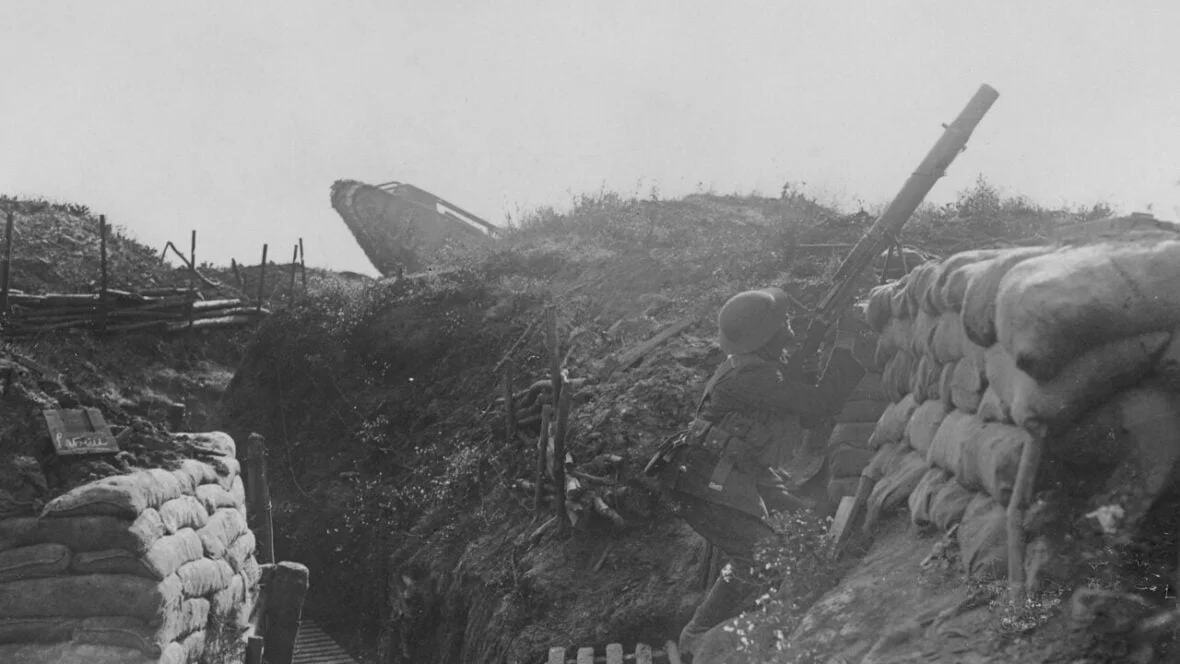
World War I placed modern armies inside cramped trench systems where a full-length rifle could become awkward and noisy gunfire might expose a raiding party.
Soldiers often relied on compact weapons built for close, sudden violence. Knives, clubs, shotguns, and even flamethrowers all answered different battlefield problems, yet each looked terrifying in its own way.
Some resembled medieval weapons, while others previewed the type of arsenal that would become infamous in later wars. More than a century later, surviving examples of these World War I trench weapons remain unsettling because their horrifying purpose is visible immediately.
Trench Clubs and Maces
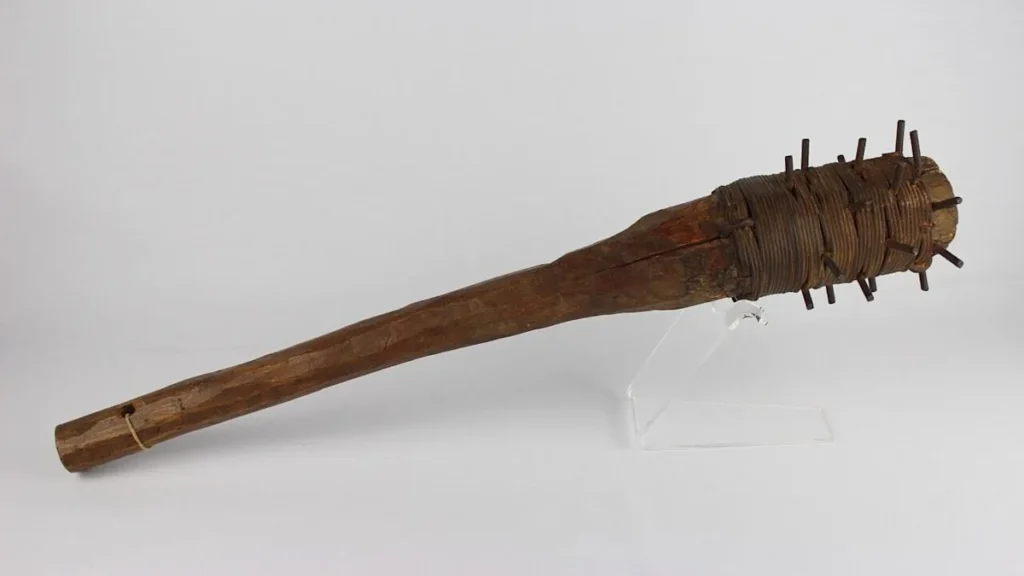
Trench mace. (Courtesy of York Museums Trust, Wiki Commons (Creative Commons Attribution-Share Alike 4.0 International License)
According to the National Army Museum, soldiers used homemade trench clubs during raids to kill or knock enemies unconscious without immediately raising the alarm.
The Imperial War Museums reported that all armies employed clubs for trench raiding. One hard swing could crush a skull or disable a defender before they could respond. Their crude handles and spiked heads look horrifying today because they belong visually to a medieval battlefield, not World War I trench weapon.
M1897 Trench Shotgun
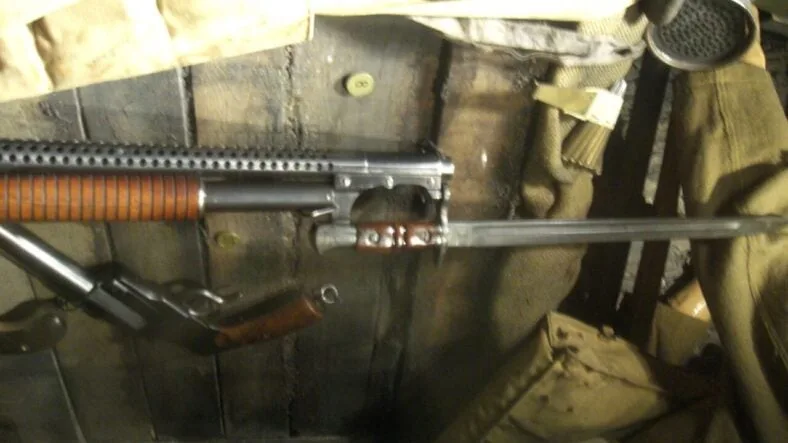
M1897 Trench Shotgun (Credit: Amendola90, Wiki Commons (Creative Commons Attribution-Share Alike 3.0 Unported License)
I find the Winchester M1897 especially chilling because it looks engineered for one job: clearing a narrow space at very close range.
American troops carried the 12-gauge pump-action shotgun, which had a shortened barrel, ventilated heat shield, and bayonet attachment. The Doughboy Foundation states that it held five shells in its magazine and could chamber a sixth. Its design also allowed rapid pump-firing while the trigger remained pressed. When fired, buckshot spread multiple projectiles through a trench section where there was little room to escape.
⇒ Read the entire article on the Yahoo! Life website.
External Web Site Notice: This page contains information directly presented from an external source. The terms and conditions of this page may not be the same as those of this website. Click here to read the full disclaimer notice for external web sites. Thank you.