Americans in the Canadian Army?
Published: 18 August 2026
By Barbara Ristine
via the Substack.com website
Americans in Canadian Armed Forces header image
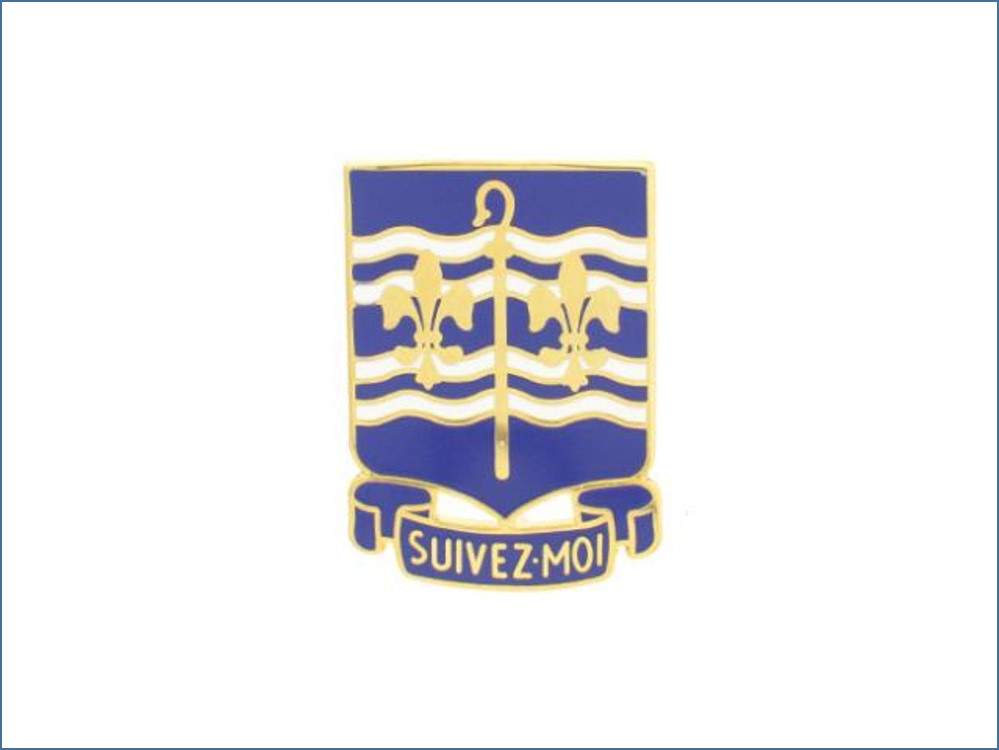
237th Battalion C.E.F.
How about an entire brigade?
When you write historical fiction, sometimes you paint yourself into a corner, and while resolving a plot issue, you discover a bit of hidden history.
How would an ordinary Yank end up in a British military hospital before America even entered the First World War?
There was the group of dashing young American pilots who formed a volunteer air unit flying for France, known as the Lafayette Escadrille, capturing the public’s imagination with their aerial exploits.
The writers Ernest Hemingway and John Dos Pasos volunteered as ambulance drivers in France and Italy and later wrote about their experiences.
But how would a kid from a ranching family in eastern Washington state come to be a Canadian soldier?
In my research, I learned just how many ordinary American citizens enlisted in the Canadian Expeditionary Force (C.E.F.), which was part of the British armed forces. Despite the U.S. being neutral at the start of the First World War, an estimated 40,000 Americans enlisted in the C.E.F. in the first two years of the war.
When Britain declared war on Germany, some Americans living in Canada joined up in solidarity with their neighbors. But thousands more Americans crossed the border, eager to enlist for a variety of reasons. The German invasion of tiny Belgium angered some; others were outraged by the sinking of the Lusitania and the resultant loss of American lives. Some wanted to defend democracy; still others wanted to prove their manhood; and a great many simply wanted an adventure.
Everyone raced to enlist, afraid the war would end before they had a chance to fight. Newspapers reported that hundreds of American volunteers had flooded the town of Windsor, Ontario.
Now here’s where it got a little tricky. The Canadian authorities knew these volunteers weren’t native-born sons, but the C.E.F. needed recruits. The Americans knew that legally, the army could enlist only Canadians. So everyone had to pretend.
The Yanks filled out the attestation papers, giving fictitious Canadian birthplaces or claiming a Canadian parent. The Canadian recruiters didn’t examine the papers too closely. Then, the volunteers took an oath of allegiance to His Majesty the King, no doubt treating it as a mere formality. (In The Face Painter, my character Jack Kelley lies about his birthplace and crosses his fingers while taking the oath.)
What did the U.S. government have to say about all this? After all, the U.S. Foreign Enlistment Act of 1818 essentially forbid U.S. citizens to serve in the armed forces of another nation. The consequences were jail or loss of citizenship.
Well, in the early years of the war, the United States simply turned a blind eye. Immigration boards were instructed not to question the citizenship of an applicant for reentry into the States simply because he had served in the Canadian forces. (Note that this would change later in the war, and men would face loss of citizenship, although by 1920, most would be welcomed back as citizens in good standing.)
The Canadian Minister of Militia and Defence, Col. Sam Hughes, saw all these enthusiastic Yanks pouring into his country and realized this was a golden recruiting opportunity. In 1914, he had contacted Lord Kitchener, Britain’s Secretary of State for War, and Winston Churchill, then the First Lord of the Admiralty, with a scheme to raise a force of American citizens to serve in the British armed forces. The original plan didn’t get off the ground amid some concern about the U.S. Foreign Enlistment Act of 1818.
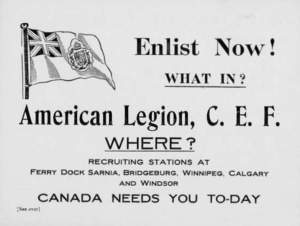
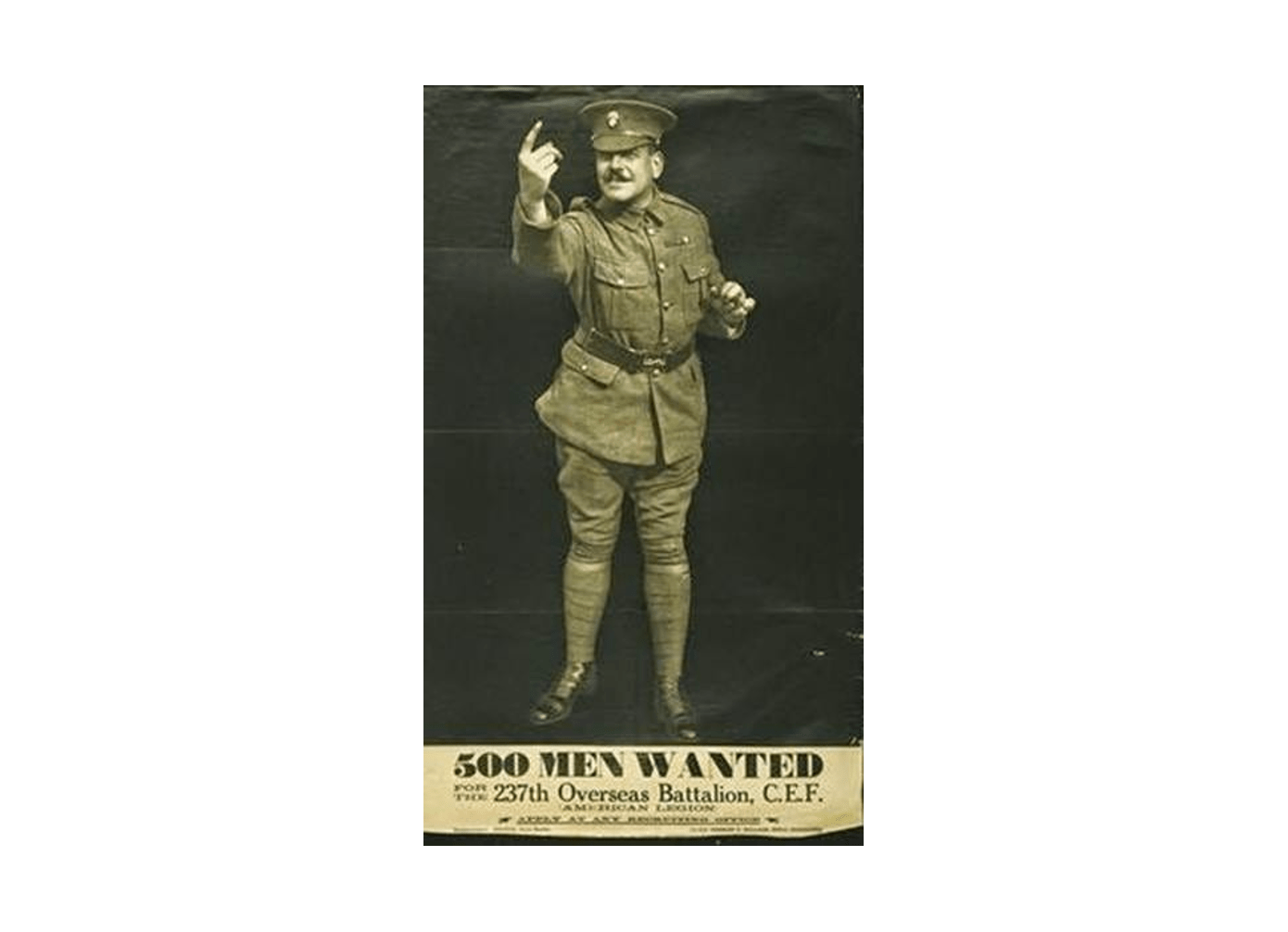
American Legion C.E.F. recruiting poster
But then in October 1915, Col. Hughes decided on his own initiative to raise a battalion composed entirely of American soldiers and officers for service with the Canadian Expeditionary Force, under the command of Captain A.B. Clark, formerly of the NY National Guard. This became the 97th Overseas Battalion, the first of a brigade that became known as the American Legion.
⇒ Read the entire article on the Barbara Ristine Substack.
External Web Site Notice: This page contains information directly presented from an external source. The terms and conditions of this page may not be the same as those of this website. Click here to read the full disclaimer notice for external web sites. Thank you.