Key Points
-
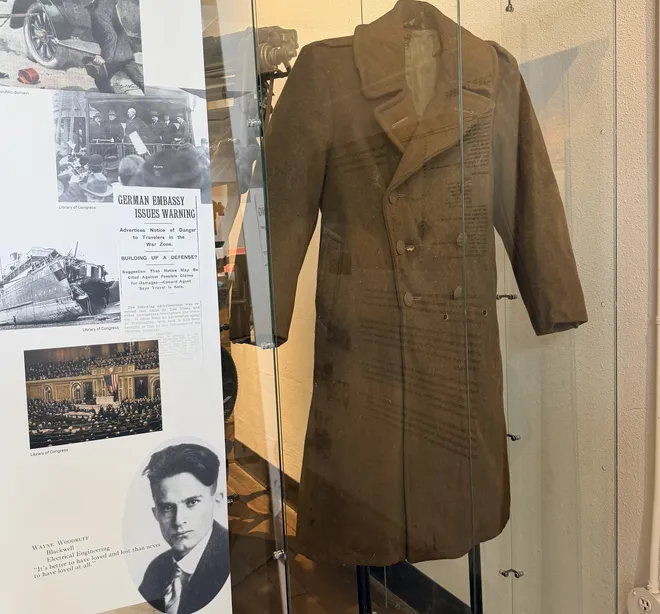
A curator discovered a rare World War I trench coat in storage at Woodburn Museum and started digging for answers.
-
The coat belonged to Sgt. Wayne Woodruff of the 605th Engineers and is the centerpiece of a new exhibit.
-
Woodruff settled in Salem after the war and was an electrical engineer and avid rose gardener.
Jennifer Gritt had been working part time at Woodburn Museum for only a few months when she came across an old Army trench coat.
It was on an upper shelf in the museum’s storage room, rolled into a ball and wrapped in plastic — enough to make any curator cringe.
As she unwrapped the olive drab wool coat, Gritt noticed what looked like a blood stain on the front, between the brass eagle buttons. A closer look revealed more blood stains inside.
“It grabbed me right away,” she said.
Her first move was to store it properly, wrapping it in acid-free tissue paper and placing it in an archival garment bag to shield it from dust, light and harmful chemicals.
She later learned it belonged to Sgt. Wayne Woodruff and was part of a larger collection of World War I items donated to the museum in 1989.
After discussing the trench coat with a colleague and contacting the National World War I Museum, Gritt realized just how rare the artifact was.
She knew it needed to be shared, and Woodruff’s story told. He lived in Salem for nearly four decades and is buried at Belcrest Memorial Park.
Gritt applied for and received a $4,500 grant last fall from the
America 250 Oregon Commission for the exhibit, launching a nine-month quest to uncover the military service and life of the man behind the coat.
Off to war with electrical engineering, ROTC background
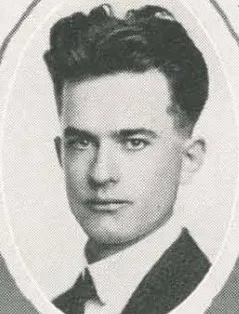
Wayne Woodruff as pictured among the junior class in the 1917 Oklahoma A&M yearbook. The college later became Oklahoma State University. Provided By Oklahoma State University
Woodruff registered for the draft in June 1917 in Kingman City, Kansas, shortly after completing his junior year in electrical engineering at Oklahoma Agricultural & Mechanical College.
His draft registration card, downloaded by the Statesman Journal from the
free genealogy website FamilySearch.com, shows he was 22 and single. He listed his occupation as student and his military experience as first sergeant in the Oklahoma A&M cadet corps, one of 17 schools in the country then offering Reserve Officers’ Training Corps.
He described himself as medium height and slender — a build consistent with the 36S stamped inside the trench coat, for size 36 Short.
He noted he was deaf in his left ear and signed the card with his full name: “Wayne Wilford Woodruff.”
Woodruff returned for his senior year at what later became Oklahoma State University. Gritt found photographs of him in the university’s
digitized yearbook collection.
His 1918 yearbook photo appeared with the quote, “It’s better to have loved and lost than never to have loved at all.”
“You get these really personal glimpses,” Gritt said, “into who he was.”
Read the entire article on the Salem Statesman Journal website.
External Web Site Notice: This page contains information directly presented from an external source. The terms and conditions of this page may not be the same as those of this website. Click here to read the full disclaimer notice for external web sites. Thank you.