How World War I Changed America: 10 Lasting Ways
Published: 27 July 2026
By Bob Farmer
via Farmers’ Almanac website
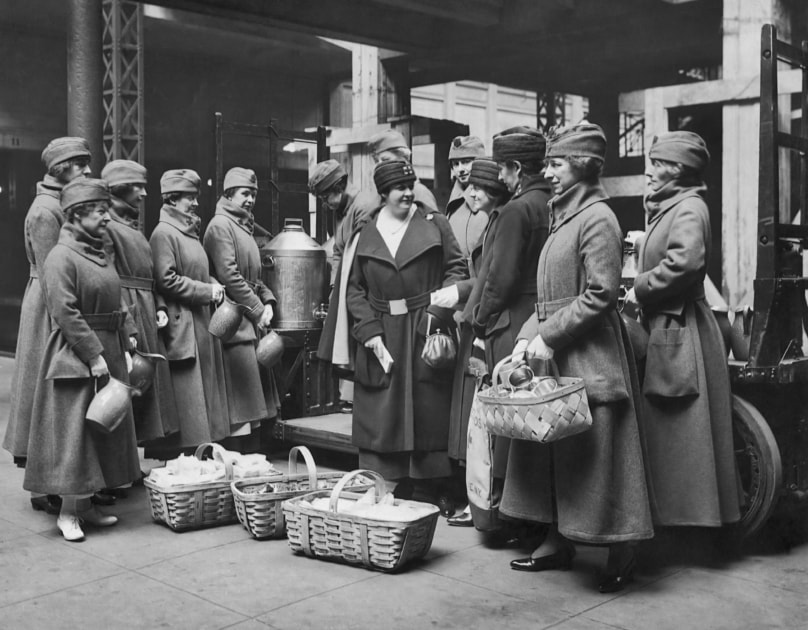
WWI-redcross-808×630
Quick Reference: How World War I Changed America
- The dates: the war began in the summer of 1914, America entered on April 6, 1917, and the fighting ended in the fall of 1918.
- Work and the vote: nearly a million women filled jobs held by men, and the 19th Amendment passed in 1920.
- Home front: over 20 million victory gardens were planted, cutting U.S. food consumption by 15%.
- The long shift: the Great Migration north, a bigger federal government, and the Roaring ’20s all trace back to these years.
The Great War began in the summer of 1914, more than 100 years ago, and for many Americans it still sits in the shadow of the Civil War before it and World War II after. The United States held back from the fighting in Europe for three years before joining the first transatlantic war on April 6, 1917. The fighting ended the next year, in the fall of 1918. In that short stretch, the country changed in ways that outlasted the war itself.
10 Ways World War I Changed America
Here are ten of the more enduring and interesting changes the war left behind, from the factory floor to the ballot box to the backyard garden.
- Women went to work. Most had never held a job outside the home, but factories and businesses suddenly needed them. Nearly a million women filled jobs that had belonged to men.
- The vote followed the work. Before the war, the women’s campaign for the right to vote had fallen on deaf ears. Afterward, even President Wilson urged Congress to pass the 19th Amendment, which succeeded in 1920.
- Victory gardens took root. Future President Herbert Hoover was appointed director of the newly created U.S. Food Administration. Hoover encouraged citizens to plant “victory gardens,” or personal gardens. This is the genesis of the urban gardens we know today. Over 20 million gardens were planted, and U.S. food consumption decreased by 15%, conserving food for the troops.
- The Great Migration began. One of the largest shifts in population in the 20th century was the movement African Americans made from the South to be employed in northern factories. Ford Motor Co. was a leader in the employment of minorities.
- The federal government grew. The power of the federal government, and that of the President in particular, greatly expanded during the war, which has carried on to this day.
- Medicine advanced. The medical field greatly advanced, especially in the treatment of mental disorders, limb replacement, and plastic surgery. Many people trace the beginning of medical specialists to this period.
- Volunteering surged. The Red Cross, Boy Scouts, and Girl Scouts enjoyed a growth in membership and interest in their collective efforts and groups.
- The Roaring ’20s arrived. The horrors of war ushered in an anything-goes attitude and a quest for fun, fashion, and frolicking. “How ya gonna keep ’em down on the farm after they’ve seen Paree” was a whimsical chorus that helped explain the population shift from the farm to cities.
- Americans became travelers. For the first time, middle-class Americans traveled overseas to visit countries and cities they came to know in the war. European tourism increased as Americans wanted to visit battlefields and grave sites.
- The United States led the world. Despite isolationist sentiments, after the war the country became a world leader in industry, economics, and trade. The world became more connected, which ushered in the beginning of what we call the world economy.
A Quick Timeline of America in the Great War
The American chapter of World War I was short but crowded. The country watched from the sidelines for three years, then entered the fight and helped end it inside of nineteen months. Here is the shape of those years at a glance.
If you want the fuller picture behind these dates, the Library of Congress keeps a plain-English timeline of the Progressive Era into the New Era, the stretch of American history that World War I sits inside.
Women Went to Work, Then Won the Vote
With so many men in uniform, the factories, offices, streetcars, and switchboards still had to run, and women answered the call. Nearly a million women stepped into jobs that had belonged to men, from munitions plants to clerical desks. For many it was the first paycheck of their own, and the country noticed.
Read the entire article on the Farmer’s Almanac website.
External Web Site Notice: This page contains information directly presented from an external source. The terms and conditions of this page may not be the same as those of this website. Click here to read the full disclaimer notice for external web sites. Thank you.