How the ACS Mobilized American Surgery for WWI—and Why It Matters Today
Published: 15 July 2026
By Jeremy W. Cannon, MD, SM, FACS, and Emma Zimmerman
via the American College of Surgeons website
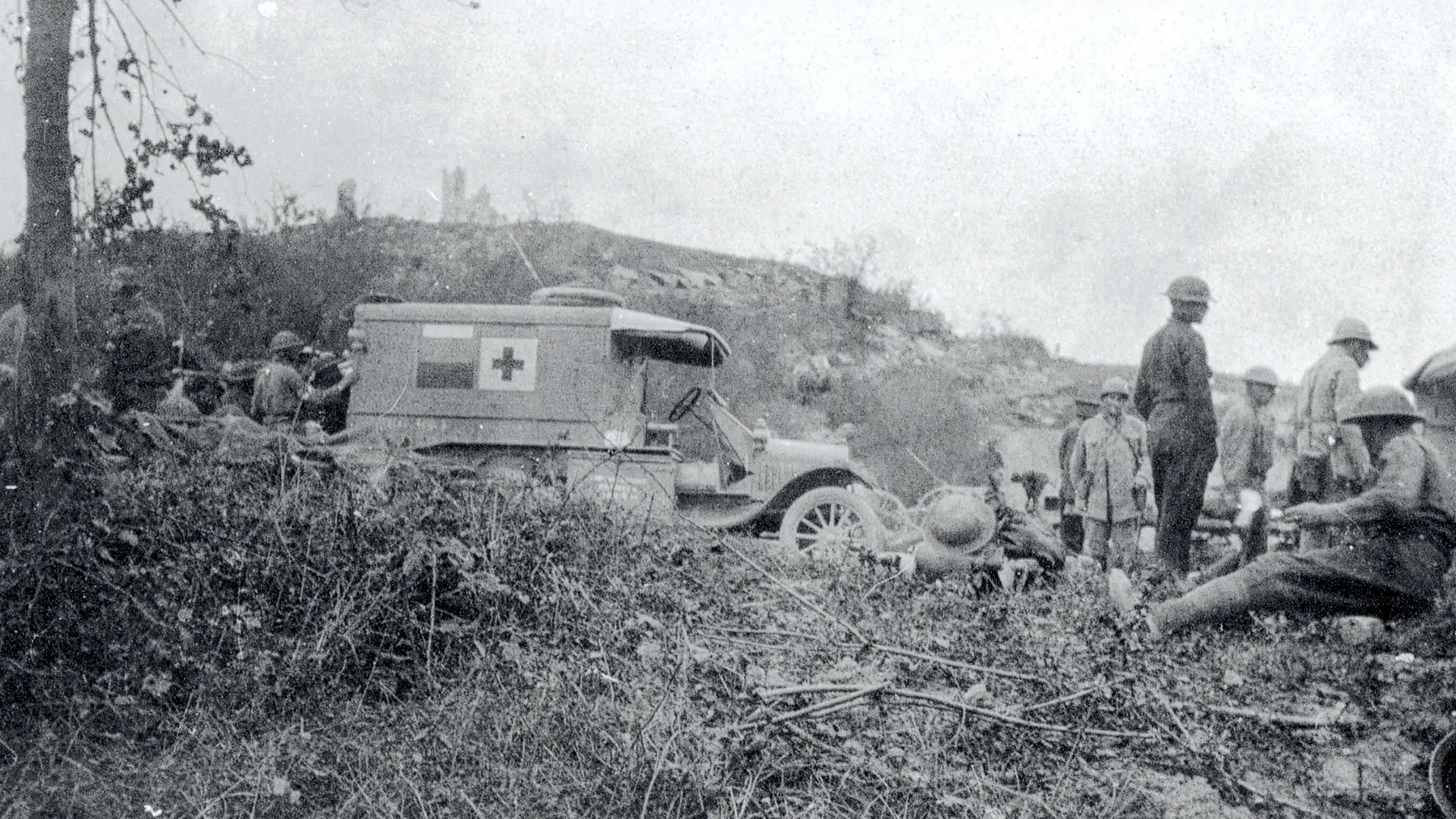
ACS-ww1-hero-hz1920x1080
American Ambulance personnel served near Saint-Gengoulph in support of French and US forces during the Second Battle of the Marne in July 1918.
From its founding, the ACS has maintained close ties with the US military.
During its first 5 years as a professional organization, the ACS appointed Navy Surgeon General Charles F. Stokes, MD, FACS, as a member of the first Board of Regents, recruited thousands of American surgeons to serve in World War I (WWI), and deployed its first president, John M. T. Finney, MD, FACS, to Europe.
These actions represent just a few of the measures taken by ACS founder Franklin H. Martin, MD, FACS, and others to ensure military surgical care met the same rigorous standards they had set for civilian surgical care. The efforts resulted in optimal clinical outcomes on the battlefields of Europe and strengthened medical readiness at home.
Today, the ACS continues to take a leadership role in medical preparedness efforts, maintaining the legacy and advancing the ideals of its early leaders.
Europe Engulfed in War
In June 1914, what started as a flare-up of regional tensions in the Balkans soon erupted into a conflict among the Great Powers, engulfing all of Europe.
A year earlier in Chicago, the ACS held its first Convocation Ceremony concurrently with the fourth Clinical Congress of North America. This formal ceremony inducted the first class of 1,059 surgeons, including the College founders, who successfully met the rigorous requirements for Fellowship.
The ceremony featured a formal procession with inductees outfitted in elegant academic robes reflecting inspiration from The Royal College of Surgeons of England (RCS-Eng). To further underscore this alignment, Dr. Martin arranged for a special guest to be named as the first Honorary Fellow: the sitting president of the RCS-Eng, Sir Rickman John Godlee.
In his acceptance address, Sir Godlee affirmed the mutual goodwill between the fledgling ACS and the RCS-Eng, and formally invited the ACS leaders to hold their next meeting with the Clinical Congress of North America in London. He also presented the ACS with the Lister Gavel, which is still in use today.
In July 1914, the ACS founders and more than 1,000 US and Canadian surgeons arrived in London.
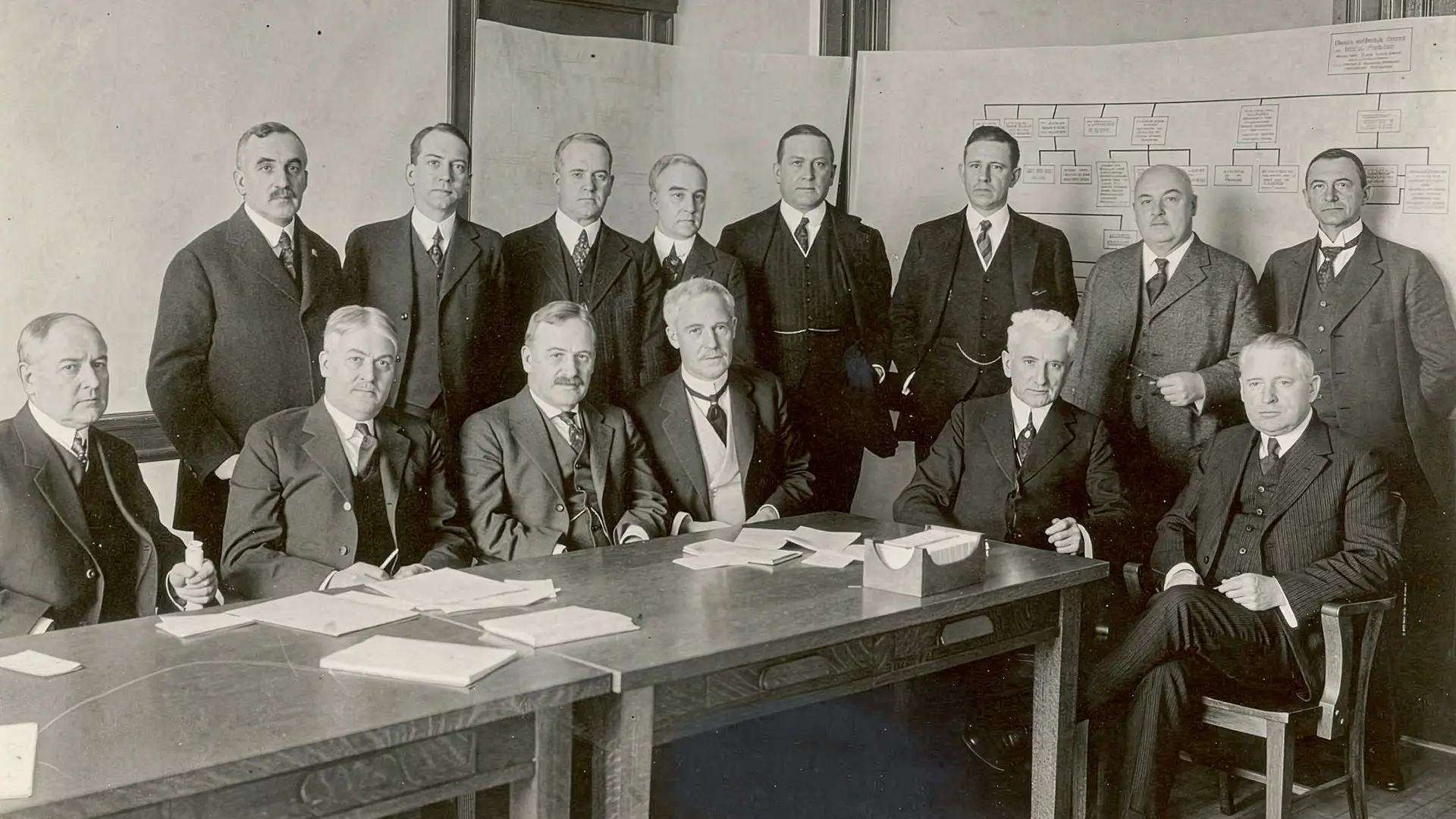
Members of the General Medical Board of the Council of National Defense helped coordinate the nation’s medical preparedness during WWI, circa 1917–1918.
Although hostilities had erupted in the Balkans a few weeks prior, most viewed these events as little more than a regional conflict in a troubled corner of Europe. Planned surgical demonstrations at hospitals across London and academic sessions presented at swank hotels continued apace. The proceedings included the Surgeon General of the Army, Major General William C. Gorgas, who was granted Honorary Fellowship in the ACS, a gesture that foreshadowed an invaluable collaboration between both organizations for years to come.
Many conference attendees had intended to visit renowned clinics in Germany and Austria after the Congress, but by the end of the meeting, declarations of war had engulfed the continent, cutting these travel plans short.
European attendees from both sides hurried home while American participants found their return voyages canceled as passenger ships converted to troop transports. Dr. Martin’s quick thinking and political savviness averted a potential crisis. He appealed to the US Ambassador to England for aid in securing transportation home, and he approached his banking friends in New York to extend lines of credit to stranded ACS Fellows.
ACS Influence in Medical Mobilization
Reports from both sides of the European front made clear that modern warfare would require organized surgical capability at a national level, not simply individual expertise to care for these patients. The ACS quickly became the lead surgical society promoting and supporting readiness for the war in Europe. Central to this engagement were three visionary ACS leaders: Dr. Martin, Dr. Finney, and the second ACS President George Crile, MD, FACS.
These leaders assumed distinct but complementary roles in this effort. Dr. Martin engaged policymakers at the highest levels of government while Drs. Finney and Crile applied their concepts of hospital standards and medical organization into US Army and Navy medical mobilization efforts.
Read the entire article on the ACS website.
External Web Site Notice: This page contains information directly presented from an external source. The terms and conditions of this page may not be the same as those of this website. Click here to read the full disclaimer notice for external web sites. Thank you.