Million Dollar Barrage: American Field Artillery in the Great War
Published: 7 July 2026
By Dr. Michael Boden
via the Roads to the Great War website
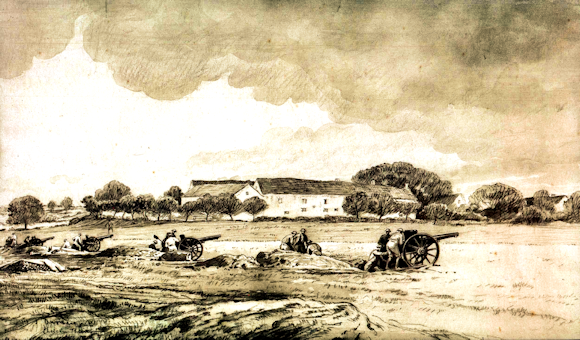
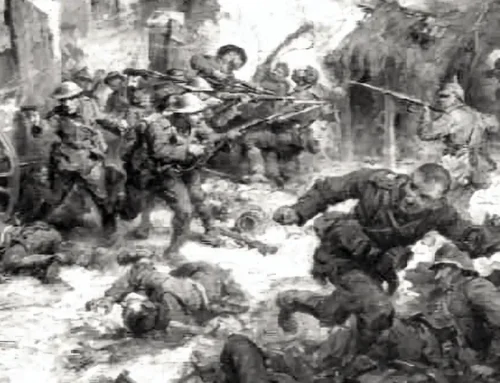
U.S. 75mm Battery at Château-Thierry
U.S. 75mm Battery at Château-Thierry, By Jack Duncan
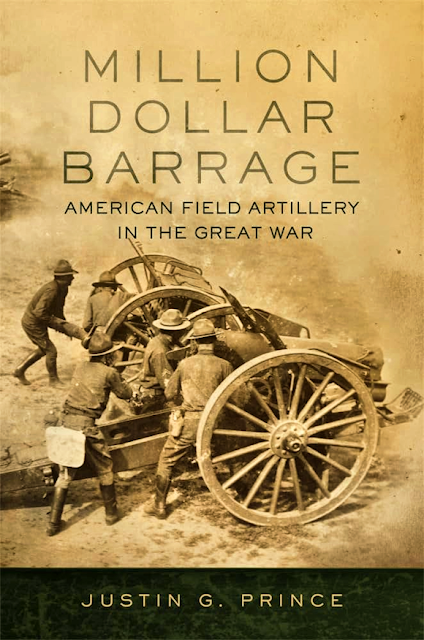
Million Dollar Barrage: American Field Artillery in the Great War, By Justin G. Prince
The numerous innovations in the conduct of war at the start of the 20th century are well known to most people who study the military history of the era. Technological advancements, tactical and operational developments, growing global political rivalries, and other conditions all contributed to the changing character of war. Justin Prince tackles one particular dimension of this environment, the origins of the U.S. Army’s Field Artillery branch, in his work, Million Dollar Barrage: American Field Artillery in the Great War.
To Prince, this period was of primary importance to the service’s coming of age. Prince notes that “these formative years, from 1907 to 1923, saw the establishment of a modern field artillery branch, and through the missteps, failures, problems, debates, and successes, the field artillery gained a new primacy in the minds of American military thinkers” (189).
 To support this assertion, throughout his narrative Prince consistently focuses on three particular areas of development: doctrine, technology, and “the debates about open warfare.” The book progresses chronologically, for the most part, although there are some overlaps in chapter focus depending on the issue under consideration.
After the introductory chapter, chapters 2 and 3 focus on conditions that necessitated a dramatic change in the application of American field artillery. The second chapter hones in on those developments from 1897 to 1913 that frame the American experience, including such key events as the introduction of the French 75mm gun in 1897, the separation of field artillery from coast artillery in 1907, and the establishment of the School of Fire at Fort Sill, Oklahoma, in 1911. The third chapter aligns closely with these initial parameters as Prince emphasizes American technological and training challenges in the years leading up to the First World War. One constant in this period is the importance of the Field Artillery Journal and the centrality of the Fort Sill experience and curriculum in shaping American artillery development. The fourth chapter emphasizes the challenges associated with arming the branch and the friction that developed between the Ordnance Department and the Field Artillery branch in procurement prior to American entry into the war. This friction resulted, to Prince, in numerous comprehensive shortcomings that persisted through the war, such as the lack of heavy artillery development and the slipshod attempt at developing a standard American field piece.
The following three chapters address the substantial qualitative developments experienced by the force throughout combat operations in Europe. The issues and themes at the forefront in the previous three chapters come together in the fifth, on artillery training after the American entry into the war. The sixth chapter focuses particularly on American observation of fire issues, of which the lack of quality observation methods and poor air coordination were two of the most significant. The seventh concentrates on the application of previous training and development during the Meuse-Argonne Offensive.
Read the entire article on the Roads to the Great War website here:
External Web Site Notice: This page contains information directly presented from an external source. The terms and conditions of this page may not be the same as those of this website. Click here to read the full disclaimer notice for external web sites. Thank you.