The 332nd U.S. Infantry’s Military and Political Role in Italy
Published: 13 July 2026
By CDR Alexander Buschor, U.S. Navy
via the Roads to the Great War website
332nd U.S. Infantry header
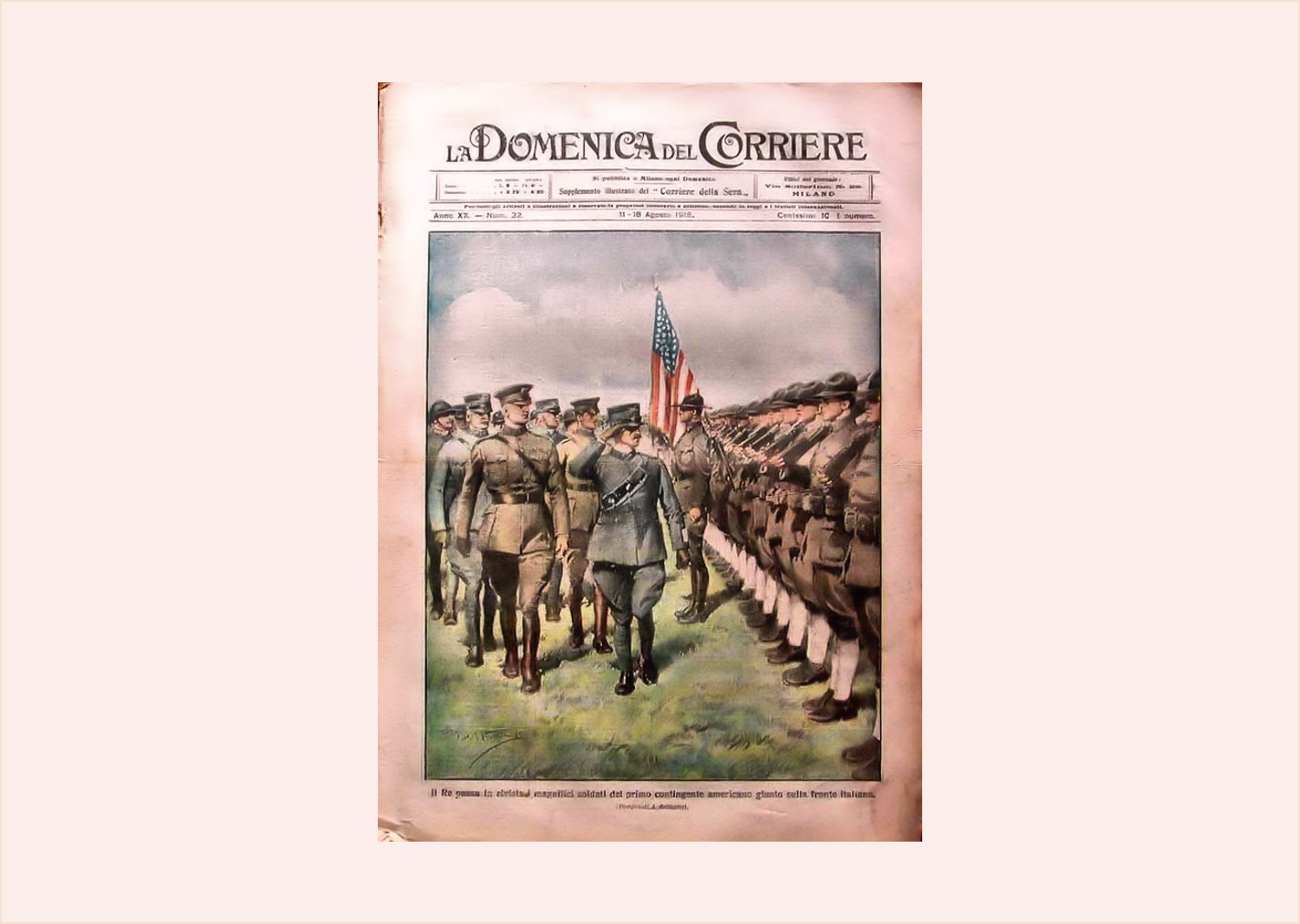
The 332nd Infantry Is Welcomed to Italy.
Though American money had been flowing into Italy’s war campaign for some time, since the Italian military’s disastrous defeat at the Battle of Caporetto, Rome had requested more than just U.S. dollars. Fresh troops and materials were needed to reroute the Austro-Hungarians. U.S. brass and policymakers were reluctant to do so, but the 332nd Infantry Regiment was eventually committed to the Italian front.
It’s worth noting that this is one of the first times an American fighting force was sent to a theater of war
(a) outside the scope of primary U.S. military engagement (in this case, the Western Front),
(b) fought under foreign leadership (the 332nd took orders from Italian generals), and
(c) were committed by diplomatic means between two separate governments as opposed to being a purely Washington-made decision
In Gen. John J. Pershing’s diary, he describes a lunch with the ambassador to Italy, Nelson Page, highlighting the political vice military nature of committing American troops to Italy: “The Ambassador seemed disappointed to find me strongly opposed to the use of our troops anywhere except on the Western Front and as components of our own army.”
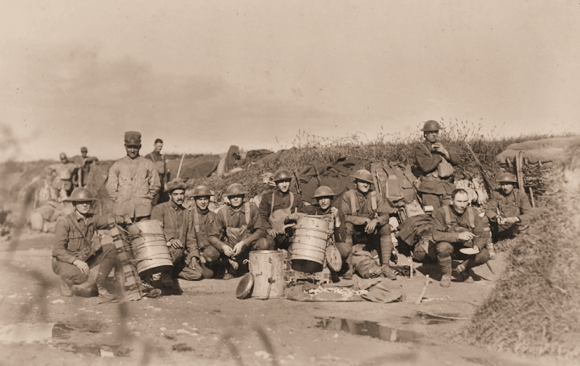
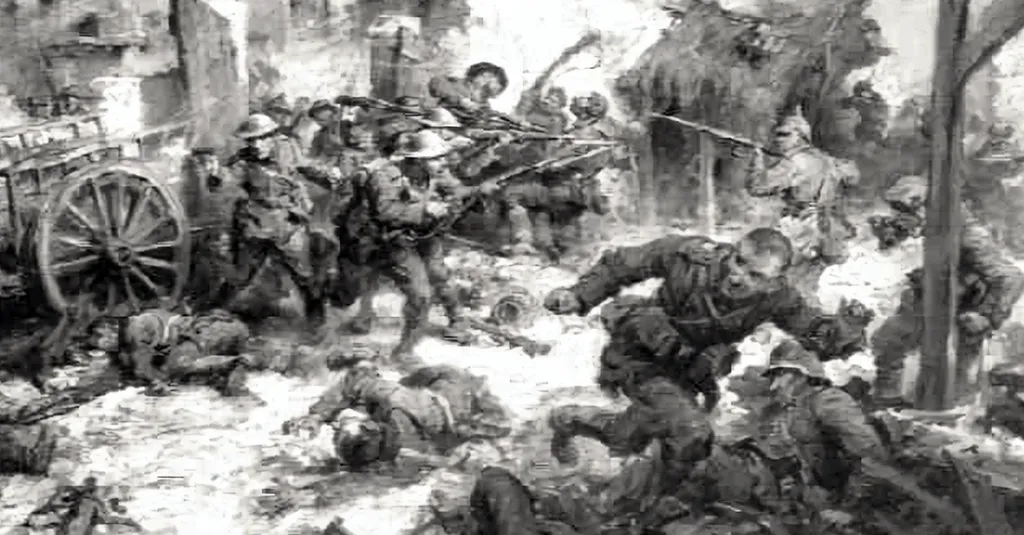
Men of the 332nd Deployed Along the Piave River.
Northern Italy already had its fair share of Americans aiding the conflict. Red Cross volunteers and ambulance drivers, so well-known from Ernest Hemingway’s dramatization in A Farewell to Arms, had been there for years. The arrival of combat troops, however, was another affair. After departing their home station of Camp Sherman in Chillicothe, Ohio, in late 1917, the 332nd crossed the Atlantic aboard the RMS Aquitania, landed in England, and eventually trained across western Europe until it finally reached Italian soil in 1918. Upon arriving in Milan, the troops were greeted by throngs: “The crowd, now uncontrollable, almost bore the men from their feet in a mad frenzy to honor these first combatant American troops in Italy. The exultant cries continued, ‘Viva l’America! Viva l’America!’ A somewhat humorous note on ethnic and cultural differences is added to this passage in the unit’s enlisted personnel’s Company Log: “The stiff wall of reserve of the Anglo-Saxon could no longer resist the mighty flood of human emotion that surged against it and in that sublime moment, seizing the inspiration of the hour, the men in khaki spoke for America, and cried back, ‘Viva l’Italia! Viva l’Italia!’
It’s important to emphasize that the 332nd was largely detailed to this corner of the war as a publicity stunt, something both Washington and Rome sought to publicize. In lieu of fighting, the American soldiers spent a substantial amount of time in rear billeting, marching around areas of the Italian peninsula not in a combat zone, performing quasi-humanitarian duties, and training. The enlisted man’s log states, throughout the summer of 1918, “The regiment continued intensive training through the late summer; each man, already overtrained, began hoping that the impending day would soon arrive when the big drive in Italy would begin. At the close of the day’s heavy, and by this time, monotonous drill, the men spent their evenings on the streets and in the small shops of Valeggio or bathed in the clear, swift waters of the Mincio. The camp life, too, was diversified by Sunday trips to Lago di Garda and Verona.
Read the entire article on the Roads to the Great War website here:
External Web Site Notice: This page contains information directly presented from an external source. The terms and conditions of this page may not be the same as those of this website. Click here to read the full disclaimer notice for external web sites. Thank you.