6 pivotal moments in 250 years of US chemistry
Published: 24 July 2026
By Elizabeth Quill
via the Chemical and Engineering News website
chemical-header-desktop
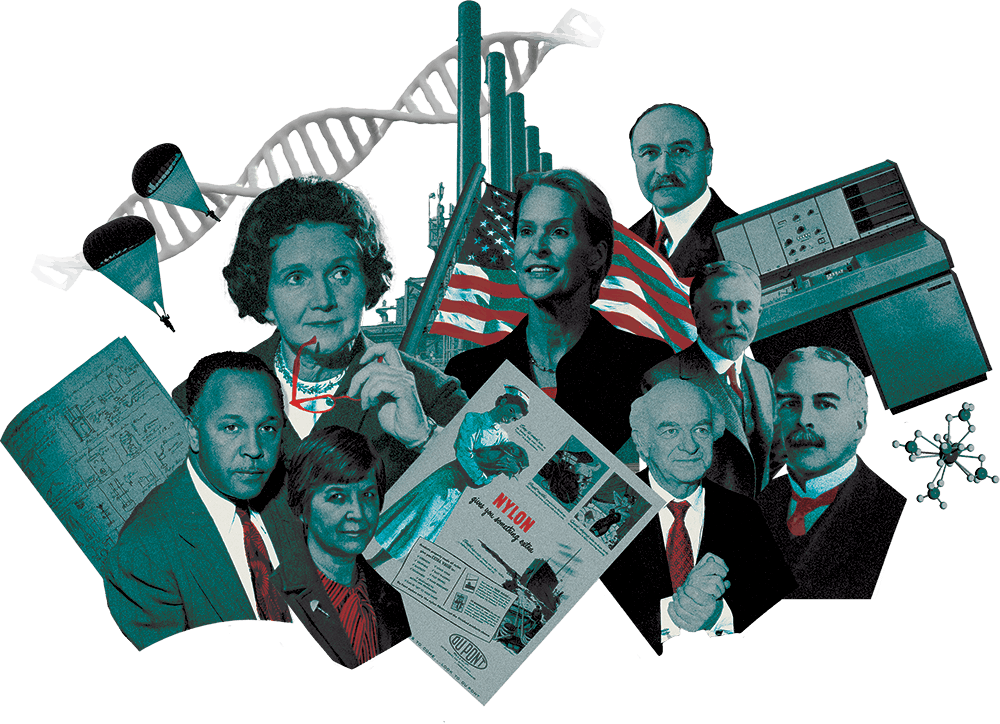
his collage represents only a tiny fraction of the people, discoveries, and events that helped make US chemistry what it is today. Credit: Madeline Monroe/C&EN/Sipa via AP Images/AP Photo/Damian Dovarganes/AP Photo/Bob Schutz/SPCOLLECTION, Retro AdArchives, Pictorial Press, GL Archive, Science History Images via Alamy/Shutterstock/C&EN Archives/Dan Addison/University of Virginia Communications
World War I kickstarted a boom in the U.S. Chemical industry
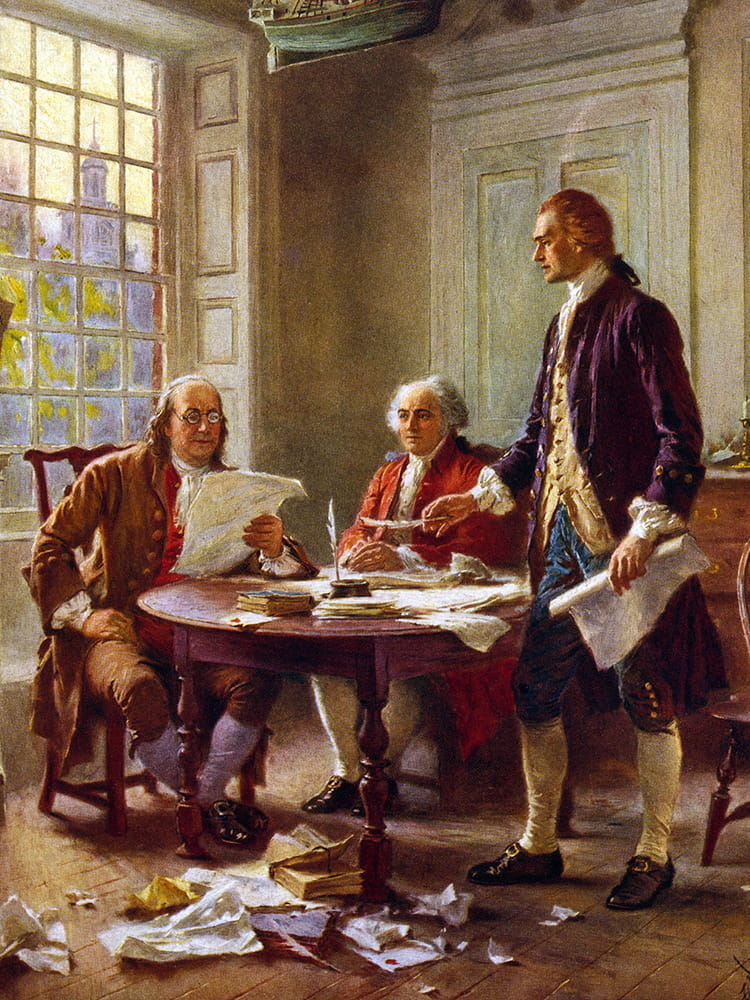
Many of the founding fathers of the United States of America were also men of science, including Benjamin Franklin, John Adams, and Thomas Jefferson. | Credit: Alamy
In 1776, the founding fathers of the United States of America declared their commitment to life, liberty, and the pursuit of happiness—but lesser known is their passion for the pursuit of science. Thomas Jefferson called it his “supreme delight.” Benjamin Franklin’s contribution to science far exceeded that of his famous kite experiment. Another founding Benjamin and signer of the Declaration of Independence, Benjamin Rush, wrote what is widely considered to be America’s first chemistry textbook.
So it’s perhaps unsurprising that in the 250 years following its birth, the US grew into one of the world’s scientific powerhouses, including in chemistry. Across various measures of chemistry prowess—number of chemists, volume of high-quality research publications, and contributions of chemistry to the national economy, to name a few—the US has long stood as a global leader.
What might not have been foreseen, though, is how far chemistry would come to reach into seemingly disparate research spheres, as well as nearly every aspect of American life. Carsten Reinhardt, a historian at the Institute for Studies of Science of Bielefeld University in Germany, describes the wide reach that emerged mainly in the US during the second half of the 20th century as a “new kind of chemistry.” Chemistry became “a toolbox for many other scientific and engineering disciplines.”
The rise of US chemistry wasn’t predestined. In examining various historical, cultural, and economic forces, C&EN identified six pivotal shifts that made the US chemical enterprise what it is today.
Read the entire article on the C&EN website.
External Web Site Notice: This page contains information directly presented from an external source. The terms and conditions of this page may not be the same as those of this website. Click here to read the full disclaimer notice for external web sites. Thank you.