20 Incredible Facts About WWI, the First World War
Published: 8 October 2026
By Robin James
via the facts.uk website

Indians_1
More than 12,000 Native Americans served in the US forces in the First World War, many as volunteers, at a time when most were not US citizens. Their service helped lead to the Indian Citizenship Act of 1924, which made all Native Americans born in the US citizens.
The First World War was fought from 28 July 1914 to 11 November 1918, when an armistice ended the fighting. The Allies, led by Britain and its empire, France and Russia, and later joined by Italy and the United States, fought the Central Powers: Germany, Austria-Hungary, the Ottoman Empire and Bulgaria. Around 9 million soldiers were killed, and estimates of all deaths, including civilians, range from about 15 to 22 million.
People at the time called it the Great War, and many hoped it would be “the war to end all wars”. Here are the facts behind it, from the shocking to the strange.
WWI at a glance
Started: 28 July 1914, when Austria-Hungary declared war on Serbia
Britain joined: 4 August 1914
Fighting ended: 11am on 11 November 1918 (the Armistice)
Peace treaty: Treaty of Versailles, signed 28 June 1919
Soldiers mobilised: around 65 to 70 million
Military deaths: around 9 million
1. It began with a wrong turn in Sarajevo
On 28 June 1914, Archduke Franz Ferdinand, heir to the throne of Austria-Hungary, was visiting Sarajevo. A bomb attack on his car that morning failed. Later, his driver took a wrong turn and stopped to reverse, right beside a young Bosnian Serb named Gavrilo Princip, who shot the Archduke and his wife Sophie. Within six weeks, Europe was at war.
2. The Archduke’s number plate seemed to predict the Armistice
The car Franz Ferdinand was riding in carried the registration A III 118. Years later, people noticed it could be read as “Armistice 11-11-18”, the date the war ended. It is pure coincidence, but a remarkable one.
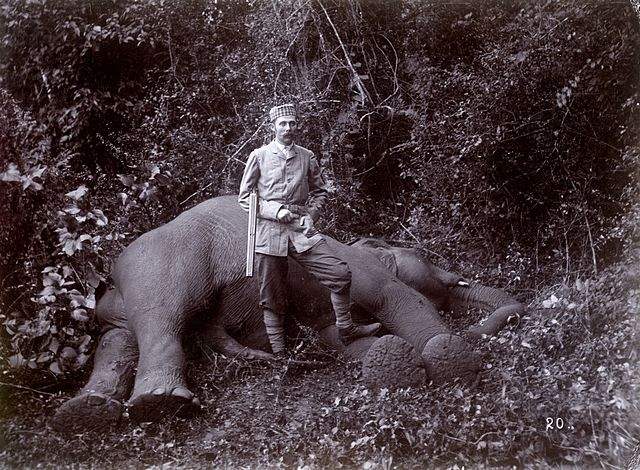
Franz Ferdinand posing
3. Tanks were called “tanks” to keep them secret
When Britain developed its first armoured fighting vehicles, workers were told they were building water carriers for the desert. The name “tank” stuck. They were first used in battle at Flers-Courcelette, during the Battle of the Somme, on 15 September 1916.
4. Tanks came in “male” and “female” versions
Early British tanks were called “male” if they carried cannons and “female” if they were armed only with machine guns. Some later tanks carried one of each and were nicknamed “hermaphrodites”.
5. Enemies played football on Christmas Day 1914
In the first Christmas of the war, soldiers in some parts of the Western Front stopped fighting on their own accord. British and German troops met in no man’s land, swapped food and souvenirs, sang carols and buried their dead. In a few places, they played football. Commanders made sure it did not happen again on the same scale.
6. Poison gas was used on a large scale from 1915
On 22 April 1915, at the Second Battle of Ypres in Belgium, German troops released chlorine gas from thousands of cylinders. Both sides went on to use gas, including phosgene and mustard gas. Gas masks became part of every soldier’s kit.
⇒ Read the entire article on the facts.uk website here:
External Web Site Notice: This page contains information directly presented from an external source. The terms and conditions of this page may not be the same as those of this website. Click here to read the full disclaimer notice for external web sites. Thank you.